Daily Current Affairs: 14 October 2026
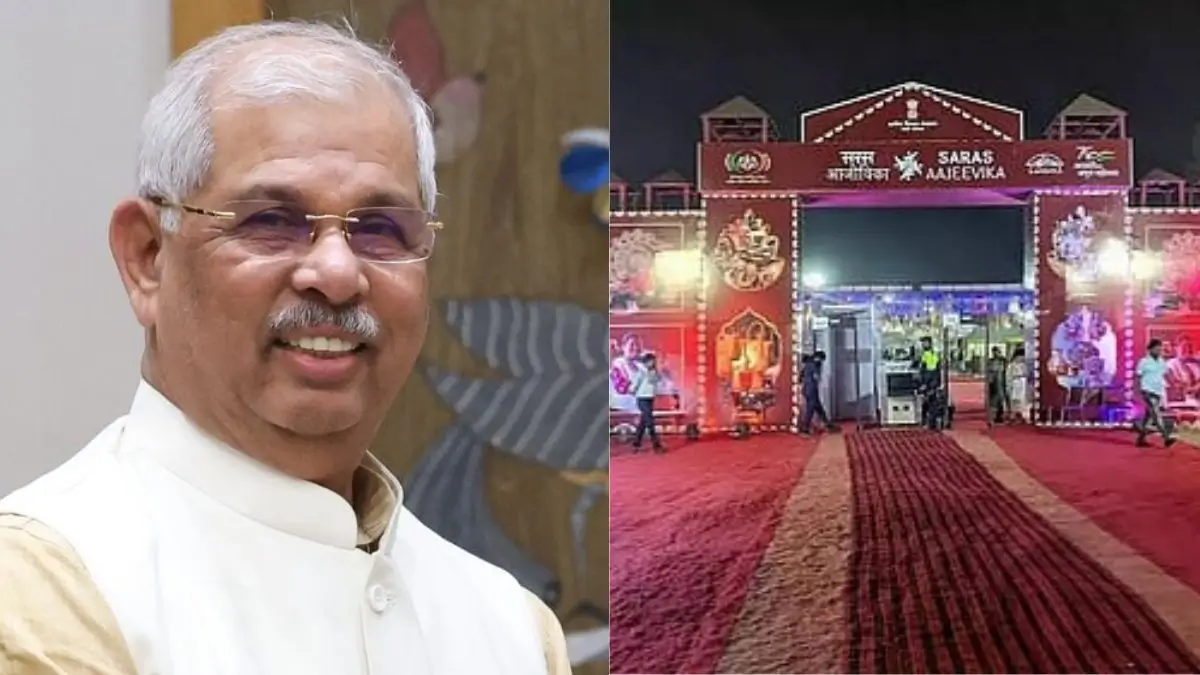
Q1. The Ministry of Rural Development, Government of India, organized the National SARAS Mela 2026 at Punnami Ghat, Vijayawada, bringing together over 1,500 Self-Help Group (SHG) women entrepreneurs. In which Indian state was this event held?
(a) Telangana
(b) Andhra Pradesh
(c) Tamil Nadu
(d) Odisha
(e) Karnataka
Answer: a
Solution:
- The Ministry of Rural Development, Government of India, in collaboration with the Society for Elimination of Rural Poverty (SERP), Andhra Pradesh, is organising the first National SARAS Mela 2026.
- The Mela is being held from 13 to 31 October 2026 at Punnami Ghat, Vijayawada, Andhra Pradesh.
- It will bring together more than 1,500 women from Self-Help Groups (SHGs) across over 30 States and Union Territories.
- The event provides a platform to showcase rural enterprises, traditional crafts, regional cuisines and women-led entrepreneurship.
Q2. Indian Naval Ship Tarkash arrived in South Africa to participate in the 9th edition of the trilateral maritime exercise IBSAMAR IX 2026. Which three navies constitute the IBSAMAR framework?
(a) India, Bangladesh, and South Africa
(b) India, Brazil, and South Africa
(c) India, Britain, and Saudi Arabia
(d) Indonesia, Brazil, and South Africa
(e) India, Brunei, and Sri Lanka
Answer: b
Solution:
- The Indian Navy’s guided-missile stealth frigate INS Tarkash is participating in the ninth edition of the India-Brazil-South Africa Maritime Exercise (IBSAMAR IX).
- The exercise is being conducted in South Africa from 12 to 22 October 2026.
- It brings together the navies of India, Brazil and South Africa to enhance interoperability, strengthen maritime cooperation and promote mutual understanding.
- IBSAMAR has been conducted biennially since 2008 under the India-Brazil-South Africa (IBSA) framework.
- The exercise covers surface warfare, anti-air warfare, anti-submarine warfare, naval air operations, maritime interdiction, anti-piracy operations, search and rescue, damage control and firefighting.
- It also includes Visit, Board, Search and Seizure (VBSS) operations and professional interactions.
- Theme: “Stronger Together Towards a Shared Future in the Maritime Domain.”
- The exercise aims to strengthen collective maritime security and preparedness, particularly in the Indian Ocean Region.
Q3. Indian captain Shubman Gill won the ‘ICC Men’s Player of the Month’ award for September 2026. How many times has Shubman Gill won this monthly ICC award in his career, establishing a new record in men’s cricket?
(a) 3 times
(b) 4 times
(c) 5 times
(d) 6 times
(e) 7 times
Answer: c
Solution:
- Shafali Verma was named the ICC Women’s Player of the Month for September 2026.
- Her performances in the Women’s Asia Cup and the Asian Games contributed to her selection. She was also India’s highest run-scorer in the Women’s Asia Cup, according to the source.
- This was Shafali Verma’s second ICC Women’s Player of the Month award.
- Shubman Gill was named the ICC Men’s Player of the Month for September 2026 following his performance in the ODI series against the West Indies.
- Gill won the award for a record fifth time, extending his record for the most wins in the men’s category.
- His previous wins were in January 2023, September 2023, February 2025 and July 2025.
Q4. Union Sports Minister Dr. Mansukh Mandaviya inaugurated the BRICS Traditional and Indigenous Sports Demonstration Games 2026 at the Veer Savarkar Sports Complex in which city?
(a) New Delhi
(b) Bhopal
(c) Ahmedabad
(d) Jaipur
(e) Pune
Answer: c
Solution:
- Union Sports Minister Dr. Mansukh Mandaviya inaugurated the Games on 12 October 2026 at the Veer Savarkar Sports Complex in Ahmedabad, Gujarat.
- The Union Ministry of Youth Affairs and Sports organised the event in collaboration with the Gujarat Government.
- The Games provide a non-competitive platform for BRICS member and partner countries to showcase traditional and indigenous sports.
- Their objectives include promoting cultural exchange and preserving sporting heritage.
- India’s demonstrations include Mallakhamb, Yogasana and Kalaripayattu.
- Other demonstrations include:
- China: Wushu and lion dance.
- Brazil: Capoeira and Corrida de Toras.
- Iran: Zoorkhaneh.
- Kazakhstan: Qazaq Kuresi.
- Russia: Sambo.
- South Africa: Kgati and Iintonga.
- Belarus, Bolivia, Ethiopia and the United Arab Emirates are also participating in the demonstrations.
Q5. Union Health Minister J. P. Nadda laid the foundation stone of India’s first High-Altitude Health Research Centre (ICMR-CHAMP) at Keylong. In which district of Himachal Pradesh is Keylong located?
(a) Kinnaur
(b) Chamba
(c) Lahaul and Spiti
(d) Shimla
(e) Kullu
Answer: c
Solution:
- Union Health and Family Welfare Minister Jagat Prakash Nadda laid the foundation stone of the country’s first high-altitude health research centre of the Indian Council of Medical Research (ICMR).
- The centre, named Kullu It is being set up under the Department of Health Research, Ministry of Health and Family Welfare.
- The centre will address public health challenges arising from high altitude, extreme weather, difficult terrain, geographical isolation and climate variability.
- Its research areas include high-altitude physiology, acclimatisation, mountain medicine, infectious and non-communicable diseases, maternal and child health, nutrition, mental health, occupational health and disaster medicine.
Q6. The Telecommunication Engineering Centre (TEC) hosted the 2nd meeting of the UN Global Initiative on AI for Agri-Food Systems (GI-AI4FS) in October 2026 along with ICAR. Which UN agency coordinates this global initiative?
(a) Food and Agriculture Organization (FAO)
(b) World Food Programme (WFP)
(c) International Telecommunication Union (ITU)
(d) International Fund for Agricultural Development (IFAD)
(e) United Nations Development Programme (UNDP)
Answer: c
Solution:
- The Telecommunication Engineering Centre (TEC), Department of Telecommunications (DoT), hosted the second meeting of the UN Global Initiative on AI for Agri-Food Systems on 10 October 2026.
- The meeting was jointly hosted with the Indian Council of Agricultural Research (ICAR) under the Ministry of Agriculture and Farmers Welfare.
- GI-AI4FS is a UN global initiative coordinated by the International Telecommunication Union (ITU) in collaboration with:
- Food and Agriculture Organization (FAO).
- International Fund for Agricultural Development (IFAD).
- World Food Programme (WFP).
- The initiative promotes the responsible use of artificial intelligence in agriculture and food systems through trustworthy, interoperable and farmer-centric AI solutions.
- It aims to strengthen international cooperation on AI governance and standards and translate innovation into practical applications.
International Telecommunication Union (ITU)
- The ITU is the United Nations’ specialised agency for information and communication technologies.
- It was established in 1865 as the International Telegraph Union.
- It became a specialised agency of the United Nations in 1947.
- It coordinates global telecommunications and ICT services between governments and private-sector organisations.
- It has 194 member countries and more than 1,000 companies, universities and international and regional organisations.
- India’s membership: India has been a member since 1869 and a regular member of the ITU Council since 1952.
- Headquarters: Geneva, Switzerland.
Q7. According to the Global Innovation Index (GII) 2026 published by WIPO, what is India’s rank among the 139 evaluated economies?
(a) 32nd
(b) 38th
(c) 40th
(d) 42nd
(e) 48th
Answer: b
Solution:
- The World Intellectual Property Organization (WIPO) publishes the Global Innovation Index annually to measure and compare the innovation performance of economies.
- The index was first launched in 2007 and is recognised by the UN General Assembly as an authoritative reference for Science, Technology and Innovation (STI) policies.
- It assesses innovation trends through investment patterns, technological progress, adoption rates and socioeconomic impacts.
- The 19th edition of the GII ranks 139 economies and maps the world’s top 100 innovation clusters.
- The special theme for 2026 examines how deep-science startups convert frontier research into new industries and scale their innovations.
Key Rankings
- Switzerland ranked first for the 16th consecutive year, followed by Sweden and the United States.
- The Republic of Korea ranked fourth, while Singapore ranked fifth.
- China ranked 10th, Japan 12th and Hong Kong, China 14th.
- India ranked 38th among 139 economies.
- India ranked first among 36 lower-middle-income economies and among the 11 economies in Central and Southern Asia.
Q8. Indian Naval Ship Sahyadri arrived at Vladivostok to participate in Exercise INDRA 2026. Exercise INDRA is a long-standing bilateral maritime exercise between India and which country?
(a) Japan
(b) France
(c) Russia
(d) Indonesia
(e) United States
Answer: c
Solution:
- Indian Naval Ship Sahyadri arrived at Vladivostok, Russia, on 10 October 2026 to participate in Exercise INDRA 2026.
- The bilateral naval exercise between the Indian Navy and the Russian Federation Navy (RuFN) is being conducted from 13 to 18 October 2026.
- The exercise provides opportunities for professional engagement and operational interaction between the two navies.
- It aims to strengthen maritime cooperation and improve interoperability.
- Exercise INDRA was first conducted in 2003 and reflects the long-standing strategic relationship between India and Russia.
Q9. In its World Economic Outlook report (October 2026), the International Monetary Fund (IMF) raised India’s GDP growth forecast for FY 2026-27 to what percentage?
(a) 6.5%
(b) 6.8%
(c) 7.2%
(d) 7.0%
(e) 7.5%
Answer: c
Solution:
- In October 2026, the International Monetary Fund (IMF) raised India’s GDP growth forecast for FY 2026–27 to 7%, up from 6.4% projected in July.
- According to the IMF’s World Economic Outlook, the upward revision reflects stronger-than-expected economic momentum, resilient domestic demand and robust services activity.
- The IMF also cited favourable demographic dynamics, an expanding domestic market and continued structural reforms as supporting factors.
- The Reserve Bank of India (RBI) had raised its GDP growth estimate for the current financial year to 7.1% at its latest monetary policy meeting October, 2026.
International Monetary Fund (IMF)
- Established: Formally established on 27 December 1945.
- Foundation: The IMF originated at the Bretton Woods Conference, held in July 1944 in New Hampshire, USA.
- Founding Members: 29 countries signed the IMF’s Articles of Agreement.
- Commencement of Operations: Began financial activities on 1 March 1947.
- Headquarters: Washington, D.C., United States.
- Historical Background: The IMF was established in response to the economic instability, currency devaluations and contraction in global trade associated with the Great Depression and the disruptions of World War II.
- Bretton Woods Institutions: The IMF and the World Bank are commonly known as the Bretton Woods twins.
- Primary Objective: To promote international monetary cooperation, global financial stability and sustainable economic growth.
Q10. Lakshadweep was officially declared a 100% literate Union Territory under the ULLAS scheme. What is the total financial outlay approved for the ULLAS scheme for the implementation period 2022–2027?
(a) ₹500.00 crore
(b) ₹750.50 crore
(c) ₹1037.90 crore
(d) ₹1250.00 crore
(e) ₹1500.00 crore
Answer: c
Solution:
- Lakshadweep was declared a 100% literate Union Territory on 11 October 2026.
- The declaration was made by Administrator Praful Patel.
- The achievement was recognised under the ULLAS – Nav Bharat Saaksharta Karyakram.
ULLAS – Nav Bharat Saaksharta Karyakram
- ULLAS is a centrally sponsored scheme aligned with the National Education Policy (NEP) 2020.
- It aims to provide education to adults aged 15 years and above who missed formal schooling.
- Its vision is to make Bharat “Jan Jan Saakshar”, based on the principle of Kartvya Bodh and implemented through volunteerism.
- The programme runs from 2022 to 2027.
- It targets foundational literacy and numeracy for 5 crore learners, with a target of 1 crore learners per year through the Online Teaching, Learning and Assessment System (OTLAS).
- The total financial outlay is ₹1,037.90 crore, comprising a Central share of ₹700 crore and a State share of ₹337.90 crore.
- Learners can access educational content in regional languages through the DIKSHA Portal and the ULLAS mobile app.
Five Components of ULLAS
- Foundational Literacy and Numeracy: Reading, writing and numeracy skills.
- Critical Life Skills: Financial, digital and legal literacy, healthcare awareness, childcare, education and family welfare.
- Basic Education: Appropriate educational equivalence for adult learners.
- Vocational Skills: Skill development to improve employment opportunities.
- Continuing Education: Lifelong learning through courses in arts, sciences, technology, culture, sports and other relevant subjects.






 Daily Current Affairs and GK Updates (14...
 Daily Current Affairs and GK Updates (13...
 Daily Current Affairs and GK Updates (12...