Daily Current Affairs: 4 June, 2026
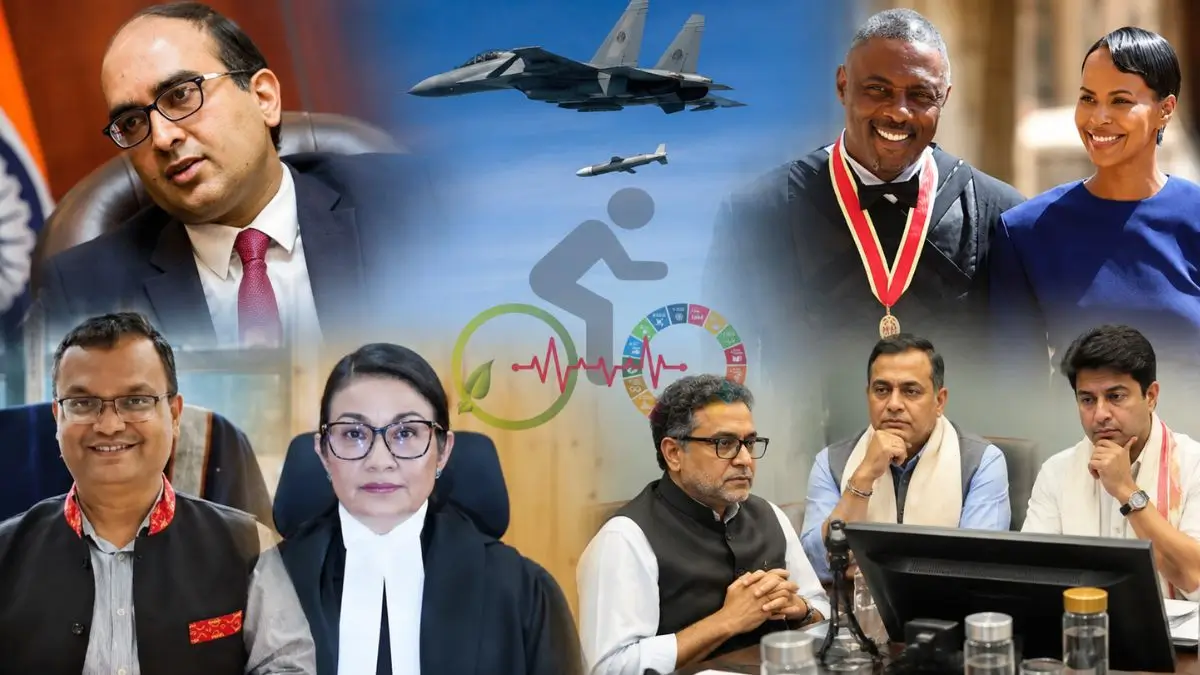
Q1. Smt. Justice Meenakshi Madan Rai, previously a senior judge of the Sikkim High Court, has been officially appointed by the President of India as the new Chief Justice of which High Court with effect from June 5, 2026?
(a) Gauhati High Court
(b) Patna High Court
(c) Calcutta High Court
(d) Allahabad High Court
(e) Delhi High Court
Answer: b
Solution:
- The President of India, in exercise of the powers conferred by the Constitution and in consultation with the Chief Justice of India, has appointed Justice Meenakshi Madan Rai as the Chief Justice of the Patna High Court.
- Justice Meenakshi Madan Rai was serving as a Judge of the Sikkim High Court prior to her elevation.
- She will assume office as the Chief Justice of the Patna High Court with effect from 5 June 2026.
- The appointment follows the retirement of Justice Sangam Kumar Sahoo, who is scheduled to retire on 4 June 2026.
- With this appointment, Justice Meenakshi Madan Rai will become the head of the Patna High Court and oversee the administration and judicial functioning of one of India’s oldest High Courts.
Q2. The ‘VYOMA Innovation Challenge’, launched in June 2026 to promote open-source, voice-first, and offline AI solution models, is powered by which division of the Ministry of Electronics and IT (MeitY)?
(a) National Informatics Centre (NIC)
(b) Digital India BHASHINI Division (DIBD)
(c) Centre for Development of Advanced Computing (C-DAC)
(d) Unique Identification Authority of India (UIDAI)
(e) Indian Computer Emergency Response Team (CERT-In)
Answer: b
Solution:
- The Digital India BHASHINI Division (DIBD), under the Digital India Corporation, Ministry of Electronics and Information Technology (MeitY), has launched the VYOMA Innovation Challenge in collaboration with Current AI and Kalpa Impact.
- The initiative aims to promote the development of open-source, multilingual, voice-first Artificial Intelligence (AI) solutions that can function effectively in offline and low-connectivity environments.
- The challenge builds upon Sunno Sutra, a multilingual, voice-first, open-source handheld AI reference device jointly developed by BHASHINI and Current AI.
- Sunno Sutra was unveiled during the IndiaAI Impact Summit 2026.
- The device serves as a reference platform that combines multilingual language technologies with on-device AI capabilities, enabling conversational AI experiences in multiple Indian languages without relying on cloud-based infrastructure.
- The VYOMA Innovation Challenge seeks to encourage innovators, developers, researchers, and startups to create practical AI solutions that address challenges related to:
- Language accessibility
- Digital literacy
- Connectivity limitations
- The initiative leverages BHASHINI’s multilingual AI infrastructure along with Current AI’s expertise in open-source technologies to foster inclusive and accessible AI innovation.
Q3. Mission ‘Senehjori’, launched in June 2026 to create a globally competitive luxury textile ecosystem, is entirely focused on upgrading which unique variety of indigenous Indian silk?
(a) Mulberry Silk
(b) Eri Silk
(c) Tasar Silk
(d) Muga Silk
(e) Anaphe Silk
Answer: d
Solution:
- Union Minister for Development of North Eastern Region (MDoNER) Jyotiraditya M. Scindia, along with the Chief Minister of Assam, launched Mission “Senehjori” – Assam Muga Silk USP, a comprehensive initiative aimed at transforming Assam’s Muga silk sector into a globally competitive luxury textile ecosystem.
- The mission is being implemented by the Ministry of Development of North Eastern Region in convergence with the Government of Assam, the Central Silk Board, the Ministry of Textiles, and other central ministries and organizations.
- The initiative seeks to strengthen the entire Muga silk value chain, including host-plant cultivation, silkworm seed production, reeling, weaving, branding, export promotion, digital traceability, and tourism development.
- Muga silk, known as the world’s only naturally golden silk, is also India’s first GI-tagged silk and supports the livelihoods of nearly 2.6 lakh rearer and weaver families in Assam.
- Despite its global recognition and rarity, the Muga silk sector remains underutilized in terms of value realization. Mission Senehjori aims to bridge this gap by creating a premium, traceable, and export-oriented Muga silk economy.
- The mission adopts a cluster-based approach covering major Muga silk-producing districts of Assam, including Jorhat, Sivasagar, Lakhimpur, Dhemaji, Dibrugarh, Tinsukia, Majuli, and Sualkuchi.
- Key interventions under the mission include strengthening host-plant ecology, establishing modern reeling infrastructure, promoting Farmer Producer Organisations (FPOs), creating Common Facility Centres (CFCs), ensuring GI authentication, and expanding global market access under the unified brand identity “Senehjori”.
- The mission envisages an estimated investment of ₹396–411 crore over a three-year period, including ₹136–151 crore from MDoNER.
- The initiative aims to create a globally recognized luxury Muga silk ecosystem, improve income and value realization for producers, and position Assam as a leading destination for silk-based cultural and experiential tourism.
Q4. The ‘RudraM-II’ weapon system, flight-tested by the DRDO and the Indian Air Force in June, 2026, belongs to which of the following core missile classifications?
(a) Surface-to-Air Missile (SAM)
(b) Air-to-Surface Missile (Anti-Radiation / Strike)
(c) Anti-Tank Guided Missile (ATGM)
(d) Intercontinental Ballistic Missile (ICBM)
(e) Submarine-Launched Cruise Missile (SLCM)
Answer: b
Solution:
- In June, 2026, the Defence Research and Development Organisation (DRDO) and the Indian Air Force (IAF) successfully conducted flight tests of the RudraM-II Air-to-Surface Missile from an airborne platform.
- The tests were carried out under extreme release conditions, validating the performance and reliability of the missile’s critical systems and flight trajectory.
- After launch, the missile accurately navigated to a predefined target and achieved pin-point precision, successfully meeting all mission objectives.
- The successful tests were confirmed through flight data collected by various range instrumentation systems deployed by the Integrated Test Range (ITR), Chandipur.
- RudraM-II has been indigenously developed by the Research Centre Imarat, which served as the nodal DRDO laboratory for the project.
- The missile was developed in collaboration with several DRDO laboratories, including:
- Defence Research and Development Laboratory
- High Energy Materials Research Laboratory
- Armament Research and Development Establishment
- Integrated Test Range
- Significant contributions were also made by development-cum-production partners, industry stakeholders, and organizations such as:
- Hindustan Aeronautics Limited
- Regional Centre for Military Airworthiness
- Missile System Quality Assurance Agency
- The successful test marks another major milestone in India’s efforts to strengthen indigenous defence capabilities and enhance the operational effectiveness of its air power.
Q5. The flagship national programme ‘Navachar Mantra’, launched in June 2026 to mentor and scale grassroots innovators, is an initiative of which Union Ministry?
(a) Ministry of Science and Technology
(b) Ministry of Skill Development and Entrepreneurship
(c) Ministry of Commerce and Industry
(d) Ministry of Micro, Small and Medium Enterprises (MSME)
(e) Ministry of Rural Development
Answer: b
Solution:
- Union Minister for Skill Development and Entrepreneurship Jayant Chaudhary launched Navachar Mantra, a flagship national programme, in New Delhi on 3 June 2026.
- The programme aims to identify, nurture, mentor, and scale grassroots innovators and entrepreneurs across the country.
- Navachar Mantra seeks to support promising innovators by providing them with access to mentorship, resources, industry networks, and national-level platforms, enabling them to transform innovative ideas into impactful and sustainable ventures.
- The initiative has been designed to create stronger linkages between grassroots entrepreneurs and key stakeholders, including policymakers, industry leaders, investors, and domain experts.
- It will facilitate knowledge-sharing, collaboration, and capacity-building opportunities to help innovators refine their ideas and expand their reach.
- The programme will also provide visibility through national platforms and create opportunities for pilot projects, funding support, market access, and business expansion.
Q6. Who has been appointed as the new Chairperson of the Central Board of Secondary Education (CBSE) by the Appointments Committee of the Cabinet?
(a) Lokhande Prashant Sitaram
(b) Rahul Singh
(c) Varun Bhardwaj
(d) Himanshu Gupta
(e) Vineet Joshi
Answer: a
Solution:
- Senior IAS officer Lokhande Prashant Sitaram has been appointed as the new Chairperson of the Central Board of Secondary Education (CBSE).
- Prior to this appointment, he was serving as Additional Secretary in the Ministry of Home Affairs.
- He succeeds Rahul Singh, who has been transferred to the Department of Agriculture and Farmers Welfare as Additional Secretary.
- The Government has also appointed Varun Bhardwaj as the new Secretary of CBSE.
- Varun Bhardwaj was previously serving as Director in the Department of Higher Education.
- He replaces Himanshu Gupta, who was serving as Secretary of CBSE.
- The appointments were approved by the Appointments Committee of the Cabinet (ACC).
Q7. The government has constituted a one-member committee in June 2026 to inquire into CBSE’s procurement of services for which specific technological evaluation system?
(a) Computer-Based Testing (CBT)
(b) On-Screen Marking (OSM) System
(c) Automated Biometric Attendance (ABA)
(d) Optical Character Recognition (OCR) Tabulation
(e) Blockchain Degree Verification
Answer: b
Solution:
- The Central Government has constituted a one-member committee to inquire into matters related to the procurement of services for the On-Screen Marking (OSM) system by the Central Board of Secondary Education.
- The committee will be chaired by S. Radha Chauhan, Chairperson of the Capacity Building Commission.
- The inquiry will examine issues associated with the procurement process undertaken for the OSM system used by CBSE.
- The committee has been tasked with conducting a detailed review and submitting its findings and recommendations to the Department of Personnel and Training (DoPT).
- The committee is required to submit its report within one month from the date of its constitution.
- The move reflects the Government’s commitment to ensuring transparency, accountability, and adherence to due procedures in public procurement processes.
Q8. In June, 2026, Shri Vipul, a senior diplomat of the 1998 batch of the Indian Foreign Service (IFS) who was serving as India’s envoy to the State of Qatar, has been officially appointed by the Ministry of External Affairs as the next Ambassador of India to which country?
(a) United Arab Emirates (UAE)
(b) Kingdom of Saudi Arabia
(c) Arab Republic of Egypt
(d) Sultanate of Oman
(e) State of Kuwait
Answer: b
Solution:
In June , 2026, Shri Vipul (IFS:1998), presently Ambassador of India to the State of Qatar, has been appointed as the next Ambassador of India to the Kingdom of Saudi Arabia.
Q9. What is the official global theme designated for the celebration of World Bicycle Day in 2026?
(a) Cycling for a Greener Future
(b) Sustainable Mobility for All
(c) Pedaling Towards Net-Zero
(d) Affordable Transport, Healthy Lives
(e) Smart Cities, Active Wheels
Answer: a
Solution:
- World Bicycle Day is observed every year on 3 June to recognize the bicycle as a simple, affordable, reliable, and environmentally friendly mode of transportation.
- The day highlights the bicycle’s contribution to sustainable development, environmental protection, health promotion, and social inclusion.
- The theme for World Bicycle Day 2026 is “Cycling for a Greener Future.”
- The theme emphasizes the role of bicycles in reducing carbon emissions, easing traffic congestion, promoting sustainable mobility, and creating healthier urban environments.
- Cycling is widely recognized as an eco-friendly mode of transport that supports climate action while improving physical and mental well-being.
- On 12 April 2018, the United Nations General Assembly (UNGA) adopted a resolution proclaiming 3 June as World Bicycle Day.
- The resolution was spearheaded by Turkmenistan and co-sponsored by 56 other countries.
- The United Nations recognized the bicycle as a sustainable, affordable, accessible, and clean means of transportation that contributes to health, education, and sustainable development goals.
Q10. In June, 2026, landmark ₹9,585 crore vehicular pollution mitigation scheme approved by the Cabinet is funded through which specific organization?
(a) Central Pollution Control Board (CPCB)
(b) National Capital Region Planning Board (NCRPB)
(c) NITI Aayog Green Fund
(d) National Highways Authority of India (NHAI)
(e) Delhi Pollution Control Committee (DPCC)
Answer: b
Solution:
- In June 2026, The Union Cabinet, chaired by Prime Minister Narendra Modi, has approved a landmark two-year scheme aimed at reducing air pollution in the Delhi–NCR region and promoting cleaner mobility.
- The scheme will be funded through the National Capital Region Planning Board under the Ministry of Housing and Urban Affairs and implemented by the Ministries of Road Transport & Highways and Petroleum & Natural Gas in collaboration with the Governments of Delhi, Haryana, Rajasthan, and Uttar Pradesh.
- The scheme has a total financial outlay of ₹9,585 crore, comprising ₹5,041 crore from the Central Government and approximately ₹1,601 crore in tax concessions from participating states.
- The initiative aims to encourage owners of trucks and buses registered in Delhi-NCR that comply with BS-IV or older emission norms to replace them with BS-VI-compliant vehicles or electric vehicles (EVs).
- The scheme is expected to benefit around 2.07 lakh vehicle owners, including approximately 1.91 lakh trucks and 16,329 buses operating in the Delhi-NCR region.
- According to studies conducted by the Automotive Research Association of India and The Energy and Resources Institute, the transport sector contributes significantly to air pollution in Delhi-NCR, accounting for 14% of PM2.5 emissions, 40% of carbon monoxide emissions, and 63% of nitrogen oxide emissions.
- Trucks and buses contribute nearly 36% of PM2.5 emissions despite constituting only about 3% of the total vehicle fleet.
- Under the scheme, BS-III and older vehicles must be scrapped at Registered Vehicle Scrapping Facilities, while BS-IV vehicles may either be scrapped or sold outside NCR in non-NCAP cities and towns.
- Vehicle owners must purchase and register a BS-VI-compliant or electric vehicle within NCR to avail benefits under the scheme.
- In Delhi, newly purchased Light Goods Vehicles (LGVs) under the scheme must be electric, while buses must be either BS-VI CNG or electric.
- Government-owned vehicles are not eligible under the scheme.
Benefits Under the Scheme
- The Central Government will provide a 5% interest subvention on vehicle loans for five years.
- Beneficiaries will receive monthly fuel vouchers worth up to ₹4,800, depending on the category of vehicle.
- Additional lump-sum incentives will be available for the purchase of electric vehicles or through trading of Certificates of Deposit.
- State Governments will waive registration fees and provide up to 100% motor vehicle tax concessions for new vehicles and 50% tax concessions for used vehicles for a period of ten years.
- Pending liabilities on old vehicles participating in the scheme will also be waived by the respective State Governments.
- Participating automobile manufacturers (OEMs) will offer an 8% discount on the ex-showroom price of eligible vehicles.
Digital Implementation and Monitoring
- The scheme will be implemented through a fully digital integrated portal enabling real-time eligibility verification, automated interest subvention claims, monthly fuel voucher credits, and monitoring of pollution reduction outcomes.
- Benefits provided by the Central Government will continue for five years from the registration date of the new vehicle, ensuring long-term impact beyond the two-year enrollment period.
- An Empowered Committee, chaired by the Cabinet Secretary, will oversee implementation and monitoring of the scheme.
- At the district level, District Collectors and District Magistrates will be responsible for implementation and supervision.








 Daily Current Affairs and GK Updates (9t...
 Daily Current Affairs Quiz 9th October, ...
 Daily Current Affairs and GK Updates (8t...