Daily Current Affairs: 8 August, 2026
Q1. Who has been appointed as the next High Commissioner of India to the Kingdom of Eswatini in August 2026?
(a) Devesh Uttam
(b) T. Armstrong Changsan
(c) Anand Prakash
(d) Manish Gupta
(e) Rudra Gaurav Shresth
Answer: c
Solution:
In August, 2026, Shri Anand Prakash (YOA: 2009), has been appointed as the next High Commissioner of India to the Kingdom of Eswatini.
Q2. Which Indian Grandmaster won his maiden Grand Chess Tour title by clinching the Saint Louis Rapid & Blitz 2026 tournament in August 2026?
(a) D. Gukesh
(b) Arjun Erigaisi
(c) R. Praggnanandhaa
(d) Vidit Gujrathi
(e) Nihal Sarin
Answer: c
Solution:
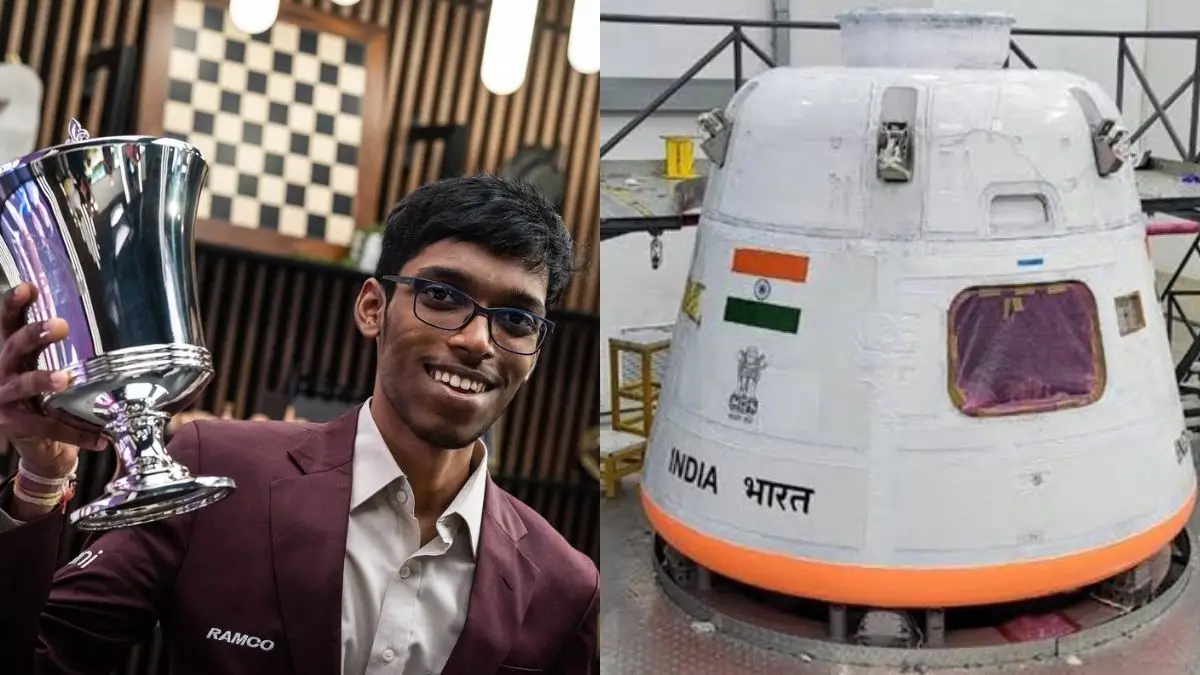
- Indian Grandmaster R. Praggnanandhaa won the Grand Chess Tour St. Louis Rapid and Blitz 2026 title in the United States.
- The 20-year-old secured the championship after drawing his penultimate-round game against Uzbekistan’s Grandmaster Javokhir Sindarov.
- Praggnanandhaa finished the tournament with 23 points out of a possible 35 to clinch the title.
- Earlier, in June 2026, Praggnanandhaa created history by winning the Norway Chess 2026 title in Oslo.
- He secured the Norway Chess 2026 crown by defeating Germany’s Grandmaster Vincent Keymer in the tenth and final round.
Q3. What is the total financial outlay approved by the Union Cabinet for GOBARdhan – National Circular Bioenergy Scheme, and what is its implementation period?
(a) ₹15,000 crore for FY 2025–26 to FY 2029–30
(b) ₹23,731 crore for FY 2026–27 to FY 2035–36
(c) ₹30,000 crore for FY 2024–25 to FY 2033–34
(d) ₹18,500 crore for FY 2026–27 to FY 2031–32
(e) ₹25,000 crore for FY 2025–26 to FY 2035–36
Answer: b
Solution:
- The Union Cabinet, chaired by Prime Minister Narendra Modi, has approved GOBARdhan – the National Circular Bioenergy Scheme with a total outlay of ₹23,731 crore.
- The scheme will be implemented from FY 2026–27 to FY 2035–36.
- GOBARdhan aims to transform agricultural residue, cattle dung, press mud, municipal organic waste and other biomass resources into Compressed Biogas (CBG), organic manure, rural income and economic value.
- The scheme seeks to establish Compressed Biogas (CBG) as a major pillar of India’s future energy mix.
- It aims to increase domestic CBG production nearly ten-fold, mobilise large-scale private investment and create a circular bioeconomy across the country.
- The scheme provides a comprehensive support framework through assured demand, stable pricing, capital assistance, pipeline infrastructure, credit support and technology development.
Six Growth Engines under GOBARdhan
- Assured CBG Offtake: The scheme establishes a dedicated CBG offtake framework to ensure a reliable market for producers through procurement by City Gas Distribution (CGD) entities.
- The notified CBG Obligation (CBGO) trajectory is 3% in FY 2026–27, 4% in FY 2027–28, and 5% from FY 2028–29 onwards in the CNG (Transport) and PNG (Domestic) segments.
- Stable CBG Pricing Framework: The scheme introduces an administered CBG price of ₹2,110 per Metric Million British Thermal Unit (MMBTU) under a government-backed pricing mechanism with a minimum ten-year horizon.
- Capital Assistance: Eligible greenfield CBG projects will receive capital assistance of up to ₹2 crore per Ton Per Day (TPD) of installed CBG capacity.
- Capital assistance will also support feedstock aggregation, organic manure processing, value addition infrastructure, and brownfield expansion projects.
- Development of Pipeline Infrastructure: The scheme supports cluster-based and standalone pipeline infrastructure connecting CBG plants with trunk pipelines and City Gas Distribution (CGD) networks.
- Credit Guarantee Support: A dedicated Credit Guarantee mechanism will facilitate institutional credit for MSME-based CBG projects, reduce collateral requirements and encourage participation by MSMEs, women entrepreneurs and first-time developers.
- CBG Ecosystem Challenge Fund: The scheme establishes a dedicated CBG Ecosystem Challenge Fund to strengthen district-level implementation through feedstock resource mapping, aggregation infrastructure, district-level planning, technology adoption, organic manure value addition, capacity building, and stakeholder awareness.
Q4. Under the Reserve Bank of India’s (RBI) Scale Based Regulation (SBR) framework, what is the regulatory classification of Tata Sons Private Limited?
(a) Base Layer NBFC (NBFC-BL)
(b) Middle Layer NBFC (NBFC-ML)
(c) Top Layer NBFC (NBFC-TL)
(d) Upper Layer NBFC (NBFC-UL)
(e) Primary Dealer Non-Banking Financial Company (PD-NBFC)
Answer: d
Solution:
- The Reserve Bank of India (RBI) has classified Tata Sons Private Limited as an Upper Layer Non-Banking Financial Company (NBFC-UL) under its principle-based identification framework for 2026–27.
- The classification has been made under the Scale Based Regulation (SBR) Framework for Non-Banking Financial Companies (NBFCs).
- Following this classification, Tata Sons will be subject to enhanced regulatory and supervisory oversight by the RBI.
- The company will also be required to comply with listing requirements within three years, in accordance with RBI regulations applicable to Upper Layer NBFCs.
About the Scale Based Regulation (SBR) Framework
- The Scale Based Regulation (SBR) Framework was introduced by the Reserve Bank of India (RBI) to regulate NBFCs according to their size, complexity and systemic importance.
- The framework classifies NBFCs into four regulatory layers.
- Base Layer (NBFC-BL): Small NBFCs subject to basic regulatory requirements.
- Middle Layer (NBFC-ML): Larger deposit-taking NBFCs and other systemically significant NBFCs.
- Upper Layer (NBFC-UL): Systemically important NBFCs that are subject to bank-like regulatory and supervisory norms.
- Top Layer (NBFC-TL): Reserved for NBFCs that pose exceptional systemic risks.
- Under the 2026–27 principle-based framework, NBFCs with assets of ₹1 lakh crore or more qualify for identification as Upper Layer NBFCs, subject to RBI assessment.
Q5. Which state government launched the “Chief Minister’s Yarn Bank Scheme” on National Handloom Day 2026 to provide natural yarn at subsidized rates to weavers?
(a) Assam
(b) Manipur
(c) Nagaland
(d) Meghalaya
(e) Mizoram
Answer: c
Solution:
- Nagaland Chief Minister Neiphiu Rio virtually inaugurated the Chief Minister’s Yarn Bank Scheme on the occasion of National Handloom Day.
- The scheme aims to strengthen Nagaland’s handloom sector and improve the livelihoods of weavers.
- The Yarn Bank has been established at the District Industries Centre, located in the State Industrial Area, Toluvi, Dimapur.
- The initiative addresses the long-standing challenge of access to quality natural yarn at affordable prices.
- Under the scheme, cotton, eri silk, muga silk, bamboo fibre and other natural fibre blends will be made available to weavers at mill-gate prices.
- The Government of Nagaland will provide a 15% subsidy on the yarn supplied through the Yarn Bank.
- The scheme is expected to benefit 5,000 to 10,000 weavers annually.
- Beneficiaries will be able to procure yarn directly through a transparent and reliable distribution system.
Q6. Which statutory body under the Ministry of Commerce & Industry co-organized the BIOFACH INDIA 2026 exhibition in Greater Noida?
(a) MPEDA
(b) Spices Board
(c) NABARD
(d) FSSAI
(e) APEDA
Answer: e
Solution:
- The Agricultural and Processed Food Products Export Development Authority (APEDA), under the Ministry of Commerce & Industry, in collaboration with Nuernberg Messe India, is organising BIOFACH INDIA 2026.
- The event is being held from 6–8 August 2026 at the India Expo Centre & Mart (IEML), Greater Noida, Delhi-NCR.
- BIOFACH INDIA 2026 serves as a premier platform for stakeholders from the organic, natural and sustainable food sectors.
- The exhibition brings together producers, exporters, buyers, industry experts, policymakers and other stakeholders from across the organic food value chain.
- The event provides a comprehensive platform for trade promotion, knowledge exchange, business networking, and the promotion of organic and sustainable food products.
Q7. Who among the following has become the first woman fighter pilot in India to clear the prestigious Fighter Combat Leader (FCL) course at TACDE Gwalior?
(a) Avani Chaturvedi
(b) Shivangi Singh
(c) Bhawana Kanth
(d) Mohana Singh
(e) Deepika Misra
Answer: c
Solution:
- Indian Air Force (IAF) Squadron Leader Bhawana Kanth became the first woman pilot in India to successfully complete the Fighter Combat Leader (FCL) Course on 6 August 2026.
- She completed the course at the Tactics and Air Combat Development Establishment (TACDE) in Gwalior, Madhya Pradesh, the IAF’s premier institution for advanced air combat training.
- The achievement makes her India’s first woman “Top Gun” combat pilot, marking a significant milestone in the integration of women into combat aviation leadership roles.
Q8. The Tenth BRICS Industry Ministers’ Meeting under India’s BRICS Chairship 2026 was hosted in which Indian city in August , 2026?
(a) Jaipur
(b) Bengaluru
(c) New Delhi
(d) Ahmedabad
(e) Hyderabad
Answer: a
Solution:
- The Tenth BRICS Industry Ministers’ Meeting was held on 6 August 2026 in Jaipur, Rajasthan, under India’s BRICS Chairship 2026.
- The meeting brought together Industry Ministers and senior representatives from BRICS member countries under the BRICS Partnership on New Industrial Revolution (PartNIR).
- The meeting was held under the theme “Building for Resilience, Innovation, Cooperation and Sustainability.”
- It provided a platform for member countries to deliberate on strengthening industrial capabilities, leveraging technological transformation, and enhancing cooperation for sustainable industrial development.
- The meeting concluded successfully with the adoption of a Joint Declaration under the BRICS Partnership on New Industrial Revolution (PartNIR).
- The Joint Declaration reaffirms the commitment of BRICS countries towards resilient, innovation-driven, and sustainable industrial growth.
About BRICS Partnership on New Industrial Revolution (PartNIR)
- The BRICS Partnership on New Industrial Revolution (PartNIR) is a cooperation mechanism aimed at strengthening industrial collaboration, innovation, digital transformation, technology exchange, and capacity building among BRICS countries.
- It promotes collaboration in areas such as advanced manufacturing, digital economy, Industry 4.0, innovation, and sustainable industrial development.
Q9. Pawan Hans Limited (PHL) signed an MoU with Noemi Aerospace (Elfly AS) to explore electric seaplane technologies. In which country is Noemi Aerospace headquartered?
(a) Sweden
(b) Norway
(c) Denmark
(d) Finland
(e) Germany
Answer: b
Solution:
- Pawan Hans Limited (PHL) signed a non-binding Memorandum of Understanding (MoU) with Noemi Aerospace (Elfly AS), Norway in August 2026 to explore collaboration in next-generation sustainable aviation technologies, including electric seaplane solutions.
- The MoU was signed in the presence of Union Minister of Civil Aviation Ram Mohan Naidu Kinjarapu.
- The proposed collaboration aims to establish a framework for cooperation in electric seaplane technologies, skill development and capacity building, technical knowledge sharing and workshops, and feasibility studies.
- The initiative aligns with the Government’s vision of strengthening indigenous capabilities and promoting emerging technologies in India’s civil aviation sector.
- Noemi Aerospace (Elfly AS) is headquartered in Bergen, Norway, and is engaged in the development of next-generation electric seaplane technology.
- The company’s development programme is supported by funding from the Government of Norway.
- The collaboration reflects Pawan Hans Limited’s commitment to innovation, operational excellence and strategic international partnerships for the growth of India’s aviation ecosystem.
Q10. Which agency is responsible for designing, constructing, and implementing the Namo Bharat Regional Rapid Transit System (RRTS) across the National Capital Region?
(a) Delhi Metro Rail Corporation (DMRC)
(b) National Capital Region Transport Corporation (NCRTC)
(c) Indian Railways Station Development Corporation (IRSDC)
(d) National Highways Authority of India (NHAI)
(e) Rail Vikas Nigam Limited (RVNL)
Answer: b
Solution:
- The 82.15 km Delhi–Ghaziabad–Meerut Namo Bharat Regional Rapid Transit System (RRTS) Corridor, India’s first Namo Bharat RRTS corridor, has been fully operational since February 2026.
- The corridor includes a 23 km Meerut Metro network, operating on the same infrastructure as the Namo Bharat RRTS.
- The National Capital Region Transport Corporation Limited (NCRTC) is the implementing agency for the Namo Bharat RRTS project.
- Under Phase-I, three Namo Bharat RRTS corridors have been prioritised:
- Delhi–Ghaziabad–Meerut
- Delhi–Gurugram–Alwar
- Delhi–Panipat
- The Delhi–Ghaziabad–Meerut corridor is the first corridor to become fully operational.
- NCRTC has submitted Detailed Project Reports (DPRs) for four additional Namo Bharat RRTS corridors:
- Delhi–Karnal
- Delhi–Bawal
- Bawal–Behror
- Ghaziabad–Noida International Airport
- The proposed Namo Bharat RRTS projects are capital-intensive and undergo detailed examination at various levels of the Central Government before financial assistance is considered.
- Financial support from the Central Government is provided based on the feasibility of the project and the availability of resources.






 Daily Current Affairs and GK Updates (9t...
 Daily Current Affairs Quiz 9th October, ...
 Daily Current Affairs and GK Updates (8t...