
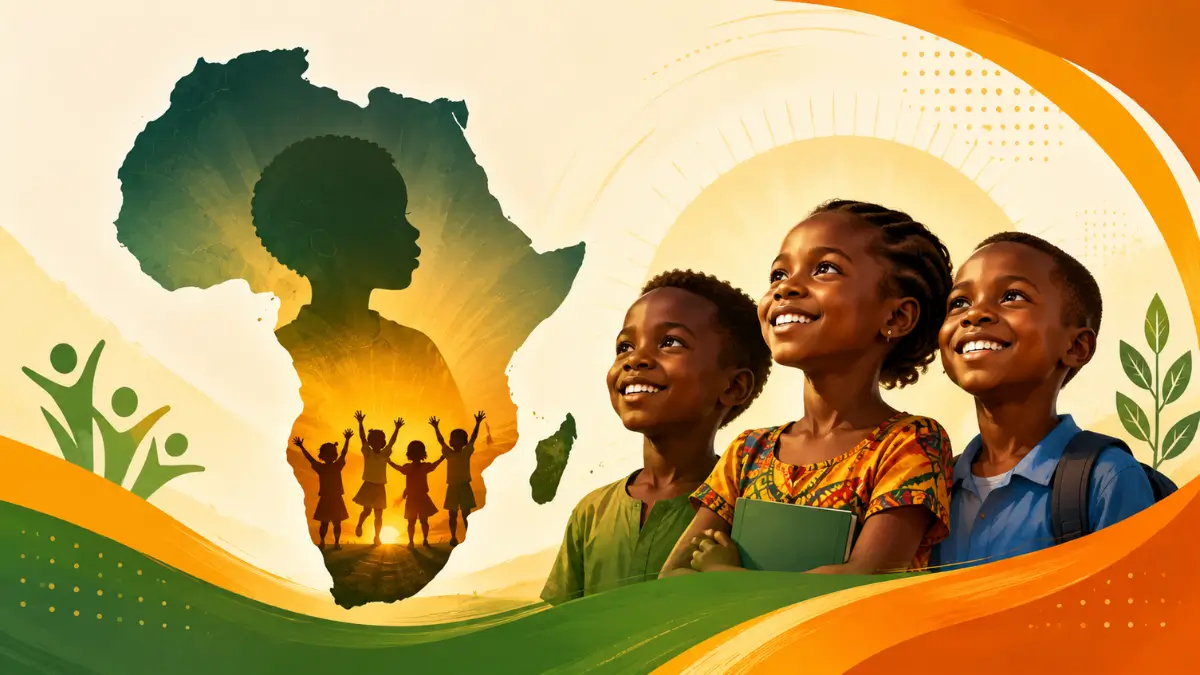
The International Day of the African Child is observed every year on 16 June to raise awareness about the rights, welfare, education, and development of children across Africa. The day serves as a reminder of the challenges faced by millions of African children and highlights the need for equal access to education, healthcare, protection, and opportunities for growth.
International Day of the African Child 2026
Governments, educational institutions, international organizations, and communities use this occasion to advocate for policies that safeguard children’s rights and well-being. The observance also commemorates the courage shown by South African students during the Soweto Uprising of 1976. Their struggle for quality education became a symbol of the broader fight for children’s rights and social justice across the African continent.
International Day of the African Child 2026 Theme
For 2026, the African Committee of Experts on the Rights and Welfare of the Child (ACERWC) has chosen a theme of urgent continental significance:
“Ensuring Universal Access to Water, Sanitation and Hygiene for Every Child in Africa”
The choice is deliberate and deeply rooted in the African Charter on the Rights and Welfare of the Child (ACRWC). Article 14 of the Charter explicitly obliges States Parties to:
- Ensure the provision of adequate nutrition and safe drinking water
- Ensure access to hygiene and sanitation services
- Ensure all sectors of society are informed and supported in basic child health, nutrition, hygiene and environmental sanitation
History of the International Day of the African Child
The origins of this observance can be traced to 16 June 1976, when thousands of black schoolchildren in Soweto, South Africa, participated in a peaceful protest against the poor quality of education and the compulsory use of Afrikaans as a medium of instruction. The protest was met with violence, resulting in the deaths and injuries of many students.
- The tragic event drew global attention to educational inequality and human rights issues in South Africa.
- To honour the bravery of these students and to promote children’s rights across Africa, the Organisation of African Unity (OAU), now known as the African Union, established the International Day of the African Child in 1991.
Significance of International Day of the African Child
The day highlights the importance of ensuring that every child has access to quality education, healthcare, protection from exploitation, and a safe environment for growth.
- Promote children’s rights across Africa.
- Encourage access to quality education.
- Address issues of child labour and exploitation.
- Improve healthcare and nutrition for children.
- Support gender equality in education.
- Raise awareness about child protection measures.
- Encourage youth participation in decision-making.
The Interconnectedness of WASH and Child Rights
(Water, Sanitation and Hygiene (WASH) for Every Child)
Access to water, sanitation and hygiene is not a standalone issue. It is the foundation upon which other rights rest:
- Right to Health: Safe water prevents diarrhoeal diseases, reduces infant mortality, and underpins infection control in health facilities
- Right to Nutrition: Water security is integral to food security; safe water is needed for breastfeeding, food preparation, and preventing malnutrition
- Right to Education: Adequate WASH in schools improves attendance, retention, and learning outcomes — especially for girls
- Right to Protection: Safe, private sanitation reduces exposure to gender-based violence and exploitation
- Right to Dignity: Clean water and functioning toilets are prerequisites for human dignity, particularly for girls and children with disabilities
Challenges Faced by African Children
While significant improvements have been made over the years, many children still encounter obstacles that affect their development and future prospects.
- Limited access to quality education.
- Poverty and economic hardship.
- Child labour and child trafficking.
- Malnutrition and healthcare gaps.
- Armed conflicts and displacement.
- Gender-based discrimination.
- Lack of access to clean water and sanitation.







 Daily Current Affairs and GK Updates (9t...
 PNB Promotion Exam Notification 2026 Out...
 RBI Assistant LPT Exam Date 2026 Out, Ch...