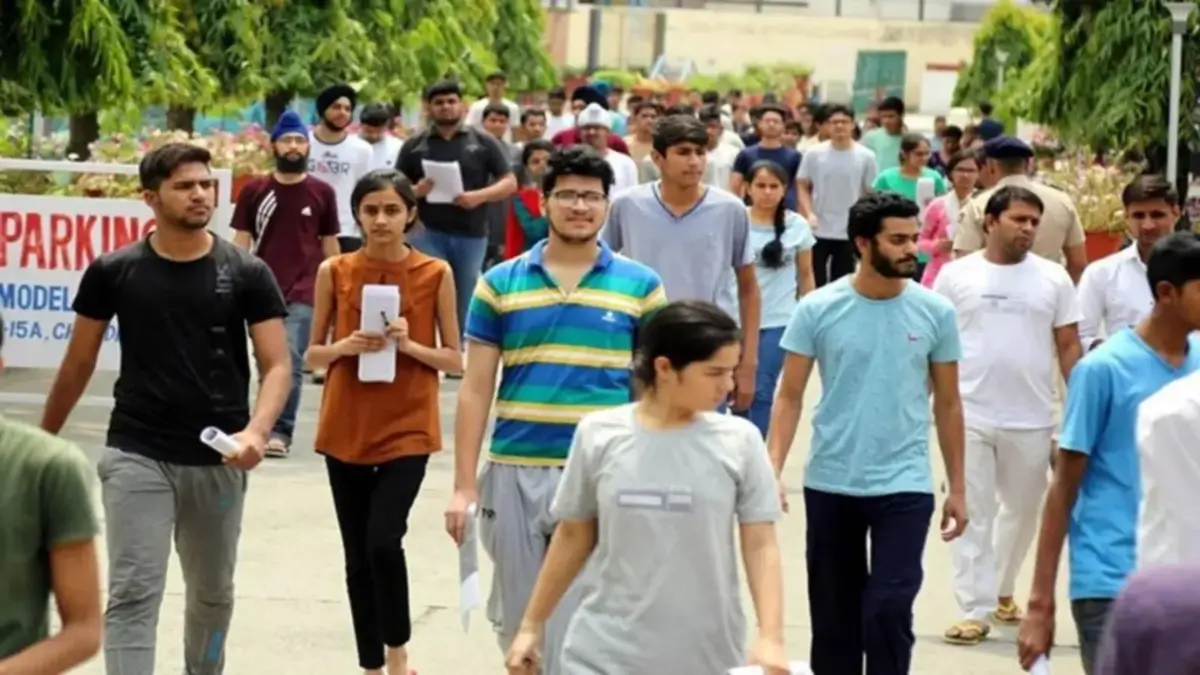
The JAIIB IE & IFS Exam Analysis 2026 for the examination conducted on 1 November 2026 provides insights into the overall difficulty level, types of questions asked, and important topics covered in the paper. Based on candidates’ feedback, the overall difficulty level of the exam was Moderate to Tough.
JAIIB IE & IFS Exam Analysis 2026
Several questions were lengthy and time-consuming, requiring candidates to spend additional time understanding and solving them. The analysis will help candidates understand the exam pattern, evaluate their performance, and identify the important topics asked in the examination.
- Overall Difficulty Level: Moderate to Tough
- Nature of Questions: Conceptual and case-based with tough options
- Time Management: Moderate, with some lengthy questions
Share Your JAIIB IE & IFS Result 2026
JAIIB IE & IFS Shift 1 Exam Analysis 2026
These are memory-based questions from Shift 1 and may not reproduce the exact wording used in the examination.
1. Banking Regulations and RBI
1. FDI Limit in Private Banks: Foreign Direct Investment limits applicable to private sector banks.
2. RBI Board Composition: Number of members in the RBI Central Board and its composition.
3. Section 22 of RBI Act: Provisions related to the issue of banknotes by RBI.
4. RBI Act, 1934: Important provisions and regulations under the Act.
5. Banking Regulation Act: Questions based on important provisions of the Banking Regulation Act.
6. Full-Time Directors in Banks: Eligibility criteria and rules for appointing full-time directors.
7. RRB Shareholding Pattern: Ownership ratio of Central Government (50%), State Government (15%) and Sponsor Bank (35%).
8. PSL Targets for Weaker Sections: Priority Sector Lending targets and limits for weaker sections in Small Finance Banks (SFBs) and Scheduled Commercial Banks (SCBs).
9. IFCI: Year of establishment and main purpose of the Industrial Finance Corporation of India.
2. Financial Institutions and Banking Schemes
1. NaBFID Board Composition: Structure and number of members on the board of NaBFID.
2. Government Stake in NaBFID: Central Government’s shareholding in the National Bank for Financing Infrastructure and Development.
3. SMILE Scheme: Objectives, eligibility and financial assistance limits under the SMILE scheme.
4. Microfinance Institutions (MFIs): Meaning, functions and important regulations related to MFIs.
5. NARCL (Bad Bank): Bond structure and process of transferring bad loans.
6. EASE Reforms: Full form of EASE (Enhanced Access and Service Excellence) and its objectives.
7. SFURTI Scheme: Full form, objectives and benefits of the scheme.
3. Financial Markets and Investment Products
1. Derivative Products: Identification of derivative financial instruments and their types.
2. Stock Exchanges: Establishment years of BSE (1875), CSE (1908), OTCEI (1990), NSE (1992), Metropolitan Stock Exchange (2012), NSE IFSC (2016) and India INX (2017).
3. Benchmark Rates: Meaning and features of SOFR (Secured Overnight Financing Rate) and SONIA (Sterling Overnight Index Average).
4. REITs: Roles of Sponsor, Trustee and Special Purpose Vehicle (SPV).
5. Green Bonds: Meaning, purpose and features of green bonds.
6. Green Shoe Option: Meaning and purpose of the green shoe option.
7. Factoring: Meaning of single factoring and international factoring.
8. TReDS: Meaning and working of the Trade Receivables Discounting System.
9. Leasing and Hire Purchase: Differences between leasing and hire purchase.
10. LPT: Questions related to the mentioned LPT term and its full form or concept.
11. Insurance Ombudsman: Role, responsibilities and jurisdiction of the Insurance Ombudsman.
12. Insurance Basics: Important rules and concepts related to insurance coverage.
4. Economy, National Income and Financial Calculations
1. GDP Calculation: Questions based on the calculation of Gross Domestic Product.
2. NNP (Net National Product): Meaning, formula and related concepts.
3. Revenue Deficit: Numerical questions based on the calculation of revenue deficit.
4. Fiscal Deficit: Formula and meaning of fiscal deficit.
5. Money Supply: Different measures of money supply, including M1 and M3.
6. M3 Formula: Relationship between M1 and time deposits with banks.
7. CPI and WPI: Meaning, differences and measurement of inflation.
8. Quinary Sector: Meaning of the quinary sector and its role in high-level decision-making.
9. Agriculture Sector: Classification of agriculture under the primary sector.
10. Reason for Migration: Questions related to the causes and reasons for migration.
5. MSME, Agriculture and Economic Classification
1. Medium Enterprise Classification: Investment and annual turnover criteria for classifying a medium enterprise.
2. Agriculture under Primary Sector: Why agriculture is included in the primary sector.
3. Quinary Sector: Activities related to high-level decision-making and specialised services.
6. Government Schemes, Infrastructure and Social Security
1. Parvatmala Pariyojana: Objectives and important features of the scheme.
2. Bharatmala Pariyojana: Objectives related to road and highway infrastructure development.
3. PMSBY: Eligibility, insurance coverage and benefits under Pradhan Mantri Suraksha Bima Yojana.
4. PMJJBY: Eligibility, premium and insurance benefits under Pradhan Mantri Jeevan Jyoti Bima Yojana.
5. Atal Pension Yojana (APY): Eligibility, contribution and pension benefits.
7. Corporate Social Responsibility and Other Topics
1. CSR Rules: Corporate Social Responsibility provisions and applicable penalties.
2. UCRF: Questions related to the UCRF abbreviation and its associated financial or banking concept.
JAIIB IE & IFS Exam Analysis 2026, Shift 1: Video Link
JAIIB IE & IFS Shift 2 Exam Analysis 2026
The JAIIB IE & IFS Shift 2 Exam 2026, conducted on 1 November, was Moderate to Difficult in overall level. Candidates reported that several questions were lengthy and time-consuming, making time management challenging during the examination.
Banking and Financial Regulations
1. Which Act governed banks before the Banking Regulation Act?
2. Under which section of the RBI Act is the authority to issue banknotes provided? (Section 22)
3. What is the minimum number of meetings of the RBI Central Board required per year?
4. Which is NOT a supervisory authority for banking operations of Multi-State Urban Cooperative Banks?
5. What is the minimum net worth required for a bank to establish a subsidiary or joint venture for conducting insurance business with risk participation?
6. What is the meaning of the arm’s length principle in bancassurance?
7. Which categories are covered under Priority Sector Lending (PSL)?
8. Which department administers pension-related matters?
9. Which is the nodal ministry for EPFO?
10. What is the role of PFRDA?
Financial Markets and Investment
11. Which of the following is a private non-bank money market instrument?
12. Which organisation manages money market benchmark rates in India?
13. What is the USDX (US Dollar Index) related to?
14. Which is a benefit of credit rating from the perspective of investors and financial markets?
15. What is VRRR (Variable Rate Reverse Repo)?
16. Who are the sponsors of InvITs?
17. What are the similarities between InvITs and REITs?
18. Which factors encourage investors to choose mutual fund SIPs over bank deposits?
– Technology awareness
– Ease of investment
– Higher returns
Economy and Economic Concepts
19. Revenue Deficit minus Grants-in-Aid for the creation of capital assets is called what?
20. What is the difference between Gross Fiscal Deficit and Net Fiscal Deficit?
21. Which organisation publishes the Consumer Price Index (CPI)?
22. Which of the following is NOT a phase of the business cycle?
23. What are the steps involved in the Hicks Curve Model?
24. What is the IS-LM Curve, particularly in relation to interest rates?
25. How is Purchasing Power Parity (PPP) calculated?
26. Why does India rank higher in PPP but have comparatively lower per capita income?
27. What are the remedies to improve unemployment?
Government Schemes and Initiatives
28. What is Atal Pension Yojana (APY)?
29. What is the Jan Aadhaar mobile application, and which option is used for linking?
30. What is India’s pledge under the One Sun One World One Grid (OSOWOG) initiative?
31. What is the Evergreen Revolution?
32. What is the Gati Model?
33. What is PM Gati Shakti?
34. What is PM SHAKTI?
35. What is Udyan Mitra?
36. What are the 17 Sustainable Development Goals (SDGs)?
37. What is COP26?
Infrastructure and Development
38. What is brownfield infrastructure development?
39. What is hard infrastructure?
40. Who are the major participants in infrastructure financing?
41. Are pension funds used for infrastructure financing?
42. What is Bharatmala Pariyojana?
6. International Organisations
43. What are the major features and functions of the World Bank?
44. Which of the following is a function of the IMF?
7. Insurance and Risk Management
45. If stock worth ₹50 lakh is insured for ₹40 lakh and is completely destroyed by fire, how much compensation will the insurance company pay?
Case Study
46. Candidates reported a case study containing approximately 4–5 questions. The exact questions and case details were not shared.
JAIIB IE & IFS Shift 3 Exam Analysis 2026
The JAIIB IE & IFS Shift 3 Exam 2026 was also Moderate to Difficult, similar to Shifts 1 and 2. The paper included conceptual, calculation-based and case-based questions, with several questions requiring careful understanding.
1. Financial Markets and Banking Products
1. TReDS: Process flow and working mechanism of the Trade Receivables Discounting System.
2. Factoring: Meaning, types and process of factoring.
3. Factoring Units: Meaning and role of factoring units.
4. Derivatives: Case-based questions on derivative products.
5. Government Securities (G-Secs): Coupon rates and related concepts.
6. Bond Valuation: Methods and calculations used for valuing bonds.
7. GST Sahay: Objectives and features of the GST Sahay platform.
2. Banking Regulations and Financial Institutions
8. NaBFID: Board composition and appointment of directors.
9. MFIs: Microfinance Institutions, their functions and regulations.
10. LABs: Local Area Banks and their capital requirements.
11. EASE 7.0: Reforms and objectives related to Viksit Bharat 2047.
3. Economy and National Income
12. IS-LM Model: Conceptual and tricky questions related to the IS-LM model.
13. GDP Theory: Basic concepts and theoretical questions related to GDP.
14. GDP at Base Year (B.Y.): Case-based questions involving GDP calculations.
15. Velocity of Money: Meaning, formula and related economic concepts.
16. FRBM Act: Fiscal Responsibility and Budget Management Act and its objectives.
17. Primary Deficit: Meaning and calculation of primary deficit in the Union Budget.
18. Five-Year Plans (FYPs): Important plans, objectives and their features.
4. Government Schemes and Economic Developments
19. Sustainable Development Goals (SDGs): Important goals and their categories.
20. Golden Revolution: Meaning, period and areas covered under the Golden Revolution.
5. MSME and Business Classification
21. Micro and Small Enterprises: Classification criteria based on investment and annual turnover.
6. Insurance and Financial Products
22. Endowment Insurance: Meaning, features and benefits of endowment policies.
23. LIC: Important concepts and information related to Life Insurance Corporation of India.
Important Topics to Review from the JAIIB IE & IFS Syllabus
Candidates preparing for future attempts can use the following syllabus areas as a revision checklist. These are study areas rather than a prediction of the questions in the November 2026 examination.
- Module A: Indian economy, economic reforms, infrastructure, MSMEs and international institutions
- Module B: Monetary policy, GDP, inflation, money supply, demand and supply
- Module C: RBI, financial institutions, banking regulations, NBFCs and development finance
- Module D: Financial markets, money market instruments, derivatives, mutual funds and insurance


 SIDBI Grade A and B Recruitment 2026 Not...
 IBPS RRB PO Prelims Expected Cut Off 202...
 JAIIB PPB Exam Analysis 2026, 22 Novembe...