
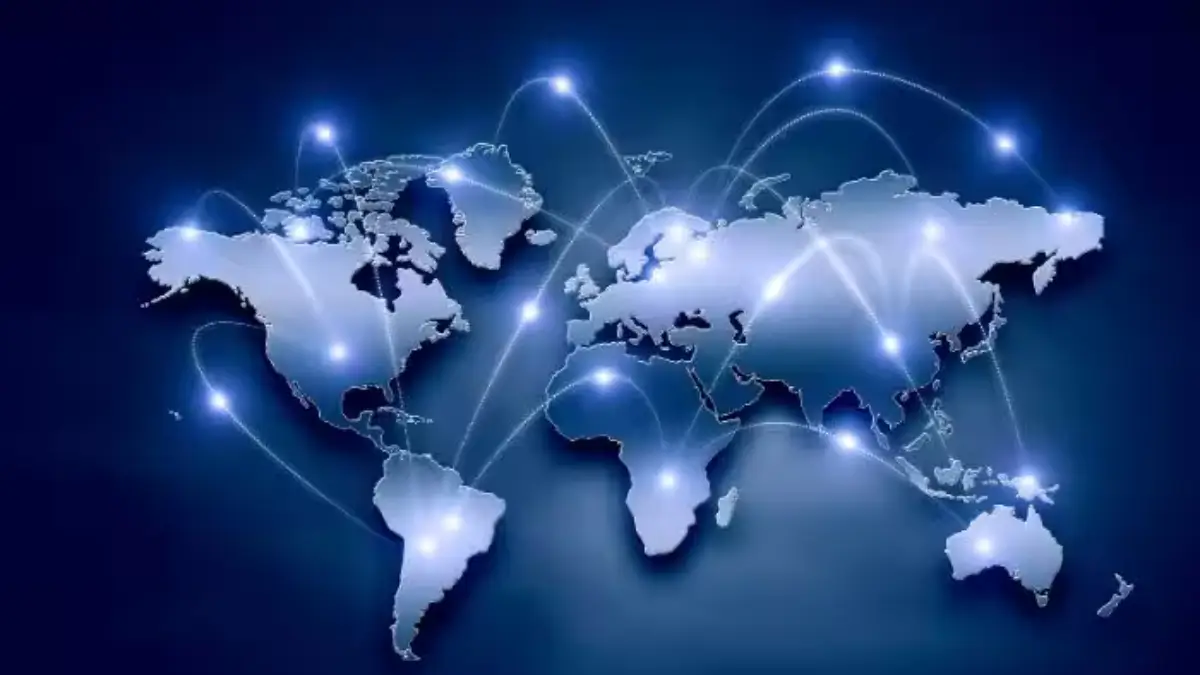
Every year on May 17th, the world pauses to recognize the invisible threads that bind humanity together. From the first telegraph clicks of the 19th century to the quantum communication experiments of today, World Telecommunication Day celebrates the evolution of how we share ideas, emotions, and information.
World Telecommunication Day 2026
As we approach 2026, telecommunication is no longer just about “making a call” or “sending a text.” It is the backbone of the global economy, healthcare, education, and disaster management. In this detailed exploration, we dive into the history, significance, and the future of this pivotal day.
Do you Know?
The ITU is one of the oldest international organizations in the world.
World Telecommunication Day 2026 Theme
The International Telecommunication Union has announced the official theme for 2026:
“Digital lifelines: Strengthening resilience in a connected world”
What “Digital Lifelines” Means
The 2026 theme focuses on the infrastructure that keeps modern civilization functioning — and what happens when it fails. The ITU identifies four critical pillars:
| Digital Lifeline | What It Is | Why It Matters |
| Terrestrial Networks | Fibre, copper, and wireless towers carry most local internet traffic |
Redundancy, backup routing, and rapid repair cycles prevent outages
|
| Submarine Cables | Undersea fibre-optic cables carrying 95% of international internet traffic |
A single cut can isolate entire regions; protection and repair are global priorities
|
| Satellite Networks | Low-Earth orbit constellations providing connectivity to remote areas |
Essential where terrestrial infrastructure is impractical or absent
|
| Data Systems | Cloud infrastructure, data centres, and software systems |
Distributed architecture, cybersecurity, and disaster recovery planning at scale
|
History of World Telecommunication Day
World Telecommunication Day was established to commemorate the founding of the International Telecommunication Union and the signing of the first International Telegraph Convention.
- The International Telegraph Convention was signed on 17 May 1865.
- The International Telecommunication Union (ITU) was founded in 1865.
- World Telecommunication Day was officially celebrated for the first time in 1969.
- In 2006, the observance became known as World Telecommunication and Information Society Day.
- The day highlights technological advancement and global digital cooperation.
Fun Fact!
Over 95% of international internet traffic is carried by cables laid on the ocean floor, not by satellites. Some of these cables are as deep as Mount Everest is tall.
Significance of World Telecommunication Day
World Telecommunication Day highlights the importance of communication technologies in modern life. The observance encourages countries to improve their digital infrastructure and provide affordable internet and communication services.
- Promotes awareness about digital communication technologies.
- Encourages global digital connectivity.
- Highlights the importance of internet accessibility.
- Supports digital education and innovation.
- Promotes economic and technological development.
- Encourages the reduction of the digital divide.
- Recognizes the role of telecommunications in emergency communication systems.
Do you Know?
The first International Telegraph Convention was signed in 1865.
Role of Telecommunications in Modern Society
Telecommunications have transformed the way people communicate, work, study, and conduct business activities. Modern economies and public services depend heavily on digital communication systems.
- Education: Supports online learning and digital classrooms
- Healthcare: Enables telemedicine and digital consultations
- Banking: Facilitates digital payments and online banking
- Business: Supports global communication and remote work
- Government Services: Improves e-governance and digital services
- Media & Entertainment: Enables streaming and digital content sharing
Do you Know?
Information in fiber-optic cables travels at roughly 200,000 kilometers per second (about 2/3 the speed of light in a vacuum).
Challenges in the Telecommunications Sector
Despite major technological advancements, the telecommunications sector still faces several challenges globally. Many regions continue to struggle with internet accessibility and digital infrastructure development.
- Digital Divide: Unequal Internet Access
- Cybersecurity Threats: Data privacy and security risks
- High Infrastructure: Costs Slower network expansion
- Rural Connectivity: Issues Limited access in remote areas
- Technological Gaps: Reduced digital inclusion
Fun Fact:
The term “ping” comes from sonar technology used in submarines, but in telecom, it measures the “latency” or the time it takes for a packet of data to go from your device to a server and back.









 CWC Recruitment 2026 Notification Out fo...
 OICL AO Cut Off 2026, Check Previous Yea...
 OICL AO Syllabus and Exam Pattern 2026, ...