
SBI CBO Recruitment 2026 Apply Online Last Date Extended, Check New Dates

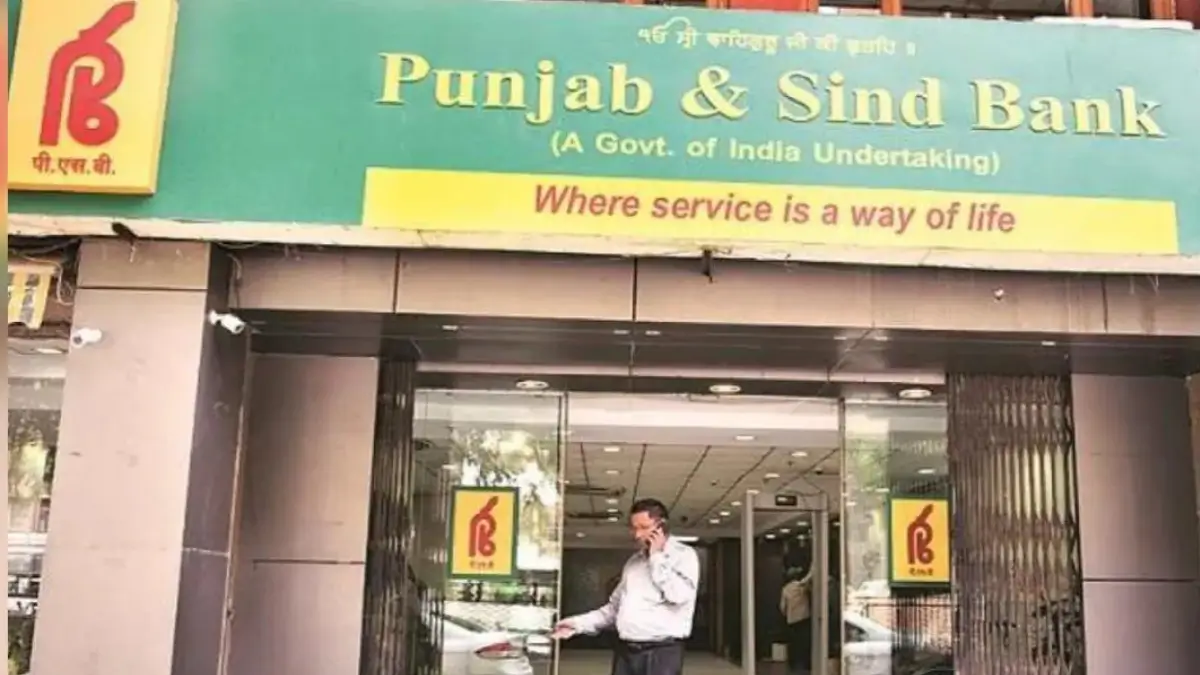
State Bank of India has provided additional time to candidates by extending the application deadline for the SBI CBO Recruitment 2026. This extension comes as a relief for aspirants who could not complete their registration earlier and are looking for a promising career opportunity in the banking sector. A total of 2,273 Circle Based Officer (CBO) vacancies will be filled through this recruitment.

SBI CBO Recruitment 2026 Apply Online Last Date Extended

As per the latest update, the last date to apply online for SBI CBO Recruitment 2026 is now 25 February 2026. Along with the deadline extension, certain eligibility conditions have also been updated, so candidates must review the revised criteria carefully before applying. The online examination is expected to be conducted in March 2026, and applicants are advised to complete the process well before the deadline to avoid last-minute technical issues due to heavy website traffic.

SBI CBO Recruitment 2026 Apply Online Last Date Extended, Check New Dates_3.1

SBI CBO 2026 Overview

Particulars Details
Organization
State Bank of India (SBI)
Post Name
Circle Based Officer (CBO)
Total Vacancies
2273 (2050 Regular + 223 Backlog)
Application Mode Online
Last Date to Apply (Extended)
25th February 2026
Selection Process
Online Test → Screening → Interview → Local Language Test
Official Website sbi.co.in

SBI CBO Apply Online Last Date Extended

The State Bank of India has extended the SBI CBO 2026 application window, giving candidates a valuable chance to complete the process smoothly and error-free.

  • Click below to access the official application portal and complete your SBI CBO 2026 registration without delay.
  • Ensure all details are entered correctly before proceeding, as edits may not be allowed later.
  • The online form is the only valid mode of application for this recruitment.
  • Keep your documents ready and apply in one go to avoid interruptions.
  • Submitting your application early ensures a smooth and stress-free process.

SBI CBO Recruitment 2026: Click Here to Apply

SBI CBO Recruitment 2026 Apply Online Last Date Extended, Check New Dates_4.1

Documents Required for Upload for SBI CBO Registration

Document Format Size
Photograph JPG/JPEG 20-50 KB
Signature JPG/JPEG 10-20 KB
Left Thumb Impression JPG/JPEG 20-50 KB
Handwritten Declaration JPG/JPEG 50-100 KB
ID Proof PDF
Date of Birth Proof PDF
Job Profile (Certified by Employer) PDF
Experience Certificate/ Appointment Letter PDF
Educational Certificates PDF
Latest Form-16 issued by the employer PDF
Latest Salary Slip PDF

SBI CBO Eligibility Criteria

Educational Qualification

  • Graduation in any discipline from a recognized university
  • Integrated Dual Degree (IDD) holders are eligible

Age Limit (as on 31.12.2025)

  • Minimum: 21 years (born on or before 31.12.2004)
  • Maximum: 30 years (born on or after 01.01.1996)

Work Experience (Critical)

  • Minimum 2 years as an officer in a Scheduled Commercial Bank or RRB listed in the RBI’s Second Schedule
  • Experience calculated as of 31 December 2025
  • The job profile must substantially match the SBI Scale-I Generalist officer role
  • A job profile certificate from the existing/previous employer is mandatory

Local Language Proficiency

  • Must be proficient in reading, writing, and understanding the local language of the circle applied for
  • Proof: 10th/12th mark sheet showing the language as a subject

SBI CBO Eligibility Update: Candidates Must Check

Along with the deadline extension, SBI has introduced updates related to eligibility that applicants must review carefully.

  • The bank has removed the clause requiring candidates from Scheduled Commercial Banks (other than Public Sector Banks / Regional Rural Banks) to draw a minimum annual gross salary of ₹9.50 lakh.
  • Candidates must still submit a job profile certified by their current or previous employer as part of the eligibility verification process.
  • If the submitted job profile does not substantially match the role of a Scale-I Generalist Officer of SBI, the application may be rejected at any stage of recruitment.
  • The bank’s decision regarding job profile suitability will be final and binding, and no representations will be entertained.

Selection Process for SBI CBO 2026

Understanding the recruitment stages helps candidates plan their preparation effectively.

  • Online Examination: Tests candidates on relevant professional knowledge and aptitude.
  • Screening and Interview: Shortlisted candidates are evaluated on experience, communication skills, and role suitability.
  • Document Verification: Ensures eligibility claims are accurate.
  • Final Selection: Based on performance across stages as per bank guidelines.
Related Posts
SBI CBO Syllabus SBI CBO Previous Year Question Papers
SBI CBO Cut Off SBI CBO Salary

SEBI Grade A Phase 2 Admit Card 2026 Out @sebi.gov.in, Download Mains Call Letter

The Securities and Exchange Board of India has announced the SEBI Grade A Phase 2 Admit Card 2026 on the official website on 12 February 2026. The SEBI Grade A Mains exam will be held on 21 February 2026. Download it immediately using your registration details to confirm your exam venue and shift.

SEBI Grade A Phase 2 Admit Card 2026

The SEBI Grade A Phase 2 Admit Card 2026 for Assistant Manager posts was released on 12th February 2026 by the Securities and Exchange Board of India. The Phase 2 exam is conducted online for streams such as General, Legal, IT, Research, Engineering, and Official Language. Candidates can download the admit card from the Careers section of the official website till 20th February 2026. No hard copy will be sent, so candidates must print the admit card and check all details carefully before the exam.

SEBI Grade A Mains Admit Card 2026 Download Link

The SEBI Grade A Mains Admit Card 2026 download link has been activated on the official SEBI website for candidates shortlisted for the Mains examination. Applicants can access their admit card by logging in with their registration number and password or date of birth.

Particulars Details
Exam Name SEBI Grade A Phase 2 (Mains) Examination 2026
Conducting Authority Securities and Exchange Board of India (SEBI)
Post Officer Grade A (Assistant Manager)
Streams General, Legal, IT, Research, Official Language
Admit Card Name SEBI Grade A Phase 2 Admit Card 2026
Admit Card Status Released
Admit Card Release Date  12 February 2026
Mains Exam Date  21 February 2026
Mode of Exam Online
Official Website www.sebi.gov.in
Login Credentials Required Registration Number & Password / Date of Birth
Selection Stage Phase 2 (Mains)
Documents Required
Admit Card, Valid Photo ID, Passport-size Photographs
Admit Card Download Link Download Now

Are You Appearing for SEBI Grade A Phase 2 Exam 2026??

​SEBI Grade A Mains Exam Date 2026

The SEBI Grade A Phase 2 Exam Date 2026 has been announced. The Phase 2 (Mains) exam will be held on 21st February 2026. Only candidates who have cleared the Phase 1 exam can appear for this stage. This recruitment drive is being conducted for 135 vacancies in different streams. Phase 2 is an important stage in the selection process, so candidates should focus on revision and prepare according to the updated syllabus and exam pattern. Further details about the interview date will be announced soon.

SEBI Grade A Phase 2 Admit Card Download Process

Step No. Official Download Process
Step 1 Visit the official SEBI website: https://www.sebi.gov.in/
Step 2 Scroll to the bottom of the homepage and click on “Careers”
Step 3 Select “SEBI Recruitment Exercise for Officer Grade A (Assistant Manager) – General, Legal, IT, Research & Official Language Streams 2025”
Step 4 Click on the “Phase-2 Call Letter Link”
Step 5 Enter your registration number, password, and captcha code
Step 6 Submit the details to view, download the admit card PDF, and print multiple copies for future reference

Details Mentioned on SEBI Grade A Mains Admit Card 2026

The admit card includes crucial details such as the exam date, reporting time, examination centre, and important instructions, and candidates must carry a printed copy along with valid photo ID to the exam venue.

Admit Card Details Description
Candidate Info Name, roll number, registration number, photo, signature, DOB ​
Exam Info Exam date: 21 February 2026, shift time, reporting time, gate closure, duration ​
Venue Info Center name, address, code ​
Instructions Allowed items (ID proof), prohibited (gadgets, calculators)

Documents Required to Carry with the SEBI Admit Card on Exam Day

Candidates must carry specific documents with their printed SEBI Grade A Phase 2 Admit Card to the exam center on February 21, 2026, for verification.

Mandatory Documents

  • Bring these essentials to avoid entry denial:
  • Printed hard copy of the SEBI Grade A Phase 2 Admit Card (original and photocopy).
  • Original valid photo ID proof: Aadhaar Card, PAN Card, Voter ID, Passport, Driving License, Bank Passbook with photo, or Photo ID issued by a Gazetted Officer/College/Employer/Bar Council.
  • 2-3 recent passport-size photographs (as backup).

Test Prime

Related Posts
SEBI Grade A Syllabus
SEBI Grade A Cut Off
SEBI Grade A Salary

NABARD Grade A Previous Year Question Paper PDF With Solution

The NABARD Grade A previous year question papers give candidates a clear idea of the exam structure, question trends, and overall difficulty across both objective and descriptive sections. Working through them along with detailed solutions helps aspirants spot weak areas, refine accuracy, and develop better time-management skills for the actual exam.

NABARD Grade A Previous Year Question Papers

Allocate dedicated time slots to key areas such as English, Reasoning Ability, Quantitative Aptitude, and Computer Knowledge, and practice them under timed conditions to simulate the actual test environment. This methodical approach sharpens problem-solving speed, improves precision, and builds the confidence needed to perform well on exam day.

NABARD Grade A Previous Year Paper 2023 PDF

NABARD Grade A Previous Year Paper 2023 PDF
NABARD Grade A Previous Year Paper Questions and Solutions

NABARD Grade A Previous Year Paper 2022 PDF

NABARD Grade A Previous Year Paper 2022 PDF
NABARD Grade A Previous Year Paper Questions and Solutions

NABARD Grade A Previous Year Paper 2021 PDF

NABARD Grade A Previous Year Paper 2021 PDF
Sections PDFs
NABARD Grade A Previous Year Paper (English) Download Now
NABARD Grade A Previous Year Paper (Hindi) Download Now

NABARD Grade A Previous Year Paper 2020 PDF

NABARD Grade A Previous Year Paper 2020 PDF
Sections PDFs
NABARD Grade A Previous Year Paper (English) Download Now
NABARD Grade A Previous Year Paper (Hindi) Download Now

Best Way to Analyse NABARD Grade A Previous Year Papers

Simply solving previous year papers is not enough what truly improves performance is how well you analyse them. A structured analysis approach helps candidates convert practice into measurable improvement and exam readiness.

  • Attempt papers in exam-like conditions: Take each paper in a single sitting with a strict time limit to replicate real exam pressure. Avoid interruptions to get an honest performance snapshot.
  • Evaluate section-wise performance: Check accuracy, time spent, and attempts separately for each section to identify where you lose marks or time.
  • Identify recurring topics: Note down topics that appear frequently, especially in merit sections like Economic & Social Issues and Agriculture & Rural Development, and revise them repeatedly.
  • Analyse mistakes deeply: Classify errors into conceptual mistakes, calculation errors, or guesswork. This helps in fixing the root cause rather than repeating the same errors.
  • Create an improvement tracker: Maintain a simple record of scores and weak areas after each paper to monitor progress over time.
  • Refine your exam strategy: Use insights from analysis to decide which sections to attempt first, ideal time allocation, and safe attempt strategy for the actual exam.

pdpCourseImg

Related Articles
NABARD Grade A Salary NABARD Grade A Syllabus
NABARD Grade A Cut Off NABARD Grade A Study Material

NABARD Grade A Salary 2026, Salary Structure, Perks and Allowances

The NABARD Grade A Salary 2026 offers an attractive and competitive pay structure, making it one of the most sought-after positions in the regulatory and financial sector. The starting basic pay is ₹44,500 per month, while the initial gross monthly emoluments go up to approximately ₹1,00,000, depending on the place of posting and applicable allowances. Along with the basic pay, the overall salary package includes benefits such as Dearness Allowance (DA), House Rent Allowance (HRA), Local Compensatory Allowance (LCA), and several other perks. These financial benefits, combined with strong career growth opportunities and long-term stability, make the NABARD Grade A role highly motivating for aspirants preparing for the exam.

NABARD Grade A Salary 2026

Particulars Details
Organization National Bank for Agriculture and Rural Development (NABARD)
Post Name Assistant Manager (Grade A)
Starting Basic Pay ₹44,500 per month
Pay Scale ₹44,500 – 2500(4) – 54,500 – 2850(7) – 74,450 – EB – 2850(4) – 85,850 – 3300(1) – 89,150
Maximum Basic Pay ₹89,150
Initial Gross Monthly Salary Approx. ₹1,00,000
In-Hand Salary ₹85,000 – ₹90,000 (after deductions)
Annual Package ₹9.6 lakh – ₹12.5 lakh (approx.)
Major Allowances DA, HRA, LCA, Grade Allowance, Family Allowance, Dispensary Allowance, Furniture Allowance
Deductions Pension contribution, insurance, taxes, other policy-based deductions
Increment Structure Regular increments over 17 years as per pay scale
Job Level Managerial Level
Promotion Hierarchy Assistant Manager → Manager → AGM → DGM → GM → CGM → Executive Director → Director
Probation Period 2 Years (Full salary paid during probation)

NABARD Grade A Salary Structure

In 2026, candidates appointed as NABARD Grade A Officers will be entitled to a well-defined salary structure that ranges from ₹44,500 to ₹89,150 over a period of 17 years. The pay scale follows a progressive format: ₹44,500 – 2500 (4) – 54,500 – 2850 (7) – 74,450 – EB – 2850 (4) – 85,850 – 3300 (1) – 89,150. Starting with a basic pay of ₹44,500 per month, officers receive regular increments that substantially enhance their earnings over time. When allowances and additional benefits are factored in, the total gross monthly salary reaches close to ₹1,00,000, making the role financially appealing and professionally fulfilling.

NABARD Grade A In Hand Salary

The in-hand salary for NABARD Grade A Officers in 2026 can vary depending on the location and specific deductions. However, on average, the in-hand salary after all deductions (such as pension fund contributions, taxes, and other mandatory deductions) is approximately ₹85,000 to ₹90,000 per month. This amount is after considering the basic pay, allowances, and the standard deductions applicable to the role.

NABARD Grade A Salary 2026: Increments

The NABARD Grade A salary structure for 2026 is designed to ensure steady financial progression through a systematic increment framework. As officers gain experience and move ahead in their careers, their basic pay is revised at regular intervals. This upward revision not only boosts the basic salary but also increases various associated allowances and benefits. Such a structured approach highlights the long-term earning potential and financial security the role offers. The increment pattern outlined below provides a clear picture of how the salary evolves over time.

NABARD Grade A Salary 2026: Increments & Basic Pay 
Time Period
Basic Pay (INR)
Increment (INR)
For the first four years
Rs. 44500
Rs. 2500
For the next 7 years
Rs. 54500
Rs. 2850
For the next 4 years
Rs. 74450
Rs. 2850
For the next 4 years
Rs. 85850
Rs. 3300 for 1 year
Max. Basic Pay
Rs. 89150
Till retirement

NABARD Grade A Salary: Deductions

The in-hand salary received by NABARD Grade A Officers is the net amount credited after applicable deductions. These deductions include mandatory contributions such as pension fund deductions, insurance premiums, and other components as per NABARD’s internal policies. While the gross salary reflects the total earnings, the final amount that employees receive each month referred to as the net or in-hand salary is calculated after subtracting these deductions.

NABARD Grade A Salary: Perks & Benefits

NABARD Grade A 2026 is considered one of the most rewarding career options in the government banking sector. Beyond the prestige and steady basic pay, what truly enhances the appeal of this role is the wide range of allowances and perks offered to Grade A Officers. These additional benefits significantly boost the overall compensation, making the position both financially and professionally fulfilling. In this section, you’ll find a detailed overview of the various allowances that form an essential part of the NABARD Grade A Salary 2026.

  1. Local Compensatory Allowance: An allowance provided to employees to compensate for the difference in the cost of living between their place of work and their hometown.
  2. House Rent Allowance: An allowance given to employees to cover their rental expenses for accommodation if they do not reside in government-provided quarters.
  3. Dearness Allowance: An allowance granted to employees to adjust their salaries according to the rising cost of living and inflation.
  4. Grade Allowance: An additional allowance given to employees based on their grade or level in the organization’s pay structure.
  5. Family Allowance: An allowance provided to employees to support their family’s financial needs and expenses.
  6. Dispensary Allowance: An allowance given to employees to cover medical expenses or access medical facilities provided by the organization.
  7. Furniture Allowance: An allowance granted to employees to purchase or maintain furniture for their official or residential use.

NABARD Grade A: Job Profile & Promotion

The NABARD Grade A 2026 is a managerial-level job. The job profile Assistant Manager includes the following responsibilities that candidates should be aware of:

  1. Policy Implementation: Assistant Managers are responsible for implementing various policies mandated by the State and Central government.
  2. Multitasking: Assistant Managers are not assigned to a specific task but are expected to perform multitasking. They need to handle multiple responsibilities and duties simultaneously.
  3. Fulfilling Assignments: Assistant Managers are entrusted with fulfilling the work assigned by the Chief General Manager of the Regional Office (RO). They play a crucial role in completing tasks and projects as directed.

NABARD Grade A Salary: Promotion

After being selected for the NABARD Grade A post, candidates have opportunities for further promotions through departmental exams and interviews. As a managerial post, the promotion hierarchy for NABARD Grade A is as follows:

  1. Assistant Manager
  2. Manager
  3. Assistant General Manager
  4. Deputy General Manager
  5. General Manager
  6. Chief General Manager
  7. Executive Director
  8. Director

NABARD Grade A Salary: Know the Annual Package

The annual package comprises a combination of basic pay, various allowances & emoluments. The annual package of NABARD Grade A Salary ranges from Rs. 9.6 lakhs to Rs. 12.5 lakhs varies as per the employment location, grade, years of service, etc. With an attractive salary package and the opportunity to contribute towards rural development and agricultural finance, a career as a Grade A officer in NABARD holds immense promise and fulfilment.

Bank MahaPack Plus

NABARD Grade A Probation Period

The candidates who will be selected as the Grade A Officers will have to undergo a probation period of 2 years. The candidates must note that this is a mandatory probation period. Candidates will be paid full salary during probation.

Related Post
NABARD Grade A Syllabus
NABARD Grade A Cut Off NABARD Grade A Previous Year Papers


NABARD Grade A Syllabus and Exam Pattern 2026 for Phase 1 & Phase 2 Exam

The NABARD Grade A Syllabus and Exam Pattern 2026outlines all the topics candidates must focus on to succeed. The recruitment process is divided into three phases: Prelims Mains and Interview. Aspirants are expected to prepare across multiple areas including reasoning ability, numerical ability, English language, general awareness, computer knowledge, and specialized subjects pertinent to the specific role.

NABARD Grade A Syllabus 2026

The NABARD Grade A 2026 syllabus provides a clear overview of the exam structure, subjects, and pattern. The prelims stage consists solely of objective-type questions, whereas the Mains stage features a combination of objective and descriptive questions. Both stages apply a negative marking of 0.25 for incorrect answers.

NABARD Grade A Syllabus & Exam Pattern 2026: Overview

Familiarity with the detailed syllabus and exam pattern enables candidates to grasp the importance of each topic, manage sectional timing efficiently, and get accustomed to the overall format of the examination. This table summarizes the important exam pattern, syllabus, and key details for quick reference.

Category Details
Exam Name NABARD Grade A 2026
Posts Assistant Manager (Generalist & Specialist)
Selection Process Prelims → Mains → Interview
Prelims 200 questions, 200 marks, 120 mins, Negative marking: 0.25 per wrong answer
Prelims Sections Reasoning, English, Computer Knowledge, Quantitative Aptitude, Decision Making, General Awareness, Economic & Social Issues, Agriculture & Rural Development
Merit Consideration Marks in General Awareness, Economic & Social Issues, Agriculture & Rural Development only
Mains – Generalist Paper I: General English (Descriptive, 100 marks), Paper II: Economic & Social Issues + Agriculture & Rural Development (Objective + Descriptive, 100 marks)
Mains – Specialist Paper I: General English, Paper II: Stream Specific Paper (Objective + Descriptive)
Interview Marks: 50–100, Hindi/English, assesses knowledge & awareness
Syllabus PDF Available for all streams: General, Agriculture, Engineering, Animal Husbandry, Finance, Forestry, Horticulture, Soil Science, Water Resources, IT

NABARD Grade A Exam Pattern 2026

The NABARD Grade A 2026 selection process is divided into two key stages. The first stage, the Preliminary exam, is an online test comprising 200 multiple-choice questions, with a total duration of 2 hours. The second stage, the Main exam, consists of two papers Paper I and Paper II each lasting 90 minutes. Candidates must clear both the Prelims and Mains to advance to the next phase of the recruitment for NABARD Grade A posts.

NABARD Grade A Phase 1 Exam Pattern 2026

The NABARD Grade A 2026 Prelims exam consists of 8 sections, and all sections with their questions and marks have been given in the table form below. The exam has a total of 200 questions to be completed in 2 hours. Candidates should note that 0.25 marks will be deducted for each incorrect answer.

NABARD Grade A Phase 1 Exam Pattern 2026
S.No.  Name of the Test Questions Marks Version Total Time
1 Test of Reasoning 20 20 Bilingual – Hindi and English, except for the English language Section Composite time of 120 Minutes for all the tests together
2 English Language 30 30
3 Computer Knowledge 20 20
4 Quantitative Aptitude 20 20
5 Decision Making 10 10
6 General Awareness 20 20
7 Eco & Soc. Issues (emphasis on Rural India) 40 40
8 Agriculture & Rural Development (emphasis on Rural India) 40 40
Total 200 200    

Marks Obtained in General Awareness, Economic & Social Issues and Agriculture & Rural Development are considered for Merit, Other Sections viz. Reasoning, English, QA, Computer & Decision Making are Qualifying in nature. Candidates are selected for the main exam based on the marks obtained in the Merit section only.

Sectional Weightage and Merit Consideration in Prelims

In the NABARD Grade A Prelims exam, not all sections carry equal importance for the final merit list. While candidates must attempt all sections, only specific subjects are considered for calculating the merit. Understanding this distinction helps aspirants focus their preparation effectively.

Sectional Weightage in Prelims:

  • Reasoning Ability: Qualifying
  • English Language: Qualifying
  • Computer Knowledge: Qualifying
  • Quantitative Aptitude: Qualifying
  • Decision Making: Qualifying
  • General Awareness: Merit
  • Economic & Social Issues (Rural Focus): Merit
  • Agriculture & Rural Development (Rural Focus): Merit

Merit Consideration:

  • Only marks obtained in General Awareness, Economic & Social Issues, and Agriculture & Rural Development are counted for preparing the merit list.
  • Scores in Reasoning, English, Quantitative Aptitude, Computer Knowledge, and Decision Making are treated as qualifying in nature. Candidates must meet the minimum cut-off in these sections to be eligible for the Mains exam.
  • The total merit score is therefore derived solely from the merit sections, which means aspirants should prioritize these areas while maintaining adequate proficiency in qualifying sections.

NABARD Grade A Phase 2 Exam Pattern 2026

The NABARD Grade A Phase 2 (Mains) exam evaluates candidates in greater depth, focusing on both subject knowledge and writing skills. The exam pattern differs slightly for Generalist and Specialist/Rajbhasha posts, but in both cases, candidates are required to attempt two papers: one assessing General English through descriptive writing, and the other covering role-specific subjects with both objective and descriptive questions.

NABARD Grade A Phase 2 Exam Pattern for Generalist Posts

The NABARD Grade A Mains Exam 2026 will consist of two papers. The First paper will be General English having a weightage of 100 marks with a sectional time limit of 90 minutes. The second paper will be on Economic and Social Issues, and Agriculture & Rural Development having both objective as well as descriptive questions. 

NABARD Grade A Phase 2 Exam Pattern for Generalist Posts
Paper Grade A Type of Paper Total Questions Total Marks Duration Remarks
Paper I General English Online Descriptive 3 100 90 Minutes Descriptive Answers are to be typed using a keyboard
Paper II Economic & Social Issues, and Agriculture & Rural Development Objective 30 50 30 minutes  
  Descriptive Type 6 questions will be asked, of which candidates will be required to attempt 4 questions [2 of 15 marks each (with difficulty level) and 2 of 10 marks each] 50 90 Minutes Descriptive

Answers are to be typed using a keyboard either in English or Hindi (Remington and Inscript keyboards)

NABARD Grade A Phase 2 Exam Pattern(Specialist/Rajbhasa)

Here, in the following table, the NABARD Grade A Phase 2 exam pattern is given for the Specialists Officers and Rajbhasa. This table give you the information regarding all the details regarding exam pattern.

NABARD Grade A Phase 2 Exam Pattern for Specialist Officers Posts
Paper Grade A Type of Paper Total Questions Total Marks Duration Remarks
Paper I General English Online Descriptive 3 100 90 Minutes Descriptive Answers are to be typed using a keyboard
Paper II Stream Specific Paper Objective 30 50 30 minutes  
  Descriptive Type 6 questions will be asked, of which candidates will be required to attempt 4 questions [2 of 15 marks each (with difficulty level) and 2 of 10 marks each] 50 90 Minutes Descriptive

Answers are to be typed using a keyboard either in English or Hindi (Remington and Inscript keyboards)

NABARD Grade A Exam Pattern for Protocol & Security

The NABARD Grade A Exam Pattern for Protocol & Security differs from other streams as it includes only an Online Test followed by an Interview. Unlike the RDBS and Specialist streams, this post does not include the mains & descriptive test phase.

NABARD Grade A Exam Pattern for Protocol & Security
Section No. of Qs. Max. Marks Duration
Reasoning 50 50 120 minutes
English 50 25
General Awareness 50 50
Professional Knowledge 50 75
Total 200 200 2 hours

NABARD Grade A Syllabus 2026

As the recruitment will be done based on the prelims, mains, and interview rounds, we are going to provide you with the detailed NABARD Grade A syllabus.

NABARD Grade A Phase 1 Syllabus 2026

The NABARD Grade A 2026 Prelims exam includes 8 sections: Reasoning Ability, Quantitative Aptitude, Computer Knowledge, English Language, General Awareness, Decision Making, Economic and Social Issues, and Agriculture & Rural Development. Below is the detailed subject-wise syllabus for the Preliminary exam:

NABARD Grade A Prelims Syllabus 
Quantitative Aptitude Reasoning Ability English Language General Awareness Computer knowledge
Number Series Blood Relation Spotting Errors Current Affairs Networking
Quadratic Equations Input-Output Reading Comprehension Banking Awareness Input-output devices
Simplification & Approximation Inequality Cloze Test Insurance DBMS
Data Sufficiency Puzzles & Seating Arrangement Sentence Improvement Economy MS Office
Arithmetic Questions Verbal Reasoning Fill in the blanks Awards and Honors History of computers & generations,
Data Interpretations and Caselets Syllogism Sentence Rearrangement Science and Technology Shortcuts
Mathematical Inequalities Coding-Decoding Para Jumbles New appointments Internet
Quantity Comparisons Miscellaneous Questions Word Swap and Column   Basic Hardware and Software

NABARD Grade A Phase 2 Syllabus 2026

The NABARD Grade A mains exam consists of 2 papers; paper 1 consists of the online descriptive test, and paper 2 is an online objective test. The detailed subject-wise syllabus of NABARD Grade A 2026 is given below:

Paper 1: Paper 1 includes Essay, Précis writing, Comprehension, and Business/Office Correspondence. The paper on English shall be framed in a manner to assess the writing skills, including expressions and understanding of the topic.

Paper 2: NABARD Grade A 2026 Mains (RDBS) Paper 2 for General consists of two subjects. Questions will be asked from Economic and Social Issues and Agriculture and Rural Development (focus on Rural India).

NABARD Grade A Syllabus for Economic and Social Issues

Economic and Social Issues is an important section of the NABARD Grade A Exam. The given table provides the section and their specific topics covering the complete NABARD Grade A Syllabus for Economic and Social Issues.

NABARD Grade A Syllabus For Economic and Social Issues
Subject Topics 
Nature of the Indian Economy
  • Structural and Institutional features
  • Economic Underdevelopment
  • Opening up the Indian Economy
  • Globalization
  • Economic Reforms in India
  • Privatization.
Inflation
  • Trends in Inflation & their Impact on National Economy and Individual Income.
Poverty Alleviation and Employment Generation in India
  • Rural and Urban
  • Measurement of Poverty
  • Poverty Alleviation Programmes of the Government.
Population Trends
  • Population Growth and Economic Development
  • Population Policy in India. 
Agriculture
  • Characteristics / Status
  • Technical and Institutional Changes in Indian Agriculture 
  • Agricultural performance
  • Issues in Food Security in India
  • Non-Institutional and Institutional Agencies in rural credit.
Industry
  • Industrial and Labour Policy
  • Industrial performance
  • Regional Imbalance in India’s Industrial Development
  • Public Sector Enterprises.
Rural banking and financial institutions in India
  • Reforms in the Banking/ Financial sector.
Globalization of Economy
  • Role of International Funding Institutions
  • IMF & World Bank
  • WTO
  • Regional Economic Cooperation.
Social Structure in India
  • Multiculturalism
  • Demographic trends
  • Urbanization and Migration
  • Gender Issues Joint Family System
  • Social Infrastructure
  • Education
  • Health and Environment. 
Education
  • Status & System of Education
  • Socio-Economic Problems associated with Illiteracy
  • Educational relevance and educational wastage
  • Educational Policy for India.
Social Justice
  • Problems of scheduled castes and the scheduled tribes
  • Socio-economic programmes for scheduled castes, scheduled tribes and other backward classes.
Positive Discrimination in favour of the underprivileged
  • Social Movements
  • Indian Political Systems
  • Human Development

NABARD Grade A Syllabus for Agriculture and Rural Development

The syllabus for Agriculture and Rural Development is vast. To know the detailed NABARD Grade A Syllabus for Agriculture and Rural Development, candidates need to refer to the table below.

NABARD Grade A Syllabus For Agriculture and Rural Development
Subject Topics 
Agriculture
  • Definition, meaning and its branches
  • Agronomy: Definition, meaning, and scope of agronomy.
  • Classification of field crops.
  • Factors Affecting Crop Production
  • Agro Climatic Zones
  • Cropping Systems: Definition and types of cropping systems.
  • Problems of dry land – Seed production, seed processing, seed village
  • Meteorology: weather parameters, crop-weather advisory
  • Precision Farming
  • System of Crop Intensification
  • Organic farming
Soil and Water Conservation
  • Major soil types
  • Soil fertility
  • Fertilizers
  • Soil erosion
  • Soil conservation
  • Watershed management
Water Resource
  • Irrigation Management
  • Types of irrigation
  • Sources of irrigation
  • Crop-water requirement
  • Command area development
  • Water conservation techniques
  • Micro-irrigation
  • Irrigation pumps
  • Major, medium and minor irrigation.
Farm and Agri Engineering
  • Farm Machinery and Power
  • Sources of power on the farm- human, animal, mechanical, electrical, wind, solar and biomass, biofuels
  • Water harvesting structures
  • Farm Ponds
  • Agro-Processing
  • Controlled and modified storage, perishable food storage, godowns, bins, and grain silos.
Plantation & Horticulture
  • Definition, meaning, and its branches
  • Agronomic practices and production technology of various plantation and horticulture crops
  • Post-harvest management, value, and supply chain management of Plantation and Horticulture crops.
Animal Husbandry
  • Farm animals and their role in the Indian economy
  • Animal husbandry methods in India
  • Common terms of different species of livestock
  • Utility classification of breeds of cattle.
  • Introduction to common feeds and fodders, their classification, and utility.
  • Introduction to the poultry industry in India (past, present, and future status)
  • Common terms about poultry production and management
  • The concept of mixed farming and its relevance to socioeconomic conditions of farmers in India
  • Complimentary and obligatory nature of livestock and poultry production with that of agricultural farming.
Fisheries
  • Fisheries resources
  • Management and exploitation – freshwater, brackish water, and marine
  • Aquaculture- Inland and marine
  • Biotechnology
  • Post-harvest technology
  • Importance of fisheries in India
  • Common terms of fish production.
Forestry
  • Basic Concepts of Forest and Forestry
  • Principles of silviculture, forest mensuration, forest management, and forest economics
  • Concepts of social forestry, agroforestry, joint forest management
  • Forest policy and legislation in India, India State of Forest Report 2015
  • Recent developments under the Ministry of Environment, Forest and Climate Change.
Agriculture Extensions
  • Its importance and role, methods of evaluation of extension programs
  • Role of Krishi Vigyan Kendra’s (KVK) in the dissemination of Agricultural technologies.
Ecology and Climate Change
  • Ecology and its relevance to man, natural resources, sustainable management, and conservation
  • Causes of climate change, GreenHouse Gases (GHG), major GHG emitting countries, climate analysis
  • Distinguish between adaptation and mitigation
  • Climate change impact on agriculture and rural livelihoods
  • Carbon credit
  • IPCC, UNFCCC, CoP meetings
  • Funding mechanisms for climate change projects
  • Initiatives by Govt of India, NAPCC, SAPCC, INDC.
Present Scenario of Indian Agriculture and Allied Activities
  • Recent trends
  • Major challenges in agriculture measures to enhance
  • Viability of agriculture Factors of Production in agriculture
  • Agricultural Finance and Marketing
  • Impact of Globalization on Indian Agriculture and Issues of Food Security
  • Concept and Types of Farm Management
Rural Development
  • Concept of Rural Area
  • Structure of the Indian Rural Economy
  • Importance and role of the rural sector in India
  • Economic, Social and Demographic Characteristics of the Indian rural economy
  • Causes of Rural Backwardness.
  • Rural population in India
  • Occupational structure
  • Farmers, Agricultural Laborers, Artisans, Handicrafts, Traders, Forest dwellers/tribes and others in rural India
  • Trends of change in rural population and rural workforce
  • Problems and conditions of rural labour
  • Issues and challenges in Hand-looms
  • Panchayati Raj Institutions – Functions and Working.
  • MGNREGA, NRLM – Aajeevika, Rural Drinking Water Program, Swachh Bharat, Rural Housing, PURA, and other rural development programs.

NABARD Grade A (RDBS) Information Technology Syllabus 2026

There are various topics covered in the subject of Information Technology. For NABARD Grade A(RDBS), we have listed the Information Technology Syllabus in the given section.

NABARD Grade A(RDBS) Information Technology Syllabus 2026
Subject Topic
Information Technology Introduction to Software, Data Structure through ‘C’ and ‘PASCAL’, Elements of Systems Analysis and Design, Numerical and Statistical Computing, Data Communication and Networks, Computer Architecture, Object-Oriented Systems, Computer Fundamentals, File Structure and Programming in COBOL, Database Management Systems, Software Engineering, Accounting and Finance on Computers, Operating Systems, Intelligent Systems, Relational Database, Management Systems

NABARD Grade A Legal Service Syllabus 2026

For the specialist cadre in NABARD Grade A, questions from the specific stream are asked. In the given table, we have discussed the NABARD Grade A Legal Service Syllabus.

NABARD Grade A Legal Service Syllabus 2026
Subject Topics
Legal Service The paper will be based on proficiency in interpreting various Laws viz., Banking, Negotiable Instruments, Company, Industrial and Cooperative Laws, Cyber laws, Commerce/Property transactions, Rural non-life insurance, direct financing, staff matters, and good experience in drafting various types of documents.

NABARD Grade A Protocol & Security Syllabus 2026

This section tests a candidate’s understanding of security frameworks, official protocols, and key procedures followed in organisational and governmental environments.

  • Basics of protocol procedures, official visits, and event coordination
  • Security management concepts related to offices, premises, and sensitive information
  • Roles and responsibilities involved in safeguarding institutional operations
  • Knowledge of emergency response mechanisms and risk assessment practices
  • Familiarity with government protocol guidelines and handling of VIP movements

NABARD Grade A Interview 2026

Candidates who clear the Prelims and Mains exams will be called for the Interview round.

  • The interview will include questions on various topics, including current affairs, to assess awareness and response skills.
  • Interview marks:
    • 50 marks for RDBS or Rajbhasha posts
    • 100 marks for P&SS posts
  • Candidates can choose to give the interview in Hindi or English.
  • A merit list will be prepared based on the combined scores of the written exams and the interview.
  • Candidates who perform well in the interview will move on to the final stages, such as document verification and appointment.

NABARD Grade A Selection Process 2026

The NABARD Grade A recruitment involves three stages, and candidates must pass each stage to move to the next. These stages help NABARD choose the best candidates for the Assistant Manager position in RDBS, Rajbhasha, or Protocol & Security Services.

  • Prelims Exam: This is the first stage and acts as a screening test. It includes objective-type questions that check basic knowledge and aptitude.
  • Mains Exam: Candidates who qualify in the prelims appear for the mains. This exam contains descriptive and objective sections to test a deeper understanding of subjects related to agriculture, rural development, and general awareness.
  • Interview: The final stage evaluates the candidate’s personality, communication skills, confidence, and suitability for the role.

NABARD Grade A Syllabus PDF

The NABARD Grade A syllabus is an important resource that every candidate should consider when preparing for the exam. Competition for this position is expected to be fierce, as many candidates are attracted to it due to its promising career prospects. The NABARD Grade A syllabus PDF is a valuable tool for focused preparation. Candidates can check the detailed syllabus for each paper and download the PDF from the links below:

NABARD Grade A Syllabus PDF
General Download PDF
General Agriculture Download PDF
Agriculture Engineering Download PDF
Animal Husbandry Download PDF
Finance Download PDF
Forestry Download PDF
Horticulture-Plantation Download PDF
Land Development- Soil Science Download PDF
Water Resources  Download PDF
Information Technology Download PDF

Important Resources for NABARD Grade A Exam 2026

To prepare effectively for NABARD Grade A 2026, candidates should utilize a mix of official materials, reference books, and practice resources. Below are the essential resources:

  • Official Syllabus & PDFs: Download the complete NABARD Grade A syllabus and stream-wise PDFs from the official NABARD website to ensure comprehensive coverage of all topics.
  • Standard Reference Books: Use authoritative books for subjects like Economics, Agriculture, Rural Development, Finance, and Information Technology to build conceptual clarity.
  • Online Mock Tests & Quizzes: Practice regularly with mock tests and online quizzes to improve speed, accuracy, and time management.
  • Current Affairs Compilations: Stay updated with monthly or weekly General Awareness capsules, focusing on rural development schemes, economic policies, and banking updates.
  • Previous Year Question Papers: Analyze past NABARD Grade A papers to identify trends, frequently asked topics, and question patterns.
  • Descriptive English Practice: Enhance writing skills through sample essays, précis writing, comprehension exercises, and business correspondence practice for the Mains descriptive paper.

Preparation Tips for the NABARD Grade A Prelims 2026

With limited time left for the Prelims exam, candidates should focus on smart revision and practice. A well-planned final strategy can significantly improve performance.

  • Revise important topics from Reasoning, Quantitative Aptitude, English, Computer Knowledge, and General Awareness.
  • Focus more on accuracy, as sectional and overall cut-offs must be cleared.
  • Practice mock tests regularly to improve speed and identify weak areas.
  • Strengthen General Awareness with special attention to agriculture, rural development, and banking-related news.
  • Avoid learning new topics at the last moment and concentrate on consolidating what you already know.
Related Articles
NABARD Grade A Salary NABARD Grade A Cut Off
NABARD Grade A Previous Year Papers NABARD Grade A Eligibility
NABARD Grade A Study Material How to Prepare for NABARD Grade A?


Daily Current Affairs and GK Updates (12th February 2026)

National Productivity Council Celebrates 68th Foundation Day with Focus on MSME Clusters

  • The National Productivity Council (NPC) celebrates its 68th Foundation Day on 12 February 2026, observing National Productivity Week from 12-18 February across India with theme “Clusters as Growth Engine: Maximizing Productivity in MSMEs”
  • Cluster-based development creates economies of scale, improves supply chain integration, encourages technology adoption, and enhances export readiness for MSMEs
  • NPC, established in 1958, provides consultancy and training in industrial engineering, environmental management, agri-business, quality management, HR, and technology management
  • The council operates as an autonomous society under DPIIT, Ministry of Commerce and Industry, supporting both public and private organizations for global competitiveness
  • NPC is a constituent of the Asian Productivity Organisation (APO) with India serving as founding member and current chair, promoting international cooperation for productivity standards

White Revolution 2.0: Government Launches Major Dairy Sector Initiative to Boost Milk Production

  • White Revolution 2.0, announced by Ministry of Cooperation, aims to strengthen India’s dairy sector through cooperative-based model, targeting 50% increase in milk procurement over five years with daily target of 1,007 lakh kilograms by 2028-29
  • The programme will establish approximately 75,000 new Dairy Cooperative Societies (DCS) in uncovered villages while upgrading 46,422 existing DCS to improve efficiency and market linkages
  • Infrastructure support includes Automatic Milk Collection Units (AMCUs), Data Processing Units, Milk testing equipment, and Bulk Milk Coolers, funded under National Dairy Development Programme 2.0
  • Nearly 70% of India’s dairy workforce comprises women; the initiative formalizes women’s participation through women-led cooperatives and increased representation in dairy institutions, strengthening economic independence
  • Decentralized storage system enables farmers to store produce locally, access pledge financing, avoid distress sales, and sell at better prices, especially benefiting small and marginal farmers

Mumbai Inaugurates India’s First Melody Road Playing ‘Jai Ho’ on Coastal Road

  • Mumbai has introduced India’s first-ever melody road on the Coastal Road, a 500-metre musical stretch that plays “Jai Ho” from Slumdog Millionaire as vehicles pass at 70-80 km/h speed
  • The melody road works through precisely cut grooves (rumble strips) that create vibrations when vehicles drive over them, producing musical notes audible even inside closed cars
  • Brihanmumbai Municipal Corporation (BMC) commissioned the project at estimated cost of ₹6.21 crore with safety measures including warning boards placed at 500m, 100m, and 60m before the stretch
  • The concept originated in Japan in 2007 by engineer Shizuo Shinoda; similar roads exist in Hungary, South Korea, and UAE, with Mumbai’s using Hungarian engineering technology
  • The melody stretch aims to promote patriotism, create joyful driving experience, and potentially reduce sudden braking while improving traffic flow on the 10.5 km-long Mumbai Coastal Road

Indian Air Force Conducts First International Exercise of 2026 with Royal Thai Air Force

  • Indian Air Force conducted first international air exercise of 2026 with Royal Thai Air Force (RTAF) near strategically vital Strait of Malacca, featuring IAF’s Su-30MKI fighters alongside RTAF’s JAS 39 Gripen aircraft
  • The joint drills focused on advanced aerial combat manoeuvres, long-range mission execution, mid-air refuelling, surveillance integration, and maritime domain awareness from bases in Andaman & Nicobar Islands and Thai air bases
  • The Strait of Malacca carries nearly one-quarter of global seaborne trade and critical share of oil and LNG shipments, making it vital for global energy security and Indo-Pacific stability
  • Swedish defence manufacturer Saab AB is aggressively promoting Gripen-E/F fighter jets to IAF under MRFA programme, proposing full-scale production in India with technology transfer and Make in India support
  • IAF plans to procure 114 multirole fighter aircraft under MRFA programme; besides Gripen-E/F, Dassault Rafale and Sukhoi Su-57 are competing, with final decision yet to be announced

India Revises Consumer Price Index Base Year from 2012 to 2024

  • India is rolling out revised Consumer Price Index (CPI) series with base year updated from 2012 to 2024, a technical change with direct implications for monetary policy, interest rates, and household finances decided by Ministry of Statistics
  • The revision incorporates updated consumption weights, expanded data sources, methodological improvements, and greater digital price coverage to reflect current consumption patterns rather than outdated economic structures
  • Food and beverages weight reduced from 45.86% to 36.75% as households spend smaller share on staples and more on services like transport, housing, health, communication, and recreation as incomes grow
  • The revised CPI could increase overall inflation by around 20-30 basis points and will include price data from 12 online markets in cities with populations above 25 lakh, capturing growing e-commerce consumption
  • New CPI will track 358 weighted items (308 goods and 50 services) across 1,465 rural and 1,395 urban markets, making inflation measurement more representative of modern, urbanized, service-oriented, and digitally connected India

India Approves Seven New High-Speed Rail Corridors Worth ₹16 Trillion

  • Government of India initiated viability assessment for seven new high-speed rail (bullet train) corridors spanning nearly 4,000 kilometres estimated to cost around ₹16 trillion following Union Budget announcement to expand India’s high-speed rail network
  • Proposed corridors include Mumbai-Pune, Pune-Hyderabad, Hyderabad-Bengaluru, Hyderabad-Chennai, Chennai-Bengaluru, Delhi-Varanasi, and Varanasi-Siliguri to strengthen connectivity between major economic and urban hubs
  • Railway Board directed National High Speed Rail Corporation Limited (NHSRCL) to update Detailed Project Reports (DPRs) with revised cost estimates, conduct financial viability assessments, and initiate pre-construction activities and contract documentation
  • Railway Minister Ashwini Vaishnaw emphasized higher levels of indigenization in future corridors, leveraging valuable experience from Mumbai-Ahmedabad project in civil engineering, overhead systems, signalling, rolling stock, and station construction
  • Expansion of bullet train corridors will reduce travel time significantly, promote regional economic integration, generate employment, enhance technological capability in rail infrastructure, and support Make in India initiative

Adani Power Enters Nuclear Energy Sector with New Subsidiary Adani Atomic Energy Ltd

  • Adani Power announced formation of new subsidiary Adani Atomic Energy Ltd, marking one of first clear moves by private Indian utility into country’s newly opened nuclear power sector focused on generating, transmitting, and distributing nuclear electricity
  • Government of India is allowing greater private sector participation in nuclear energy to meet rising electricity demand, reduce carbon emissions, expand clean energy capacity, and strengthen long-term energy security
  • Currently, nuclear power generation in India is largely controlled by state-run Nuclear Power Corporation of India Limited (NPCIL) with total installed nuclear capacity of 8.8 gigawatts (GW) and all operational plants owned by NPCIL
  • Adani Power’s announcement follows Tata Power’s recent statement evaluating potential sites for nuclear projects, signaling growing private interest in nuclear energy sector among major Indian utilities
  • Nuclear energy serves as stable, low-carbon baseload power source; private players’ entry will accelerate technology adoption, infrastructure development, investment inflows, and capacity expansion supporting India’s clean energy ecosystem

World’s Largest Grain Storage Plan in Cooperative Sector Strengthens Decentralized Agricultural Infrastructure

  • Government of India implementing World’s Largest Grain Storage Plan in Cooperative Sector (WLGSP) to strengthen decentralized storage infrastructure at grassroots level, enhance food security, reduce post-harvest losses, and improve farmers’ income
  • Balaghat district of Madhya Pradesh selected as pilot district with 500 MT godown constructed at Bahudeshiya Prathamik Krishi Saakh Sahakari Society, inaugurated by Prime Minister Narendra Modi on 24 February 2024
  • Plan implemented at PACS (Primary Agricultural Credit Societies) level through convergence of multiple schemes including Agriculture Infrastructure Fund (AIF), Agricultural Marketing Infrastructure (AMI), Sub Mission on Agricultural Mechanization (SMAM), and PMFME
  • Key amendments include loan repayment period extended from 2+5 to 2+8 years for PACS, margin money reduced from 20% to 10%, and subsidy increased from 25% to 33.33% with additional support for ancillary infrastructure
  • Decentralized system enables farmers to store produce locally, access pledge financing, avoid distress sales, and sell at better prices; especially beneficial for small and marginal farmers facing storage facility challenges

India Ranks 3rd Globally in AI Development with ₹131.31 Billion Market Projected by 2032

  • India emerging as global leader in Artificial Intelligence, ranking 3rd globally in Stanford University’s 2025 Global AI Vibrancy Ranking behind United States and China, with AI market projected to reach USD 131.31 billion by 2032 at CAGR of 42.2%
  • India’s AI readiness demonstrated by score of 49.3 in IMF’s AI Preparedness Index (above emerging market average), ranked 27th in Oxford’s Government AI Readiness Index (2025), reflecting growth in AI research, talent, infrastructure, and entrepreneurship
  • Over 65% of India’s population under 35 with large digitally skilled workforce, 100+ crore internet users, 400+ million 5G users, 42.36 lakh route km optical fiber network, government acquired 38,000 GPUs, and national data centers with 100 PB storage capacity
  • AI-related job postings in South Asia doubled between 2023-2025; India leads globally in AI talent hiring with approximately 33% annual hiring rate; AI roles offer 28% wage premium compared to regular jobs; 87% of enterprises actively using AI solutions
  • Ministry of Electronics and Information Technology launched National Program on Artificial Intelligence focusing on National Center on AI, Data Management Office, Skilling in AI, Responsible AI, with goal to empower 1 crore citizens with foundational AI skills under “AI for All”

Uttar Pradesh Presents ₹9.13 Trillion Budget for FY 2026-27 with Focus on Education and Infrastructure

  • Government of Uttar Pradesh presented ₹9.13 trillion Budget for financial year 2026-27, reflecting 12.2% increase over previous year’s outlay, focusing on fiscal discipline, infrastructure development, employment generation, and strengthening social sectors
  • Fiscal deficit limit for 2026-27 fixed at 3% of Gross State Domestic Product (GSDP) following Sixteenth Finance Commission recommendations, maintaining ceiling until 2030-31 to ensure sustainable growth while managing borrowing levels effectively
  • Key sector-wise allocations include Education at 12.4% of total outlay, Health at 6%, and Agriculture and allied services at 9%, highlighting government’s focus on human capital development and rural development
  • Large-scale employment-oriented training initiatives to be implemented in mission mode with existing skill development centres upgraded and new centres established across districts to enhance employment opportunities for youth
  • Job placement and skill centres will be established under Public-Private Partnership (PPP) model ensuring private sector participation, reflecting state’s strategy of combining fiscal prudence with growth-oriented spending to strengthen economic base

Swami Dayanand Saraswati Marks 202nd Birth Anniversary with National Recognition

  • India marks 202nd birth anniversary of Swami Dayanand Saraswati, great social reformer and Vedic scholar who founded Arya Samaj in 1875, widely regarded as key figure in India’s social and cultural awakening in 19th century
  • Swami Dayanand was among first leaders to give call for “Swaraj” (self-rule) in 1876, advocating “India for Indians” vision that inspired nationalist leaders like Bal Gangadhar Tilak who popularized “Swaraj is my birthright” slogan
  • Arya Samaj promoted return to Vedic teachings, social reforms, women’s education, opposition to social evils, and spread of Sanskrit learning, playing crucial role in social and cultural reform movements across India and educational development
  • Prime Minister Narendra Modi released commemorative coins marking 200th birth anniversary of Swami Dayanand Saraswati and 150th anniversary of Arya Samaj, recognizing his contribution to social reform, education, and national awakening
  • Swami Dayanand Saraswati remains symbol of reform, rational thought, and national pride, whose ideas continue to influence Indian society through his work on women’s empowerment, education advancement, and nationalist ideology

Tropical Cyclone Gezani Causes Widespread Destruction in Madagascar with Over 2,700 Displaced

  • Tropical Cyclone Gezani caused widespread destruction in Madagascar after making landfall in eastern port city of Toamasina with wind speeds exceeding 195 km/h, resulting in at least 20 deaths and several injuries
  • Toamasina, Madagascar’s main port city, suffered extensive infrastructure damage with approximately 2,700 people displaced, at least 33 people injured, nearly 75% of city’s infrastructure affected, and widespread power outages reported
  • President Michael Randrianirina visited affected region to review situation and oversee relief efforts as emergency services work to restore electricity and provide temporary shelter to displaced families, cyclone moving westward with concerns about further flooding
  • Cyclone Gezani struck just weeks after Cyclone Fytia impacted Madagascar, compounding country’s humanitarian crisis as frequent cyclones in southwest Indian Ocean region have made Madagascar highly vulnerable to climate-related disasters
  • Back-to-back storms strained relief systems and disrupted recovery efforts, leaving country bracing for more extreme weather events in coming months requiring sustained international humanitarian assistance and disaster management support

Daily Current Affairs Quiz 13th February 2026 Check Important Questions Here

Practice Current Affairs Quiz to stay updated with national, international, economic, and banking news. This quiz is based on the previous day’s current affairs and is designed to boost your exam readiness, improve speed and accuracy, strengthen memory, and build confidence for competitive exams and interviews.

Q1. In February 2026, the Indian Navy assumed command of Combined Task Force (CTF) 154 under the Combined Maritime Forces. What is the primary role of CTF 154 within the CMF structure?
(a) Counter-terrorism operations
(b) Anti-submarine warfare
(c) Training and capacity building of member nations
(d) Coastal surveillance of the Indian Ocean
(e) Humanitarian evacuation missions

Answer: c

Solution:

  • In a significant step toward strengthening multinational maritime security, the Indian Navy has assumed command of Combined Task Force (CTF) 154.
  • CTF 154 is a multinational training task force under the Combined Maritime Forces (CMF).
  • The change of command ceremony was held on 11 February 2026 at the CMF Headquarters in Manama, Bahrain.
  • The ceremony was presided over by Vice Admiral Curt A. Renshaw, Commander of CMF, US NAVCENT, and the US Fifth Fleet.
  • Commodore Milind M. Mokashi of the Indian Navy formally took over as Commander of CTF 154 from the outgoing Italian Navy commander.
  • CTF 154 was established in May 2023 under the CMF framework.
  • It focuses on training and capacity building for member nations to enhance maritime security.
  • The task force reflects the growing trust in India’s operational expertise and its role as a Preferred Security Partner among the 47 CMF member nations.

Q2. National Productivity Week observed from 12 to 18 February, 2026. Which organisation conducts this annual observance across India?
(a) NITI Aayog
(b) National Productivity Council
(c) Ministry of MSME
(d) FICCI
(e) Quality Council of India

Answer: b

Solution:

  • The National Productivity Council (NPC) celebrated its 68th Foundation Day on 12 February 2026.
  • To mark the occasion, National Productivity Week is being observed from 12 to 18 February 2026 across the country.
  • The theme for the 68th National Productivity Week is: “Clusters as Growth Engine: Maximizing Productivity in MSMEs.”
  • These activities are being conducted through 12 Regional Directorates of NPC located in:
    Bengaluru, Bhubaneswar, Chandigarh, Chennai, Gandhinagar, Guwahati, Hyderabad, Jaipur, Kanpur, Kolkata, Mumbai, and Patna.
  • The National Productivity Council is an autonomous society under the Department for Promotion of Industry and Internal Trade (DPIIT), Ministry of Commerce and Industry.
  • NPC was established in 1958 with the objective of becoming a knowledge leader in productivity and supporting India’s global competitiveness through sustainable and inclusive socio-economic development.

Q3. In February 2026, the CEO of Rolls-Royce met Prime Minister Narendra Modi in New Delhi to discuss plans to expand the company’s operations in India under the Viksit Bharat vision. Who is the CEO of Rolls-Royce who attended this meeting?
(a) Warren East
(b) John Rishton
(c) Tufan Erginbilgic
(d) Leena Nair
(e) Guillaume Faury

Answer: c

Solution:

  • On 11 February 2026, Rolls-Royce CEO Tufan Erginbilgic met Prime Minister Narendra Modi in New Delhi.
  • During the meeting, both sides discussed plans to significantly expand Rolls-Royce’s operations in India.
  • The expansion is aligned with the Government of India’s “Viksit Bharat” vision for economic growth and industrial development.

Q4. Under the World’s Largest Grain Storage Plan in Cooperative Sector (WLGSP), which district in Madhya Pradesh was selected as the pilot district for the project?
(a) Indore
(b) Balaghat
(c) Jabalpur
(d) Gwalior
(e) Rewa

Answer: b

Solution:

  • Balaghat district in Madhya Pradesh was selected as the pilot district under the World’s Largest Grain Storage Plan in Cooperative Sector (WLGSP).
  • Under the pilot project, a 500 metric tonne (MT) godown was constructed at the Bahudeshiya Prathamik Krishi Saakh Sahakari Society Maryadit, Parswada in Balaghat district.
  • The project was fully completed and inaugurated on 24 February 2024 by the Prime Minister of India.
  • The newly constructed godown has been hired by the Madhya Pradesh Warehousing and Logistics Corporation (MPWLC).
  • The plan is being implemented at the level of Primary Agricultural Credit Societies (PACS) and other cooperative societies.
  • The initiative aims to strengthen storage infrastructure, reduce post-harvest losses, and enhance the cooperative agricultural ecosystem.

Q5. V.O. Chidambaranar Port Authority became India’s first major port to receive the IGBC Platinum Rating, which is the highest certification in green building standards. Which organisation awards the IGBC Platinum Rating?

(a) Bureau of Energy Efficiency
(b) Indian Green Building Council
(c) Central Pollution Control Board
(d) National Green Tribunal
(e) Ministry of Environment, Forest and Climate Change

Answer: b

Solution:

  • V.O. Chidambaranar Port Authority has become India’s first major port to receive the IGBC Platinum Rating, the highest certification of the Indian Green Building Council (IGBC).
  • The Administration Building follows the port’s Green Policy and waste management plan to promote sustainability.
  • The building is equipped with rooftop solar panels and a high Solar Reflectance Index (SRI) reflective roof coating to reduce the Urban Heat Island effect and improve energy efficiency.
  • Resource efficiency has been enhanced through IoT-enabled water meters, Indoor Air Quality (IAQ) monitoring systems, rainwater harvesting, and water-saving plumbing fixtures.
  • These measures have resulted in a 37% reduction in potable water usage.
  • All wastewater is treated in an on-site Sewage Treatment Plant (STP) and fully reused.
  • The Administration Building operates on 100% renewable energy.
  • 89% of electricity is generated on-site through solar power, while 11% is sourced from off-site renewable energy.
  • The port has also received Shunya and Shunya Plus certifications from the Bureau of Energy Efficiency (BEE) under the Ministry of Power.
  • The Shunya Certification system ensures that a building’s annual energy demand is met entirely through renewable energy sources.
  • A Shunya building is a Net Zero Energy Building that produces as much energy as it consumes annually, with an Energy Performance Index (EPI) between 0 and 10 kWh/m²/year.
  • A Shunya Plus building is a Net Positive Energy Building that generates more renewable energy than it consumes, with an EPI of less than 0 kWh/m²/year and exports surplus energy to the grid.
  • At the port, the Hospital and CISF Barracks have received the Shunya Plus certification.
  • The Administrative Building and Guest House have received the Shunya certification.

RBI Grade B 2026 Notification, Exam Date, Eligibility & Selection Process

The RBI Grade B 2026 Notification is expected to be released soon, creating strong anticipation among aspirants aiming for a prestigious career in the central banking system. Known for its competitive selection process and attractive career growth, this examination draws candidates from diverse academic backgrounds each year. Candidates planning to appear should begin early preparation and stay alert for the official announcement to ensure they do not miss important updates.

RBI Grade B 2026

The RBI Grade B 2026 recruitment is likely to be conducted through a structured, stage-wise assessment process designed to test both breadth and depth of a candidate’s abilities. The selection journey generally moves from an initial screening phase to a more specialized evaluation, and finally to a personal interaction round.

Along with performance in these stages, candidates must satisfy the prescribed criteria related to age limits, academic background, and citizenship.  As the exam continues to attract top talent from across the country, a well-planned preparation strategy focused on concept clarity, current developments, and answer-writing skills will be key to staying ahead in the competition.

RBI Grade B 2026
Organization Reserve Bank Of India
Exam Name RBI Grade B
Post Grade B
Vacancy To be announced
Category Recruitment
Language Of the Exam English
Selection Process Phase I, Phase II, and Interview
Application Mode Online
Age Limit 21 to 30 Years
Salary Basic Pay: ₹78,450/-p.m
Official Website www.rbi.org.in
WhatsApp Channel Join WhatsApp Channel

What is RBI?

The Reserve Bank of India (RBI) is India’s central bank, established in 1935, and plays a vital role in maintaining the country’s economic stability. It oversees monetary policy, regulates banks, and ensures smooth functioning of the financial system.

Key Functions of RBI:

  • Regulates the supply of money and controls inflation.
  • Issues currency notes and manages cash flow in the economy.
  • Supervises banks and financial institutions for safety and compliance.
  • Sets key interest rates to guide economic growth.
  • Manages foreign exchange reserves and exchange rates.
  • Maintains overall financial stability in the country.

RBI Grade B 2026: Important Dates

The notice will be released to announce vacancies across the General, DEPR, and DSIM streams. Candidates are advised to check the eligibility criteria and prepare accordingly.

RBI Grade B 2026: Important Dates (Expected)
Event Dates
 Detailed PDF 2026 Release Date July 2026
RBI Grade B Apply Online 2026 July-August 2026
Phase 1 Exam Date September 2026
Phase 2 Exam Date
November 2026

RBI Grade B Notification 2026

The RBI Grade B Notification 2026 will be released on the official website, outlining the complete details of the recruitment process. This document will include information on vacancies, exam dates, syllabus, eligibility norms, and selection stages.

RBI Grade B Notification PDF (Previous Recruitment Cycle)

Is graduation in any stream sufficient to apply?

Yes, candidates from any stream can apply for RBI Grade B, provided they have at least 60% marks (50% for SC/ST/PwBD) in graduation. Some specialized posts may require specific qualifications, but for the general post, any stream is accepted.

RBI Grade B Online Application 2026

The RBI Grade B 2026 online application process is expected to start soon after the official notification is published. Eligible candidates will need to register on the RBI portal, provide their personal and educational details, upload the required documents, and pay the application fee within the specified dates. To ensure a smooth application process, aspirants should keep their academic certificates, ID proof, and recent photographs ready in the prescribed format beforehand.

RBI Grade B Apply Online 2026- Inactive 

RBI Grade B 2026 Application Fee

The application fees mentioned here are based on the previous RBI Grade B. Candidates from the General and OBC categories are required to pay ₹850 plus 18% GST for the final submission of the application form, while candidates from ST, SC, PWD, and EXS categories need to pay ₹100 plus 18% GST.

RBI Grade B 2026 Eligibility Criteria

To apply for RBI Grade B 2026, candidates must meet certain rules related to nationality, age, education and the number of attempts. If candidates don’t meet these conditions than their application may be rejected or they could be disqualified later in the selection process. So, it’s important to check and follow all the eligibility criteria before applying for any posts.

SBI CBO Recruitment 2026 Apply Online Last Date Extended, Check New Dates_15.1

Educational Qualification

The educational qualification required for RBI Grade B 2026 is a Bachelor’s degree with a minimum of 60% marks. Candidates belonging to SC, ST, and PWD categories are eligible with 50% marks. Equivalent qualifications are also accepted, and preference may be given to candidates with higher academic achievements.

Educational Qualifications
Post
Minimum Educational Qualifications
Officers in Grade B (DR) – General
– Graduation in any discipline or equivalent technical/professional qualification with 60% marks (50% for SC/ST/PwBD) or equivalent CGPA, or
– Post-Graduation in any discipline or equivalent technical qualification with 55% marks (pass marks for SC/ST/PwBD) in aggregate of all semesters/years.
– Additional Qualifications:
– Full-time course (3 years post-Class XII) recognized as equivalent to graduation.
– Final Examination for Membership of the Institute of Chartered Accountants of India (ICAI).
– Full-time course (2 years post-graduation) recognized as equivalent to post-graduation.
Officers in Grade B (DR) – DEPR
– Essential:
– Master’s Degree in Economics, Econometrics, Quantitative Economics, Mathematical Economics, Integrated Economics Course, or Finance with 55% marks or equivalent grade (50% for SC/ST/PwBD), or
– PGDM/MBA in Finance with 55% marks or equivalent grade (50% for SC/ST/PwBD), or
– Master’s Degree in Economics (sub-categories: agricultural/business/developmental/applied) with 55% marks or equivalent grade (50% for SC/ST/PwBD).
– Additional: Candidates with research/teaching experience at recognized institutions are eligible for age relaxation (up to 3 years, excluding probationary period).
Officers in Grade B (DR) – DSIM
– Essential:
– Master’s Degree in Statistics, Mathematical Statistics, Mathematical Economics, Econometrics, Statistics & Informatics (IIT-Kharagpur), or Applied Statistics & Informatics (IIT-Bombay) with 55% marks or equivalent grade (50% for SC/ST/PwBD), or
– Master’s Degree in Mathematics with 55% marks or equivalent grade and a one-year postgraduate diploma in Statistics or related subjects from a reputed institute, or
– M. Stat. Degree from Indian Statistical Institute with 55% marks, or
– Post Graduate Diploma in Business Analytics (PGDBA) from ISI Kolkata, IIT Kharagpur, and IIM Calcutta with 55% marks or equivalent grade.

Age Criteria

For age criteria, applicants must be between 21 and 30 years of age. It is essential for candidates to meet this age range to be eligible for the RBI Grade B.

Number of Attempts

General Category: For the general category, there are a maximum of 6 attempts for the General stream (counted when a candidate appears for Phase I).
SC/ST/PwBD/Ex-Servicemen: There is No limit on attempts, provided age criteria are met.
DEPR/DSIM: No specific attempt limit for DEPR/DSIM, but candidates must meet age and qualification requirements.

RBI Grade B Vacancy 2026

For the year 2026, the Reserve Bank of India will released the number of vacancies under the Grade B cadre. The majority of openings are for the General stream, while a smaller number of posts are reserved for specialized roles in Economic & Policy Research (DEPR) and Statistics & Information Management (DSIM).

RBI Grade B Vacancy (Previous Recruitment Cycle)
Post Vacancies
Category-wise Distribution
Officers in Grade B (DR) – General 83
UR: 35, SC: 15, ST: 6, OBC: 19, EWS: 8
Officers in Grade B (DR) – DEPR 17 UR: 6, SC: 4, ST: 4, OBC: 2, EWS: 1
Officers in Grade B (DR) – DSIM 20 UR: 10, SC: 2, ST: 4, OBC: 3, EWS: 1
Total 120

How many attempts are allowed?

For the General category, a maximum of 6 attempts are allowed. However, there is no restriction on attempts for candidates belonging to SC/ST/OBC/PwBD categories, subject to the age limit.

RBI Grade B 2026 Prelims Exam Pattern

The RBI Grade B 2026 Prelims Exam is expected to follow the same structured pattern as previous years, assessing candidates across four major sections. Understanding the distribution of questions, marks, and sectional timing helps aspirants plan an effective attempt strategy.

Name of the Section No. of Questions Marks Duration
English Language 30 30 25 Minutes
General Awareness 80 80 25 Minutes
Quantitative Aptitude 30 30 25 Minutes
Reasoning 60 60 45 Minutes
Total 200 200 120 Minutes

RBI Grade B Phase 1 Marking Scheme

The RBI Grade B Phase 1 exam is the first step in the selection process and primarily serves to shortlist candidates for Phase 2. It is an online, objective-type test that evaluates basic aptitude and knowledge across multiple sections.

RBI Grade B Phase 1 Marking Scheme:

  • The exam is conducted in online mode.
  • It is qualifying in nature to shortlist candidates for Phase 2.
  • The paper consists of objective-type questions.
  • Candidates can attempt the exam in Hindi or English, except the English Language section, which is only in English.
  • Each correct answer carries full marks.
  • For every incorrect answer, 1/4th of the marks are deducted as negative marking.
  • No penalty is applied for unattempted questions.

RBI Grade B 2026 Mains Exam Pattern

The RBI Grade B Mains Exam 2026 will be conducted online and includes three papers Economics & Social Issues (ESI), English (Writing Skills) and Finance & Management (FM). Each paper carries 100 marks, making a total of 300 marks.

The exam has both objective (multiple-choice) and descriptive sections. The descriptive part will test candidates writing and analytical skills, while the objective part checks their conceptual knowledge.

Paper Name Type of Paper Maximum Marks Duration
Economics & Social Issues (Paper I) 50% Objective (MCQs) and 50% Descriptive (Typed answers) 100 120 minutes
English (Writing Skills) (Paper II) Descriptive (3 Questions – Essay, Comprehension, and Letter Writing) 100 90 minutes
Finance & Management (Paper III) 50% Objective (MCQs) and 50% Descriptive (Typed answers) 100 120 minutes
Total 300 Marks

RBI Grade B Phase 2 Marking Scheme

  • The RBI Grade B Phase 2 exam is conducted in online mode.
  • Phase 2 consists of three papers, which are held separately.
  • Candidates can choose to write the papers in Hindi or English, except for the English Language paper, which must be attempted in English only.
  • The papers include objective and descriptive questions.
  • For objective-type questions, negative marking applies.
  • 1/4th (0.25) marks are deducted for every wrong objective answer.
  • No marks are deducted for questions that are not attempted.

RBI Grade B 2025 Prelims Pattern

Benefits of Becoming an RBI Grade B Officer

A career as an RBI Grade B Officer is highly sought after due to its prestige, job security, and growth opportunities. The role offers not only financial rewards but also a chance to contribute to India’s economic development while enjoying a balanced work life.

Key Benefits of Being an RBI Grade B Officer:

  • Attractive starting salary of ₹78,450 per month, with potential to reach around ₹1.5 lakh with allowances.
  • Opportunity to work in India’s central bank and influence national financial policies.
  • Excellent work-life balance compared to many other government roles.
  • Regular promotions and career growth prospects.
  • Postings primarily in metro cities, ensuring convenience and lifestyle benefits.
  • High respect and recognition associated with the role in the banking and financial sector.

RBI Grade B 2026 Syllabus

The RBI Grade B Syllabus for General posts is divided into two phases. Phase I focuses on General Awareness, English Language, Quantitative Aptitude, and Reasoning, while Phase II emphasizes Economic and Social Issues, English, and Finance & Management. As the topics for each phase differ significantly, a thorough understanding of the complete syllabus is essential for effective preparation and success in the exam.

Bank MahaPack Plus

RBI Grade B 2026 Selection Process

The RBI Grade B 2026 selection will be done in three stages.

Selection Process for RBI Grade B Notification 2026
Stage Mode What Happens Important Notes
Phase 1 Online (MCQ) Preliminary exam with objective-type questions
Used to shortlist candidates for Phase 2; marks not counted in final selection
Phase 2 Offline (MCQ + Descriptive) Main exam with both objective and descriptive questions Marks are counted for final merit
Interview Face-to-face Personal interview for candidates who pass Phase 2
Final selection is based on Phase 2 + Interview marks

RBI Grade B 2026 Salary

Below we have given the comprehensive understanding of the salary structure, candidates can refer to the detailed RBI Grade B 2026 salary information.

Salary Component Amount
Basic Salary ₹78,450/-
Special Allowance Varies
Grade Allowance Varies
Dearness Allowance (DA) Varies
House Rent Allowance (HRA)
15% of Basic Salary (if no bank housing provided)
Total Monthly Salary (Without HRA) ₹1,50,374/-
Pay Scale
₹78,450 – ₹1,41,600 (over 16 years)

How to Start Preparation of RBI Grade B 2026

To succeed in the RBI Grade B exam, it’s crucial to start preparing early and with a clear strategy. Focus on understanding the syllabus and planning your study routine.

Preparation Tips:

  • Collect standard study materials, reference books, and current affairs resources.
  • Create a balanced daily study schedule, prioritizing weaker areas.
  • Solve previous year question papers and take regular mock tests.
  • Go through the complete syllabus for Phase I and Phase II.
  • Analyze mistakes and work on improving accuracy and speed.
  • Stay updated with the latest developments in economics, finance, and banking.
Related Posts
RBI Grade B Salary RBI Grade B Selection Process
RBI Grade B Mains Mock Test RBI Grade B Eligibility
RBI Grade B Preparation Strategy RBI Grade B previous year question papers
RBI Grade B Mock Test  

ECGC PO Interview Call Letter 2026 Out, Direct Link To Download

The ECGC PO Interview Call Letter 2026 has been released on 12 February 2026, for candidates who have successfully cleared the previous stages of the recruitment process. With the interview being the final stage, aspirants must treat this update with urgency and download their call letters at the earliest. The admit card contains essential details such as interview date, reporting time, and venue, all of which are necessary for a smooth selection process.

ECGC PO Interview Call Letter 2026 Out

the ECGC PO interviews will be conducted until 12 March 2026, giving shortlisted candidates a defined timeline to prepare for the final evaluation. The interview stage plays a decisive role in determining the final merit list, as it assesses communication skills, professional awareness, and overall suitability for the Probationary Officer role. Applicants are advised to begin structured preparation immediately, focusing on banking awareness, export credit knowledge, and current financial developments.

ECGC PO Interview Call Letter 2026 Download Link

Candidates can access the ECGC PO Interview Admit Card through the direct link provided below. It is advisable to log in using your registration credentials and download the call letter well before your scheduled interview date. After downloading, verify all details carefully and keep multiple printouts for future use. Use the direct link below to access your interview call letter quickly and stay prepared for the final stage.

ECGC PO Interview Call Letter 2026: Click here to Download

Are you appearing for the ECGC PO Interview 2026

Test Prime

Steps To Download ECGC PO Interview Admit Card 2026

Follow these simple steps to download the call letter without confusion:

  • Visit the official ECGC website.
  • Navigate to the recruitment or careers section.
  • Click on the link titled “ECGC PO Interview Call Letter 2026.”
  • Enter your registration number and password/date of birth.
  • Check the displayed details carefully.
  • Download and print the call letter for the interview.

Documents to Carry for the ECGC PO Interview

Being well-prepared with documents can prevent unnecessary stress on the interview day.

  • Printed copy of the interview call letter.
  • Valid photo identity proof.
  • Educational certificates and mark sheets.
  • Experience certificates, if applicable.
  • Category certificate for reserved candidates.
  • Passport-size photographs.

NABARD Grade A 2026 Notification, Exam Date, Exam Pattern & Selection Process

The NABARD Grade A 2026 Notification is expected to be released soon, bringing a major opportunity for aspirants aiming to build a career in the development banking sector. Each year, the recruitment attracts candidates seeking a stable role with strong growth prospects and meaningful exposure to rural and agricultural finance. Candidates planning to appear should begin preparation early to strengthen their chances of success.

NABARD Grade A 2026

NABARD conducts Grade A exams for various disciplines such as General, Finance, Company Secretary, Civil Engineering, Forestry, Statistics, Media Specialists, etc. A summary of the NABARD Grade A 2026 has been tabulated below for reference

NABARD Grade A 2026: Overview
Organization National Bank for Agriculture and Rural Development
Exam Name NABARD Garde A
Post Grade ‘A’ Officer
Vacancy To Be Notified
Category Recruitment
Age Limit Minimum – 21 years
Maximum – 30 years
Medium of Exam Bilingual (Except English Language)
Selection Process Phase I, Phase II & Interview
Application Mode Online only
Basic Pay ₹44,500/- p.m.
Official Website www.nabard.org
Official WhatsApp Channel Join WhatsApp Channel

NABARD Grade A Vacancy 2026 (Last Year)

The NABARD Grade A Vacancy 2026 will be announced along with the Notification PDF. In the Previous year, 102 Assistant Manager positions were for the Rural Development Banking Service (RDBS) and Rajbhasa roles.

NABARD Grade A Vacancy (Last Recruitment Cycle)
Stream General EWS SC ST OBC Total
General 23 5 7 3 12 50
Chartered Accountant 2 1 0 0 1 4
Finance 3 1 1 1 1 7
Computer/ Information Technology 9 0 1 1 5 16
Agriculture 1 1 0 0 0 2
Animal Husbandry 1 0 0 0 1 2
Fisheries 0 0 0 0 1 1
Food Processing 0 0 0 0 1 1
Forestry 1 0 0 0 1 2
Plantation & Horticulture 1 0 0 0 0 1
Geo Informatics 0 0 0 0 1 1
Development Management 1 0 0 1 1 3
Statistics 0 1 0 1 0 2
Civil Engineering 1 0 0 0 2 3
Electrical Engineering 0 0 1 0 0 1
Environmental Engineering/Science 1 0 0 1 0 2
Human Resource Management 1 0 1 0 0 2
Asst Manager (RDBS) Total 45 9 10 10 26 100
Assistant Manager(Rajbhasa) 1 1 2
Total 46 9 11 10 26 102

NABARD Grade A Eligibility Criteria

Aspirants must ensure that they fulfil the minimum eligibility criteria before filling out the application form, regarding age limit, educational qualification, etc. Details are provided below regarding eligibility criteria.

Educational Qualification

The NABARD Grade A exam is conducted to recruit various discipline posts, so, it requires different minimum educational qualifications. Details are provided below

General

  • Bachelor’s Degree – minimum 60% marks (For SC/ST/PwBD 55%) or
  • Post Graduate Degree – minimum 55% marks (For SC/ST/PwBD 50%) or
  • CA/CS/ICWA or
  • PhD

Computer/IT

  • Bachelor’s Degree in Computer Science/Computer Technology/Computer Applications/IT – minimum 60% marks (SC/ST/PwBD – 55%) or
  • Post Graduate Degree in Computer Science/Computer Technology/Computer Applications/IT – minimum 55% marks (SC/ST/PwBD – 50%)

Finance

  • CA/CMA/ICWA with a Bachelor’s Degree or
  • BBA (Finance/Banking)/BMS (Finance/Banking)/Bachelor of Finance & Investment Analysis – minimum 60% marks (SC/ST/PwBD – 55%) or
  • 2 years full-time P.G. Diploma in Management (Finance)/Full-time MBA (Finance)/MMS (Finance) – minimum 60% marks (SC/ST/PwBD – 55%)

Company Secretary

  • CS from ICSI with a Bachelor’s Degree

Civil Engineering

  • Bachelor’s Degree in Civil Engineering – minimum 60% marks (SC/PwBD – 55%) or
  • Post Graduate Degree in Civil Engineering – minimum 55% marks (SC/PwBD – 50%)

Electrical Engineering

  • Bachelor’s Degree in Electrical Engineering – minimum 60% marks (PwBD – 55%) or
  • Post Graduate Degree in Electrical Engineering – minimum 55% marks (PwBD – 50%)

Geo Informatics

  • BE/B.Tech/BSc Degree in Geoinformatics – minimum 60% marks (PwBD – 55%) or
  • ME/M.Tech/MSc Degree in Geoinformatics – minimum 55% marks (PwBD – 50%)

Forestry

  • Bachelor’s Degree in Forestry – minimum 60% marks (ST/PwBD – 55%) or
  • Post Graduate Degree in Forestry – minimum 55% marks (ST/PwBD – 50%)

Food Processing

  • Bachelor’s Degree in Food Processing/Food Technology – minimum 60% marks (PwBD – 55%) or
  • Post Graduate Degree in Food Processing/Food Technology – minimum 55% marks (PwBD – 50%)

Statistics

  • Bachelor’s Degree in Statistics – minimum 60% marks (PwBD – 55%) or
  • Post Graduate Degree in Statistics – minimum 55% marks (PwBD – 50%)

Mass Communication/Media Specialist

  • Bachelor’s Degree in Mass Media/ Communication/ Journalism/ Advertising/ Public Relations – minimum 60% marks (PwBD – 55%) or
  • Post Graduate Degree in Mass Media/ Communication/ Journalism/ Advertising/ Public Relations – minimum 55% marks (PwBD – 50%) or
  • Bachelor’s Degree (in any subject) – minimum 60% marks (PwBD – 55%) with Post Graduate Diploma in Mass Media/ Communication/ Journalism/ Advertising/ Public Relations – minimum 55% marks (PwBD – 50%)

NABARD Grade A Age Limit

With the release of the official notification, NABARD will specify the cut-off date for the NABARD Grade A age limit. The minimum and maximum age limits and age relaxation are mentioned below

  • Minimum Age: 21 years
  • Maximum Age: 30 years
NABARD Grade A: Age Relaxation
Category Age Relaxation
OBCs 03 years
SC/ST 05 years
Ex-Serviceman 05 years
PwBD 10 years
PwBD (OBC) 13 years
PwBD (SC/ST) 15 years
Victims of the 1984 riots 05 years

NABARD Grade A Nationality

The NABARD Grade A Notification 2026 recruitment process is only for Indian citizens. To attend this examination a candidate should hold a citizenship of India. Other than the Citizen of India nobody is allowed to sit for the NABARD Grade A Examination.

Bank MahaPack Plus

NABARD Grade A 2026 Application Fees

To complete the registration process for NABARD Grade A, candidates need to pay an application fee. The details of the fee according to the previous year’s notification have been listed in the table below. Make sure to pay this fee to complete the application process.

NABARD Grade A 2026: Application Fees
Category Application Fee Intimation Charges Total
Fee for SC/ST/PwBD Nil Rs. 150 Rs. 150/-
For all other applicants Rs.700 Rs. 150 Rs. 850/-

NABARD Assistant Manager Salary Structure

The candidates who will be selected as NABARD Grade A Officers in 2026 will be drawing a salary based on a pay scale of Rs. 44500 – 2500 (4) – 54500 – 2850 (7) – 74450 – EB – 2850 (4)– 85850 – 3300 (1) – 89150 (17 Years). The gross monthly emoluments are approximately Rs. 1,00,000/-, including the DA, TA, HRA, Grade Allowance, Local Compensatory Allowance, etc. Click here to check the NABARD Grade A Salary.

NABARD Grade A Notification 2026 Selection Process

The selection process for NABARD Grade A consists of multiple stages designed to assess the candidates. Understanding the selection process is crucial for strategic preparation. The recruitment process is divided into three phases, viz;

  • Preliminary Exam (Phase I): An online objective test that serves as a screening exam. It includes sections like English Language, Reasoning, Quantitative Aptitude, General Awareness, and Economic & Social Issues.
  • Mains Exam (Phase II): Candidates who qualify for the prelims are eligible for the main exam, which includes both objective and descriptive sections. The focus is on core subjects relevant to rural development and agriculture.
  • Interview: Candidates who clear the main exam are called for an interview. This stage assesses the candidates’ personality, knowledge, and suitability for the role.

NABARD Grade A 2026 Exam Pattern

The NABARD Grade A Exam includes two stages: Prelims and Mains. The details of how the exam will be conducted have been provided by the officials. It’s important for candidates to understand this pattern to prepare effectively. Below, you can find the exam structure for both NABARD Grade A Prelims and Mains exams.

NABARD Grade A Prelims Exam Pattern 2026

The first phase of the examination is the Preliminary Exam, which is common for the RDBS and Rajbhasa.

NABARD Grade A Phase I Exam Pattern 2026
Subjects No. of Questions Max. Marks Duration
Reasoning 20 20 120 minutes (2 hours)
Quantitative Aptitude 20 20
English 30 30
Computer 20 20
Decision Making 10 10
General Awareness 20 20
Economic & Social Issues (emphasis on Rural India) 40 40
Agriculture & Rural Development (emphasis on Rural India) 40 40
Total 200 200

Note – Reasoning, English, Computer, Quantitative Aptitude, and Decision Making are Qualifying in nature

Marks obtained in General Awareness, Economic & Social Issues, and Agriculture & Rural Development are calculated for Merit.

Candidates will be shortlisted for the Mains Exam based on the marks obtained in the Merit section only.

NABARD Grade A Mains (Generalist) Exam Pattern 2026

The preliminary exam-qualified candidates will be invited to participate in the NABARD Grade A 2026 Mains Examination

NABARD Grade A Mains (Generalist) Exam Pattern 2026
Paper Subject Type No. of Qs. Marks Duration
Paper I English Descriptive 3 100 90 minutes
Paper II Economic & Social Issues, Agriculture & Rural Development Objective 30 50 30 minutes
Descriptive Attempt 4 out of 6 50 90 minutes

NABARD Grade A Mains (Specialist) Exam Pattern 2026

The exam pattern for the NABARD Grade A 2026 Mains Examination for the Specialists Officer is

NABARD Grade A Mains (Specialist) Exam Pattern 2026
Paper Subject Type No. of Qs. Marks Duration
Paper I English Descriptive 3 100 90 minutes
Paper II  Stream Specific Paper Objective 30 50 30 minutes
Descriptive Attempt 4 out of 6 50 90 minutes

Selected Candidates will be called for the Interview (50 marks)

Note: 1/4 marks will be deducted for every wrong answer marked in both the Preliminary & Mains Examination.

NABARD Grade A 2026 Syllabus

The NABARD Grade A Syllabus includes both Preliminary and Main exams. The Preliminary exam tests English, reasoning, quantitative aptitude, general awareness, and economic & social issues. The Main exam focuses on General English and a specialized paper on Economic & Social Issues and Agriculture & Rural Development, covering topics like agricultural finance, rural development programs, and economic reforms.

Prelims Exam:

  • English Language: Comprehension, grammar, vocabulary
  • Reasoning: Logical and analytical ability
  • Quantitative Aptitude: Numerical and problem-solving skills
  • General Awareness: Current affairs with focus on banking and agriculture
  • Economic & Social Issues: Indian economy, poverty alleviation, rural development

Mains Exam:

  • General English: Essay writing, comprehension, and precise writing
  • Economic & Social Issues & Agriculture & Rural Development: Agricultural finance, rural development programs, economic reforms

NABARD Grade A Previous Year Papers

To excel in the NABARD Grade A exam, it is crucial to understand the exam pattern and the types of questions that have been asked in previous years. NABARD Grade A Previous Year Paper is an invaluable resource for this purpose. Candidates preparing need to gain insights into the structure of the exam, including the distribution of questions across different sections.

NABARD Grade A 2026 Cut-Off

Candidates can check the previous year’s cut-off for prelims and main exams. This will help the candidates in analyzing the competition and difficulty level of the exams. Candidates can check the category-wise and discipline-wise previous year Cut Off in the table given below.

NABARD Grade A Cut Off 2023 for Phase I
Disciplines UR EWS OBC SC ST
General 46 33.50 42.50 37.50 30.25
Computer/ Information Technology 11.50 5.25 5.50 6.75
Finance 16.75 14.75 6 5.25 8.75
Company Secretary 17 14.50
Civil Engineering 15.75 12.25 8.50
Electrical Engineering 21 17.50 5
Geo Informatics 15
Forestry 22.50 10.50
Food Processing 17.00 10.75
Statistics 16.75
Mass Communication/ Media Specialist 13.25

Also Read, NABARD Grade A Cut Off

Here candidates can check the NABARD Grade A Cut-Off 2023 for phase 2 in the given below table.

NABARD Grade A Cut Off 2023 for Phase II
Disciplines UR EWS OBC SC ST
General 128.50 121 125.50 120.75 111.50
Computer/ Information Technology 113.50 101 106.50 104.25 106.25
Finance 139.50 135 120.25 120.50
Company Secretary 125.50 115.00
Civil Engineering 115.25 113.75 110.50
Electrical Engineering 125.50 116.75 116.25
Geo Informatics 111.50
Forestry 136.50 120.50
Food Processing 128.25 119.25
Statistics 101.50
Mass Communication/ Media Specialist 118.50

Test Prime

QR Code
Scan Me