National News
SC Verdict Upholds The Election Commission’s SIR Exercise For Bihar and Other States
- The Supreme Court of India, in a verdict on the Election Commission of India’s (ECI) Special Intensive Revision (SIR) of electoral rolls in Bihar and other states, has upheld the exercise as constitutional, proportionate, and legally valid under Article 324 of the Constitution and the Representation of the People Act, 1950.
- The judgment, delivered by a two-judge Bench led by Chief Justice Surya Kant, strengthens the ECI’s authority to ensure accurate electoral rolls for free and fair elections.
- The Court held that SIR is a legitimate “special revision” permitted under Section 21(3) of the RPA, 1950, and is different from routine annual updates.
- It ruled that voter list inclusion creates only a rebuttable presumption, allowing verification of eligibility, including limited checks related to citizenship (without final determination).
- The Court also upheld the document verification framework, including Aadhaar as an accepted document, and directed safeguards such as review of deleted names to prevent wrongful exclusion while maintaining electoral integrity.
Union Health Ministry Releases National Health Accounts Estimates for India 2022-23
- The National Health Accounts (NHA) Estimates 2022-23, released by the Union Health Ministry, highlight major improvements in India’s healthcare financing system over the past decade.
- Prepared by the National Health Accounts Technical Secretariat (NHATS) under the National Health Systems Resource Centre (NHSRC) and the Ministry of Health and Family Welfare, the report follows the System of Health Accounts (SHA) 2011 framework and is the 10th edition of the NHA series.
- It tracks key indicators such as government and private health spending, household expenditure, insurance coverage, and social security spending.
- The report shows a rise in Government Health Expenditure (GHE) from 1.15% of GDP in 2013-14 to 1.43% in 2022-23 (1.48% on revised base), along with per capita spending increasing from ₹1,042 to ₹2,786.
- At the same time, out-of-pocket expenditure (OOPE) fell significantly from 64.2% to 43.4%, indicating better financial protection for citizens.
Kolkata Selected as Host City for International Day of Yoga 2026 Celebrations
- International Day of Yoga (IDY) 2026 will be hosted in Kolkata, West Bengal, while the announcement was made during Yoga Mahotsav 2026 at Khajuraho, Madhya Pradesh.
- The official theme, “Yoga for Healthy Ageing,” highlights physical fitness, mental wellness, and preventive healthcare through yoga.
- The Ministry of Ayush also launched the Yoga Sangam Portal and Yoga Park Portal to improve public participation and expand yoga accessibility nationwide.
- Thousands participated in the Common Yoga Protocol (CYP) demonstration, reflecting yoga’s growing role in India’s wellness movement and cultural diplomacy.
What Is SARTHAK-PDS? Key Features and Benefits of the New PDS Scheme
- The Union Cabinet, chaired by Narendra Modi, has approved the SARTHAK-PDS scheme with a total outlay of ₹25,530 crore for the next five years. SARTHAK-PDS stands for Scheme for Assistance in Ration Transport and Handling-Income with Automation in Public Distribution System and aims to modernize India’s Public Distribution System (PDS) through better logistics, digital governance, and technology-driven reforms.
- The scheme merges existing initiatives related to foodgrain transportation and SMART PDS modernization, and will remain operational until March 31, 2031.
- The scheme focuses on improving food security delivery, reducing leakages, strengthening Fair Price Shops (FPS), and ensuring efficient last-mile distribution under the National Food Security Act framework, which covers over 81 crore beneficiaries.
- Key reforms include the use of Artificial Intelligence (AI), Machine Learning (ML), blockchain, real-time monitoring systems, unified national PDS databases, predictive analytics, and AI-based grievance redressal, making the ration distribution system more transparent, efficient, and technology-enabled.
PM Modi Reviews ₹30,000 Crore Infrastructure Projects in 51st PRAGATI Meeting
- Narendra Modi chaired the 51st PRAGATI meeting to review major infrastructure and governance projects across India. PRAGATI (Pro-Active Governance and Timely Implementation) is a digital platform that improves coordination between the Centre and States for faster execution of public projects.
- During the meeting, the Prime Minister reviewed seven key projects worth nearly ₹30,000 crore across the railways, power, and road sectors spanning nine states, with emphasis on timely execution and better inter-agency coordination.
- The meeting also focused on rooftop solar expansion, the Ken-Betwa River Inter-linking Project, Swachh Bharat Mission-Urban 2.0, and development of the Vadhavan Port as a multi-modal logistics hub. PM Modi encouraged innovative infrastructure models such as installing solar panels over canals to improve clean energy generation, reduce water evaporation, and optimize land use, while stressing stronger monitoring and mission-mode implementation for sanitation, water security, and renewable energy projects.
Supreme Court Declares Trauma Care a Fundamental Right Under Article 21
- The Supreme Court of India, in the case SaveLIFE Foundation vs Union of India, recognised access to trauma care as part of the Right to Life under Article 21 of the Constitution.
- The Court directed the Centre and States to implement major reforms in emergency healthcare, including integration of emergency helplines into 112, creation of a National Trauma Registry, and mandatory compliance with the National Ambulance Code.
- It also strengthened protections for Good Samaritans and ordered implementation of the PM RAHAT Scheme for cashless treatment of road accident victims, aiming to improve India’s trauma response and emergency medical infrastructure.
State News
Telangana Inaugurates India’s First Women-Led Solar Power Plant
- Telangana has launched India’s first women-operated solar power project at Venkatapuram village, Khammam district under the Indira Mahila Shakti scheme.
- The 1 MW solar plant, developed at a cost of around ₹3 crore, is fully managed by women’s self-help groups (SHGs).
- The project combines renewable energy generation with women’s economic empowerment and rural livelihood creation.
- Participating SHGs are expected to earn around ₹4.5–5 lakh monthly through power supply agreements with DISCOMs.
- The initiative supports Telangana’s target of 20,000 MW solar capacity by 2030 and promotes inclusive, community-led sustainable development.
Sikkim Becomes India’s Fifth Fully Literate State Under ULLAS Initiative
- Sikkim has been declared India’s fifth fully literate state under the ULLAS (Understanding of Lifelong Learning for All in Society) initiative, announced in the presence of President Droupadi Murmu at Sikkim University in Gangtok.
- With this achievement, Sikkim joins Mizoram, Goa, Tripura, and Himachal Pradesh, becoming the third state in the Northeast to reach full literacy.
- ULLAS is part of the Nav Bharat Saaksharta Karyakram under the Ministry of Education, aligned with NEP 2020, and focuses on adult education, functional literacy, skill development, and lifelong learning for citizens aged 15 and above.
- The milestone was achieved through strong community participation, volunteer teachers, and outreach in remote areas, marking a major step toward social and educational empowerment.
Siddaramaiah Resigns as Karnataka Chief Minister, DK Shivakumar Likely to Take Over
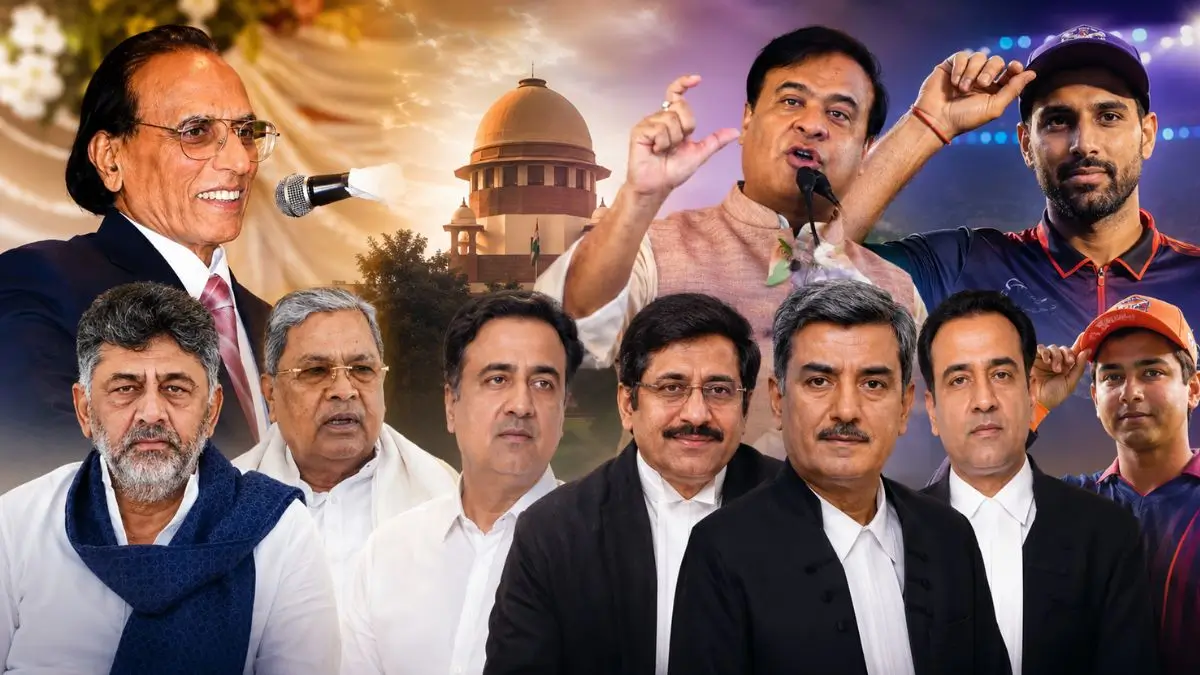
- Karnataka Chief Minister Siddaramaiah has resigned from his post, formally submitting his resignation to Karnataka Governor Thaawarchand Gehlot through the Governor’s office in Bengaluru.
- The move is seen as part of the Congress leadership transition in the state.
- Deputy Chief Minister D. K. Shivakumar is widely expected to become the next Chief Minister.
- Siddaramaiah thanked Congress leaders Sonia Gandhi, Rahul Gandhi and Mallikarjun Kharge for the opportunity to serve Karnataka.
Assam Assembly Passes Uniform Civil Code Bill 2026, Creating History in Northeast India
- The Assam Legislative Assembly passed the Uniform Civil Code (UCC) Bill, 2026, making Assam the first Northeast state and third in India to adopt UCC legislation.
- The law introduces a common civil framework for marriage, divorce, succession, and live-in relationships.
- It mandates registration of marriages and live-in relationships, bans polygamy and child marriage, and prescribes penalties for fraudulent or forced marriages.
- The bill also provides custody guidelines and legal protections while exempting tribal communities, religious rituals, and customary practices from its scope.
Union Minister Jyotiraditya Scindia Launches ₹236 Crore Mission Queen Pineapple in Tripura
- Mission Queen Pineapple is a ₹236 crore initiative launched in Tripura by Union Minister Jyotiraditya M. Scindia to transform the state’s GI-tagged Queen Pineapple into a premium global brand.
- Implemented from Q2 FY2026 to Q4 FY2028 under the Ministry of Development of North Eastern Region (MDoNER), the mission focuses on building a full value chain covering cultivation, processing, packaging, branding, logistics, and exports.
- It aims to increase farmer income, reduce post-harvest losses, and expand rural employment through a hub-and-spoke infrastructure model with processing hubs, cold chains, and digital traceability systems.
Appointments News
Supreme Court Collegium Recommends Five New Judges Including Senior Advocate V Mohana
- The Supreme Court Collegium, led by the Chief Justice of India Surya Kant, has recommended the appointment of five new judges to the Supreme Court following the expansion of the court’s sanctioned strength from 34 to 38 judges.
- The move aims to address rising case pendency, reduce judicial workload, and improve the speed of case disposal.
- If approved, the working strength of the Supreme Court will rise significantly, leaving only a small number of vacancies.
- The recommended names include Justice Sheel Nagu, Justice Shree Chandrashekhar, Justice Sanjeev Sachdeva, Justice Arun Palli, and senior advocate V Mohana.
- Among them, V Mohana’s elevation is historic, as she is set to become only the second woman directly elevated from the bar to the Supreme Court after Justice Indu Malhotra, marking an important milestone in gender representation in India’s higher judiciary.
Sports News
Vaibhav Sooryavanshi Hits Record 65 Sixes in IPL 2026, Surpasses Chris Gayle
- Fifteen-year-old cricket sensation Vaibhav Sooryavanshi created history in the Indian Premier League 2026 Eliminator against Sunrisers Hyderabad at Maharaja Yadavindra Singh International Cricket Stadium by breaking Chris Gayle’s long-standing record for the most sixes in a single IPL season.
- Playing for Rajasthan Royals, Vaibhav smashed 65 sixes, surpassing Gayle’s 59 sixes from 2012.
- He also became the youngest player to score 600 runs in an IPL season, breaking Rishabh Pant’s record, and earlier became the fastest batter to hit 100 T20 sixes in just 515 deliveries.
Important Days News
Eid-ul-Adha 2026 Date and Significance: Everything You Need to Know About Bakrid
- Eid-ul-Adha (Bakrid), one of the most important Islamic festivals, will be observed on 28 May 2026, subject to the moon sighting.
- The festival commemorates Prophet Ibrahim’s devotion and willingness to sacrifice his son in obedience to Allah.
- Muslims celebrate the occasion through Qurbani (animal sacrifice), special Eid prayers, charity, and sharing meat with relatives and the poor.
- The festival symbolizes faith, sacrifice, compassion, and social responsibility. Eid-ul-Adha also coincides with the annual Hajj pilgrimage in Mecca, adding deep spiritual significance to the celebration.
Obituaries News
Veteran Urdu Poet Bashir Badr Passes Away at the Age of 91
- Legendary Urdu poet Bashir Badr passed away on May 28 in Bhopal at the age of 91 after battling dementia.
- Known for his simple, emotional, and relatable ghazals, he made Urdu poetry accessible to common readers across generations.
- His son Taiyab Badr confirmed the news, while poet Javed Akhtar paid tribute, saying Urdu had become “a little poorer.” Born in Ayodhya, Bashir Badr authored celebrated works like Aahat and Kulliyate Bashir Badr and received honors including the Padma Shri.





 Daily Current Affairs Quiz 17th Septembe...
 Daily Current Affairs and GK Updates (16...
 Daily Current Affairs Quiz 16th Septembe...