
Daily Current Affairs: 22 July, 2026
Q1. Which Indian regulatory body granted the marketing authorization for India’s first dengue vaccine, Qdenga®, and under which governing legislation was the scientific evaluation executed?
(a) Food Safety and Standards Authority of India (FSSAI) under the FSS Act, 2006
(b) Indian Council of Medical Research (ICMR) under the Epidemic Diseases Act, 1897
(c) Central Drugs Standard Control Organisation (CDSCO) under the Drugs and Cosmetics Act, 1940
(d) National Medical Commission (NMC) under the NMC Act, 2019
(e) Biotechnology Industry Research Assistance Council (BIRAC) under the Patent Act, 1970
Answer: c
Solution:
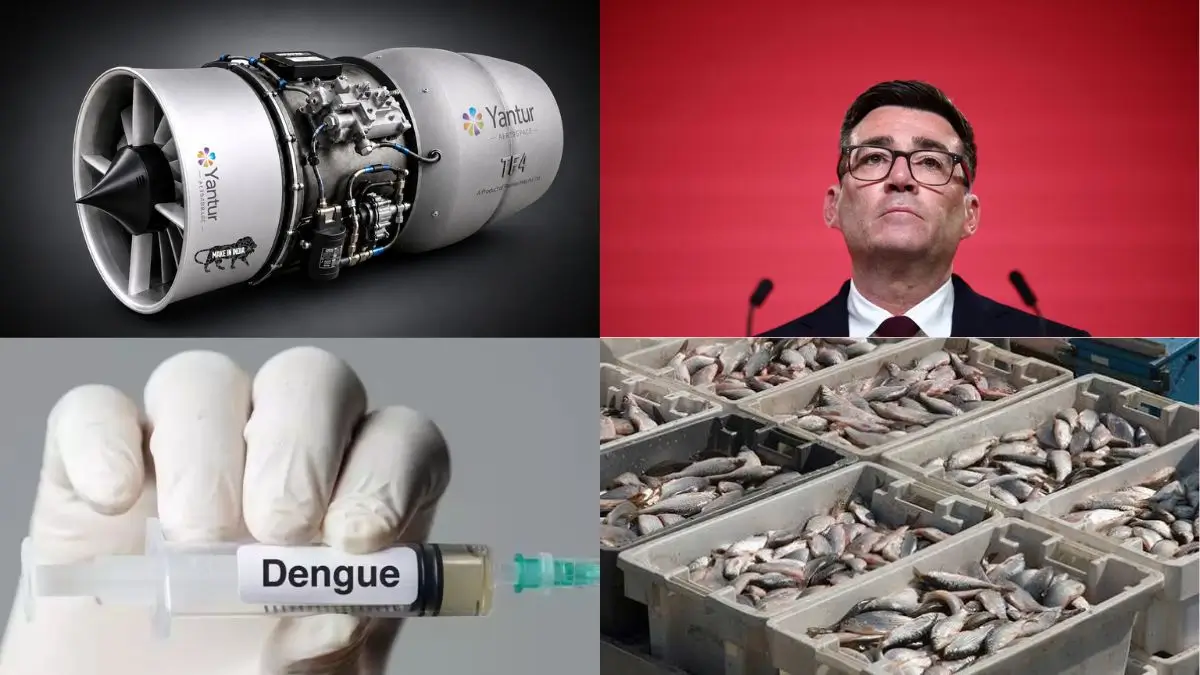
- The Central Drugs Standard Control Organisation (CDSCO), under the Ministry of Health and Family Welfare, has granted marketing authorisation for Qdenga®, the first dengue vaccine approved in India for the prevention of dengue disease.
- Qdenga® is manufactured by Takeda GmbH, Germany, and will be imported by M/s Takeda Biopharmaceuticals India Pvt. Ltd.
- The approval was granted after a comprehensive scientific evaluation of the vaccine’s quality, safety, and efficacy in accordance with the Drugs and Cosmetics Act, 1940 and the Drugs Rules, 1945.
- Qdenga® is a live, attenuated tetravalent dengue vaccine developed using recombinant DNA technology.
- The vaccine is produced in Vero cells, with genes encoding serotype-specific surface proteins engineered into a dengue virus type-2 backbone.
- The product contains genetically modified organisms (GMOs).
- It is supplied as a freeze-dried powder for reconstitution and is administered through a subcutaneous injection.
- The vaccine is indicated for the prevention of dengue disease in individuals aged 4 to 60 years.
- The recommended immunisation schedule consists of two doses of 0.5 ml each, administered three months apart (0 and 3 months).
Q2. The Ministry of Information and Broadcasting launched the ‘Gems of India Challenge’ on 21 July 2026 to empower grassroots creators. Through which digital platform section are participants required to submit their short video entries?
(a) BharatKosh Portal
(b) MyGov Creative Corner
(c) MyWAVES section on WAVES OTT
(d) DD National Digital Hub
(e) NFDC Talent Vault
Answer: c
Solution:
- The Ministry of Information and Broadcasting launched the pilot phase of the Gems of India Challenge on 21 July 2026.
- It is a nationwide initiative aimed at identifying, nurturing, and promoting grassroots digital creators.
- The challenge is built on the MyWAVES platform under WAVES OTT.
- The initiative invites citizens to create short videos showcasing the unique stories, culture, heritage, and identity of their districts.
- Participants can submit 1 to 3-minute videos through the MyWAVES section on the WAVES OTT platform.
- The submission window will remain open from 1 August to 31 August 2026.
- The pilot phase will cover Andaman and Nicobar Islands, Arunachal Pradesh, Chandigarh, Dadra and Nagar Haveli and Daman and Diu, Goa, and Ladakh.
- The programme seeks to encourage local storytelling and promote India’s diverse cultural heritage through digital content creation.
- Based on the success of the pilot phase, the initiative will be expanded to all States and Union Territories.
Q3. What is the total financial outlay approved for the five-year “Mission Golden Spice” initiative launched by the Ministry of Development of North Eastern Region (DoNER) to brand and scale up Lakadong turmeric cultivation in Meghalaya?
(a) ₹75 crore
(b) ₹100 crore
(c) ₹125 crore
(d) ₹175 crore
(e) ₹250 crore
Answer: d
Solution:
- Union Minister for Development of North Eastern Region (DoNER) Jyotiraditya Scindia launched Mission Golden Spice along with Meghalaya Chief Minister Conrad Sangma.
- Mission Golden Spice is a ₹175-crore, five-year initiative aimed at branding Lakadong Turmeric as Meghalaya’s flagship export product.
- The project is being implemented under the Ministry’s Unlock the Economic Potential of India’s Northeast (USP) initiative.
- Lakadong Turmeric, known for its high curcumin content, is primarily cultivated in the West Jaintia Hills and East Jaintia Hills districts of Meghalaya.
- At present, Lakadong turmeric is cultivated over approximately 2,600 hectares, producing around 10,000 metric tonnes annually.
- Under the mission, the government aims to expand the cultivation area to 7,000 hectares, nearly tripling the current area under cultivation.
- The initiative is expected to benefit around 17,500 farmers, of whom 99% are women.
- The mission is also projected to generate around 3,000 additional jobs across the state.
Q4. The novel anti-HPV candidate SHetA2, designed to selectively eliminate precancerous Cervical Intraepithelial Neoplasia (CIN) cells while sparing healthy tissue, was licensed to which Indian pharmaceutical enterprise?
(a) Biological E Ltd.
(b) Bharat Biotech International
(c) Dr. Reddy’s Laboratories
(d) Emcure Pharmaceuticals Ltd.
(e) Serum Institute of India
Answer: d
Solution:
- The Indian Council of Medical Research (ICMR), under its Medical Innovations Patent Mitra initiative, facilitated the licensing of three indigenous biomedical technologies to leading Indian pharmaceutical and vaccine manufacturers for further development, manufacturing, and commercialization.
- The technologies include SHetA2, a novel anti-HPV therapeutic candidate for the treatment of Cervical Intraepithelial Neoplasia (CIN), licensed to Emcure Pharmaceuticals Ltd.
- Two next-generation vaccine technologies against enteric bacterial infections, developed at ICMR–National Institute of Research in Bacterial Infections (ICMR-NIRBI), Kolkata, have been licensed to Biological E Ltd.
- These technology transfers represent a significant step towards translating publicly funded research into affordable healthcare solutions and strengthening India’s biomedical innovation ecosystem.
SHetA2 Technology
- SHetA2 was developed through a collaboration between Dr. Showket Hussain of ICMR–National Institute of Cancer Prevention and Research (ICMR-NICPR) and Dr. Doris M. Benbrook of the Stephenson Cancer Center, University of Oklahoma, USA.
- It is a first-in-class targeted therapeutic candidate designed to selectively eliminate HPV-induced precancerous and cervical cancer cells while sparing healthy cells.
- The technology has the potential to provide a safe, affordable, and minimally invasive treatment option for cervical cancer.
Q5. Prime Minister Narendra Modi congratulated Andy Burnham on assuming office as the Prime Minister of which nation in July 2026?
(a) Australia
(b) Canada
(c) Ireland
(d) New Zealand
(e) United Kingdom
Answer: e
Solution:
- Prime Minister Narendra Modi on 21 July 2026 extended congratulations to Mr. Andy Burnham on assuming office as the Prime Minister of the United Kingdom.
- Prime Minister Modi conveyed his best wishes to Andy Burnham and expressed confidence in further strengthening the longstanding partnership between India and the United Kingdom.
Q6. In July 2026, India formally became a Party to the WTO Agreement on Fisheries Subsidies (AFS). India joined as which numbered WTO Member to deposit its Instrument of Acceptance?
(a) 100th
(b) 112th
(c) 123rd
(d) 135th
(e) 150th
Answer: c
Solution:
- India deposited its Instrument of Acceptance of the WTO Agreement on Fisheries Subsidies (AFS) on 20 July 2026, thereby becoming a Party to the Agreement.
- The Instrument of Acceptance was formally handed over by Commerce Secretary Shri Rajesh Agrawal to the Director-General of the World Trade Organization (WTO).
- India’s decision reflects its commitment to sustainable fisheries management, marine resource conservation, food security, livelihoods, and employment for coastal communities.
- The WTO Agreement on Fisheries Subsidies was adopted by consensus at the 12th WTO Ministerial Conference (MC12) held in Geneva, Switzerland, in June 2022.
- It is the first multilateral WTO agreement with an environmental sustainability objective.
- The Agreement entered into force on 15 September 2025 after receiving acceptance from two-thirds of WTO Members.
- India became the 123rd WTO Member to deposit its Instrument of Acceptance.
- The Agreement focuses on subsidies related to marine wild capture fishing and fishing-related activities at sea.
- Aquaculture and inland fisheries are excluded from the scope of the Agreement.
Q7. According to the provisional estimates released by DPIIT for June 2026 under the revised series (Base Year 2022–23), what was the year-on-year growth rate recorded by the Index of Core Industries (ICI)?
(a) 1.0%
(b) 3.2%
(c) 3.6%
(d) 5.0%
(e) 9.8%
Answer: d
Solution:
- The Office of Economic Adviser (OEA) under the Department for Promotion of Industry and Internal Trade (DPIIT) has released the revised series of the Index of Core Industries (ICI) with Base Year 2022-23.
- The new series replaces the existing ICI series with Base Year 2011-12.
- The Index of Core Industries (ICI) is compiled and released on a monthly basis.
- Along with the revised series, the Provisional Estimates for June 2026 have also been released.
- The back series of ICI (Base Year 2022-23) has been made available from April 2023 onwards.
Key Highlights of ICI for June 2026 (Base Year 2022-23)
- The Index of Core Industries (ICI) recorded a 5.0% year-on-year growth in June 2026 (Provisional Estimate) compared to June 2025.
- This represents an improvement over the 3.2% growth rate recorded in May 2026 (Final Estimate).
- Iron Ore, Electricity, Cement, Steel, and Coal registered positive year-on-year growth rates of 43.9%, 9.8%, 9.8%, 4.6%, and 1.4%, respectively.
- Natural Gas, Crude Oil, Refinery Products, and Fertilizers recorded negative growth during June 2026.
- Iron Ore and Electricity emerged as the major contributors to the overall growth of the Index of Core Industries.
- The cumulative growth rate of ICI during April–June 2026 stood at 3.6% (Provisional Estimate) compared to 1.0% during the corresponding period of the previous year.
Q8. According to official performance data released by the Department of Fisheries, national fish production in India increased from 141.64 lakh tonnes in 2019–20 to how many lakh tonnes in 2024–25 under the Pradhan Mantri Matsya Sampada Yojana (PMMSY)?
(a) 165.50 lakh tonnes
(b) 175.20 lakh tonnes
(c) 188.40 lakh tonnes
(d) 197.75 lakh tonnes
(e) 210.30 lakh tonnes
Answer: d
Solution:
- The Department of Fisheries, under the Ministry of Fisheries, Animal Husbandry and Dairying, has been implementing the Pradhan Mantri Matsya Sampada Yojana (PMMSY) since FY 2020-21 for the holistic development of the fisheries and aquaculture sector.
- During the six years of PMMSY implementation, India’s fish production increased from 141.64 lakh tonnes in 2019-20 to 197.75 lakh tonnes in 2024-25.
Women Empowerment under PMMSY
- PMMSY promotes inclusive development by providing 60% financial assistance of the unit cost for women beneficiaries under beneficiary-oriented activities.
- During the six financial years from 2020-21 to 2025-26, fisheries development proposals worth ₹4,178.30 crore were sanctioned for 1,47,654 women beneficiaries across various States and Union Territories.
Development of Cold Chain and Marketing Infrastructure
- Development of cold chain and marketing infrastructure is one of the key focus areas under PMMSY and the Fisheries and Aquaculture Infrastructure Development Fund (FIDF).
- Till April 2026, the Department of Fisheries approved proposals worth ₹2,797 crore under PMMSY and FIDF for the development of cold chain and marketing facilities.
Q9. India’s first immersive language museum, ‘Shabdalok’ (Museum of Word), was inaugurated in July 2026. In which historic landmark is this museum situated?
(a) National Archives of India, New Delhi
(b) Belvedere House, National Library Campus, Kolkata
(c) Salar Jung Museum Campus, Hyderabad
(d) Asiatic Society Heritage Building, Mumbai
(e) Victoria Memorial Hall, Kolkata
Answer: b
Solution:
- India’s first immersive language museum, Shabdalok (Museum of Word), was inaugurated on 19 July 2026 at the National Library campus in Kolkata.
- The museum functions under the Union Ministry of Culture.
- Shabdalok is housed in the historic Belvedere House located within the National Library premises.
Shabdalok and Linguistic Heritage
- Shabdalok is dedicated to showcasing India’s linguistic heritage and the historical evolution of languages.
- The museum presents information on nearly 380 languages through exhibits, artefacts, and technology-enabled interactive displays.
- It also features the 121 languages recorded in the Census of India 2011.
- The museum aims to preserve, document, and promote India’s rich linguistic diversity.
- Through immersive experiences and digital technologies, visitors can explore the origins, development, and cultural significance of various Indian languages.
Q10. Where is India’s first utility-scale 100 MWh Vanadium Redox Flow Battery Energy Storage System (VRFB BESS) scheduled to be deployed?
(a) Bhadla Solar Park, Rajasthan
(b) Pavagada Solar Park, Karnataka
(c) Khavda Solar Park, Gujarat
(d) Rewa Ultra Mega Solar Park, Madhya Pradesh
(e) Dholera Renewable Energy Park, Gujarat
Answer: c
Solution:
- India has approved its first utility-scale 100 MWh Vanadium Redox Flow Battery Energy Storage System (VRFB BESS) for deployment at Khavda Solar Park in Gujarat.
- The project marks a significant milestone in India’s efforts to strengthen grid-scale energy storage and support the integration of renewable energy into the power system.
- NTPC Renewable Energy Limited (NTPC REL) awarded the contract for the project on 20–21 July 2026.
- The Vanadium Redox Flow Battery Energy Storage System (VRFB BESS) is scheduled for deployment in 2027.
- The project contract includes 10 years of operations and maintenance (O&M) services.
- The deployment is expected to enhance grid stability, improve renewable energy utilization, and support India’s clean energy transition.








 Daily Current Affairs and GK Updates (12...
 Daily Current Affairs Quiz 12th October,...
 Daily Current Affairs Quiz 11th October,...