
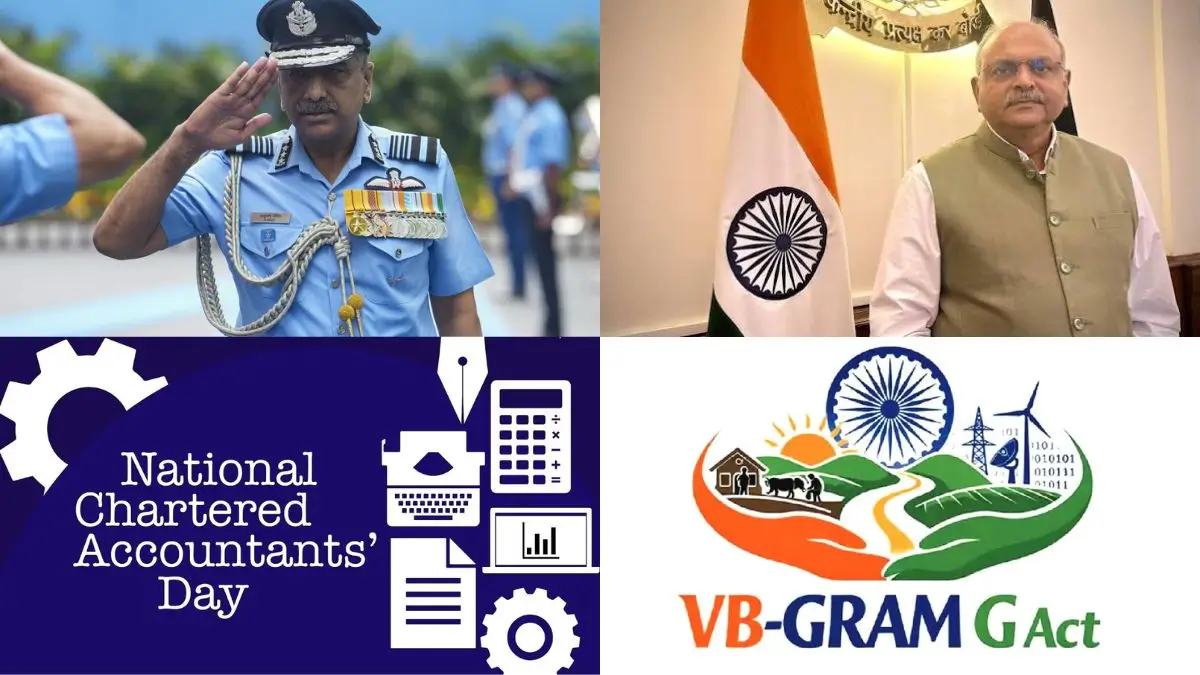
Daily Current Affairs: 2 July, 2026
Q1. The Union Home Ministry recently deployed the FCRA 2.0 Portal to overhaul the supervision of international philanthropic inflows. Which of the following cloud infrastructures serves as the centralized hosting platform for this secure digital application?
(a) National Government Cloud (MeghRaj)
(b) DigiLocker Enterprise Cloud
(c) NIC-Baadal Academic Server
(d) Aadhaar Secure Vault Core
(e) GigaMesh Rural Network
Answer: a
Solution:
- Union Home Minister and Minister of Cooperation Amit Shah recently launched the FCRA 2.0 Portal to modernize and streamline the administration of the Foreign Contribution (Regulation) Act (FCRA).
- The portal has been developed to simplify compliance requirements under the FCRA while strengthening the monitoring and enforcement mechanism related to foreign contributions.
- All major services, including applications, renewals, annual returns, and other regulatory processes, have now been made completely digital through an end-to-end online system.
- At present, around 14,500 active FCRA-registered organizations operate across the country.
- The portal has been hosted on the National Government Cloud (MeghRaj) to ensure security, scalability, and efficient service delivery.
- FCRA 2.0 incorporates several advanced features, including process re-engineering, integrated dashboards, Aadhaar-based authentication, e-Sign facilities, and OCR-based document analysis.
- The provisions of the FCRA Amendment Rules, 2026 have also been integrated into the portal.
- The system has been linked with major government databases and institutions, including PAN, Aadhaar, Overseas Citizen of India (OCI), NGO Darpan, and the Institute of Chartered Accountants of India (ICAI) UDIN system.
- The portal reduces paperwork, simplifies compliance procedures, and provides a more convenient user experience for registered organizations.
Q2. The newly launched Electronic Overseas Citizen of India (e-OCI) system completely digitizes the administrative lifecycle of diaspora registration. Which of the following traditional compliance mandates has been entirely eliminated under this new digital framework?
(a) The requirement to hold a foreign passport while traveling to India
(b) The mandatory re-issuance of the physical OCI booklet upon receiving a new passport after the age of 20
(c) The payment of visa fees for minor children of Indian origin
(d) The filing of annual income tax returns on global income earned outside India
(e) The biometric registration of passengers at their home country departures
Answer: b
Solution:
- Union Home Minister and Minister of Cooperation Amit Shah recently launched the Electronic Overseas Citizen of India (e-OCI) Card, a major citizen-centric initiative aimed at modernizing OCI services for the global Indian diaspora.
- The e-OCI Card introduces a fully digital system that enables applicants to complete the entire OCI process online.
- Under the new system, applicants can submit applications, upload supporting documents, track their applications, and download the digitally generated OCI card after approval.
- Existing OCI cardholders can also obtain their e-OCI Card digitally in most cases without requiring a fresh application or physical verification.
- One of the major reforms under the new system is the removal of the requirement to reissue the OCI booklet after obtaining a new passport once the cardholder has attained the age of 20 years.
- However, OCI cardholders are required to update their passport details online whenever a new passport is issued.
- The e-OCI initiative provides a completely digital and convenient experience, eliminating the need for physical visits and paperwork.
- Applicants can access the system through computers and mobile devices, enabling anytime and anywhere access to OCI services.
- The digital issuance process is expected to reduce processing time and eliminate the risk of loss or damage associated with physical documents.
- The e-OCI system also facilitates smoother travel by supporting faster immigration verification and clearance.
Q3. The veteran creative icon Vijaya Mehta, who recently passed away at the age of 92, was universally acknowledged as an avant-garde pioneer of which of the following cultural movements? (a) Experimental Marathi Theatre
(b) Classical Carnatic Vocal Stream
(c) Modern Hindustani Instrumental Symphony
(d) Contemporary Bengali Parallel Cinema
(e) Traditional Yakshagana Folk Dance
Answer: a
Solution:
- Renowned film and theatre personality Vijaya Mehta passed away at the age of 92, marking the end of an era in Indian theatre and cinema.
- She was regarded as one of the foremost pioneers of experimental Marathi theatre and played a transformative role in modern Indian stagecraft.
- Popularly known as ‘Bai’, Vijaya Mehta introduced innovative theatrical techniques, contemporary perspectives, and a globally influenced approach to Marathi theatre through the theatre group Rangayan.
- Under her leadership, Rangayan became a major force in the development of experimental theatre in Maharashtra.
- Some of her landmark theatrical productions include ‘Barrister’, ‘Sakharam Binder’, ‘Hamidabaichi Kothi’, ‘Mahanirvan’, ‘Purush’, ‘Hayavadana’, and ‘Wada Chirebandi’.
- Beyond theatre, Vijaya Mehta made significant contributions to films and television through works such as ‘Rao Saheb’, ‘Pestonjee’, ‘Shakuntalam’, and the television series ‘Smritichitre’.
- As a teacher, mentor, and director, she trained and inspired several generations of actors, directors, and theatre practitioners.
- Vijaya Mehta received numerous accolades for her contribution to Indian performing arts.
- She was awarded the Sangeet Natak Akademi Award in 1975 for her outstanding contribution to theatre.
- In 1986, she received the National Film Award for Best Supporting Actress for her performance in ‘Rao Saheb’.
Q4. The National Chartered Accountant (CA) Day is observed annually across India on July 1st to recognize the contributions of financial professionals to corporate governance and economic stability. This specific date commemorates the enforcement of the Chartered Accountants Act through an Act of Parliament, which led to the formal establishment of the Institute of Chartered Accountants of India (ICAI) in which year?
(a) 1947
(b) 1949
(c) 1950
(d) 1956
(e) 1961
Answer: b
Solution:
- The 78th National Chartered Accountant (CA) Day is being celebrated across India on 1 July 2026, commemorating the establishment of the Institute of Chartered Accountants of India (ICAI) in 1949.
- The day recognizes the significant contribution of Chartered Accountants (CAs) to financial transparency, corporate governance, economic development, and nation-building.
- Chartered Accountant Day is observed every year on 1 July because the Chartered Accountants Act, 1949 came into force on this date, leading to the establishment of the ICAI through an Act of Parliament.
Q5. National Doctor’s Day is observed across India on July 1st each year. Whose monumental contributions to medicine and public service are commemorated on this specific date?
(a) Dr. APJ Abdul Kalam
(b) Dr. Bidhan Chandra Roy
(c) Dr. Dwarkanath Kotnis
(d) Dr. Hargobind Khorana
(e) Dr. Homi J. Bhabha
Answer: b
Solution:
- National Doctors’ Day is observed across India every year on 1 July to honor the dedication, compassion, and invaluable contribution of doctors toward protecting and improving public health.
- The day commemorates both the birth anniversary and death anniversary of Dr. Bidhan Chandra Roy, one of India’s most distinguished physicians, renowned medical educators, and statesmen.
- The theme for National Doctors’ Day 2026 is “Behind the Mask: Who Heals the Healers?”
- The theme emphasizes the importance of supporting the mental, emotional, and physical well-being of doctors, who devote their lives to caring for patients and safeguarding public health.
Q6. Ravi Agrawal’s re-appointment as the Chairman of the Central Board of Direct Taxes (CBDT) has been locked in for a specific duration on a contract basis. What is the designated tenure of this extension?
(a) Three months
(b) Six months
(c) One year
(d) Two years
(e) Nine months
Answer: b
Solution:
- Ravi Agrawal has been re-appointed as the Chairman of the Central Board of Direct Taxes (CBDT) on a contract basis.
- The re-appointment has been approved by the Appointments Committee of the Cabinet (ACC).
- His tenure will be for a period of six months, effective from 1 July 2026.
- He will continue to serve as CBDT Chairman until 31 December 2026 or until further orders, whichever is earlier.
Q7. According to provisional data released by the Ministry of Finance on July 1, 2026, India’s gross Goods and Services Tax (GST) collections for June 2026 registered a year-on-year growth of 13.9%. What was the absolute value of gross GST collections recorded during this month?
(a) Rs 1,71,105 crore
(b) Rs 1,62,377 crore
(c) Rs 1,94,812 crore
(d) Rs 1,34,774 crore
(e) Rs 6,31,699 crore
Answer: c
Solution:
- India’s gross Goods and Services Tax (GST) collections increased by 13.9% year-on-year to ₹1,94,812 crore in June 2026, compared to ₹1,71,105 crore collected in June 2025, according to provisional data released by the Ministry of Finance on 1 July 2026.
- The strong growth in GST collections reflects improved economic activity, higher compliance, and increased tax revenues from both domestic transactions and imports.
- During the first quarter of FY 2026–27 (April–June 2026), cumulative gross GST collections reached ₹6,31,699 crore, registering an 8.4% increase over ₹5,82,542 crore collected during the corresponding period of the previous financial year.
- Gross domestic GST revenue stood at ₹1,34,774 crore in June 2026, recording a growth of 6.5% compared to ₹1,26,506 crore in June 2025.
- Revenue from imports witnessed robust growth, rising by 34.6% to ₹60,038 crore, compared to ₹44,600 crore during the same month last year.
- After adjusting for refunds, net GST collections increased by 11.2% year-on-year to ₹1,62,377 crore, as against ₹1,45,984 crore in June 2025.
Q8. MECON Limited, which was recently granted the prestigious Miniratna Category-I status by the government following its strong financial performance and positive net worth, is a Schedule ‘A’ Central Public Sector Enterprise (CPSE). In which year was this premier engineering and consultancy organization established, and under which Union Ministry’s administrative control does it operate?
(a) 1959; Ministry of Heavy Industries
(b) 1964; Ministry of Mines
(c) 1973; Ministry of Power
(d) 1964; Ministry of Steel
(e) 1959; Ministry of Steel
Answer: e
Solution:
- The Ministry of Steel has approved the grant of Miniratna Category-I status to MECON Limited, a Schedule ‘A’ Central Public Sector Enterprise (CPSE) functioning under the administrative control of the Ministry of Steel.
- The recognition has been accorded in view of the company’s strong financial performance and sustained profitability in recent years.
- MECON Limited has recorded profits continuously during the last three financial years, thereby fulfilling one of the key eligibility conditions prescribed by the Department of Public Enterprises (DPE) for Miniratna Category-I status.
- The company reported a Profit Before Tax (PBT) of ₹77.62 crore in FY 2023–24, ₹32.08 crore in FY 2024–25, and ₹104.53 crore in FY 2025–26.
- MECON also maintained a positive net worth of ₹535.42 crore as of 31 March 2026, meeting the financial criteria required for the grant of Miniratna Category-I status.
- MECON Limited was established in 1959 and is headquartered in Ranchi, Jharkhand.
Q9. A significant top-tier transition took place within the joint military command structure of the Indian Armed Forces. Which of the following high-ranking officers officially assumed charge as the Chief of Integrated Defence Staff to the Chairman Chiefs of Staff Committee (CISC) on 1 July, 2026?
(a) Air Marshal Vivek Ram Chaudhari
(b) Vice Admiral Sanjay Jasjit Singh
(c) Lieutenant General Upendra Dwivedi
(d) Air Marshal Tejinder Singh
(e) Air Marshal Amar Preet Singh
Answer: d
Solution:
- Air Marshal Tejinder Singh assumed charge as the Chief of Integrated Defence Staff to the Chairman Chiefs of Staff Committee (CISC) on 1 July 2026.
- Prior to his appointment as CISC, he served as the Air Officer Commanding-in-Chief (AOC-in-C) of the South Western Air Command of the Indian Air Force.
- As the Chief of Integrated Defence Staff, Air Marshal Tejinder Singh will play a crucial role in promoting jointness and integration among the three armed services — the Indian Army, Indian Navy, and Indian Air Force.
- The CISC serves as the principal staff officer to the Chairman Chiefs of Staff Committee (CoSC) and assists in coordinating inter-service matters, joint operational planning, and the implementation of integrated defence initiatives.
Q10. According to the notification issued by the Ministry of Rural Development, the Central Government has implemented a historic statutory floor limit for rural employment wages under the VB-G RAM G Act effective from July 1, 2026. What is this new mandatory interim base wage rate per day below which no state can fall?
(a) Rs 250
(b) Rs 298
(c) Rs 300
(d) Rs 327
(e) Rs 350
Answer: c
Solution:
- The Central Government has notified revised wage rates under the Viksit Bharat Guarantee for Rozgar and Ajeevika Mission (Gramin) [VB-G RAM G] Act, 2025, with effect from 1 July 2026.
- According to the notification issued by the Ministry of Rural Development, wage rates have been increased across all States and Union Territories.
- For the first time, the government has introduced an interim base wage rate of ₹300 per day, ensuring that no notified wage under the programme falls below this level.
- The national average wage rate has increased from ₹298.80 per day under MGNREGA to ₹327.40 per day under VB-G RAM G, representing an average increase of more than 10 percent.
- A total of 21 States and administrative units, which previously had wage rates below ₹300 per day, have now been brought up to the new minimum benchmark.
- Several States have witnessed substantial wage revisions ranging from 15 to 25 percent.
- Uttar Pradesh, Bihar, Jharkhand, West Bengal, Assam, Arunachal Pradesh, and Himachal Pradesh are among the States that have received significant increases in wage rates.
- Arunachal Pradesh and Nagaland have recorded the highest percentage increase, with wage rates rising by nearly 24.5 percent.
- States that already had relatively higher wage rates have also received upward revisions.
- Among the highest wage rates notified:
- Haryana: ₹409 per day
- Goa: ₹406 per day
- Kerala: ₹401 per day
- In the High Altitude Gram Panchayats of Sikkim, the wage rate has been fixed at ₹450 per day, making it one of the highest rates under the programme.









 Daily Current Affairs Quiz 20th October,...
 Daily Current Affairs and GK Updates (19...
 Daily Current Affairs Quiz 18th October,...