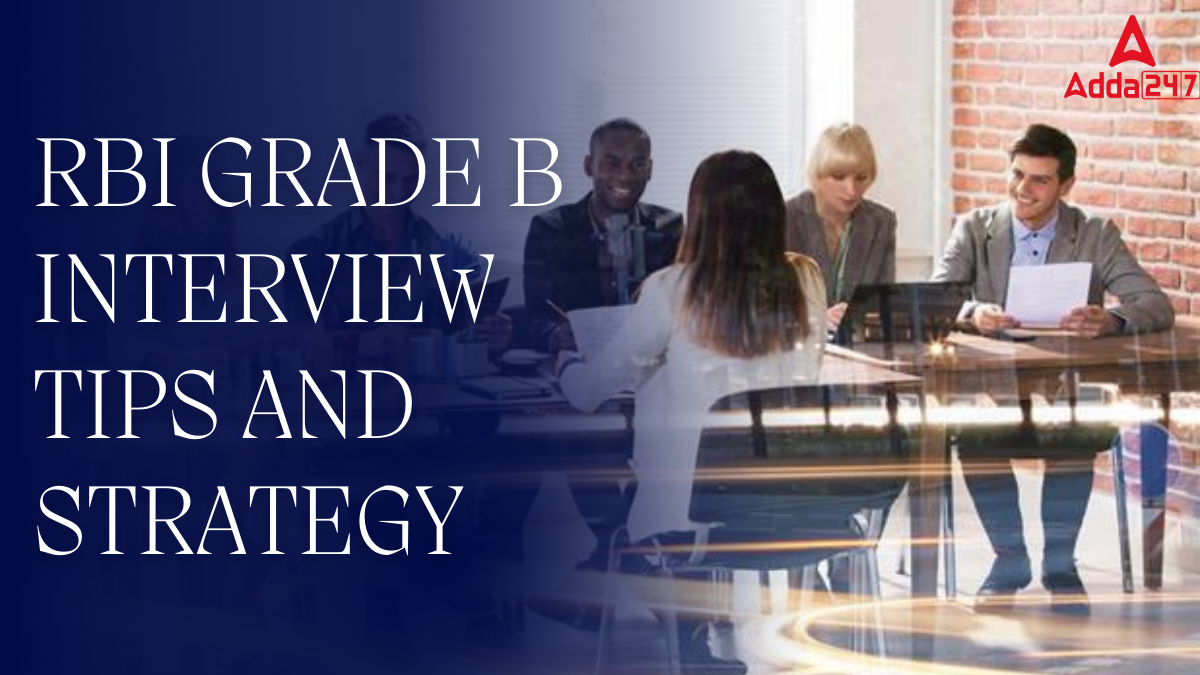
Clearing RBI Grade B Phase 2 is a major achievement, but the final challenge is still ahead—the Interview. The RBI Grade B Interview carries 75 marks, while Phase II carries 300 marks, making the interview an important part of the final merit process. If you have reached this stage, do not approach the interview like another written examination; the panel is also interested in your communication, analytical thinking, awareness, personality and suitability for the role.
RBI Grade B Interview 2026
The RBI Grade B Interview is designed to assess qualities that cannot be fully tested through written papers, including communication, judgement, confidence, analytical ability, awareness and overall suitability for the role. Questions can come from your academic background, work experience, hometown, hobbies, RBI and banking, economics, finance and recent developments.
RBI Grade B Interview: Marks and Final Merit
For the General cadre, RBI’s published scorecard shows that Phase II comprises 300 marks, while the Interview adds 75 marks, taking the combined total to 375 marks for the final merit calculation.
This means a candidate should not treat the Interview as a mere formality after clearing Phase II. A strong written score gives you an advantage, but a well-prepared interview can make a meaningful difference to your final position.
RBI Grade B Interview Preparation Strategy
The best strategy is to divide your preparation into four areas: your profile, RBI and banking, economic and financial current affairs, and interview communication.
1. Know Your Biodata/DAF Inside Out
Your Detailed Application Form or biodata is one of the most important sources of potential questions. Be ready to explain every academic qualification, work experience, achievement, hobby, hometown detail and career decision that you mention.
- Tell us about yourself.
- Why did you choose your graduation subject?
- Why do you want to join RBI?
- Why RBI after your current job?
- Tell us about your work experience.
- Explain your graduation project/dissertation.
- What are your hobbies?
- What is your hometown known for?
- What are the major economic activities in your hometown?
- How can RBI’s policies affect your state or region?
Golden rule: If something is written in your biodata, assume the panel can ask you about it.
2. Prepare a Strong “Tell Me About Yourself” Answer
Your introduction should be short, structured and relevant to the RBI Grade B role. Start with your educational background, briefly mention relevant work experience or achievements, and then connect your profile with your motivation for joining RBI.
3. Revise RBI Thoroughly
You should be able to explain what RBI does, how it operates and why its functions matter to the Indian economy. Do not restrict yourself to memorising definitions; practise explaining each concept in simple language and connecting it with a recent development.
4. Current Affairs: Focus on Economy and Finance
For RBI Grade B, current affairs preparation should go beyond simply memorising headlines. Focus particularly on developments involving monetary policy, inflation, GDP, banking, financial regulation, government finances, financial inclusion and international economic developments.
- RBI: Recent policy decisions, circulars, initiatives and announcements
- Monetary Policy: Policy stance, inflation outlook, liquidity and transmission
- Banking: NPAs, regulation, capital, digital banking and reforms
- Economy: GDP, inflation, employment, fiscal deficit and growth
- Budget: Major announcements and their economic implications
- Financial Markets: Interest rates, bonds, equity and currency movements
- International Economy: IMF, World Bank and major global developments
- Financial Inclusion: Digital payments, banking access and inclusion initiatives
- Government Schemes: Schemes connected with banking, finance and development
5. Strengthen Your Economics and Finance Basics
Do not assume that clearing the Phase II Economics/Finance papers means the panel will only ask current affairs. Interviewers can return to basic concepts and ask you to explain them from a practical perspective.
6. Prepare “Why RBI Grade B?”
This is one question you should never answer with a generic statement about job security, salary or prestige. Your answer should demonstrate that you understand the nature of RBI’s work and have a genuine reason for wanting to build a career in central banking.
7. Prepare Profile-Based Questions
The panel can use your personal background to create questions that are difficult to predict but easy to prepare for if you study your own profile carefully. Candidates should therefore prepare a separate question bank based on their graduation subject, hometown, work experience, hobbies and achievements.
8. Prepare Your Hometown and State
Your hometown is an easy starting point for the panel, so do not underestimate it. Know the important economic activities, industries, agricultural products, major institutions and financial characteristics of your district and state.
9. Don’t Ignore Your Hobbies
If you have mentioned a hobby, be prepared to discuss it beyond simply naming it. A hobby can easily become a follow-up question, especially if you claim a serious interest in something.
10. Practise Mock Interviews
Mock interviews are useful because knowing an answer and delivering it under pressure are two different skills. A mock can reveal whether you speak too quickly, give unnecessarily long answers, avoid eye contact, use excessive filler words or struggle with follow-up questions.
11. Learn How to Handle Questions You Don’t Know
You will not know the answer to every question, and that is completely normal. The worst response is to confidently invent an answer when you are unsure, especially when the panel can immediately recognise the mistake.
12. Learn to Handle Counter-Questions
The panel may not stop after your first answer. They may ask “Why?”, “How?”, “What if?” or “Do you agree?” to test whether you actually understand the subject.
RBI Grade B Interview Day Strategy
Do not allow last-minute anxiety to undo weeks of preparation. Keep your documents organised, check the venue and reporting instructions beforehand, choose professional attire and reach the venue with sufficient time to spare.
- Carry all documents mentioned in the official communication.
- Carry valid identification as prescribed.
- Keep your biodata/DAF copy if required.
- Reach the venue early.
- Avoid studying new topics just before entering.
- Stay hydrated and composed.
- Listen carefully to every question.
- Take a moment before answering difficult questions.
- Be honest when you do not know something.
| Related Posts | |
| Do’s and Don’ts for the RBI Grade B Interview | RBI Grade B Syllabus |
| RBI Grade B Salary Structure | RBI Grade B Selection Process |
| Dress Code for RBI Grade B Interview | RBI Grade B Cut Off |





 Do's & Don'ts for SBI PO Interview t...
 How to Introduce Yourself in SBI PO Inte...
 SBI PO Interview Questions 2026, Guide, ...