
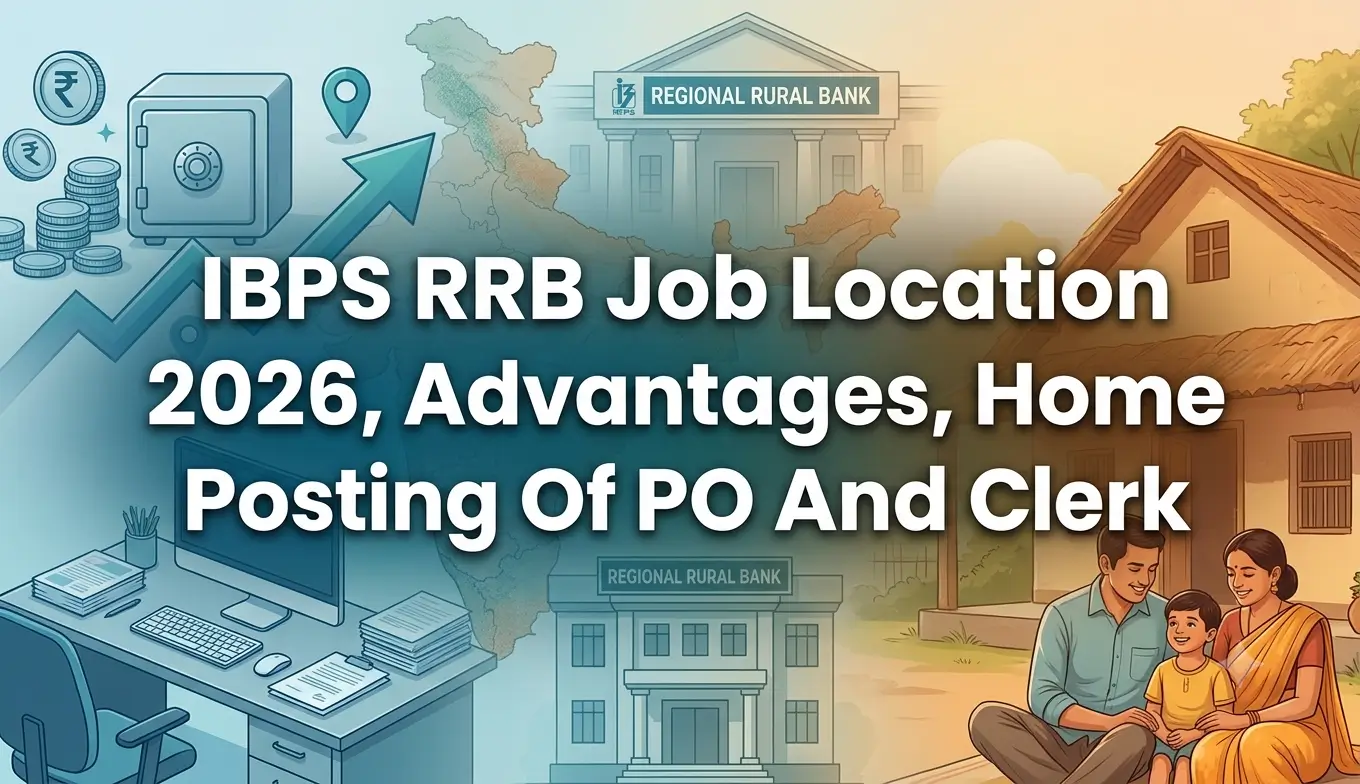
The Institute of Banking Personnel Selection Regional Rural Banks (IBPS RRB) examination remains one of the most sought-after avenues for banking aspirants in India. Unlike public sector banks (PSBs) like SBI or general IBPS PSBs, IBPS RRBs offer a distinct work environment defined by localized jurisdiction, stable schedules, and strong work-life balance.
Job Location Structure of IBPS RRB PO & Clerk
Every Regional Rural Bank operates within a defined state boundary, typically controlling 2 to 10 districts. When you apply for IBPS RRB Officer Scale-I (PO) or Office Assistant (Clerk), your recruitment is tied strictly to the state and bank selected during application.
- Branch Setting: Around 80% to 85% of postings are in rural and semi-urban branches. A small fraction of postings exist in district headquarters or regional head offices.
- State-Bound Service: Your entire career stays limited to the operating area of your specific RRB. Inter-state transfers are generally non-existent except under rare, exceptional circumstances like spouse ground rules or extreme medical reasons.
Possibility of Home Posting: PO vs. Clerk
Getting posted close to home is a primary reason candidates prefer RRB over central banking exams. However, home posting dynamics vary by cadre:
1. IBPS RRB Clerk (Office Assistant)
- High Chance of Home Posting: Clerical positions are state-level cadre entries. Initial allotment often places candidates within their home district or neighboring districts within 30–60 km.
- Transfer Flexibility: After completing an initial mandatory service period (usually 2–3 years), clerks can easily request internal transfers to branches closer to their home city, provided vacancies exist.
2. IBPS RRB PO (Officer Scale-I)
- Home State Guaranteed, Hometown Variable: You will be posted in your home state (if applied there), but not necessarily in your home town initially.
- Rotational Postings: Officers face mandatory transfers every 3 to 5 years across different branches within the bank’s operating districts. While officers are often posted within 100–200 km of their hometown, administrative operational needs take priority during branch manager and scale officer assignments.
| Cadre | Home State Guarantee | Hometown / Home District Chance | Transfer Frequency |
| RRB Clerk | 100% (If applied in home state) | Very High (First posting or after 2 years) | Low (Mostly request-based) |
| RRB PO | 100% (If applied in home state) | Moderate (Rotates within 2–5 districts) | Every 3–5 years |
Top Advantages of IBPS RRB Jobs
- Proximity to Family & Roots: Unlike commercial bank POs who face routine pan-India transfers, RRB employees spend their entire service life within their home state or region.
- Superior Work-Life Balance: Branch operations generally close on schedule due to straightforward rural transactions. Overtime and late working hours are minimal compared to urban public sector banks.
- Lower Cost of Living: Living in rural or semi-urban areas reduces housing, commuting, and daily expenditure, allowing higher disposable savings despite modest initial HRAs.
- Social Impact: Working directly with rural communities, farmers, and micro-entrepreneurs provides strong job satisfaction through government schemes implementation (like PM Jan Dhan Yojana or Mudra loans).
IBPS RRB PO and Clerk roles remain unmatched choices for candidates who prioritize geographic stability, reasonable work hours, and staying close to family over fast-paced metro corporate banking.











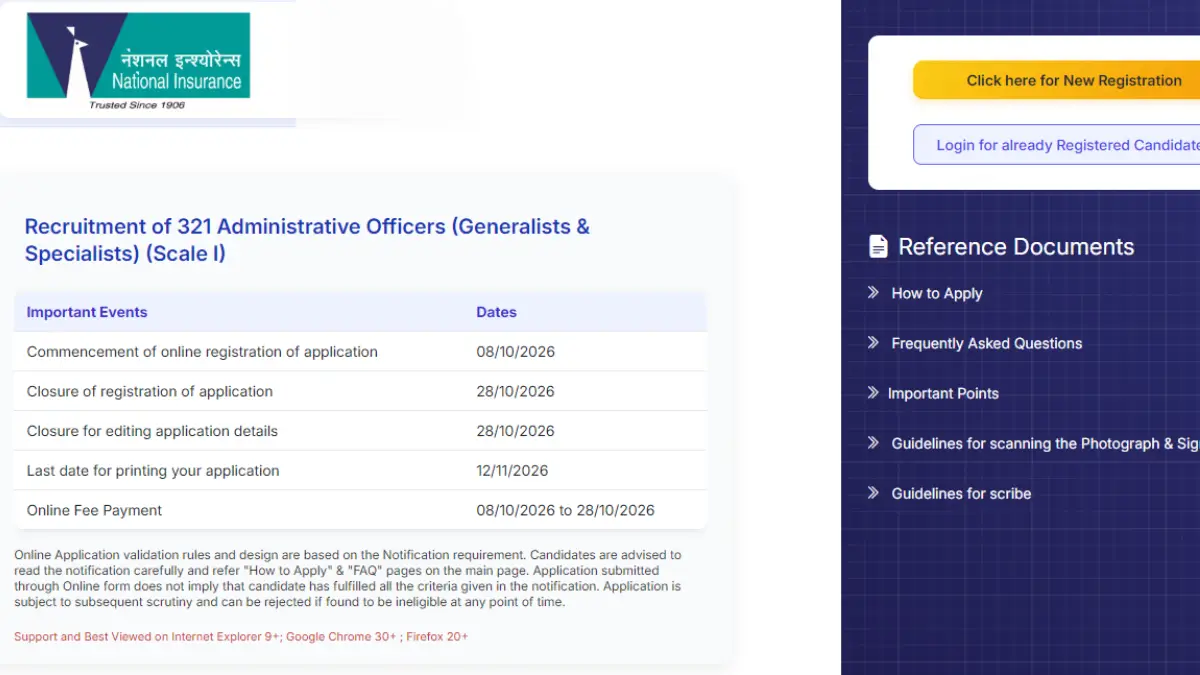 NICL AO Apply Online 2026 Link Active Fo...
 Major Changes In NICL AO 2026, Check Rev...
 IBPS Clerk Admit Card 2026 Out @ibps.in,...