
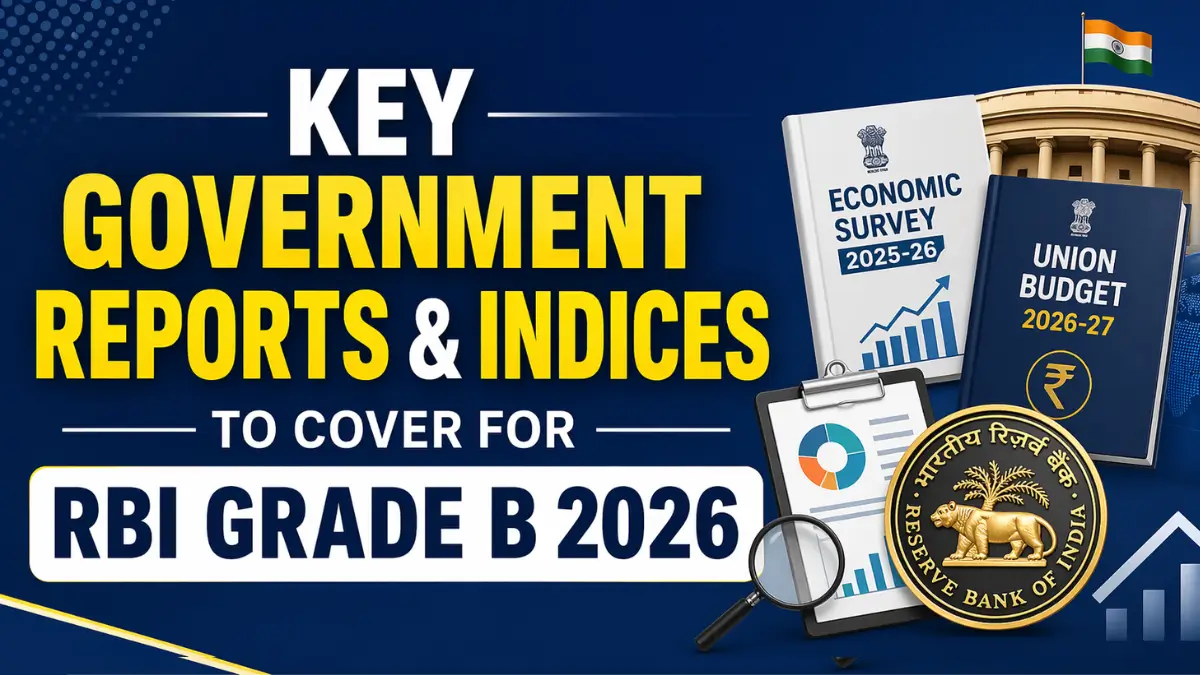
For candidates preparing for the RBI Grade B 2026 exam, current affairs, especially government reports and global indices, play a crucial role in both Phase 1 and Phase 2. These reports are often used to formulate questions related to the economy, governance, banking awareness, and international rankings.
Key Government Reports & Indices to Cover for RBI Grade B 2026
The core of the Economic & Social Issues (ESI) and Finance papers lies in the ability to cite authentic government data and global rankings. Understanding what to study is more important than memorizing everything, so a focused approach is essential.
The Three Important National Pillars
These are non-negotiable. They form the skeleton of your Phase 2 preparation.
Union Budget 2026-27: Focus on the Seven Priorities (Saptarishi) or any new thematic focus introduced. Pay attention to capital expenditure (Capex) targets, fiscal deficit goals, and new tax slabs.
Economic Survey 2025-26: Usually released a day before the budget, this provides the why behind the what. Analyze chapters on the External Sector, Monetary Management, and Prices.
RBI Annual Report & Financial Stability Report (FSR): The FSR is published bi-annually (June and December). It’s critical for understanding Non-Performing Assets (NPAs), Capital to Risk-Weighted Assets Ratio (CRAR), and the resilience of the Indian banking sector.
1. Major Economic & Financial Reports (India-Focused)
These are extremely important for understanding monetary policy and banking structure.
RBI Publications
The Reserve Bank of India releases several key reports that directly influence exam questions:
Financial Stability Report (FSR) – assesses risks in the financial system
Annual Report of RBI – covers policy actions, banking trends, and economic overview
Monetary Policy Report (MPR) – explains inflation outlook and policy decisions
Report on Trend and Progress of Banking in India – banking sector performance insights
Economic Survey of India
- Released before the Union Budget, this is one of the most important documents for RBI Grade B:
- Provides a detailed review of the Indian economy
- Covers GDP trends, inflation, fiscal policy, employment, and reforms
- Helps in both objective and descriptive questions
Union Budget Highlights
While not a report in the strict sense, budget-related updates are crucial:
- Taxation changes
- Fiscal deficit targets
- Infrastructure spending
- Financial sector reforms
2. International Economic Reports
IMF World Economic Outlook (WEO)
- Global and country-wise GDP forecasts
- Inflation and growth projections
- India’s economic comparison with global peers
World Bank Reports
- Ease of Doing Business (historical reference)
- Global Economic Prospects
- Poverty and development indicators
OECD Economic Outlook
- Analysis of developed and emerging economies
- Policy recommendations and growth forecasts
3. Important Global Indices
These indices are frequently used in static + current affairs questions.
Economic & Development Indices
- Human Development Index (HDI)
- Global Hunger Index (GHI)
- World Happiness Report
- Global Competitiveness Index
- Ease of Doing Business Index (legacy reference)
Banking & Financial Indices
- Global Financial Centres Index
- Financial Development Index
- International Banking Statistics (BIS-related updates)
Governance & Corruption Indices
- Corruption Perceptions Index
- Rule of Law Index
- Democracy Index
- Press Freedom Index
Environment & Sustainability Indices
- Environmental Performance Index
- Climate Risk Index
- Global Climate Change Performance Index
- SDG Index (Sustainable Development Goals)
Innovation & Technology Indices
- Global Innovation Index
- Global Cybersecurity Index
- Network Readiness Index
4. India-Specific Rankings & Reports
These are highly relevant for exam questions:
- NITI Aayog reports on SDGs and development
- Periodic Labour Force Survey (PLFS)
- Consumer Price Index (CPI) updates
- Index of Industrial Production (IIP)
- Fiscal Responsibility reports
- Digital Economy and fintech reports
5. How to Study These Government Reports & Indices
Instead of memorising every ranking, focus on:
- India’s position in major indices
- Top 3 countries in each index
- Year-wise improvements or declines
- Which organisation releases which report
- Key findings or themes of major reports
- A smart revision strategy is to maintain a monthly notebook or digital sheet for updates.









 NICL Assistant Mains Exam Date 2026 Out ...
 SBI Data Leak Shock! 3.75 Lakh Customer ...
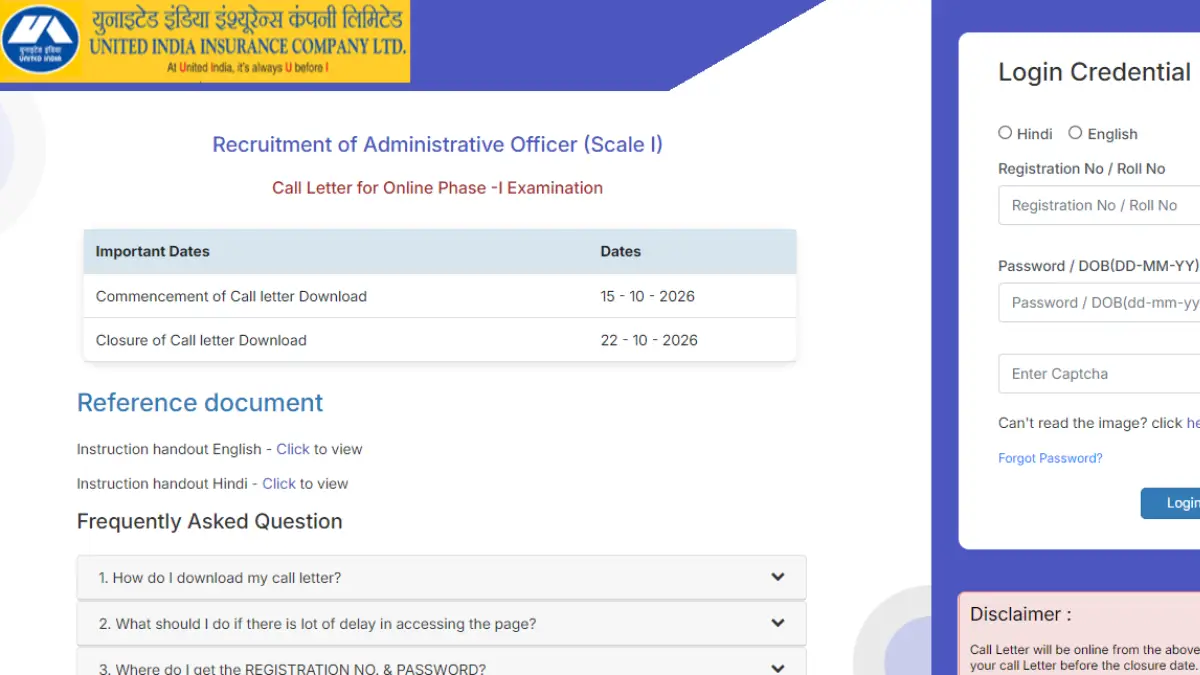 UIIC AO Admit Card 2026 Out: Download Li...