
Directions (1-5): In each of the questions below are given some statements followed by some conclusions. You have to take the given statements to be true even if they seem to be at variance with commonly known facts. Read all the conclusions and then decide which of the given conclusions logically follows from the given statements disregarding commonly known facts.
(a) If only conclusion I follows.
(b) If only conclusion II follows.
(c) If either conclusion I or II follows.
(d) If neither conclusion I nor II follows.
(e) If both conclusions I and II follow.
Q1. Statements: P > Y ≤ H ≥ U > T = N
Conclusions:
I. P > U II. N < H
Q2. Statements: A ≥ S > D = C ≥ V > F > G ≥ H
Conclusions:
I. V < D II. H ≤ V
Q3. Statements: F > G ≥ T ≥ H > Y, T ≤ L = J < K
Conclusions:
I. J > H II. J = H
Q4. Statements: B > N ≥ M = K > L, W ≤ E = B, Q ≥ W > A
Conclusions:
I. W > M II. Q ≤ K
Q5. Statements: C > V = B > N ≥ M, K ≤ L = O ≤ P < V
Conclusions:
I. O < C II. B > L
Directions (6-10): In each of the questions below are given some statements followed by two conclusions. You have to take the given statements to be true even if they seem to be at variance with commonly known facts. Read all the conclusions and then decide which of the given conclusions logically follows from the given statements disregarding commonly known facts.
(a) If only conclusion I follows.
(b) If only conclusion II follows.
(c) If either conclusion I or II follows.
(d) If neither conclusion I nor II follows.
(e) If both conclusions I and II follow.
Q6. Statements: P>S≥T; T>Q<R; R=N
Conclusion I: P>N II: R≥S
Q7. Statements: A>B<C=D≥E≥ G<F
Conclusion
I: B>F II: C≥G
Q8. Statements: J>K=L; L>N>M; M<A
Conclusion
I: J>M II: A>J
Q9. Statements: B=Y≥X>V; V<K>Q; Q=C
Conclusion
I: B>V II: C≤X
Q10. Statements: Z>V<N=M≥E≥B<C
Conclusion
I: B>V II: Z≥E
Directions (11-15): In each of the questions below are given some statements followed by some conclusions. You have to take the given statements to be true even if they seem to be at variance with commonly known facts. Read all the conclusions and then decide which of the given conclusions logically follows from the given statements disregarding commonly known facts.
(a) If only conclusion I follows.
(b) If only conclusion II follows.
(c) If either conclusion I or II follows.
(d) If neither conclusion I nor II follows.
(e) If both conclusions I and II follow.
Q11. Statements: P ≥H >T= Y >Q ≤N >E <F
Conclusions:
I. P > N II. F< H
Q12. Statements: Z ≥S >N = C ≥ V; V>J >L ≥ H
Conclusions:
I. L< N II. H ≤ V
Q13. Statements: F > S > T ≥ H > D; F ≤ L = J < G
Conclusions:
I. J > H II. S < G
Q14. Statements: M > N ≥ R = T > L; M ≤ E < B; L < W > A
Conclusions:
I. E > T II. A ≤ M
Q15. Statements: M > K = L> N ≥ A; M ≤ L = O ≤ P < V
Conclusions:
I. N < P II. M ≤P
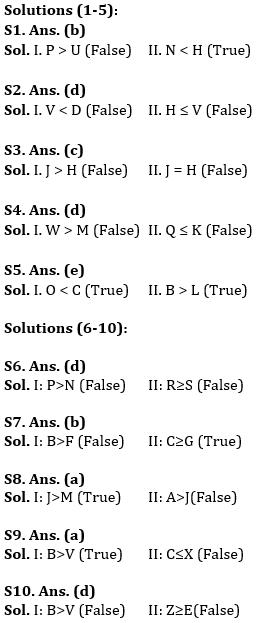
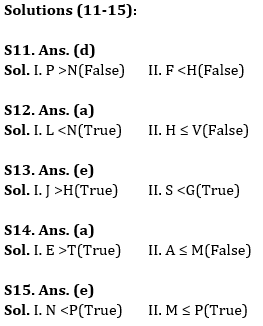
Solutions

Click Here to Register for Bank Exams 2021 Preparation Material








 RBI Assistant Mains Admit Card 2026 Out,...
 Union Bank Apprentice Exam Date 2026 Out...
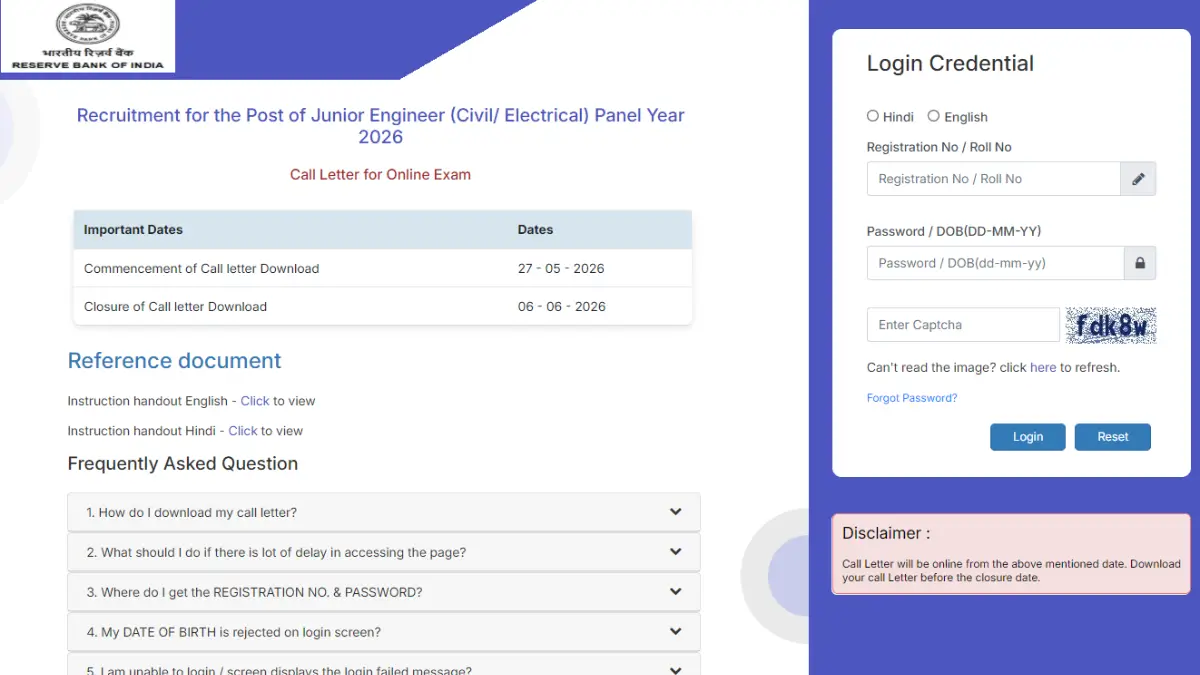 RBI JE Admit Card 2026 Out, Direct Link ...