
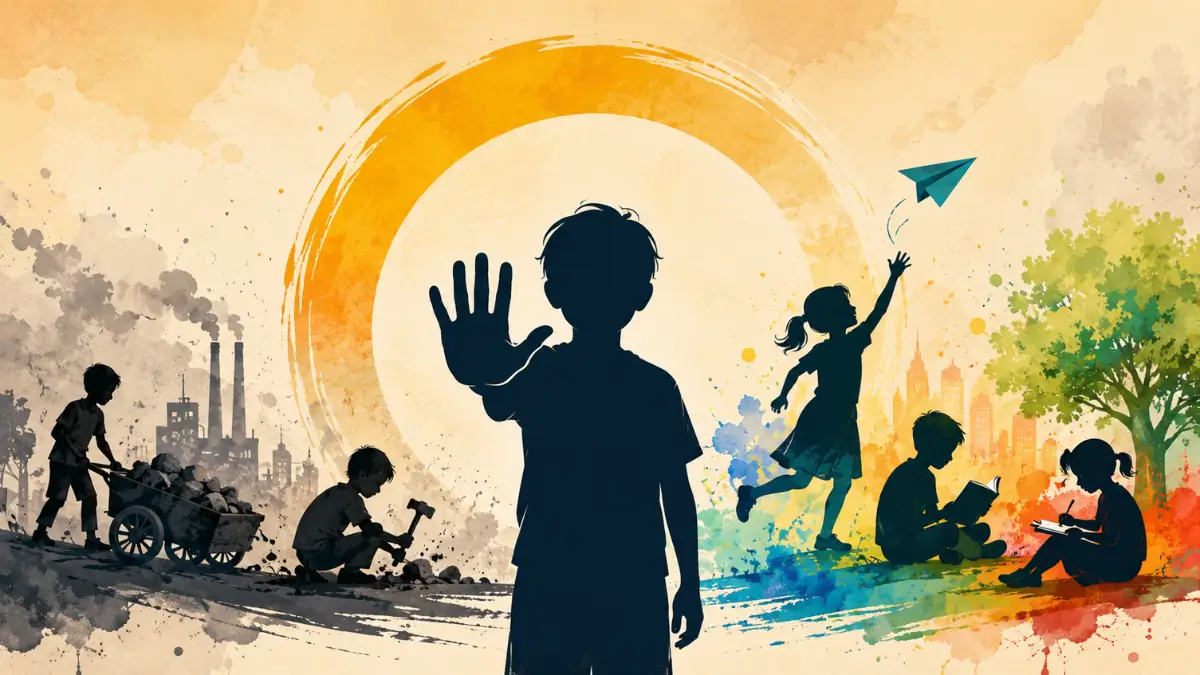
The World Day Against Child Labour is observed every year on 12 June to raise awareness about the harmful effects of child labour and to promote efforts aimed at eliminating it worldwide. The observance highlights the challenges faced by millions of children who are deprived of education, healthcare, and a safe childhood because they are forced into work at an early age. Governments, international organizations, employers, workers’ groups, and civil society organizations use this day to advocate for stronger measures against child labour and support children’s rights.
World Day Against Child Labour 2026
Despite significant progress in recent decades, child labour remains a major global concern. Millions of children continue to work in agriculture, manufacturing, mining, domestic services, and other sectors under conditions that can be dangerous to their health and development. The World Day Against Child Labour serves as a reminder that every child deserves access to education, protection, and opportunities for a better future.
What is Child Labour?
Child labour refers to work that deprives children of their childhood, education, dignity, and overall development. It includes activities that are mentally, physically, socially, or morally harmful to children.
What is the Theme World Day Against Child Labour 2026
The theme for World Day Against Child Labour 2026 is:
“Red card to child labour: Fair play for children, decent work for adults”
History of World Day Against Child Labour
The International Labour Organization (ILO) launched the World Day Against Child Labour in 2002 to draw global attention to the issue of child labour and mobilize efforts to eliminate it.
- 1999: ILO Convention No. 182 adopted on Worst Forms of Child Labour
- 2002: First World Day Against Child Labour observed
- 2015: Child labour elimination included in UN Sustainable Development Goals
- 2021: International Year for the Elimination of Child Labour
- Present: Global awareness and action campaigns continue
Objectives of World Day Against Child Labour
The observance aims to encourage governments, employers, communities, and individuals to work together to eliminate child labour and promote children’s well-being.
- Raise awareness about child labour
- Promote children’s rights
- Encourage access to education
- Prevent exploitation of children
- Strengthen labour laws
- Support social protection measures
- Eliminate hazardous child labour
- Promote international cooperation
“Children should have pens in their hands, not tools.” — Kailash Satyarthi, Nobel Peace Laureate
Significance of World Day Against Child Labour
World Day Against Child Labour highlights the need to protect children from exploitation and ensure that they have opportunities to learn, grow, and develop in safe environments.
- Awareness: Highlights the issue of child labour
- Advocacy: Encourages stronger laws and policies
- Education: Promotes school enrollment and retention
- Child Protection: Supports children’s welfare
- Global Action: Strengthens international cooperation
Causes of Child Labour
Child labour often results from a combination of social, economic, and cultural factors. Addressing these root causes is essential for eliminating the practice.
- Poverty
- Lack of access to education
- Unemployment among adults
- Social inequality
- Migration and displacement
- Weak law enforcement
- Family debt
- Natural disasters and conflicts
Effects of Child Labour
Child labour can have long-lasting consequences on a child’s physical, emotional, and educational development. It often prevents children from reaching their full potential.
- Health Risks: Exposure to injuries and diseases
- Educational Loss: School dropout and illiteracy
- Psychological Impact: Stress and emotional trauma
- Social Isolation: Limited social development
- Economic Disadvantage: Reduced future opportunities
The Six Pillars of Action (Marrakech Framework)
The 2026 campaign calls for reinforced action on six critical policy areas:
- Quality Education: Universal access, especially in rural and crisis-affected areas
- Universal Social Protection: Child benefits, safety nets, and poverty alleviation
- Decent Work & Adequate Livelihoods: Fair wages and stable employment for adults
- Stronger Laws & Enforcement: Criminalizing exploitation and penalizing violators
- Better Data & Monitoring: Accurate tracking to target interventions effectively
- Responsible Supply Chains: Business accountability from cotton to coffee to manufacturing
“The only way to end child labour is to ensure that all children have access to education and opportunities.” — ILO Director-General
World Day Against Child Labour and Sustainable Development Goals
The observance contributes to the achievement of several Sustainable Development Goals (SDGs), particularly those related to education, poverty reduction, and decent work.
- SDG 1: No Poverty
- SDG 4: Quality Education
- SDG 8: Decent Work and Economic Growth
- SDG 10: Reduced Inequalities
- SDG 16: Peace, Justice and Strong Institutions









 Daily Current Affairs Quiz 20th October,...
 SBI Clerk Syllabus 2026 (Prelims and Mai...
 SBI Clerk Previous Year Question Paper w...