
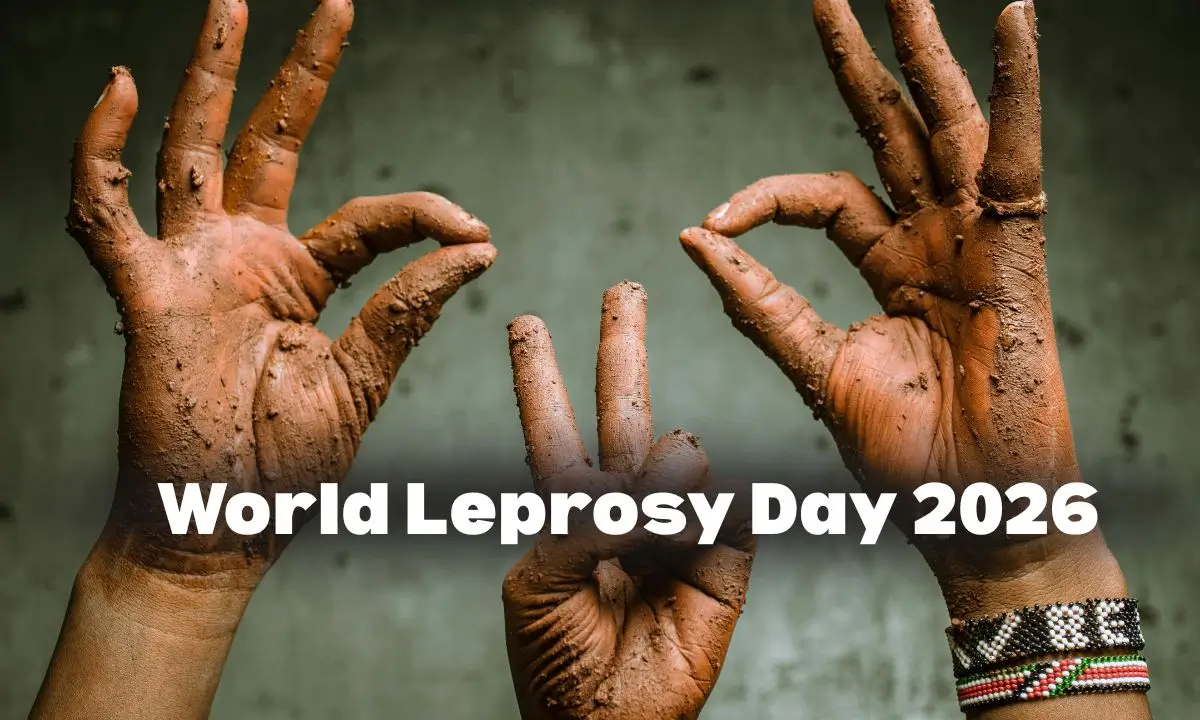
World Leprosy Day is an international observance held every year on the last Sunday of January to raise awareness about leprosy, also known as Hansen’s disease, and to combat the stigma and discrimination associated with it. In India, this day is observed on 30 January each year, coinciding with the death anniversary of Mahatma Gandhi a leader who worked compassionately for those affected by leprosy. The day highlights the need for early diagnosis, proper treatment, and inclusive support for those living with the disease.
History of World Leprosy Day
World Leprosy Day was first initiated in 1954 by French humanitarian Raoul Follereau, who sought to draw global attention to leprosy and the hardships faced by people affected by it. Follereau specifically chose January for the observance to honour Mahatma Gandhi’s commitment to leprosy patients, as Gandhi had shown deep compassion and personally cared for those suffering from the disease. Since then, it has been observed every year to encourage global action and solidarity.
Significance of the World Leprosy Day
The significance of World Leprosy Day lies in its mission to raise awareness, reduce stigma, and promote early treatment for leprosy. Despite being one of the oldest recorded diseases, leprosy is often misunderstood, leading to social exclusion and discrimination against affected individuals. This day provides an important opportunity for governments, health organizations, and communities to educate people about the disease, support those affected, and amplify efforts to eliminate it from society.
Theme of World Leprosy Day 2026
Each year, World Leprosy Day carries a specific theme that reflects global priorities in fighting the disease. For example, the theme for World Leprosy Day 2025 was “Unite. Act. Eliminate.”, which emphasized collective action for awareness, care, and eventual elimination of leprosy. The 2026 theme, as announced by WHO, is “Leprosy is curable, the real challenge is stigma,” focusing on dismantling the social stigma that continues to affect people with leprosy.

Awareness and Advocacy
World Leprosy Day is not just a date on the calendar its a call to action. On this day, campaigns, seminars, webinars, and community programs are organized to spread accurate information about the disease, encourage early diagnosis, and promote inclusive treatment. These activities help dispel myths, educate the public about how leprosy spreads and how it can be cured, and support the global goal of eliminating leprosy as a public health issue.


 Daily Current Affairs and GK Updates (3r...
 RBI Assistant Prelims Admit Card 2026 Ou...
 International Day for Mine Awareness 202...