IBPS RRB Clerk Prelims Admit Card 2026 Out @ibps.in, Direct Download Call Letter Link

The Institute of Banking Personnel Selection (IBPS) has released the IBPS RRB Clerk Prelims Admit Card 2026 on its official website, ibps.in. Candidates appearing for the Office Assistant (Multipurpose) examination can now download their call letters using their registration number and password or date of birth. The IBPS RRB Clerk Prelims Exam 2026 is scheduled to be conducted on 6, 12 and 13 December 2026 across various centres. Candidates should download their admit cards in advance and check the exam date, shift timing, reporting time and venue details mentioned on them.

IBPS RRB Clerk Prelims Admit Card 2026 Out

Candidates appearing for the IBPS RRB Clerk Prelims Exam 2026 can download their admit card through the official IBPS portal. The call letter contains essential information regarding the examination, including the candidate’s roll number, exam centre, reporting time and exam date. Candidates must ensure that they download and print their admit card before the examination and verify all the details mentioned on it.

IBPS RRB Clerk Admit Card 2026: Overview

Candidates who have applied for the recruitment can now download their call letter from the official website of IBPS using their login credentials.

Particulars Details
Organisation
Institute of Banking Personnel Selection (IBPS)
Exam Name
IBPS RRB Clerk (Office Assistant) 2026
Post Office Assistant (Multipurpose)
Total Vacancies 8,222
Admit Card Status Released
Total Shifts 4 Shifts (Each Day)
Prelims Exam Date 6th, 12th and 13th December 2026
Mode of Admit Card Online
Login Credentials
Registration/Roll Number & Password/Date of Birth
Official Website ibps.in

RRB Clerk Prelims Admit Card 2026 Download Link

The IBPS RRB Clerk Prelims Admit Card 2026 download link is now active on the official website of the Institute of Banking Personnel Selection. Candidates can download the IBPS RRB Clerk Prelims Admit Card 2026 by visiting the official IBPS website and entering their login credentials, including their Registration Number/Roll Number and Password/Date of Birth..

IBPS RRB Clerk Prelims Admit Card 2026: Link Active

Are You Appearing For the IBPS RRB Clerk Prelims??

Steps to Download IBPS RRB Clerk Prelims Admit Card 2026

Candidates can follow the steps given below to download their IBPS RRB Clerk Prelims Admit Card 2026:
1. Visit the official website of IBPS at www.ibps.in.
2. Navigate to the CRP RRBs section on the homepage.
3. Click on the link for CRP RRB XIV – Office Assistant Admit Card 2026.
4. Enter your Registration Number/Roll Number and Password/Date of Birth.
5. Fill in the captcha code, if required, and click on the login button.
6. Your IBPS RRB Clerk Prelims Admit Card 2026 will appear on the screen.
7. Download the admit card and take a printout for the examination day.

Details Mentioned on IBPS RRB Clerk Admit Card 2026

Candidates must carefully check all the details mentioned on their IBPS RRB Clerk Prelims Admit Card 2026 after downloading it. The following information is generally mentioned on the call letter:

  • Candidate’s Name
  • Roll Number and Registration Number
  • Photograph and Signature
  • Exam Date and Shift
  • Reporting Time
  • Exam Centre Name and Address
  • Exam-related Instructions

Documents to Carry for IBPS RRB Clerk Prelims Exam 2026

Candidates must carry the required documents to the examination centre to avoid any inconvenience during the entry process. The important documents generally required are:

  • Printed Admit Card: A clear printed copy of the IBPS RRB Clerk Prelims Admit Card 2026.
  • Valid Photo ID Proof: Aadhaar Card, PAN Card, Voter ID, Passport or any other valid ID as permitted in the official instructions.
  • Photograph: Recent passport-size photographs, if required as per the call letter instructions.

IBPS RRB Clerk Prelims Exam 2026: Exam Day Instructions

Candidates appearing for the IBPS RRB Clerk Prelims examination must follow the instructions prescribed by IBPS to ensure a smooth examination process. Some important exam-day guidelines are given below:

  • Reach the Exam Centre on Time: Candidates should reach the examination centre before the reporting time mentioned on their admit card.
  • Carry Required Documents: The printed admit card and valid photo identity proof are mandatory for verification.
  • Check Exam Centre Details: Candidates must verify the examination centre address in advance and plan their route accordingly.
  • Follow Examination Guidelines: Candidates must follow all instructions issued by the examination authorities and the invigilators at the centre.
  • Avoid Prohibited Items: Electronic gadgets, smartwatches, calculators and other prohibited items should not be carried inside the examination hall, as per the exam instructions.
  • Read the Admit Card Instructions: Candidates should carefully read the instructions mentioned on their call letter regarding identification, reporting and entry requirements.

What to Do If You Are Unable to Download IBPS RRB Clerk Admit Card 2026?

Candidates may occasionally face difficulties while downloading the IBPS RRB Clerk Prelims Admit Card 2026 due to technical issues, heavy website traffic or incorrect login credentials. In such cases, candidates can follow these steps:

  • Check whether the Registration Number/Roll Number and Password/Date of Birth have been entered correctly.
  • Ensure that the internet connection is stable while accessing the IBPS website.
  • Try accessing the website again after some time if the server is experiencing heavy traffic.
  • Check the official IBPS website for any updates regarding admit card download issues.
  • If the problem persists, contact the IBPS helpdesk through the contact details provided on the official website.

IBPS RRB Clerk Prelims Final Preparation

With the IBPS RRB Clerk Prelims Exam 2026 approaching, candidates should focus on revising important topics, improving accuracy and practising within the given time limit.

  • Revise Important Topics: Focus on high-priority topics in Reasoning Ability and Numerical Ability, including puzzles, seating arrangements, simplification, number series and arithmetic.
  • Attempt Mock Tests: Take full-length mock tests regularly to improve speed, accuracy and time management.
  • Analyse Previous Mock Tests: Identify recurring mistakes and work on weak areas instead of attempting too many new questions.
  • Practise Short Tricks: Revise calculation techniques, approximation methods and quick-solving approaches for time-consuming questions.
  • Focus on Accuracy: Avoid random guessing, as incorrect answers attract negative marking.
  • Revise Formulas and Concepts: Go through important formulas, tables, squares, cubes and basic concepts.
  • Check Exam-Day Requirements: Read the instructions on the admit card and keep the required documents ready before the examination.

JAIIB RBWM Exam Analysis 2026, 29 November: All Shifts Review

The JAIIB Retail Banking and Wealth Management (RBWM) examination was conducted by the Indian Institute of Banking and Finance (IIBF) on 29 November 2026. Aspirants who appeared for the paper can refer to this page for a detailed review of all shifts. The JAIIB RBWM Exam Analysis 2026 covers the difficulty level, questions asked, important topics, numerical-based questions and the overall examination experience shared by candidates.

JAIIB RBWM Exam Analysis 2026, 29 November: Overall Review

RBWM is an important paper in the JAIIB examination, covering various aspects of retail banking, customer service, banking products, wealth management and financial planning. The paper evaluates candidates’ understanding of banking operations and their practical application in different situations. Based on the initial responses received from candidates, the overall examination review is provided below.

  • Overall Difficulty Level: Moderate to Difficult
  • Question Pattern: Conceptual, Numerical and few Case Studies
  • Time Management: Moderate, with some lengthy questions

JAIIB RBWM Exam Analysis 2026: Shift 1 Review

The first shift of the RBWM examination was held from 9:30 to 11:30. Candidates who appeared in this session can check the questions and topics recalled after the examination. The review will provide an idea of the paper’s difficulty and the areas that received greater attention.

18 qs. of 2 marks

  • AI
  • Provisioning
  • Moratorium Period (Housing Loan)
  • FOIR
  • Card Types
  • Marketing
  • LTV
  • Section 80EE
  • EMI related (Numerical)
  • SBU Approach
  • Written Down Value
  • Future Value
  • Sinking Fund
  • Reverse Mortgage
  • Vehicle Loan
  • Willful Defaulter
  • Features of Retail Banking
  • Small Account
  • Auto Loan (No Moratorium Period)
  • STCG- Period of Holding
  • Portfolio Management (3 questions)
  • LTCG & STCG
  • Rule: 72, 115, 144
  • NACH- NPCI
  • Virtual Card & Credit Card
  • Non-payment on Charge Card
  • Mobile Banking, Cheque & P2P
  • Annuity Formula
  • Minimum Retention Requirement
  • PMSBY
  • Credit Card after due date
  • Locker-Joint (Case Study)
  • Due Date: Credit Card
  • Fintech
  • Calculation of Loan Amount from EMI
  • Gift Card

JAIIB RBWM Exam Analysis 2026: Shift 1 Video Review

From Setbacks to Success with Bank Mahapack: Debjani Baskey’s Journey to SBI Clerk and IBPS PO Mains

Every banking aspirant dreams of seeing their name in the final selection list. But the journey towards that dream is rarely easy. Missed cut-offs, unsuccessful Mains attempts, self-doubt and the pressure to perform can test even the strongest determination.

What makes the difference is the courage to start again, the right guidance and the willingness to keep improving. Adda247 Bank Mahapack aims to support aspirants through this journey with structured classes, mock tests, study material and expert guidance for major banking examinations.

Bank Mahapack: Complete Preparation Support for Banking Exams

Preparing for SBI, IBPS, RRB and other banking examinations often requires multiple resources. Bank Mahapack brings different learning and practice facilities together under one subscription, helping aspirants organise their preparation. Key resources available under Bank Mahapack include:

  • 2,000 Hours of Online Live Classes: Learn from experienced faculty members.
  • 16,729 Mock Tests: Practise regularly and analyse your performance.
  • 310 E-Books: Access digital study material for learning and revision.
  • 14,282 Videos: Strengthen concepts with recorded lectures.

Bank Mahapack: Special Offers

  • Students can also access foundation batches, subject-wise classes, exam-targeted batches, score booster sessions, mock discussions, monthly current affairs sessions, repeater batches and Mains preparation.
  • Bank Mahapack supports preparation for major examinations, including SBI PO, SBI Clerk, IBPS PO, IBPS Clerk, IBPS RRB PO and Clerk, RBI Assistant, SBI SO and other covered banking and insurance examinations.
  • With resources for Quantitative Aptitude, Reasoning, English, General Awareness, Banking Awareness and Current Affairs, aspirants can work on different aspects of their preparation through one platform.

Debjani Baskey’s Success Story: From Repeated Mains Setbacks to SBI Clerk & IBPS PO Mains

“I started my preparation in mid-2024 with early-morning Viral Maths sessions.” Debjani Baskey’s banking preparation journey began with small steps and a big dream. After studying through YouTube for almost a month, Debjani decided to purchase Bank Mahapack, which became an important part of the preparation journey. The first breakthrough came with the SBI Prelims 2024 result. Debjani successfully cleared the examination with a good score in the ST category.

But the journey was far from over. The Mains examination became the first major hurdle. Instead of giving up, Debjani reviewed the mistakes, worked on the weaknesses and started preparing again. Debjani cleared SBI Clerk, RRB Clerk and IBPS Clerk Prelims, but Mains continued to be challenging.

Imagine clearing Prelims repeatedly, coming closer to the goal with every attempt, yet having to start again after Mains results. It takes immense patience to continue when success seems just a few marks away. But Debjani refused to let those setbacks define the journey. Every failed attempt became a lesson. Every disappointment strengthened the determination. And finally, the hard work started turning into achievements! Debjani successfully cleared SBI Clerk and IBPS PO Mains, marking an important milestone in the banking preparation journey. Sharing her experience, Debjani expressed heartfelt gratitude towards the Adda247 teachers:

“I want to thank all the dedicated teachers of Adda who not only deliver the classes but also guide us and motivate us in our low phases. Their hard work gives me motivation to work harder.

Once again, thank you Adda247 for everything.”

ZIDDI Season 11: Because Your Determination Deserves a Selection!

  • Debjani Baskey’s journey perfectly reflects the spirit of ZIDDI. ZIDDI is for the aspirant who has missed the cut-off but refuses to miss the next opportunity. It is for the student who has faced Mains disappointment but still wakes up the next morning to prepare again.
  • It is for those who have heard enough advice to give up but still believe that their dream is worth fighting for. Your unsuccessful attempt is not your final result. Your delay is not your defeat. And your dream is certainly not too big!
  • This ZIDDI Season 11, Adda247 brings a special Bank Mahapack offer to help aspirants continue their preparation with the right learning resources and guidance.

Bank Mahapack ZIDDI Season 11 Offer

Get access to comprehensive banking preparation resources and continue working towards your SBI, IBPS, RRB and other covered examination goals. If Debjani’s journey teaches us anything, it is that one setback cannot decide the future of a determined aspirant.

  • Price: ₹1,999
  • 3X Validity
  • 3 Months Extra Validity

Sapna Banker Banne Ka, Zidd Selection Ki!

Daily Current Affairs Quiz 29th November, 2026 for Banking & Competitive Exams

Daily Current Affairs: 29 November 2026

Q1. For which country was the maiden ‘Global Leadership Programme in Defence Governance and Public Administration for Emerging Leaders’—conducted by the Defence Headquarters Training Institute (DHTI), Ministry of Defence, with its first phase concluding at Lami, Suva on 27 November 2026—organised for the first time?

(a) Maldives

(b) Fiji

(c) Mauritius

(d) Sri Lanka

(e) Seychelles

Answer: b

Solution:

  • The first phase of the maiden Global Leadership Programme in Defence Governance and Public Administration for Emerging Leaders, organised by the Defence Headquarters Training Institute (DHTI), Ministry of Defence, India, concluded at Lami, Suva, Fiji, on 27 November 2026.
  • The programme was organised for officers of the Ministry of Defence and Veteran Affairs of Fiji.
  • The programme covered various aspects of defence governance and public administration, including good governance, defence procurement, ethics in governance, talent management and capacity building.
  • Other important topics covered during the programme included administrative law, citizen-centric governance, modernisation of the defence audit framework, artificial intelligence for digital transformation, purpose-driven leadership, strategic communication and emotional intelligence for leaders in the defence sector.

Q2. Which shipyard indigenously built ‘Vindhyagiri’ (Yard 3024)—the seventh and final ship of the Nilgiri-class (Project 17A) frigates—delivered to the Indian Navy on 27 November 2026?

(a) Mazagon Dock Shipbuilders Limited (MDL), Mumbai

(b) Garden Reach Shipbuilders and Engineers Ltd (GRSE), Kolkata

(c) Cochin Shipyard Limited (CSL), Kochi

(d) Goa Shipyard Limited (GSL), Vasco da Gama

(e) Hindustan Shipyard Limited (HSL), Visakhapatnam

Answer: b

Solution:

  • The Indian Navy received Vindhyagiri (Yard 3024), the seventh and final ship of the Nilgiri class under Project 17A, on 27 November 2026.
  • The ship was delivered by Garden Reach Shipbuilders and Engineers Limited (GRSE) at Kolkata, marking the successful completion of Project 17A ship deliveries.
  • Vindhyagiri is the third ship of the Nilgiri class built by GRSE.
  • The delivery marks a significant milestone in India’s efforts towards achieving self-reliance in warship design and construction.

About Vindhyagiri

  • The ship has been named after the Vindhyagiri mountain range in Karnataka.
  • Vindhyagiri is a reincarnation of the erstwhile INS Vindhyagiri, a Leander-class frigate that served in the Indian Navy from 8 July 1981 to 11 June 2012, completing 31 years of service.
  • The new Vindhyagiri is a state-of-the-art frigate that represents a significant advancement in naval design, stealth, firepower, automation and survivability.
  • Project 17A frigates are versatile, multi-mission platforms designed to address present and future challenges in the maritime domain.

Technical Features of Project 17A Frigates

  • Project 17A frigates have been designed by the Warship Design Bureau (WDB) and are overseen by the Warship Overseeing Team (Kolkata).
  • These frigates represent a generational advancement in indigenous ship design, stealth, survivability and combat capabilities.
  • Project 17A ships are equipped with an advanced weapons and sensors suite compared to the earlier Project 17 (Shivalik) class.
  • These ships use a Combined Diesel or Gas (CODOG) propulsion system, consisting of a diesel engine and a gas turbine that drive a Controllable Pitch Propeller (CPP) on each shaft.
  • The frigates are also equipped with a modern Integrated Platform Management System (IPMS).
  • Their advanced weapons and sensors significantly enhance their multi-dimensional warfare capabilities in anti-surface, anti-air and anti-submarine warfare.

Q3. At the 45th India International Trade Fair (IITF) 2026 (held from 14 to 27 November 2026 at Bharat Mandapam, New Delhi, under the theme “Vikas aur Virasat”), which medal did CBIC’s ‘GST & Customs Pavilion’ win for display on 27 November 2026?

(a) Gold Medal

(b) Silver Medal

(c) Bronze Medal

(d) Special Commendation Trophy

(e) Platinum Award

Answer: c

Solution:

  • The GST and Customs Pavilion of the Central Board of Indirect Taxes and Customs (CBIC) won the Bronze Medal for Display at the 45th India International Trade Fair (IITF) 2026.
  • The award was presented on 27 November 2026 at Bharat Mandapam, New Delhi, in recognition of the pavilion’s sustained public outreach efforts, engaging public-facing formats and citizen-centric communication.
  • CBIC showcased its flagship GST and Customs Pavilion at IITF 2026 from 14 to 27 November 2026.
  • The pavilion was inaugurated on 16 November 2026 by Vivek Chaturvedi, Chairman of CBIC, in the presence of Board Members and senior officers.
  • The pavilion was aligned with the theme of the fair, “Vikas aur Virasat”.
  • The pavilion focused on creating public awareness about the Next-Gen GST Process Reforms, updated Baggage Rules, 2026 and CBIC’s digital initiatives.
  • It was designed as an interactive and educational space that provided a single-point public interface for taxpayers, traders, exporters, importers, students, travellers and other citizens.
  • The pavilion helped visitors understand recent changes in tax and customs procedures and the benefits available to them.

Q4. To ease banking system liquidity pressures, the Reserve Bank of India (RBI) reduced the minimum daily maintenance of the Cash Reserve Ratio (CRR) from 99% to what percentage, effective from the fortnight beginning 1 December 2026?

(a) 90%

(b) 85%

(c) 80%

(d) 92%

(e) 95%

Answer: a

Solution:

  • Amid liquidity pressures in the banking system, the Reserve Bank of India (RBI) reduced the minimum daily maintenance requirement of the Cash Reserve Ratio (CRR) from 99% to 90%.
  • The RBI announced this decision through a notification issued on 27 November 2026, based on an assessment of the current and evolving macroeconomic situation and liquidity conditions.
  • The revised requirement will become effective from the fortnight beginning 1 December 2026.
  • The decision comes after banking system liquidity turned into a deficit for the first time in five months, mainly due to Goods and Services Tax (GST) outflows and the RBI’s interventions in the foreign exchange market.

About Cash Reserve Ratio (CRR)

  • The Cash Reserve Ratio (CRR) is the percentage of a bank’s total deposits that it is required to maintain as cash reserves with the Reserve Bank of India.
  • Banks cannot use the amount maintained as CRR for lending or investment purposes.
  • The RBI does not pay any interest on the CRR balances maintained by banks.
  • Under the Reserve Bank of India Act, 1934, scheduled commercial banks are required to maintain CRR with the RBI.
  • Scheduled commercial banks include public sector banks, private sector banks, foreign banks, regional rural banks and cooperative banks.
  • Non-Banking Financial Companies (NBFCs) are outside the purview of this reserve requirement.

Calculation of CRR

  • CRR is calculated as a percentage of a bank’s Net Demand and Time Liabilities (NDTL).
  • NDTL represents the aggregate demand and time liabilities of a bank, including savings account balances, current account balances and fixed deposits.
  • The CRR percentage is determined by the RBI and can be changed by the central bank from time to time.

Q5. Under the ‘Reserve Bank of India (White Label ATM Operators) Directions, 2026’—issued and effective on 27 November 2026—what is the minimum net worth that non-bank entities must maintain at all times to operate White Label ATMs (WLAs)?

(a) ₹25 crore

(b) ₹50 crore

(c) ₹200 crore

(d) ₹100 crore

(e) ₹500 crore

Answer: d

Solution:

  • The Reserve Bank of India (RBI) issued the Reserve Bank of India (White Label ATM Operators) Directions, 2026, on 27 November 2026.
  • The directions came into effect immediately and consolidated the regulatory framework governing non-bank entities operating ATMs in India.

Eligibility and Authorisation

  • Non-bank entities intending to set up, own and operate White Label ATMs (WLAs) must obtain authorisation under the RBI’s Master Direction on Authorisation to Operate a Payment System, dated 15 June 2026.
  • Such entities must maintain a minimum net worth of ₹100 crore at all times.

ATM Deployment Requirements

  • White Label ATM Operators (WLAOs) must maintain a minimum ATM deployment ratio of 1:2:3 across metropolitan or urban, semi-urban and rural centres, respectively.
  • The RBI will review compliance with the prescribed deployment ratio at least once every six months.
  • White Label ATM Operators are not permitted to take over existing bank-operated ATMs.
  • WLAOs cannot charge bank customers directly for ATM usage, although they may receive fees from banks for the use of their ATMs.

Q6. Under the RBI’s amended Know Your Customer (KYC) directions for payment banks—taking effect from 1 July 2027 (or earlier if adopted)—how many calendar days are account holders given to submit an explanation and supporting documents after a debit hold is placed on a suspicious transaction or account?

(a) 3 calendar days

(b) 5 calendar days

(c) 21 calendar days

(d) 15 calendar days

(e) 7 calendar days

Answer: e

Solution:

  • The Reserve Bank of India (RBI) issued amended Know Your Customer (KYC) directions for payment banks on 27 November 2026.
  • The amended directions introduce a uniform and time-bound Standard Operating Procedure (SOP) for identifying and restricting highly suspicious transactions and accounts associated with money mule activities, cyber-enabled financial frauds and terrorist financing.
  • The new directions will come into effect from 1 July 2027, or on an earlier date if a bank decides to implement the SOP before that date.

Key Provisions of the Amended KYC Directions

  • Banks are required to deploy suitable technological and other solutions to identify highly suspicious transactions and accounts using objective parameters while minimising the possibility of wrongly identifying genuine accounts as suspicious.
  • Banks may impose debit holds on highly suspicious transaction amounts or accounts, subject to approval from an appropriately higher authority within the bank.
  • The RBI has directed banks to avoid the mechanical application of debit holds at the entire account level.
  • After imposing a debit hold, banks must promptly notify customers through digital channels or, through other communication methods, by the end of the next working day.
  • The notification must clearly mention the reasons for imposing the restriction, the procedure for removing it and the contact details of the concerned officer.
  • Customers will be provided seven calendar days to submit their explanations and supporting documents against the imposed debit hold.
  • Banks must examine the explanation and supporting documents submitted by customers and take a decision promptly, but not later than seven calendar days from the date of receiving the explanation.
  • Based on its assessment, the bank may either remove the debit hold or continue the restriction and report the matter to the jurisdictional police authority.
  • If no instruction to continue the debit hold is received from the competent authority within 30 calendar days of reporting the matter, the bank must remove the restriction on the 31st day, provided it is satisfied with the enhanced due diligence of the account.
  • Payment banks must appoint nodal officers for grievance redressal and prominently display their contact details on their websites and at all branches.
  • Banks are required to acknowledge customer complaints upon receipt and resolve them within 30 calendar days.
  • Banks must maintain records of debit holds, the reasons for imposing and removing restrictions, and correspondence with customers and police authorities for five years.

Q7. Under the consolidated card-based digital payments framework issued by the RBI on 27 November 2026 (Digital Payments-Card-based transaction Directions, 2026), contactless payments up to what per-transaction limit are exempt from additional authentication requirements?

(a) ₹1,000

(b) ₹2,000

(c) ₹5,000

(d) ₹10,000

(e) ₹15,000

Answer: c

Solution:

  • The Reserve Bank of India (RBI) consolidated its earlier circulars relating to card-based digital payments, ATM withdrawals, transaction charges, payment security and customer protection into two separate regulatory frameworks on 27 November 2026.
  • The RBI issued the Reserve Bank of India (Digital Payments–Card-based Transaction) Directions, 2026 and the Reserve Bank of India (Cash Withdrawal Transactions through Automated Teller Machines and Point of Sale Terminals) Directions, 2026.
  • Both regulatory directions came into effect immediately.
  • The card-based payment directions consolidate 25 earlier circulars, while the cash withdrawal framework consolidates 17 earlier circulars, including specified provisions of a circular relating to prepaid payment instruments.
  1. RBI Digital Payments–Card-based Transaction Directions, 2026
  • Under the new framework, contactless card payments of up to ₹5,000 per transaction are exempt from additional authentication requirements.
  • Contactless transactions exceeding ₹5,000 will require additional authentication, and customers will be required to use contact-based payments with additional authentication.
  • Customers can also choose PIN-based payments irrespective of the transaction amount.
  • The RBI has clarified that customers cannot be compelled to make payments through the contactless mode.
  • Card issuers must provide customers with 24×7 facilities to enable or disable domestic, international, online and contactless transactions.
  • Customers must also be provided with the facility to modify their card transaction limits.
  • Credit card issuers are required to offer eligible customers a choice of card networks.
  • The directions restrict entities other than card issuers and card networks from storing actual card details for transactions in which the card is not physically present.
  1. RBI Cash Withdrawal Transactions Directions, 2026
  • Savings bank account holders are entitled to five free transactions every month at their own bank’s ATMs, including both financial and non-financial transactions.
  • Customers using ATMs of other banks are entitled to three free transactions per month in metropolitan cities and five free transactions per month in non-metropolitan locations, subject to an overall limit of five transactions.
  • Cash withdrawals from ATMs of other banks are subject to a maximum limit of ₹10,000 per transaction.
  • Banks can charge customers up to ₹23 per transaction, plus applicable taxes, for transactions beyond the prescribed free transaction limits.
  • Banks must establish suitable mechanisms to alert customers about the number of free transactions already used during a month and the charges applicable to subsequent transactions.
  • Failed ATM transactions caused by technical issues, non-availability of cash, invalid PIN validation and other specified reasons will not be counted towards the free transaction limits and will not attract charges.
  • The framework also covers cash withdrawals at designated merchant outlets through debit cards, eligible prepaid payment instruments and UPI.
  • Such cash withdrawals are subject to a limit of ₹2,000 per transaction and ₹10,000 per month.
  • Customer charges for cash withdrawals at designated merchant outlets cannot exceed 1% of the transaction amount.

Legal Framework

  • Both directions have been issued under the provisions of the Payment and Settlement Systems Act, 2007.
  • The directions form part of the RBI’s broader regulatory consolidation exercise.

Q8. According to EY’s Economy Watch report (November 2026), citing IMF projections, India’s general government debt-to-GDP ratio is projected to decline from 84.3% in 2025 to what percentage by 2031?

(a) 79.4%

(b) 77.2%

(c) 75.1%

(d) 72.8%

(e) 70.5%

Answer: c

Solution:

  • According to EY’s Economy Watch Report for November 2026, India’s general government debt-to-GDP ratio is projected to decline from 84.3% in 2025 to 75.1% by 2031.
  • The projections are based on estimates of the International Monetary Fund (IMF).
  • India is expected to remain an exception among major emerging economies, where government debt relative to GDP is largely projected to increase over the medium term.
  • India’s general government debt-to-GDP ratio is expected to decline by 9.2 percentage points between 2025 and 2031.

Comparison with Other Major Economies

  • The debt-to-GDP ratio of emerging market and developing economies is projected to increase from 73.7% in 2025 to 84.2% by 2031, largely due to rising government debt in China.
  • China’s debt-to-GDP ratio is projected to increase from 98.6% in 2025 to 122.1% by 2031.
  • The United States’ debt-to-GDP ratio is projected to increase from 124.4% in 2025 to 145% by 2031.

India’s Economic and Fiscal Outlook

  • EY projected that India’s real GDP growth in the second quarter of FY 2026–27 could range between 7.5% and 7.7%, while nominal GDP growth could remain close to 11%.
  • Higher nominal GDP growth could support the government’s tax revenue collections.
  • However, persistent inflationary pressures may increase government expenditure on major subsidies related to food, fertilisers and petroleum products.
  • During the first half of FY 2026–27, the Centre’s gross tax revenues increased by 6.1%, while total government expenditure increased by 10.7%.
  • Government expenditure on major subsidies increased by 10.1% during the first half of FY 2026–27.
  • Retail inflation increased to 6.1%, while wholesale inflation reached 12.3% in October 2026.
  • In view of inflationary pressures, EY recommended an increase in the RBI’s policy rate at its December 2026 monetary policy meeting.
  • The report also highlighted India’s progress in reducing poverty and inequality while maintaining relatively high economic growth.

Poverty and Inequality in India

  • According to World Bank estimates cited in the EY report, India’s extreme poverty rate declined from 27.1% in 2011 to an estimated 2.3% in 2024.
  • The extreme poverty rate was measured using a purchasing power parity-adjusted poverty threshold of USD 3 per day.
  • The report also highlighted a decline in inequality in per capita consumption expenditure over time.
  • EY emphasised the need for the government to maintain momentum in capital expenditure to support domestic demand during the remaining months of the financial year while adhering to fiscal consolidation targets.

Q9. The Appointments Committee of the Cabinet (ACC) approved the appointment of Sandeep Sarkar—a 1995-batch Indian Defence Accounts Service (IDAS) officer—as Secretary of which statutory vigilance body?

(a) Central Bureau of Investigation (CBI)

(b) Central Vigilance Commission (CVC)

(c) Lokpal of India

(d) Enforcement Directorate (ED)

(e) National Investigation Agency (NIA)

Answer: b

Solution:

  • The Appointments Committee of the Cabinet (ACC) approved the appointment of Sandeep Sarkar as the Secretary of the Central Vigilance Commission (CVC).
  • Sandeep Sarkar is a 1995-batch Indian Defence Accounts Service (IDAS) officer.
  • Before his appointment, he was serving as Additional Secretary and Financial Adviser in the Department of Agricultural Research and Education (DARE).
  • He will assume the new position in the rank and pay of Additional Secretary to the Government of India.

About the Central Vigilance Commission (CVC)

  • The Central Vigilance Commission (CVC) is the apex vigilance institution responsible for exercising superintendence over vigilance administration in organisations to which the executive powers of the Government of India extend.
  • The CVC is an apex integrity institution that enjoys independence and autonomy in the performance of its functions.
  • The CVC was established in 1964 through a resolution of the Government of India on the recommendations of the Committee on Prevention of Corruption, headed by K. Santhanam.
  • The CVC was granted statutory status through the Central Vigilance Commission Act, 2003.
  • The CVC is not controlled by any ministry or department and is responsible to the Parliament.

Important Provisions of the Central Vigilance Commission Act, 2003

Composition:

– The CVC is a multi-member commission consisting of one Central Vigilance Commissioner (Chairperson) and not more than two Vigilance Commissioners (Members).

Organisation:

– The CVC has its own Secretariat, the Chief Technical Examiners’ Wing (CTE) and a wing of Commissioners for Departmental Inquiries (CDI).

Appointment:

– The Central Vigilance Commissioner and other Vigilance Commissioners are appointed by the President of India on the recommendations of a committee consisting of the Prime Minister as Chairperson, the Union Minister of Home Affairs and the Leader of the Opposition in the Lok Sabha.

Tenure:

– The Central Vigilance Commissioner and Vigilance Commissioners hold office for a term of four years or until they attain the age of 65 years, whichever is earlier.

Q10. In a circular issued in November 2026 (effective 1 June 2027), the Securities and Exchange Board of India (SEBI) permitted Foreign Portfolio Investors (FPIs) to participate in which segment of non-agricultural commodity derivatives?

(a) Cash-settled agricultural commodity futures

(b) Physically (non-cash) settled non-agricultural commodity derivatives (excluding options in goods)

(c) Sovereign gold exchange-traded options

(d) Weather derivatives on monsoon rainfall

(e) Unlisted commodity forward contracts

Answer: b

Solution:

  • The Securities and Exchange Board of India (SEBI) has permitted Foreign Portfolio Investors (FPIs) to participate in physically settled, or non-cash-settled, non-agricultural commodity derivative contracts.
  • The decision aims to deepen institutional participation and improve liquidity in India’s commodity derivatives market.
  • Previously, FPIs were permitted to participate in the commodity derivatives segment of recognised stock exchanges only through cash-settled non-agricultural commodity derivative contracts.
  • Under the new framework, FPIs can participate in physically settled non-agricultural commodity derivative contracts, excluding options in goods, subject to specified safeguards.

Key Provisions of the New Framework

  • FPIs can hold positions in physically settled commodity derivative contracts only until the commencement of the tender or staggered delivery period.
  • FPIs must close their open positions or roll them over before the beginning of the delivery period.
  • SEBI has also introduced a safeguard mechanism for situations in which FPIs fail to voluntarily close or roll over their open positions.
  • The new framework will come into effect from 1 June 2027.

CAIIB Admit Card 2026 Out, Direct Link To Download Call Letter

The CAIIB Admit Card 2026 has been released by the Indian Institute of Banking and Finance (IIBF) on 28 November 2026 for the December examination. Candidates who have registered for the Certified Associate of the Indian Institute of Bankers (CAIIB) examination can now download their call letters from the official IIBF examination portal.

CAIIB Admit Card 2026 Out

The CAIIB December 2026 online examinations are scheduled from 6 December to 27 December 2026. The admit card provides essential examination details, including the candidate’s name, membership number, examination centre, exam date, reporting time and allotted shift. Candidates can access their call letters using their registered login credentials through the official portal.

CAIIB Admit Card 2026: Overview

Candidates can check the important details regarding the CAIIB December 2026 examination and admit card in the table below.

Particulars Details
Exam Name Certified Associate of the Indian Institute of Bankers (CAIIB)
Conducting Body Indian Institute of Banking and Finance (IIBF)
Exam Cycle December 2026
Admit Card Status Released
CAIIB Exam Date 2026 6 December to 27 December 2026
Exam Mode Online
Exam Duration 2 Hours
Number of Exam Slots 2
First Shift Timing 9:30 AM to 11:30 AM
Second Shift Timing 1:30 PM to 3:30 PM
First Shift Reporting Time 8:30 AM
Second Shift Reporting Time 12:30 PM
Required Login Details Username and Password

CAIIB Admit Card 2026 Download Link

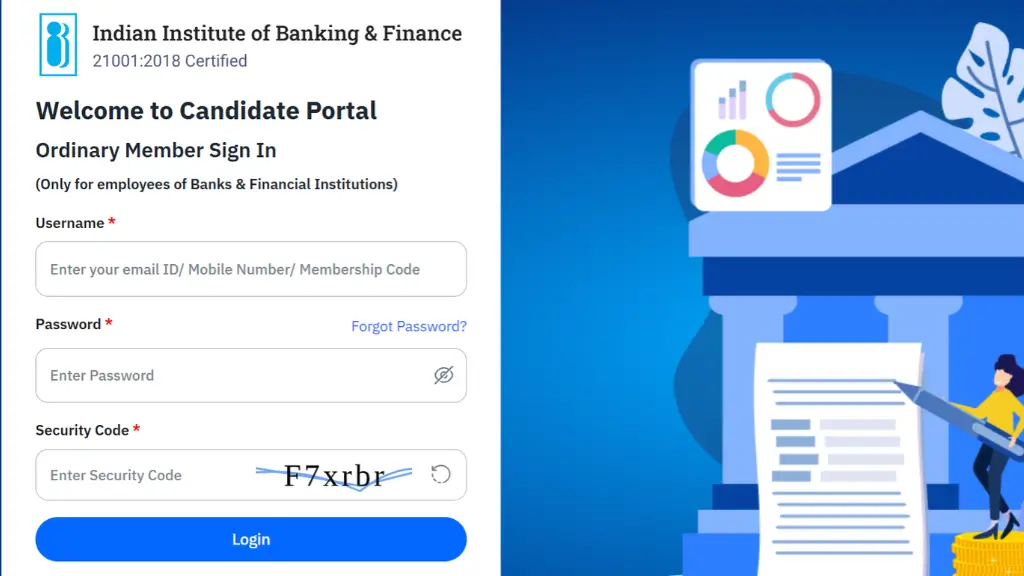
The IIBF has activated the CAIIB Admit Card 2026 download link on its official examination portal. Candidates appearing for the December examination can access their call letters by entering their registered username, password and the required security code.

Direct Link to Download CAIIB Admit Card 2026: Click Here

Steps to Download CAIIB December Admit Card 2026

Candidates can follow the steps given below to download their CAIIB December Admit Card 2026:

  1. Visit the official IIBF examination portal at https://portal.iibf.org.in/.
  2. Enter your registered username and password.
  3. Fill in the security code displayed on the login screen.
  4. Submit the login credentials to access your account.
  5. Locate the CAIIB December 2026 Admit Card link.
  6. Open the admit card and carefully verify all the details.
  7. Download the call letter and take a clear printout for examination purposes.

CAIIB Exam Date 2026

The IIBF has scheduled the CAIIB December 2026 online examinations from 6 December to 27 December 2026. Candidates appearing for the examination should check their individual admit cards to confirm the date of their respective papers, examination centre, reporting time and allotted shift.

The examination will be conducted in online mode, and each paper will have a duration of two hours. Candidates should plan their preparation and travel according to the examination schedule mentioned on their call letters.

Details Mentioned on CAIIB Admit Card 2026

The CAIIB December Admit Card 2026 contains important personal and examination-related information. Candidates must carefully verify all the details after downloading their call letters. The following details are mentioned on the CAIIB admit card:

  • Candidate’s Name
  • Candidate’s Photograph
  • Date of Birth
  • IIBF Membership Number
  • Name of the Bank or Institution
  • Candidate’s Address
  • Examination Medium
  • Examination Centre and Complete Address
  • Date of Examination
  • Reporting Time
  • Examination Timing
  • Important Examination Instructions

CAIIB Exam Timing 2026: Shift-Wise Schedule

The CAIIB December 2026 examination will be conducted in two slots. Candidates must check their individual admit cards to know their allotted examination shift, reporting time and gate-closing time. The shift-wise examination schedule is provided below:

Particulars First Slot Second Slot
Reporting Time 8:30 AM 12:30 PM
Gate Closing Time 9:00 AM As Mentioned on Admit Card
Exam Timing 9:30 AM – 11:30 AM 1:30 PM – 3:30 PM
Exam Duration 2 Hours 2 Hours

Important Instructions for CAIIB December Exam 2026

Candidates appearing for the CAIIB December 2026 examination must follow all the instructions mentioned on their admit cards. Important examination guidelines are provided below.

  1. Carry a Printed Admit Card: Candidates must carry a printed copy of their CAIIB Admit Card 2026 to the examination centre. Entry may be denied without the required admit card.
  2. Carry an Original Photo ID Proof: Candidates must bring an original and valid photo identity proof along with their admit cards. Documents such as Aadhaar Card, Voter ID Card and Passport may be used as identity proof, subject to IIBF instructions.
  3. Reach the Examination Centre on Time: Candidates should reach their allotted examination centres before the reporting time. Entry will not be permitted after the prescribed gate-closing time.
  4. Electronic Gadgets Are Not Allowed: Mobile phones, smartwatches and other electronic or smart gadgets are strictly prohibited inside the examination hall.
  5. Follow Calculator Instructions: Battery-operated portable calculators are permitted as per the examination instructions. Smart calculators and other electronic calculating devices are not allowed.
  6. Check the Examination Venue: Candidates should carefully verify their examination centre address and check the official IIBF website one day before the examination for any important notices or changes in the examination venue.
  7. Verify Personal Details: Candidates must ensure that their name, photograph, date of birth and membership number are correctly printed on the admit card.

What Happens After the CAIIB Examination?

After completing and submitting the CAIIB examination, candidates may be able to view their provisional scorecard on the computer screen. This provides an immediate indication of their performance in the respective paper. However, the provisional scorecard should not be confused with the final result. Candidates should visit the official IIBF website for updates regarding their results and qualifying status.

Daily Current Affairs and GK Updates (28th November, 2026)

National News

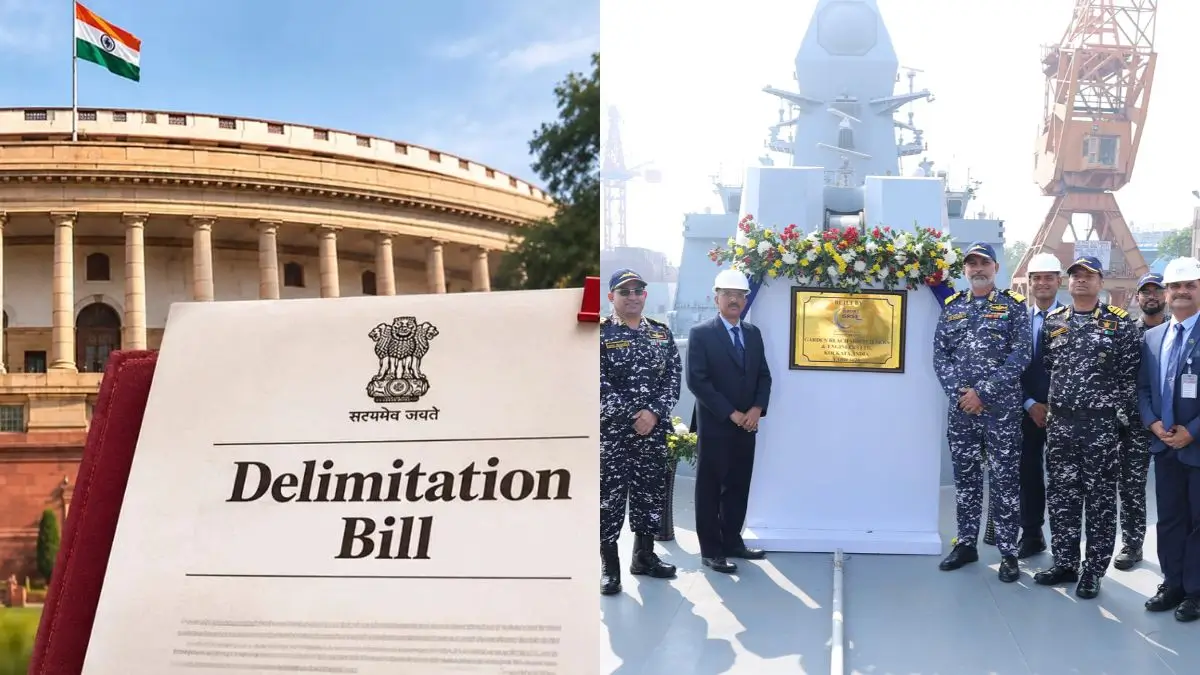
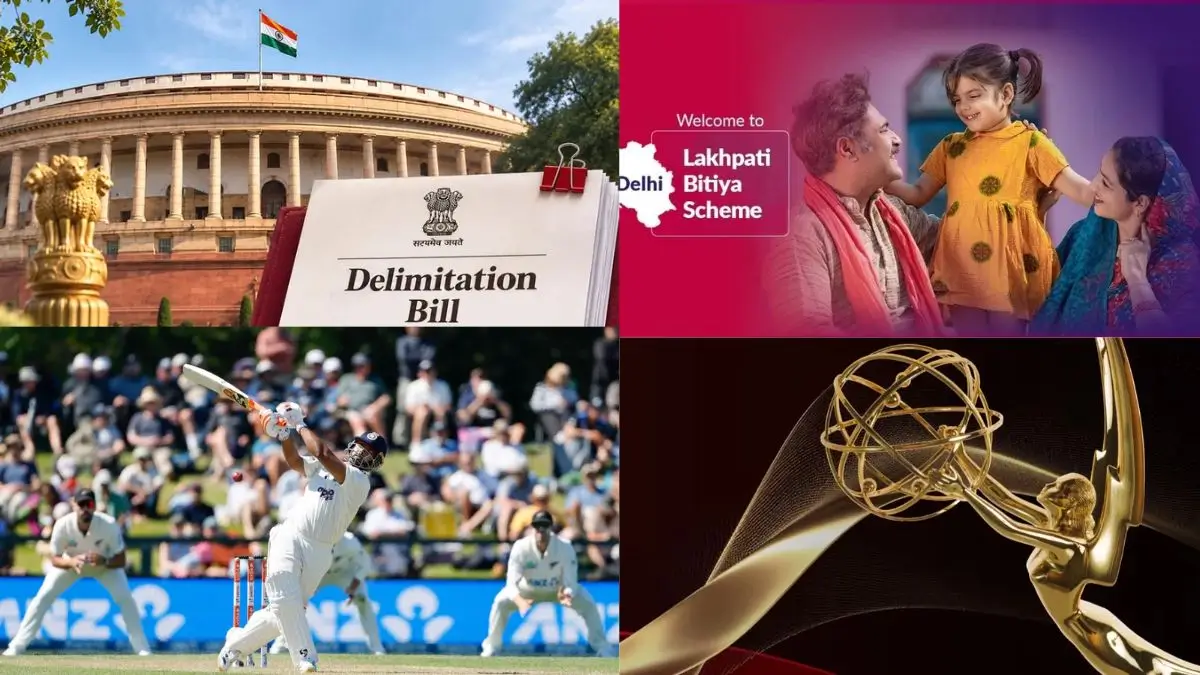
Union Cabinet Approves Fresh Delimitation-Linked Women’s Reservation Bill

  • The Union Cabinet approved a fresh delimitation-linked Women’s Reservation Constitution Amendment Bill on 27 November 2026.

  • The proposed legislation seeks a uniform 50% increase in Lok Sabha seats across states.

  • It proposes to raise the maximum strength of the Lok Sabha to 850 members.

  • The Bill aims to facilitate 33% reservation for women in legislative bodies ahead of the 2029 general elections.

  • It proposes using the 2011 Census for redrawing constituencies.

  • The Bill requires parliamentary approval. The existing 106th Constitutional Amendment Act, 2023, provides one-third reservation for women in the Lok Sabha and State Legislative Assemblies.

State News

Mahabodhi Festival 2026 Begins at Sanchi Stupa

  • The two-day Mahabodhi Festival commenced on 28 November 2026 at Sanchi in Raisen district, Madhya Pradesh.

  • The festival features the public display of sacred relics of Gautama Buddha’s principal disciples, Sariputra and Mahamaudgalyayana.

  • Devotees from India, Japan, Sri Lanka, Vietnam, Singapore and Thailand are participating.

  • The programme includes religious processions, prayers and cultural performances.

  • The sacred relics were enshrined at Sanchi in 1952.

  • The Great Stupa was commissioned by Emperor Ashoka in the third century BCE, and the Buddhist Monuments at Sanchi received UNESCO World Heritage status in 1989.

Maharashtra Opens First Marathi Language Office in Hingoli

  • Maharashtra inaugurated its first dedicated Marathi Language Office at the Hingoli district collectorate on 27 November 2026.

  • Marathi Language and Industries Minister Uday Samant announced the initiative.

  • The office aims to promote, preserve and develop the Marathi language.

  • Similar offices are planned across other districts, along with a proposed Village of Books in Hingoli.

  • Maharashtra’s first Village of Books was established at Bhilar, Satara district, in 2017.

  • Marathi received Classical Language status on 3 October 2024, while Marathi Language Pride Day is celebrated on 27 February.

International News

25th IORA Council of Ministers Meeting Adopts Delhi Communiqué 2026

  • The 25th Meeting of the Council of Ministers of the Indian Ocean Rim Association (IORA) was held in New Delhi on 27 November 2026.

  • The meeting was chaired by External Affairs Minister Dr S. Jaishankar.

  • Representatives from 23 Member States and 12 Dialogue Partners participated.

  • India announced a grant of USD 500,000 to strengthen IORA’s institutional capacity.

  • The meeting endorsed two proposed Centres of Excellence focusing on ocean sciences and maritime law.

  • It adopted the Delhi Communiqué 2026 and discussed IORA’s Action Plan for 2028–2032, covering maritime security, freedom of navigation and regional cooperation.

India to Host ITU Plenipotentiary Conference 2030

  • India will host the International Telecommunication Union’s Plenipotentiary Conference 2030 (PP-30).

  • The decision was formally approved during PP-26 in Doha, Qatar.

  • India was also elected to the ITU Council for the 2027–2030 term.

  • India has been an ITU member since 1869 and a continuous Council member since 1952.

  • Established on 17 May 1865, ITU is a specialised United Nations agency headquartered in Geneva, Switzerland.

  • Its three major sectors are ITU-R, ITU-T and ITU-D.

Italy Passes New Education Law Restricting Face Coverings and Foreign Student Enrolment

  • Italy approved a new education law known as Decreto Scuola.

  • The legislation introduces restrictions on face coverings, including burqas and niqabs, in classrooms.

  • It establishes a 30% limit on certain foreign students in first-year classes from the 2027–28 academic year.

  • Students with adequate Italian-language proficiency or previous experience in Italian schools are exempt.

  • The Chamber of Deputies approved the law with 142 votes in favour, 112 against and four abstentions.

  • Prime Minister Giorgia Meloni’s government supports the reforms, while opposition parties have raised concerns about discrimination and inclusivity.

ICCAT Adopts New Shark Finning Rules and Retains Shortfin Mako Protection

  • The International Commission for the Conservation of Atlantic Tunas (ICCAT) adopted new shark-finning measures in November 2026.

  • The agreement promotes landing sharks with their fins naturally attached.

  • It permits alternative identification methods using wires, ropes and tags.

  • ICCAT retained the North Atlantic shortfin mako retention ban, originally adopted in 2021.

  • The shortfin mako shark (Isurus oxyrinchus) is classified as Endangered by the IUCN and listed under CITES Appendix II.

  • Established in 1966, ICCAT is headquartered in Madrid, Spain.

Virginia and New York Declare Emergencies Over Thanksgiving Storm

  • A powerful Thanksgiving nor’easter struck the eastern United States, causing heavy rainfall, coastal flooding and damaging winds.

  • Virginia Governor Abigail Spanberger declared a state of emergency on 27 November 2026.

  • New York Governor Kathy Hochul issued an emergency declaration on 25 November 2026.

  • More than 500,000 electricity customers were affected by power outages.

  • Reported wind gusts reached 74 mph, while the Macy’s Thanksgiving Day Parade was postponed to 28 November.

  • A nor’easter is an extratropical storm characterised by northeastern coastal winds. Thanksgiving is observed on the fourth Thursday of November in the United States.

Banking News

RBI Issues White Label ATM Operators Directions 2026

  • The Reserve Bank of India issued the White Label ATM Operators Directions, 2026, to consolidate regulations governing non-bank ATM operators.

  • White Label ATM operators must maintain a minimum net worth of ₹100 crore.

  • The prescribed ATM deployment ratio across urban, semi-urban and rural centres is 1:2:3.

  • Operators cannot directly charge customers or take over existing bank ATMs.

  • Permitted services include cardless withdrawals, bill payments and interoperable cash deposits, subject to applicable certification requirements.

  • The directions were issued under the Payment and Settlement Systems Act, 2007. RBI introduced the White Label ATM framework in 2012.

RBI Reduces Minimum Daily CRR Maintenance Requirement from 99% to 90%

  • The Reserve Bank of India reduced the minimum daily Cash Reserve Ratio (CRR) maintenance requirement for scheduled banks from 99% to 90%.

  • The revised requirement will take effect from the fortnight beginning 1 December 2026.

  • The decision was announced through an RBI circular dated 27 November 2026.

  • The move provides banks greater flexibility in managing daily liquidity.

  • The prescribed CRR rate remains unchanged.

  • Banks must continue maintaining the required average CRR over the reporting fortnight.

Economy News

India’s Forex Reserves Decline to $700.90 Billion

  • India’s foreign exchange reserves declined by USD 4.443 billion to USD 700.898 billion during the week ended 20 November 2026.

  • The RBI released the data on 27 November 2026.

  • Foreign Currency Assets stood at USD 583.186 billion.

  • Gold reserves declined by USD 4.095 billion to USD 94.519 billion.

  • Special Drawing Rights stood at USD 18.451 billion, while India’s reserve position with the IMF was USD 4.743 billion.

  • India’s forex reserves had reached an all-time high of USD 785.706 billion in September 2026. The four components are managed by the RBI.

Deutsche Bank Projects India’s FY28 Fiscal Deficit at 4.3% of GDP

  • Deutsche Bank Research projected India’s fiscal deficit at 4.3% of GDP in FY28.

  • It expects the government to meet its FY27 fiscal deficit target of 4.3%.

  • Factors affecting expenditure include higher subsidies, rising oil prices and implementation of the 8th Pay Commission.

  • India’s real GDP growth is projected at 7.3% in FY27, 7.2% in FY28 and 7.3% in FY29.

  • Retail inflation reached 6.09% in October 2026, exceeding the RBI’s upper tolerance limit.

  • Deutsche Bank expects a 25-basis-point repo rate hike in December 2026.

Appointments News

Raghav Sharma Appointed Private Secretary to Vice President

  • Senior IAS officer Raghav Sharma was appointed Private Secretary to Vice President C. P. Radhakrishnan.

  • The appointment was announced through a Personnel Ministry order dated 27 November 2026.

  • Sharma belongs to the 2013 batch of the Himachal Pradesh cadre.

  • His appointment is for five years or until the Vice President’s tenure ends, whichever is earlier.

  • Separately, Unni Raj P. S., a 2013-batch Indian Ordnance Factory Service officer, was appointed Officer on Special Duty for up to four years.

  • Article 63 of the Constitution provides for the office of the Vice President, while Article 64 makes the Vice President the ex-officio Chairman of the Rajya Sabha.

Sandeep Sarkar Appointed Secretary of Central Vigilance Commission

  • The Appointments Committee of the Cabinet approved Sandeep Sarkar’s appointment as Secretary of the Central Vigilance Commission (CVC).

  • Sarkar is a 1995-batch Indian Defence Accounts Service officer.

  • He previously served as Additional Secretary and Financial Adviser in the Department of Agricultural Research and Education.

  • He will hold the new position in the rank and pay of Additional Secretary to the Government of India.

  • The CVC was established on 11 February 1964 following the recommendations of the K. Santhanam Committee.

  • It received statutory status under the Central Vigilance Commission Act, 2003, and oversees vigilance administration in government organisations.

Vikrant Nawani Appointed Second Secretary at Indian Embassy in Moscow

  • The Appointments Committee of the Cabinet approved Vikrant Nawani’s appointment as Second Secretary (Management) at the Embassy of India in Moscow, Russia.

  • Nawani is a Scientist-C at the National Informatics Centre (NIC).

  • He will serve on a three-year foreign deputation at Pay Level-11.

  • The appointment proposal was submitted by the Ministry of External Affairs.

  • NIC was established in 1976 and functions under the Ministry of Electronics and Information Technology.

  • India and Russia established diplomatic relations on 13 April 1947.

Kshitij Jain Gets Two-Year Extension as Private Secretary to Mansukh Mandaviya

  • The Appointments Committee of the Cabinet approved a two-year extension for Kshitij Jain.

  • Jain is a 2011-batch IRS (Customs and Indirect Taxes) officer.

  • He will continue as Private Secretary to Union Minister Dr. Mansukh Mandaviya in the Ministry of Youth Affairs and Sports.

  • His extended tenure will continue until 20 September 2028.

  • The extension allows him to complete the maximum permissible seven-year central deputation period in this stint.

  • The proposal was submitted by the Department of Youth Affairs. The ACC is chaired by the Prime Minister.

Awards News

54th International Emmy Awards 2026: UK Leads with Nine Wins, France Wins Best Drama

  • The 54th International Emmy Awards were held in New York on 23 November 2026.

  • The United Kingdom led the awards with nine wins across 16 competitive categories.

  • France’s Carême won the Best Drama Series award.

  • Argentina’s División Palermo – Season 2 won Best Comedy Series.

  • India’s nominees, comedian Vir Das and SonyLIV’s Real Kashmir Football Club, did not win.

  • Bela Bajaria received the International Emmy Founders Award, while Gerhard Zeiler received the Directorate Award. The ceremony recognised 64 entries from 22 countries.

CSIR-IIIM Jammu Wins DIDAC India Award 2026

  • The CSIR-Indian Institute of Integrative Medicine (CSIR-IIIM), Jammu, received the Pioneering Institution of the Year – Higher Education & Skills award at DIDAC India 2026.

  • The event was held in Bengaluru from 25 to 27 November 2026.

  • The institute was also recognised as a Torchbearer in Higher Education & Skills.

  • It promotes employment-oriented training through the CSIR Integrated Skill Initiative.

  • The institute functions under the leadership of Director Dr. Zabeer Ahmed.

  • Established in 1941 as the Drug Research Laboratory, CSIR-IIIM specialises in natural product-based drug discovery, biotechnology and pharmaceutical research.

Defense News

Indian Navy Receives Vindhyagiri, Seventh and Final Project 17A Stealth Frigate

  • The Indian Navy received Vindhyagiri (Yard 3024) from GRSE in Kolkata on 27 November 2026.

  • It is the seventh and final Nilgiri-class stealth frigate under Project 17A.

  • The delivery completes the handover of all seven Project 17A frigates to the Indian Navy.

  • Designed by the Warship Design Bureau, the vessel features advanced stealth technology, weapons and sensors.

  • It is equipped with a CODOG propulsion system and an Integrated Platform Management System.

  • The project has achieved 75% indigenisation, involving over 200 MSMEs and generating direct and indirect employment for thousands of personnel.

Schemes News

Delhi Makes Aadhaar Mandatory for Beneficiaries of Lakhpati Bitiya Scheme

  • The Delhi government made Aadhaar mandatory for beneficiaries of the Lakhpati Bitiya Scheme.

  • The notification was issued on 19 November 2026 by the Women and Child Development Department.

  • Applicants must provide Aadhaar details or undergo authentication.

  • Alternative identity documents and Aadhaar enrolment slips are permitted while Aadhaar numbers are being generated.

  • The scheme provides ₹11,000 at birth, ₹5,000 at specified school admission stages and ₹20,000–₹25,000 for graduation courses.

  • The accumulated amount is transferred to beneficiaries upon maturity after the prescribed lock-in period.

Sports News

Rohit Sharma Reappointed Mumbai Indians Captain for IPL 2027

  • Mumbai Indians reappointed Rohit Sharma as captain for IPL 2027 on 27 November 2026.

  • The appointment ends a three-season gap in his leadership role.

  • Rohit joined Mumbai Indians in 2011 and captained the franchise from 2013 to 2023.

  • Under his captaincy, Mumbai Indians won five IPL titles in 2013, 2015, 2017, 2019 and 2020.

  • He recorded 87 victories in 158 matches as Mumbai Indians captain.

  • The IPL mini-auction is scheduled for 16 December 2026 in Goa, while Mumbai Indians will celebrate their 20th IPL season in 2027.

Haryana Unveils Blackbuck-Inspired Mascot for Khel Mahakumbh 2026

  • Haryana Chief Minister Nayab Singh Saini unveiled the Blackbuck-inspired mascot for Khel Mahakumbh Haryana 2026 on 27 November.

  • The event will feature approximately 18,000 athletes competing across 30 sports disciplines.

  • Competitions will be held in 11 cities over two phases.

  • The mascot represents agility, determination, sporting excellence and wildlife conservation.

  • Former hockey captain Sardar Singh and boxers Parveen Hooda and Narender were felicitated.

  • The Blackbuck (Antilope cervicapra) is Haryana’s state animal and is classified as Least Concern by the IUCN.

Rishabh Pant Becomes Highest Six-Hitter in World Test Championship History

  • Indian wicketkeeper-batter Rishabh Pant became the highest six-hitter in World Test Championship (WTC) history on 28 November 2026.

  • He achieved the feat during the second Test against New Zealand at Hagley Oval, Christchurch.

  • Pant hit his 89th WTC six, surpassing England’s Ben Stokes, who had 88.

  • Pant reached the record in 76 innings across 44 matches, compared with Stokes’ 117 innings.

  • Rohit Sharma ranks third with 56 sixes, followed by Shubman Gill (48) and Yashasvi Jaiswal (45).

  • Pant also crossed 3,000 WTC runs and became the tournament’s most successful wicketkeeper.

Important Days News

Red Planet Day 2026 – 28 November

  • Red Planet Day is observed annually on 28 November to commemorate the launch of NASA’s Mariner 4 spacecraft in 1964.

  • Mariner 4 completed its Mars flyby on 14 July 1965 and transmitted the first close-up photographs of the planet.

  • Mars is the fourth planet from the Sun and appears reddish due to iron oxide on its surface.

  • Mars has two natural satellites: Phobos and Deimos.

  • India’s Mars Orbiter Mission (Mangalyaan) was launched on 5 November 2013 aboard PSLV-C25.

  • Mangalyaan successfully entered Martian orbit on 24 September 2014, marking India’s achievement in interplanetary space exploration.

Current Affairs Today | 28 November 2026 | Daily Current Affairs | By Ashish Gautam

JAIIB AFM Exam Analysis 2026, 28 November All Shifts Exam Review

The Indian Institute of Banking and Finance (IIBF) conducted the JAIIB Accounting and Financial Management for Bankers (AFM) Examination on 28 November 2026. Candidates who appeared for the examination can check the shift-wise exam analysis to know the overall difficulty level, important topics, numerical questions and memory-based questions. The review is based on feedback shared by candidates who appeared in the different shifts.

JAIIB AFM Exam Analysis 2026, 28 November

The AFM paper is one of the four compulsory papers of the JAIIB examination. It tests candidates on accounting principles, financial statements, financial management, taxation and costing concepts. The examination was conducted in online mode across three shifts, with each shift having a duration of two hours.

  • Overall Difficulty Level:  Moderate
  • Nature of Questions:  Conceptual and few Numerical Questions
  • Time Management: Moderate, with some lengthy questions

JAIIB AFM NOV 2026! Share your Result with us!

JAIIB AFM Exam Analysis 2026: Shift 1

The first shift of the JAIIB AFM examination was conducted from 9:30 AM to 11:30 AM. The review of this shift question distribution and the types of numerical and theory-based questions reported by candidates.

  • AS Questions
  • BRS
  • Section 129(5) AS Deviation
  • Depreciation Numerical
  • Currency Swap
  • Ordinary & Annuity Due
  • Accrued Income Adjustment Entry
  • Numericals
  • Bond YTM
  • Simple Interest
  • Compound Interest
  • EMI Formula
  • Transfer Price
  •  Net Profit Ratio
  • Bond Duration
  • Schedule Number
  • Mac Duration
  • Abnormal Loss Value
  • Ind As 16
  • As 14 Amalgamation
  • As 23,29
  • Private Company Members
  • Tom/Cash ( Match the Following)
  • Types of Accounting
  • Going Concern
  • Golden Rule – Real A/C
  • Half Yearly Compounding
  • WACC Flotation Cost
  • Cost of Capital Cost
  • Petty Cash Types
  • Deferred Payment Guarantee
  • AS 19
  • Activity Ratio
  • Debt Equity Ratio
  • Debtors Collection Period
  • Bank Balance Sheet
  • Bill Collection Terminology
  • Order of Balance Sheet
  • Forward point
  • lifu/fifo
  • Forensic Audit
  • Zero Based Budget
  • LAN WAN

JAIIB AFM Exam Analysis 2026, 28 November Shift 1: Video Link

JAIIB AFM Exam Analysis 2026: Shift 2

  • AS 10
  • Composite Voucher
  • Capital Structure
  • Research & Development – Capital Expand
  • WC – Method
  • Drs Collection Period
  • WACC
  • Indi AS 1
  • CVP Analysis
  • AS 3
  • EMI
  • Intangible Asset
  • Sweat Equity
  • Transfer Pricing
  • Spot – Next Working Day
  • Cost Center
  • Deferred tax
  • Depreciation
  • Derivatives
  • Accounting Standard
  • NPV
  • How to Improve CR
  • BRS
  • YTM
  • Bond
  • Draw, Drawer, Payee – Definition
  • Journal Entry
  • IRD- Spot Rate Based
  • Costing Methods

JAIIB AFM Exam Analysis 2026: Shift 3

  • Theory of Cogs
  • Costing Method
  • Bill Disc – JE
  • DER, Current Ratio
  • AS (Matching)
  • Forward Contract
  • Types of Bond
  • IRR
  • Net Profit
  • Numerical on Chain Rule
  • Penalty % Rate on GST
  • Person (Who is)
  • Moderate Theory
  • Business Entity Concept
  • Net Profit Asked ( Given Sales VC Tac %)
  • Which type Deposit After TD Mature
  • Interest Provided by Bank Depends On
  • EMI
  • Capital of Firm
  • Depreciation
  • Banking Regulation Act Schedule
  • Leverage Ratio
  • FOREX
  • Petty Cash
  • Bill of Exchange – Rebate JE
  • Commercial Paper
  • Notice Money
  • Contra Entry

IBPS PO Mains Cut Off 2026 Out, Check Category-wise Cut Off Marks

The Institute of Banking Personnel Selection (IBPS) has released the IBPS PO Mains Cut Off 2026 along with the Mains Score Card on 27 November 2026. Candidates who appeared for the Probationary Officer/Management Trainee (CRP PO/MT-XVI) examination can now access their marks and qualifying status through the official website. The scorecard includes section-wise marks and other important details of the examination.

IBPS PO Mains Cut Off 2026 Out

The IBPS PO Mains Cut Off 2026 determines the minimum marks required to qualify for the next stage of the recruitment process. Candidates can check the category-wise and section-wise cut-off marks to assess their performance in the Mains examination, held on 4 October 2026. The released cut-offs also help candidates understand the qualifying criteria for the IBPS PO Interview stage.

Candidate also check Download : IBPS PO Mains Scorecard 2026 Out

IBPS PO Mains Cut Off 2026: Category-wise Marks

The IBPS PO Mains cut-off is determined separately for different categories, and candidates must satisfy the prescribed qualifying requirements. The score display facility provides the applicable cut-off information along with individual marks.

Category IBPS PO Mains Cut Off 2026 (out of 225)
General (UR) 75.16
OBC 75.16
EWS 75.16
SC 62.98
ST 44.36
HI 46.56
OC 44.71
VI 48.84
ID 53.56

IBPS PO Mains Section-wise Cut Off 2026

Apart from the overall qualifying marks, IBPS prescribes minimum qualifying marks for individual sections of the Mains Examination. Candidates need to meet the applicable sectional requirements as well as the overall cut-off to qualify for the next stage.

Section Maximum Marks Sectional Cut Off (UR/EWS) Sectional Cut Off (OBC/SC/ST/PwBD)
Reasoning 60 14.75 11.25
English Language 20 8 6.50
Data Analysis & Interpretation 60 13.25 9.50
General/Economy/Banking Awareness 60 7.25 4
English Language (Descriptive) 25 10 8.75
Total 225 – –

IBPS PO 2026: Qualifying Criteria

To qualify for the next stage of the IBPS PO Recruitment 2026, candidates must meet both the sectional cut-off and overall cut-off prescribed by IBPS. The sectional cut-off refers to the minimum marks required in each individual section of the Mains Examination, while the overall cut-off represents the minimum aggregate marks required across all sections.

Candidates must satisfy both qualifying requirements according to their respective categories. Meeting the sectional cut-off alone does not guarantee qualification if the candidate fails to secure the required overall marks. Similarly, scoring above the overall cut-off is not sufficient if the minimum qualifying marks in any individual section are not achieved.

What After IBPS PO Mains Cut Off 2026?

Candidates who qualify in the IBPS PO Mains Examination will proceed to the Personality Test and Interview stages, as per the recruitment process.

  • Personality Test: Shortlisted candidates must appear for the Personality Test on 30 November, which is mandatory for being eligible for the Interview.
  • Interview: Candidates who appear in the Personality Test will be allowed to participate in the Interview, which carries 100 marks.
  • Final Merit Calculation: The final score is calculated by combining Mains and Interview marks in an 80:20 ratio.
  • Further Updates: Candidates should regularly check the official IBPS website and their registered email IDs for Personality Test and Interview schedules, call letters and other instructions.

IBPS PO Mains Score Card 2026 Out, Download Marks & Scorecard PDF at ibps.in

The IBPS PO Mains Score Card 2026 has been released on 27 November 2026 on the official website of the Institute of Banking Personnel Selection (IBPS). Candidates who appeared for the IBPS PO Mains Exam 2026, conducted on 04 October 2026 under CRP PO/MT-XVI, can now download their scorecards and check their section-wise and overall marks.

IBPS PO Mains Score Card 2026 Out

The IBPS PO Mains Score Card 2026 contains important details of candidates’ examination performance, including section-wise marks and overall scores. Along with the scorecard, candidates can also check the IBPS PO Mains Cut Off 2026 to understand the minimum qualifying marks. Candidates who qualify for the Mains examination should keep track of the latest updates regarding the Personality Test and Interview process on the official IBPS website.

IBPS PO Mains Score Card 2026: Overview

The IBPS PO Mains Score Card 2026 has been released only for candidates who did not qualify the Mains Exam. Shortlisted candidates will proceed to the next stage of the selection process as per IBPS guidelines.

Particulars Details
Organisation
Institute of Banking Personnel Selection (IBPS)
Exam Name IBPS PO Mains 2026
Recruitment Cycle CRP PO/MT-XVI
Post
Probationary Officer / Management Trainee
Mains Exam Date 4 October 2026
Scorecard Release Date 27 November 2026
Cut-Off Status
Released, as per the stated update
Scorecard Mode Online
Next Stage
Personality Test and Interview, as applicable
Official Website ibps.in

IBPS PO Mains Score Card 2026: Direct Link

Candidates can access the IBPS PO Mains Score Card 2026 through the official IBPS website. They should visit the CRP PO/MT-XVI recruitment section and select the relevant scorecard link. Candidates should use the scorecard link provided below for the correct recruitment cycle and keep their registration or roll number and password or date of birth ready, as required by the login page.

IBPS PO Mains Score Card 2026: Click here to Download

How to Download IBPS PO Mains Score Card 2026

Follow these steps to check and download the scorecard:

  1. Visit the official website at ibps.in.
  2. Open the CRP PO/MT-XVI recruitment section.
  3. Click on the IBPS PO Mains Score Card 2026 link.
  4. Enter the required login credentials.
  5. Submit the details to access your scorecard.
  6. Check your overall and section-wise marks, along with the cut-off information provided.
  7. Download and save the scorecard for future reference.

IBPS PO Mains Cut Off 2026

The IBPS PO Mains Cut Off 2026 represents the minimum marks candidates must obtain to qualify under the applicable selection criteria. IBPS determines the cut-off based on factors such as vacancies, examination performance and category-wise competition.

Details Mentioned on the IBPS PO Mains Scorecard

Candidates should review the following details wherever displayed on their scorecard:

  • Candidate’s name and registration or roll number
  • Examination and recruitment details
  • Section-wise marks
  • Overall marks obtained
  • Category-wise or test-wise cut-off details, where provided
  • Qualifying status or related instructions, if displayed

IBPS PO Mains Score Card 2026: Last Date to Download

Candidates can download the IBPS PO Mains Score Card 2026 from the official IBPS website until 07 December 2026. The scorecard download link will remain available for a limited period, so candidates are advised to check their marks and save a copy before the deadline. It is recommended to keep a PDF copy of the scorecard for future reference during the recruitment process.

IBPS PO Mains Score Calculation 2026

The IBPS PO Mains Score 2026 is calculated based on candidates’ performance in the examination. The following factors are considered during score calculation:

  • Section-Wise Marks: Marks obtained in individual sections are displayed on the scorecard.
  • Negative Marking: One-fourth (0.25) of the marks assigned to a question is deducted for each incorrect answer in the objective test.
  • Normalisation: Scores may be normalised across different shifts, wherever applicable.
  • Overall Score: Calculated as per the prescribed IBPS evaluation methodology.
  • Qualifying Cut-Off: Candidates must meet the applicable sectional and overall cut-offs to qualify for the next stage.

What After the IBPS PO Mains Score Card 2026?

Candidates should take the next steps according to their result and the instructions issued by IBPS.

  • If shortlisted: Prepare for the Personality Test and Interview, as applicable.
  • Review the scorecard: Compare your marks with the official cut-off and review section-wise performance.
  • Prepare documents: Keep educational certificates, identity proof and other required documents ready according to the official instructions.
  • Check updates: Monitor the IBPS website for call letters, schedules and further recruitment notices.
  • If not shortlisted: Review your performance and use the scorecard to identify areas for improvement.
Related Posts
IBPS PO Cut Off IBPS PO Interview Questions
IBPS PO Previous Year Papers IBPS PO Salary
IBPS PO Syllabus Do’s and Don’ts for IBPS PO Interview

Most Scoring Topics For Maximum Marks In IBPS Clerk Mains Exam 2026

The IBPS Clerk Mains Examination 2026 is scheduled to be conducted on 27 December 2026, giving candidates a valuable opportunity to strengthen their preparation and improve their overall scores. With limited time remaining, focusing on high-weightage and scoring topics can help candidates use their revision time more effectively. Rather than covering every chapter with equal attention, candidates should prioritise topics that are relatively easier to solve, frequently tested and offer good accuracy.

Most Scoring Topics For IBPS Clerk Mains Exam 2026

The IBPS Clerk Mains paper tests candidates across Reasoning Ability, Quantitative Aptitude, English Language, General/Financial Awareness and Computer Aptitude. Each section requires a different preparation strategy, as some topics are calculation-intensive while others depend on conceptual clarity, reading ability or regular revision. Candidates should identify their strong areas and focus on topics where they can solve questions accurately within the given time.

1. Most Scoring Topics In Reasoning Ability

Reasoning Ability require a combination of logical thinking, pattern recognition and conceptual understanding. Candidates should prioritise questions that can be solved without spending too much time on lengthy arrangements. Regular practice of puzzles and seating arrangements is also important because these topics can contribute a significant number of questions.

Topic Preparation Priority
Inequality High
Syllogism High
Blood Relation High
Direction and Distance High
Alphanumeric Series High
Coding-Decoding High
Order and Ranking High
Linear Seating Arrangement High
Circular Seating Arrangement High
Floor and Flat-Based Puzzles High
Box-Based Puzzles High
Input-Output High
Data Sufficiency Moderate
Logical Reasoning Moderate

Preparation Tip: Start with inequality, syllogism, blood relation, direction and alphanumeric series to build accuracy in standalone questions. Practise different puzzle formats regularly, but avoid spending excessive time on a single difficult set during the examination. For Computer Aptitude, revise basic terminology, networking, operating systems, memory and commonly used computer applications.

2. Most Scoring Topics In Quantitative Aptitude

Quantitative Aptitude requires consistent practice and familiarity with calculation methods. Candidates should focus on topics that allow them to solve questions accurately without lengthy calculations. Data Interpretation, arithmetic and number-based topics deserve regular revision because they test both calculation speed and conceptual understanding.

Topic Preparation Priority
Simplification and Approximation High
Number Series High
Quadratic Equations High
Data Interpretation High
Caselet DI High
Missing DI High
Tabular DI High
Line Graph DI High
Bar Graph DI High
Percentage High
Profit and Loss High
Ratio and Proportion High
Average High
Time and Work High
Time, Speed and Distance High
Simple and Compound Interest High
Partnership Moderate
Mixture and Alligation Moderate
Probability Moderate
Permutation and Combination Moderate

3. Most Scoring Topics In English Language

English Language can become a scoring section with regular reading practice and a clear understanding of grammar and vocabulary. Candidates should focus on reading-based questions and commonly tested grammar concepts. The aim should be to improve comprehension speed while avoiding unnecessary attempts in confusing questions.

Topic Preparation Priority
Reading Comprehension High
Cloze Test High
Error Detection High
Sentence Improvement High
Phrase Replacement High
Fill in the Blanks High
Para Jumbles High
Word Usage High
Vocabulary High
Sentence Rearrangement Moderate
Connectors Moderate
Word Swap Moderate
Double Fillers Moderate

4. Most Scoring Topics In General/ Financial Awareness

General and Financial Awareness is an important section for candidates aiming to maximise their overall score. Unlike calculation-based sections, this area depends heavily on consistent revision and retention of current information. Candidates should give priority to recent banking and financial developments, government schemes and important national and international events.

Topic Preparation Priority
Banking and Financial Awareness Very High
RBI Updates and Monetary Policy Very High
Current Affairs Very High
Government Schemes High
Appointments and Resignations High
Awards and Honours High
Important Days and Themes High
Reports and Indices High
National and International News High
Static Banking Awareness Very High
Financial Institutions High
Important Committees High
Budget and Economic Survey High
Summits and Conferences Moderate
Sports News Moderate

5. Most Scoring Topics In Computer Aptitude

Computer Aptitude is generally tested along with Reasoning Ability in the IBPS Clerk Mains Examination. Candidates should revise the fundamentals of computers, commonly used software, networking and internet-related terminology. These topics can be prepared through short notes and regular practice of objective questions.

Topic Preparation Priority
Computer Fundamentals High
Input and Output Devices High
Memory and Storage High
Operating System High
MS Word, Excel and PowerPoint High
Internet and Networking High
Computer Abbreviations High
Hardware and Software High
Database Management Moderate
Cyber Security High
Computer Generations Moderate
Programming Languages Moderate

How To Maximise Marks In IBPS Clerk Mains Exam 2026?

Scoring well in the Mains Examination is not only about covering more topics but also about selecting questions wisely and maintaining accuracy. With the examination scheduled for 27 December 2026, candidates should now focus on revision, mock tests and analysis of their performance. The following strategies can help candidates make the most of their remaining preparation time:

  • Prioritise High-Weightage Topics: Focus on topics that offer good scoring opportunities and match your strengths.
  • Revise Current Affairs Daily: Give special attention to banking awareness, RBI updates, financial news and recent appointments.
  • Practise Full-Length Mock Tests: Attempt mocks in an exam-like environment to improve time management and section-wise strategy.
  • Analyse Every Mock Test: Identify incorrect answers, time-consuming questions and weak topics after each test.
  • Improve Calculation Speed: Practise tables, squares, cubes, percentages and fraction conversions regularly.
  • Avoid Unnecessary Guesswork: Since negative marking applies, attempt questions with a reasonable level of confidence.
  • Prepare Short Revision Notes: Keep formulas, banking facts, grammar rules and computer abbreviations in one place for quick revision.
  • Maintain Section-wise Time Management: Practise completing each section within its allotted time instead of allowing one section to affect another.

Final Revision Strategy For IBPS Clerk Mains 2026

With the exam approaching on 27 December 2026, candidates should avoid starting too many new topics at the last moment. The focus should shift towards strengthening familiar concepts, revising current affairs and improving performance through mock tests. A balanced revision plan will help candidates maintain accuracy and confidence across all four sections.

Preparation Area What To Do
Reasoning Ability Practise puzzles, seating arrangements and standalone questions
Quantitative Aptitude Revise arithmetic formulas, DI and calculation techniques
English Language Practise comprehension, grammar and vocabulary
General/Financial Awareness Revise recent current affairs and banking awareness
Computer Aptitude Review fundamentals, networking and MS Office
Mock Tests Attempt full-length mocks and analyse mistakes
Final Revision Revisit short notes, formulas and important facts