

National News
Lok Sabha Passes Central Excise (Amendment) Bill 2025
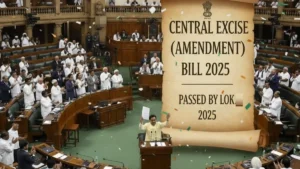
- The Lok Sabha passed the Central Excise (Amendment) Bill, 2025 and Health and National Security Cess Bill, 2025, replacing the GST compensation cess on tobacco, cigarettes, and pan masala.
- The new regime maintains high excise duties (₹5,000–₹11,000 per 1,000 cigarettes, 60–70% on unmanufactured tobacco, 100% on nicotine products) and a dedicated cess for health and national security, ensuring revenue continuity, fiscal discipline, and targeted social spending after the cess phaseout in March 2026.
Government Withdraws Mandatory Pre-Installation of Sanchar Saathi App
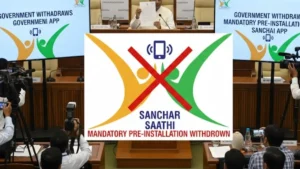
- The Government of India has withdrawn the mandate requiring smartphone makers to pre-install the Sanchar Saathi app, following privacy and industry concerns.
- Launched in 2025 to combat mobile theft, SIM fraud, and unauthorized connections, the app remains voluntary, with over 1.5 crore downloads so far.
- The rollback ensures user choice, industry flexibility, and reinforces digital privacy while continuing to promote cybersecurity awareness.
Bharat Taxi Begins Trials in Delhi and Gujarat

- Bharat Taxi, a driver-owned cooperative ride-hailing platform, has launched pilot operations in Delhi and Gujarat under the Sahakar Se Samriddhi initiative.
- Operated by Sahakar Taxi Cooperative, it offers zero commission, no surge pricing, and driver ownership, giving Saarthis full stakeholder rights.
- Integrated with DigiLocker and UMANG, it aims to provide transparent fares, better driver incomes, and a people-first alternative to Uber and Ola, with a national rollout planned by December 2025.
State News
Haryana’s Lado Lakshmi Yojana to Offer Financial Aid Quarterly from December 2025
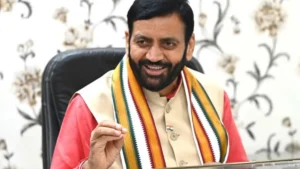
- The Haryana government has revised the Deen Dayal Lado Lakshmi Yojana (DDLLY), shifting financial assistance from ₹2,100 monthly to ₹6,300 quarterly, starting December 2025.
- Aimed at women’s economic empowerment, the digital-first scheme now allows over 7 lakh beneficiaries aged 23–60 to receive funds via DBT, enhancing planning flexibility, reducing administrative load, and continuing support for social security and financial stability.
International News
India to Chair International Institute for Democracy and Electoral Assistance (International IDEA)
- On 3 December 2025, India formally assumed the chairship of International IDEA for the first time, represented by Chief Election Commissioner Gyanesh Kumar, reflecting global recognition of India’s electoral expertise.
- As Chair, India will shape democratic reforms, share election management experience, and promote inclusive, transparent, and resilient democracies worldwide, strengthening both its prestige and global influence in electoral governance.
Banking News
SEBI Launches SWAGAT-FI to Simplify Access for Low-Risk Foreign Investors in India

- SEBI has launched SWAGAT-FI (Single Window Automatic & Generalised Access for Trusted Foreign Investors) to simplify market access for low-risk foreign investors, unifying registration across FPI and FVCI routes, reducing documentation, and extending registration validity to 10 years.
- The move aims to boost ease of compliance, attract investment from entities like sovereign funds, central banks, and regulated insurance companies, and enhance India’s appeal as an investment destination.
India’s Insolvency Regime Upgraded to Group B by S&P
- S&P Global Ratings upgraded India’s insolvency regime to Group B from Group C, citing improvements under the Insolvency and Bankruptcy Code (IBC), including faster resolutions (≈2 years) and higher average recoveries (≈30%).
- However, the regime still lags top Group A jurisdictions, recovery rates remain low for unsecured creditors, and legal delays and procedural unpredictability persist, though Supreme Court rulings reinforce creditor protections.
Brendan Nelson Appointed Chairman of HSBC, Succeeding Mark Tucker

- HSBC Holdings has appointed Brendan Nelson as its new chairman, replacing Mark Tucker. Nelson, previously interim chair and ex-head of global banking at KPMG, joined HSBC’s board in 2023.
- He will oversee the bank’s Asia-focused strategy, growth in fee-based income, and geopolitical risks, while continuing as audit committee chair until Feb 2026.
- This marks a return to internal leadership for HSBC after Tucker’s tenure as the first external chairman.
RBI Approves Vikram Sahu as CEO of Bank of America India for Three-Year Term
- Vikram Sahu has been appointed CEO of Bank of America NA (India) for three years, in addition to his role as India Country Executive and member of the Asia Pacific Executive Committee, with RBI approval.
- He succeeds Kaku Nakhate, now Chair of BANA India, and will lead local governance, regulatory compliance, strategic growth, and client engagement, reinforcing BANA’s commitment to India as a key growth market.
Economy News
India to Update National Accounts Base Year to 2022–23 — What It Means
- India will revise the base year for national accounts from 2011–12 to 2022–23, with the update coming into effect on February 26–27, 2026, announced by Finance Minister Nirmala Sitharaman.
- The change aims to make economic statistics more relevant, address concerns over the IMF’s C-grade assessment linked to the outdated base year, and better reflect the current structure of the economy.
Appointments News
Jeyandran Venugopal Appointed as President & CEO of Reliance Retail Ventures Ltd

- Reliance Industries Ltd (RIL) has appointed Jeyandran Venugopal, a senior Flipkart executive, as President and CEO of Reliance Retail Ventures Ltd (RRVL), a newly created role announced on December 3, 2025.
- He will drive digital transformation, omni-channel integration, and innovation across Reliance’s offline and e-commerce operations, supporting expansion in tier 2/3 cities and enhancing competitiveness against Amazon, Flipkart, and Tata Neu.
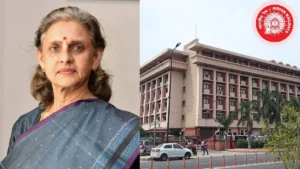
Aparna Garg Takes Charge as Member (Finance), Railway Board
Summits & Conferences News
Meghalaya Hosts Regional AI Impact Conference 2025 in Shillong
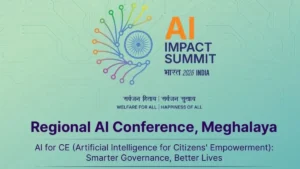
- India’s Regional AI Impact Conference 2025 in Shillong highlighted India’s push to democratize AI, showcasing major investments under the IndiaAI Mission such as ₹10,300 crore funding, 38,000 GPUs, and expanding AI/data labs across the Northeast, while emphasizing skill development, with plans to train 1 million people to ensure inclusive, region-wide technological growth.
Sports News
Armand Duplantis and Sydney McLaughlin-Levrone Named World Athletes of the Year 2025

- The World Athletics Awards 2025 honored Armand Duplantis and Sydney McLaughlin-Levrone as World Athletes of the Year after their undefeated seasons and record-breaking performances at the Tokyo World Championships, with Duplantis making pole-vault history by clearing 6.30m and McLaughlin-Levrone running a stunning 47.78s in the 400m.
- Additional awards celebrated global talents, highlighting the sport’s diversity, excellence, and growing global impact.
Archery Premier League Wins Big at India Sports Awards 2025

- The Archery Premier League (APL) won ‘Emerging Professional Sports Event of the Year’ at the India Sports Awards 2025, just after its inaugural season in New Delhi, highlighting its rise as India’s first professional franchise-based archery league.
- With six teams, gender-balanced squads, and a fast-paced, spectator-friendly format, APL has successfully modernized archery, boosted fan engagement, and set a new benchmark for professional sports in India.
Important Days News
Indian Navy Day 2025: Honouring Operation Trident, Maritime Strength and Indigenous Defence Capabilities

- Indian Navy Day – December 4, 2025: Observed annually to honour the Indian Navy’s courage and strategic excellence, this year’s theme is “Combat Ready, Cohesive, Self-Reliant”, highlighting operational readiness, unity, and indigenisation under Atmanirbharta.
- The day commemorates Operation Trident (1971), when Indian naval forces struck Pakistan’s Karachi harbour, marking India’s first major naval offensive.
- Operational Demonstration 2025 at Shangumugham Beach, Kerala showcases warships, submarines, aircraft, and indigenous platforms, emphasizing India’s growing maritime security, deterrence, and technological prowess.
- The celebration underscores the Navy’s role in defence, humanitarian aid, and protecting trade routes
International Day of Banks 2025: Advancing Sustainable Development Through Financial Inclusion
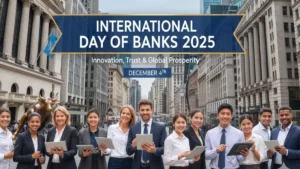
- International Day of Banks – December 4, 2025: Observed annually to highlight the crucial role of banks and financial institutions in promoting sustainable development, the day was declared by the UN General Assembly in 2019 (Resolution 74/245).
- It underscores banks’ contribution to financing infrastructure, clean energy, MSMEs, financial inclusion, and green finance, aligning with SDGs 8, 9, 10, and 17.
- In 2025, amid climate challenges, geopolitical tensions, and rising debt vulnerabilities, the observance calls for resilient, inclusive, and innovative financial systems that empower communities and advance the 2030 Agenda for Sustainable Development.
International Day Against Unilateral Coercive Measures 2025
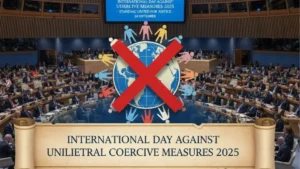
- International Day Against Unilateral Coercive Measures – December 4, 2025: Marking its first observance, this day, declared by the UN General Assembly in June 2025.
- Highlights the adverse impacts of unilateral economic, financial, or trade restrictions (UCMs) imposed outside international law.
- UCMs—including trade embargoes, asset freezes, investment restrictions, and travel bans—violate human rights, international humanitarian law, and state sovereignty, disproportionately affecting developing countries by disrupting access to food, healthcare, and essential services.








 Daily Current Affairs and GK Updates (26...
 Daily Current Affairs and GK Updates (25...
 Daily Current Affairs Quiz 25th Septembe...