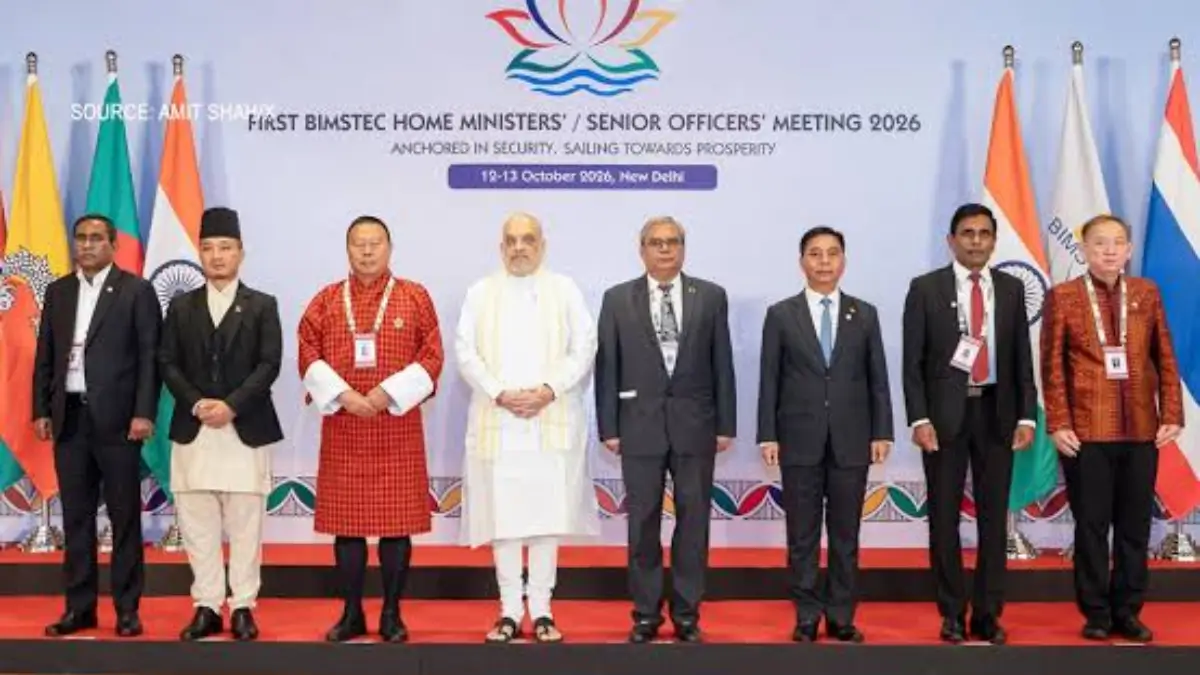
India hosted the first BIMSTEC Home Ministers’ Meeting to strengthen regional security cooperation and address common challenges faced by member countries. The meeting focused on counter-terrorism, drug trafficking, transnational organised crime, cybersecurity, extradition of fugitives, and disaster management.
India Hosts First BIMSTEC Home Ministers’ Meeting
The meeting highlighted India’s vision of regional cooperation based on peace, mutual trust, and collective security. It also reaffirmed the importance of coordinated action among the seven member states to tackle threats that cross national borders.
Key Highlights and Agenda of the Meeting
The first BIMSTEC Home Ministers’ Meeting placed regional security and collective action at the centre of cooperation among the seven member states. Its focus on drug trafficking, counter-terrorism, cybercrime, fugitive extradition, institutional capacity building, and disaster management reflects the need for a coordinated regional approach to shared challenges.
1. Regional Cooperation and India’s Vision
India emphasised that BIMSTEC is an important platform for inclusive growth, economic cooperation, and collective security. The country’s approach reflects the principle of Vasudhaiva Kutumbakam, meaning “the world is one family.”
2. Five Key Pillars of Security Cooperation
The meeting stressed that the security of one member state contributes to the security of the entire region. Respect for sovereignty, territorial integrity, peaceful coexistence, and human welfare remains central to regional cooperation.
i. Cooperation Against Drug Trafficking
India highlighted the serious threat posed by drug trafficking, particularly in the region traditionally known as the Golden Triangle, which was described as a “Death Triangle” to underline the destructive impact of narcotics on young people and society.
The proposed measures included:
- Implementing the BIMSTEC Drug Control Action Plan finalised in Colombo.
- Promoting real-time information sharing across drug supply chains.
- Establishing joint task forces and preventing the diversion of precursor chemicals.
- Identifying and seizing illegal financial assets linked to drug trafficking.
ii. Counter-Terrorism and Law Enforcement Cooperation
India reiterated its zero-tolerance policy towards terrorism. The meeting stressed that terrorist groups should not be allowed to access safe havens, recruitment networks, training facilities, or financial resources within the region.
Member states were encouraged to strengthen intelligence-sharing, mutual legal assistance, and cooperation in extradition proceedings.
iii. Extradition of Fugitives
The meeting called for stronger cooperation among member countries to bring fugitive criminals and terrorists to justice. Effective extradition procedures and legal coordination can help prevent offenders from escaping prosecution by crossing international borders.
iv. Cybersecurity and Combating Cybercrime
The discussions highlighted the misuse of encrypted communications, social media, cryptocurrency, drones, and the dark web for terrorist propaganda, recruitment, and illegal funding.
The meeting also emphasised cooperation against cyber-enabled human trafficking, forced recruitment, and online fraud through joint protocols and information-sharing mechanisms.
v. Institutional Cooperation and Capacity Building
India welcomed the proposed BIMSTEC Security Information Database and Information Sharing Centre. It also highlighted its willingness to share expertise in police training, counter-terrorism operations, and forensic investigations to strengthen the capabilities of member states.
3. Disaster Management Cooperation
India highlighted the proposed establishment of the BIMSTEC Disaster Management Centre in Jamnagar, Gujarat, as announced by Prime Minister Narendra Modi during the 6th BIMSTEC Summit. The initiative aims to strengthen regional preparedness and cooperation in responding to natural disasters.
About BIMSTEC
The Bay of Bengal Initiative for Multi-Sectoral Technical and Economic Cooperation (BIMSTEC) is a regional organisation connecting South Asia and Southeast Asia.
| Feature | Details |
| Established | 6 June 1997 |
| Founding Document | Bangkok Declaration |
| Secretariat | Dhaka, Bangladesh |
| Member Countries | Bangladesh, Bhutan, India, Myanmar, Nepal, Sri Lanka, and Thailand |
| Regional Coverage | South Asia and Southeast Asia |
| Strategic Importance for India | Supports the Neighbourhood First and Act East policies |









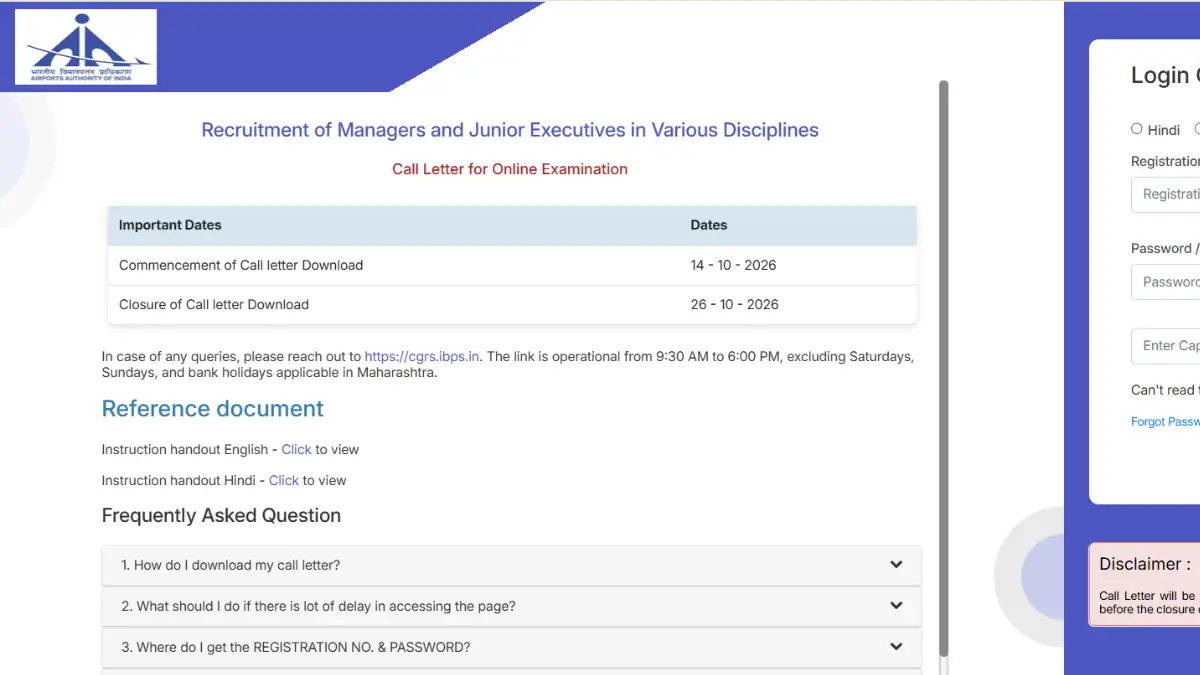 AAI Admit Card 2026 Out @aai.aero for Ma...
 AAI Exam Date 2026 Out For Manager and J...
 SCI Senior Personal Assistant Syllabus 2...