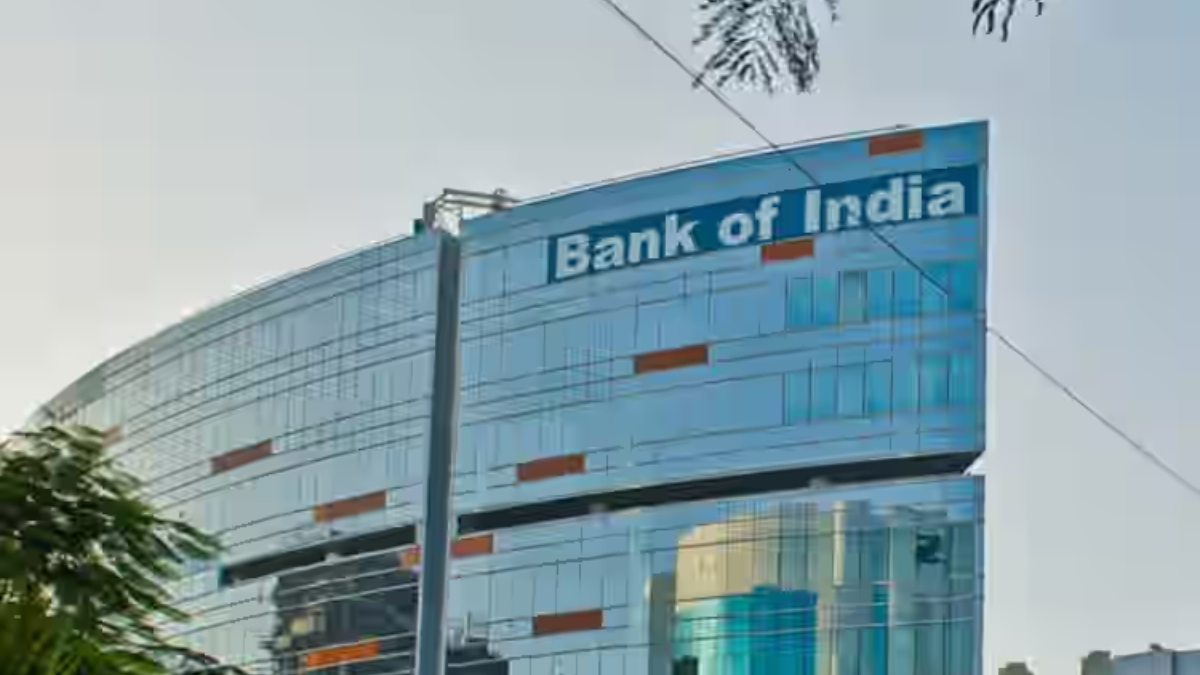
The Bank of India Credit Officer Syllabus 2026 has become even more important as the bank has changed the exam pattern for this year’s recruitment. Candidates should review the updated syllabus before starting their preparation to understand the topics and marking scheme. According to the latest exam pattern the online exam will have only two sections: English Language and Professional Knowledge (Relevant to the Post).
Bank of India Credit Officer Syllabus 2026 and Exam Pattern
The BOI Credit Officer Syllabus 2026 has been revised along with the latest exam pattern. Unlike the previous recruitment cycle, the online examination will now consist of only two sections English Language and Professional Knowledge (Relevant to the Post).
- The English Language test is qualifying in nature, and its marks will not be included while preparing the final merit list.
- Candidates must secure at least 35% marks in both the English Language and Professional Knowledge tests to qualify (for General/EWS category).
- Candidates belonging to SC, ST, OBC, and PwBD categories are eligible for a 5% relaxation in the minimum qualifying marks.
- It is mandatory to qualify in both sections to be considered for the next stage of the recruitment process.
Bank of India Credit Officer Syllabus 2026
The Bank of India Credit Officer Syllabus 2026 is designed to assess candidates on both their aptitude and professional knowledge required for the Credit Officer role. The detailed syllabus for each section is provided below.
English Language
This section evaluates reading ability, grammar usage, and comprehension skills required for professional banking communication.
| Topic | Important Subtopics |
| Reading Comprehension | Inference, Tone of Passage, Theme, Vocabulary-Based Questions, True/False Statements |
| Cloze Test | Grammar-Based, Vocabulary-Based, Contextual Fillers |
| Error Detection | Subject-Verb Agreement, Tenses, Articles, Prepositions, Conjunctions, Pronouns |
| Sentence Improvement | Grammar Correction, Phrase Replacement |
| Fill in the Blanks | Single Fillers, Double Fillers |
| Para Jumbles | Sentence Rearrangement, Paragraph Formation, Odd Sentence Out |
| Word Swap | Single & Multiple Word Swap |
| Phrase Replacement | Correct Usage of Phrases |
| Match the Column | Sentence Matching, Phrase Matching |
| Vocabulary | Synonyms, Antonyms, Contextual Vocabulary, Word Meaning |
| Idioms & Phrases | Meaning and Usage |
| One Word Substitution | Vocabulary-Based Questions |
| Spellings | Correct/Incorrect Spelling, Misspelled Words |
| Miscellaneous | Fillers, Grammar Rules, Context-Based Questions |
Professional Knowledge (Credit Officer)
This is the most important section, carrying maximum weightage and deciding shortlisting.
Banking & Financial System
- Structure of Indian banking system.
- Functions of RBI, commercial banks, NBFCs.
- Types of bank accounts and deposit products.
Credit Appraisal & Lending
- Credit appraisal process and loan lifecycle.
- Types of loans: retail, MSME, corporate, agriculture.
- Fund-based and non-fund-based limits.
- Security, collateral, and guarantees.
Financial Statement Analysis
- Balance Sheet analysis.
- Profit & Loss account interpretation.
- Cash Flow and Fund Flow statements.
- Ratio analysis (liquidity, profitability, leverage).
Working Capital & Project Finance
- Working capital assessment methods (Turnover method, MPBF).
- Project appraisal and viability analysis.
- Break-even analysis and DSCR.
Risk Management
- Credit risk, market risk, operational risk.
- Basel norms and capital adequacy.
- Risk mitigation techniques.
Asset Quality & Recovery
- NPA classification and provisioning norms.
- SMA categories and restructuring.
- SARFAESI Act and recovery mechanisms.
Priority Sector & MSME Lending
- Priority sector guidelines by the RBI.
- MSME classification and financing schemes.
- Government credit-linked schemes.
Regulatory & Compliance
- RBI guidelines on lending and exposure norms.
- KYC, AML, and compliance basics.
Bank of India Credit Officer Exam Pattern 2026 Revised
The Bank of India Credit Officer Exam 2026 will be conducted in online mode and consists of objective-type questions. The detailed exam pattern is given below.
- There is negative marking in the BOI Credit Officer Online Exam.
- For every incorrect answer, one-fourth (0.25) of the marks assigned to that question will be deducted.
- No marks will be deducted for questions that are left unanswered.
- The online exam consists of 125 objective-type questions.
- A total of 125 marks are allotted for the examination.
- The overall duration of the exam is 120 minutes (2 hours).
| Section | No of Qs. | Max. Marks | Duration |
| English Language | 25 | 25 | 120 minutes |
| Professional Knowledge (Relevant to Post) | 100 | 100 | |
| Total | 125 | 125 | 2 hours |




 RBI Grade B Syllabus and Exam Pattern 20...
 NICL Assistant Syllabus 2026, Check Exam...
 LIC HFL Apprentice Syllabus and Exam Pat...