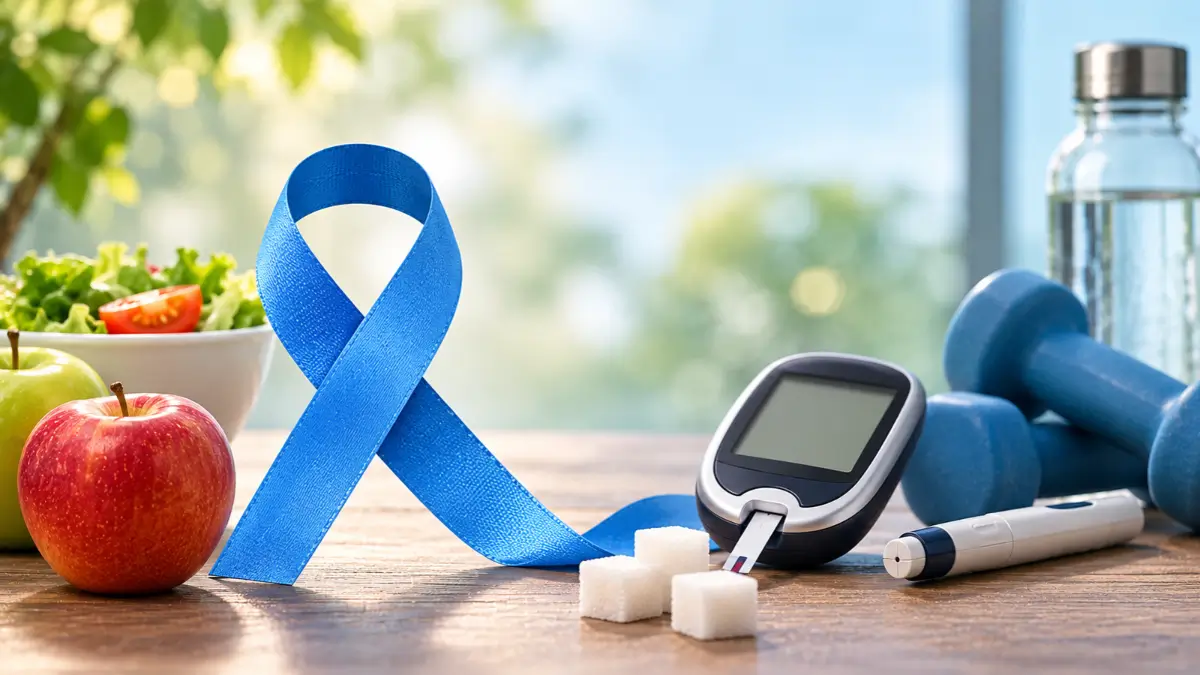
Imagine feeling thirsty all the time, getting tired easily or needing to use the washroom more frequently than usual. These may seem like ordinary problems, but they can sometimes be warning signs of diabetes. The challenge is that many people do not recognise these symptoms or may not experience noticeable signs at all. World Diabetes Day 2026 draws attention to the importance of early diagnosis, timely treatment and awareness of diabetes.
World Diabetes Day 2026
World Diabetes Day is observed every year on 14 November to spread awareness about diabetes and encourage action to prevent and manage the condition. The date marks the birthday of Sir Frederick Banting, who co-discovered insulin with Charles Best in 1921. The campaign brings together healthcare professionals, governments, organisations and communities to highlight the challenges faced by people living with diabetes.
Insulin was discovered in 1921: Frederick Banting and Charles Best began their experiments at the University of Toronto in May 1921. John Macleod and James Collip also played important roles in developing the treatment
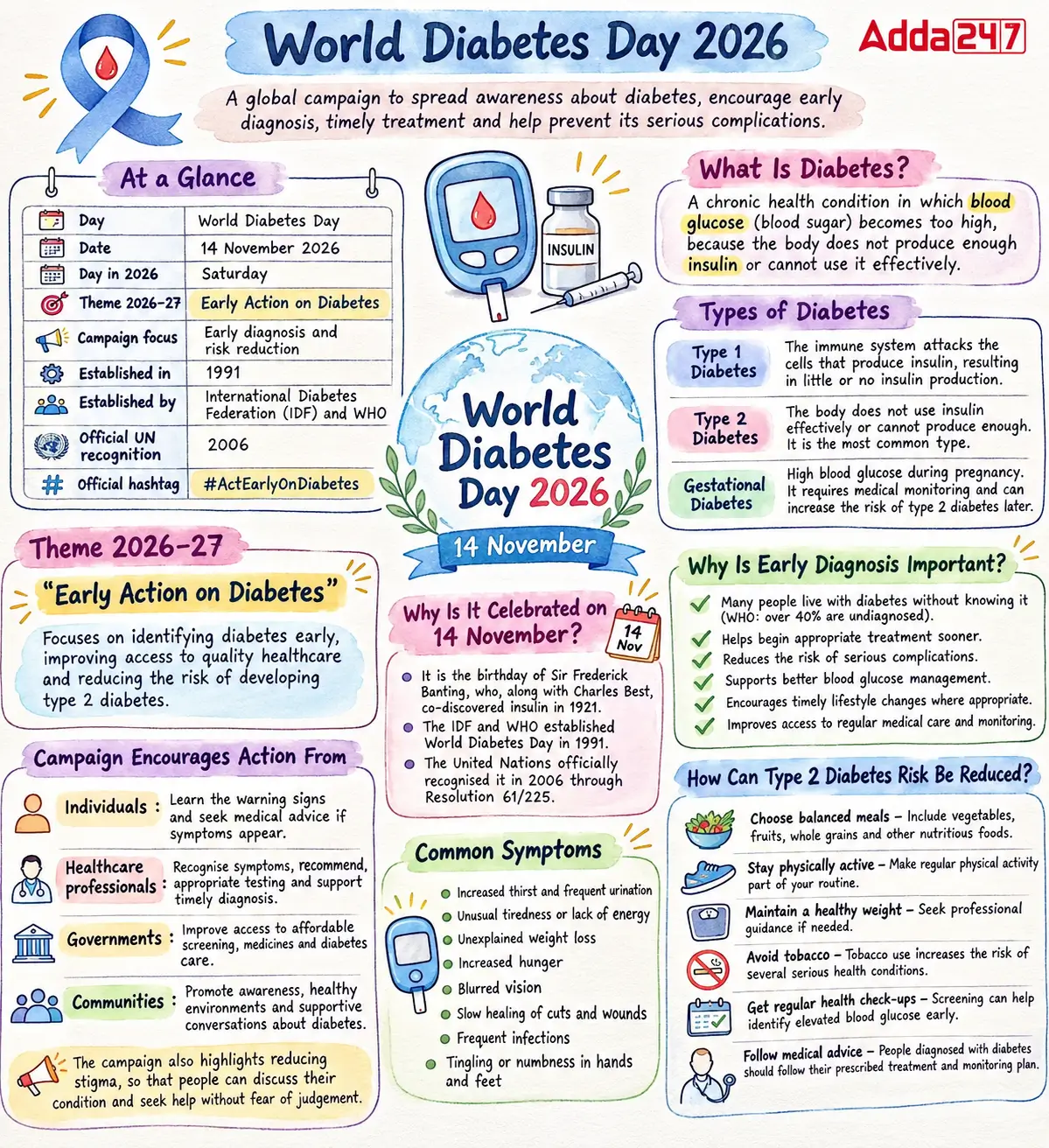
World Diabetes Day 2026 Theme: Early Action on Diabetes
The theme for World Diabetes Day 2026–27 is “Early Action on Diabetes.” The campaign focuses on identifying diabetes at an early stage, improving access to quality healthcare and reducing the risk of developing type 2 diabetes.
The campaign encourages action at different levels:
- Individuals: Learn the warning signs and seek medical advice if symptoms appear.
- Healthcare professionals: Recognise symptoms, recommend appropriate testing and support timely diagnosis.
- Governments: Improve access to affordable screening, medicines and diabetes care.
- Communities: Promote awareness, healthy environments and supportive conversations about diabetes.
The word insulin has an interesting origin: The name comes from the Latin word insula, meaning “island.” It refers to the tiny clusters of insulin-producing cells in the pancreas known as the islets of Langerhans.
Why Is World Diabetes Day Celebrated on 14 November?
World Diabetes Day is observed on 14 November because it is the birthday of Sir Frederick Banting, who, along with Charles Best, played a major role in the discovery of insulin. Their work transformed diabetes treatment and helped make insulin therapy available to people who previously had very limited treatment options. The International Diabetes Federation (IDF) and the World Health Organization (WHO) established World Diabetes Day in 1991 in response to growing concerns about the rising impact of diabetes. In 2006, the United Nations officially recognised the observance through Resolution 61/225.
Diabetes has been known for thousands of years: One of the earliest known descriptions of a condition resembling diabetes appears in the ancient Egyptian Ebers Papyrus, dating to around 1550 BCE.
What Is Diabetes?
Diabetes is a chronic health condition in which blood glucose, commonly known as blood sugar, becomes too high. This happens when the body does not produce enough insulin or cannot use the insulin it produces effectively. Insulin is a hormone that helps glucose move from the bloodstream into the body’s cells to provide energy. If diabetes is not properly managed, high blood sugar can damage the heart, kidneys, eyes, nerves and blood vessels.
Types of Diabetes
Diabetes is generally classified into three major types. Each type has different causes and may require a different approach to treatment and management.
| Type | Explanation |
| Type 1 Diabetes | The body’s immune system attacks the cells that produce insulin, resulting in little or no insulin production. People with this condition require insulin treatment. |
| Type 2 Diabetes | The body does not use insulin effectively or cannot produce enough to maintain normal blood glucose levels. It is the most common type of diabetes. |
| Gestational Diabetes | High blood glucose develops during pregnancy. It requires medical monitoring and can increase the risk of developing type 2 diabetes later in life. |
Insulin discovery received a Nobel Prize: Frederick Banting and John Macleod received the 1923 Nobel Prize in Physiology or Medicine for the discovery of insulin. Banting shared his prize money with Charles Best, while Macleod shared his with James Collip.
Why Is Early Diagnosis Important?
The 2026 campaign places special emphasis on early diagnosis because many people are living with diabetes without knowing it. According to the WHO, more than 40% of people living with diabetes worldwide are undiagnosed.
- Help people begin appropriate treatment sooner.
- Reduce the risk of serious complications.
- Support better blood glucose management.
- Encourage timely lifestyle changes where appropriate.
- Improve access to regular medical care and monitoring.
Insulin was not always produced using modern technology: Early insulin was extracted from the pancreases of animals, including cattle and pigs. Advances in biotechnology later made it possible to produce human insulin using recombinant DNA technology.
How Can Type 2 Diabetes Risk Be Reduced?
Type 2 diabetes can often be delayed or prevented through healthy lifestyle choices, although individual risk also depends on factors such as family history, age and other health conditions. Small, consistent changes can support better overall health and reduce certain risk factors.
- Choose balanced meals: Include vegetables, fruits, whole grains and other nutritious foods in appropriate portions.
- Stay physically active: Make regular physical activity part of your routine, according to your health and fitness level.
- Maintain a healthy weight: Seek professional guidance if weight management is a concern.
- Avoid tobacco: Tobacco use increases the risk of several serious health conditions.
- Get regular health check-ups: Screening can help identify elevated blood glucose before symptoms become noticeable.
- Follow medical advice: People diagnosed with diabetes should follow their prescribed treatment and monitoring plan.




 List of RBI Governors in India 2026: Fir...
 SBI PO Interview Date 2026 Out, Check Re...
 Supreme Court JCA Admit Card 2026 Out, D...