
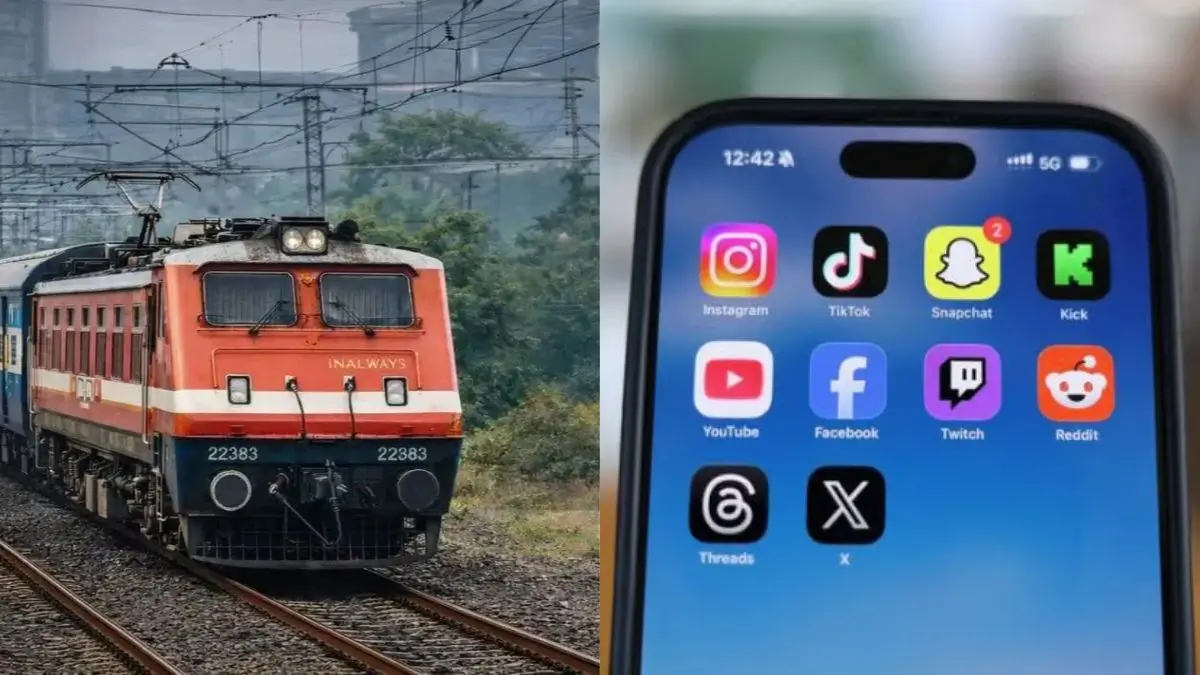
Daily Current Affairs: 23 July, 2026
Q1. According to the International Union of Railways (UIC) report of June 2025, which nation ranks ahead of India in percentage of railway electrification?
(a) China
(b) Switzerland
(c) Japan
(d) France
(e) Spain
Answer: e
Solution:
- Railway electrification on Indian Railways has been undertaken in mission mode, making it one of the fastest railway electrification programmes in the world.
- As of 2026, about 99.6% of the Broad Gauge (BG) network has been electrified.
- Electrification work on the remaining network is currently underway.
Railway Electrification in India
| Period | Route Kilometres Electrified |
| Before 2014 (about 60 years) | 21,801 km |
| 2014–26 | 48,072 km |
- During 2014–26, Indian Railways electrified 48,072 route kilometres, more than double the electrification achieved in the preceding six decades.
- All new line and multi-tracking projects are now being sanctioned and constructed with electrification.
Global Railway Electrification Status (UIC Report, June 2025)
| Country | Railway Electrification |
| Switzerland | 100% |
| India | 99.6% |
| China | 82% |
| Spain | 67% |
| Japan | 64% |
| France | 60% |
| United Kingdom | 39% |
- According to the International Union of Railways (UIC) Report, June 2025, India has one of the most extensively electrified railway networks in the world.
- By network coverage, Indian Railways ranks second globally after Switzerland, with 99.6% electrification of its Broad Gauge network.
Q2. INS Malvan, which was inducted into the Indian Navy at Karwar in July 2026, belongs to which class of naval vessels?
(a) Arnala class ASW-SWC
(b) Mahe class ASW-SWC
(c) Nilgiri class Stealth Frigate
(d) Kalvari class Submarine
(e) Visakhapatnam class Destroyer
Answer: b
Solution:
- The Indian Navy inducted INS Malvan, the second Anti-Submarine Warfare Shallow Water Craft (ASW-SWC) of the Mahe class, at Karwar, Karnataka, on 22 July 2026.
- The induction marks a significant milestone in India’s indigenous warship-building programme and strengthens the country’s coastal defence capabilities.
- Air Chief Marshal A. P. Singh, Chief of the Air Staff, attended the ceremony as the Chief Guest.
- Speaking on the occasion, Air Chief Marshal A. P. Singh appreciated the Indian Navy’s efforts towards Atmanirbhar Bharat and stated that INS Malvan would play a crucial role in ensuring the maritime security of India’s coastal regions.
- INS Malvan has been built by Cochin Shipyard Limited (CSL) under the Atmanirbhar Bharat Mission.
- The warship incorporates more than 80% indigenous equipment and technology, reflecting India’s growing self-reliance in defence manufacturing.
- It is equipped with RBU-6000 anti-submarine rocket launchers, DRDO-developed torpedoes, and an advanced German-Indian sonar suite.
- The vessel is designed to detect, track, and neutralize enemy submarines operating in shallow coastal waters.
- INS Malvan will significantly enhance the Indian Navy’s anti-submarine warfare (ASW) capabilities and strengthen maritime security along India’s coastline.
Q3. France passed landmark legislation in July 2026 prohibiting children under a specific age limit from using social media platforms. What digital age limit did France establish as the first EU country to do so?
(a) Under 13 years
(b) Under 14 years
(c) Under 15 years
(d) Under 16 years
(e) Under 18 years
Answer: c
Solution:
- France’s Parliament has passed a landmark bill prohibiting children under the age of 15 from using social media platforms.
- Lawmakers in both chambers of the French Parliament voted in favor of the legislation.
- The bill also includes a ban on mobile phone use by students in schools.
- With this legislation, France becomes the first country in the European Union to approve a blanket ban on social media access for children under 15.
- The measure has been introduced amid growing global concerns about the harmful effects of digital content and excessive social media use on children and adolescents.
- The ban is aimed at protecting young users from risks associated with online platforms, including exposure to inappropriate content, cyberbullying, and negative impacts on mental health.
- The restrictions will not apply to online encyclopedias, educational platforms, or scientific directories, ensuring continued access to educational and learning resources.
Q4. As of 31 March 2026, what were the total realized actual investments and cumulative exports enabled across the 14 PLI sectors since inception?
(a) Investment: ₹1.91 lakh crore; Exports: ₹8.0 lakh crore
(b) Investment: Over ₹2.40 lakh crore; Exports: Over ₹15.2 lakh crore
(c) Investment: ₹3.50 lakh crore; Exports: ₹20.0 lakh crore
(d) Investment: ₹1.50 lakh crore; Exports: ₹10.5 lakh crore
(e) Investment: Over ₹4.00 lakh crore; Exports: Over ₹12.0 lakh crore
Answer: b
Solution:
- The Government of India has launched Production Linked Incentive (PLI) Schemes for 14 key sectors with an approved financial outlay of ₹1.91 lakh crore.
- The schemes aim to enhance domestic manufacturing, attract investments, increase exports, generate employment, and improve India’s global competitiveness.
- The Department for Promotion of Industry and Internal Trade (DPIIT) serves as the nodal department for overall coordination and monitoring of the PLI Schemes.
- The respective ministries and departments are responsible for implementing their sector-specific PLI schemes.
- As of 31 March 2026, the PLI Schemes have attracted actual investments exceeding ₹2.40 lakh crore.
- The schemes have generated employment for over 14.15 lakh people (direct and indirect).
Key Achievements of PLI Schemes
- The PLI Schemes have collectively enabled exports worth more than ₹15.2 lakh crore since their inception.
- The cumulative exports increased from ₹4 lakh crore as of 31 March 2024 to ₹15.2 lakh crore as of 31 March 2026.
Sector-wise Impact
- In the Large Scale Electronics Manufacturing sector, mobile phone production has increased by around 2.4 times since the launch of the scheme.
- Mobile phone imports have declined by about 77%.
- Around 99.2% of mobile phones used in India are now manufactured domestically.
- The Pharmaceuticals sector has recorded cumulative sales of over ₹3.64 lakh crore under the scheme.
- Domestic manufacturing of 1,931 pharmaceutical products has been enabled.
- This includes 191 bulk drugs that are being manufactured in India for the first time.
- In the Bulk Drugs sector, manufacturing capacity of approximately 55,000 MT has been established across 26 critical Active Pharmaceutical Ingredients (APIs).
- The initiative has reduced import dependence for products such as Paracetamol, Levofloxacin, and Norfloxacin.
- The Medical Devices scheme has facilitated domestic production of advanced medical equipment including CT Scanners, MRI Systems, Cath Labs, and Ultrasonography Equipment.
- 22 applicants have commenced operations under the scheme.
- 55 unique medical devices have been commissioned.
- In the Telecom & Networking Products sector, the scheme has supported the development of indigenous 4G technology.
- It has also strengthened domestic manufacturing capabilities for 5G telecom equipment.
- The PLI Scheme for White Goods has significantly expanded domestic manufacturing.
- Compressor manufacturing capacity increased from 1 million units in 2021 to 10 million units in 2025-26.
- Localisation of critical components such as PCBAs and Cross Flow Fans has improved substantially.
- Several key air-conditioner components are now being manufactured domestically.
Q5. What is the primary target group and objective of the Swayamshakti Sahakar Scheme implemented by NCDC?
(a) Providing interest subvention to large agricultural marketing federations
(b) Facilitating affordable, reliable credit to poor communities and women Self-Help Groups (SHGs)
(c) Funding cold storage infrastructure exclusively for coastal aquaculture cooperatives
(d) Training rural youth in digital banking tools across Primary Agricultural Credit Societies (PACS)
(e) Granting export subsidies to sugar co-operatives
Answer: b
Solution:
- The National Cooperative Development Corporation (NCDC), a statutory organization under the Ministry of Cooperation, is implementing the Yuva Sahakar Scheme and Swayam Shakti Sahakar Scheme.
- Both schemes are fully funded and supported by NCDC.
Yuva Sahakar Scheme
- The Yuva Sahakar Scheme is being implemented to encourage newly formed cooperative societies with new and innovative ideas.
- The scheme aims to promote entrepreneurship and innovation within the cooperative sector.
Swayam Shakti Sahakar Scheme
- The objective of the Swayam Shakti Sahakar Scheme is to facilitate access to affordable, cost-effective, and reliable financial services for the poor, including Women Self-Help Groups (SHGs).
- The scheme supports common and collective socio-economic activities to promote sustainable livelihoods.
Implementation and Monitoring
- NCDC extends financial assistance on a project basis under both schemes.
- Under the Yuva Sahakar and Swayam Shakti Sahakar schemes, no cooperative society from the Hisar Lok Sabha Constituency in Haryana has submitted any proposal to NCDC.
- NCDC actively monitors the implementation of these schemes through its 19 Regional Offices and 9 Sub-Offices across the country.
- Periodic field visits and inspections are conducted to ensure proper monitoring of loan disbursement and timely credit flow, particularly to women cooperatives.
Q6. Who assumed office as the Chairman of the National Commission for Minorities (NCM) in July 2026?
(a) Shri Iqbal Singh Lalpura
(b) Smt. S. Munawari Begum
(c) Syed Ghayorul Hasan Rizvi
(d) Shri Wajahat Habibullah
(e) Shri Harjit Singh Grewal
Answer: e
Solution:
- Shri Harjit Singh Grewal assumed office as the Chairman of the National Commission for Minorities (NCM) on 21 July 2026.
- His appointment marks the beginning of a renewed commitment towards promoting the welfare, inclusion, empowerment, and socio-economic development of minority communities.
- With extensive experience in public life and organizational leadership, he has been actively involved in promoting social harmony, public welfare, and inclusive development.
- Smt. S. Munawari Begum, Member of the National Commission for Minorities, assumed office as the Vice Chairperson of the Commission on 20 July 2026.
National Commission for Minorities (NCM)
- Established: 1993
- Statutory Basis: National Commission for Minorities Act, 1992
- Ministry: Ministry of Minority Affairs
- Headquarters: New Delhi
- Objective: To safeguard the rights and interests of minority communities and evaluate the progress of their socio-economic and educational development.
Q7. As of June 30, 2026, India’s total non-fossil fuel-based electricity installed capacity stood at 297.36 GW. What was the exact contribution of nuclear power capacity in this mix?
(a) 5.50 GW
(b) 6.78 GW
(c) 8.78 GW
(d) 11.25 GW
(e) 15.40 GW
Answer: c
Solution:
- India’s renewable energy installed capacity has increased from 76.38 GW in 2014 to 288.58 GW as on 30 June 2026.
Source-wise Renewable Energy Installed Capacity (as on 30 June 2026)
| Source | Installed Capacity (GW) |
| Solar Power | 162.15 |
| Wind Power | 57.44 |
| Bio Power | 11.75 |
| Hydro Power | 57.24 |
| Total | 288.58 |
- A total of 297.36 GW of non-fossil fuel-based electricity capacity has been installed in the country as on 30 June 2026.
- This includes 288.58 GW of renewable energy capacity and 8.78 GW of nuclear power capacity.
- Since FY 2014 to FY 2026, the renewable energy sector has attracted Foreign Direct Investment (FDI) of USD 45.72 billion (approx.).
- During the same period, domestic financial institutions have deployed ₹12.32 lakh crore towards the renewable energy sector.
- The institutions contributing to renewable energy financing include 12 Public Sector Banks, IREDA, PFC, REC, IIFCL, NaBFID, and SIDBI.
Q8. In July 2026, Ukrainian President Volodymyr Zelenskyy removed General Oleksandr Syrskyi as Commander-in-Chief of the Armed Forces of Ukraine. Who was appointed as his successor?
(a) Major General Mykhailo Drapatyi
(b) General Valerii Zaluzhnyi
(c) Lieutenant General Kyrylo Budanov
(d) Oleksii Reznikov
(e) General Anatoliy Barhylevych
Answer: a
Solution:
- Ukrainian President Volodymyr Zelenskyy has removed Army Commander-in-Chief Oleksandr Syrskyi from his post.
- Mykhailo Drapatyi has been appointed as the new Commander-in-Chief of the Armed Forces of Ukraine.
- The leadership change comes amid the continuing conflict between Ukraine and Russia and is part of a broader effort to strengthen Ukraine’s military effectiveness and strategic operations.
- Mykhailo Drapatyi is regarded as an experienced military commander with extensive operational experience in Ukraine’s armed forces.
Q9. In July 2026, EbixCash World Money Limited became the first entity in India to receive a perpetual RBI licence with an expanded scope of current account activities under which entity classification?
(a) Authorised Dealer Category-I (AD-I)
(b) Full-Fledged Money Changer (FFMC)
(c) Non-Banking Financial Company – Infrastructure Finance Company (NBFC-IFC)
(d) Authorised Dealer Category-II (AD-II)
(e) Payment Aggregator – Cross Border (PA-CB)
Answer: d
Solution:
- EbixCash World Money Limited has secured a perpetual Authorised Dealer Category-II (AD-II) licence from the Reserve Bank of India (RBI).
- With this approval, EbixCash becomes the first AD-II entity in India to receive a perpetual RBI licence with an expanded scope of permitted activities.
- The licence enables the company to undertake trade remittances and family maintenance remittances, areas that were previously dominated by banks.
- The expanded powers will allow EbixCash to directly serve small and medium enterprises (SMEs) involved in international trade.
- The regulatory milestone follows a landmark amendment to the Foreign Exchange Management Act (FEMA) framework in May 2026.
- Under the revised framework, the RBI permitted AD-II entities to process:
- Trade remittances up to ₹25 lakh
- Family maintenance remittances
- This marks the first time such activities have been opened to AD-II entities.
- The development is expected to improve access to foreign exchange services, enhance competition, and facilitate international transactions for businesses and individuals.
Q10. Where was the White Rabbit-based IST Dissemination Demonstration Network commissioned, and which three primary Indian institutions jointly developed it?
(a) CSIR-NPL, New Delhi; Ministry of Power, DRDO, and C-DAC
(b) RRSL, Bengaluru; Department of Consumer Affairs, CSIR-NPL, and ISRO
(c) ISAC, Bengaluru; NIC, MeitY, and IISc Bengaluru
(d) VSSC, Thiruvananthapuram; BSNL, C-DOT, and ISRO
(e) SAC, Ahmedabad; RBI, SEBI, and CSIR-NPL
Answer: b
Solution:
- Union Minister Pralhad Joshi commissioned the White Rabbit Technology-based Indian Standard Time (IST) Dissemination Demonstration Network at the Regional Reference Standard Laboratory (RRSL), Bengaluru.
- The initiative marks a significant step towards establishing a secure, indigenous, and resilient national time synchronisation system.
- The demonstration network has been developed jointly by the Department of Consumer Affairs, CSIR–National Physical Laboratory (CSIR–NPL), and the Indian Space Research Organisation (ISRO).
- The system disseminates Indian Standard Time (IST), traceable to UTC (NPLI), using Precision Time Protocol (PTP)-based White Rabbit Technology.
- The network is designed to provide highly accurate, secure, and resilient time synchronisation for critical sectors such as banking, financial markets, telecommunications, power systems, transportation, digital governance, and other strategic infrastructure.
- The system has already successfully demonstrated secure transmission of IST between RRSL Bengaluru and the National Stock Exchange (NSE), Chennai.
What is White Rabbit Technology?
- White Rabbit is an advanced networking protocol that enables devices connected through optical fibre networks to synchronise their clocks with an accuracy of less than one nanosecond (one-billionth of a second).
- The technology was originally developed at CERN (European Organization for Nuclear Research).
- It is considered a high-precision enhancement of standard Ethernet networking.
- Its key innovation lies in continuously monitoring and compensating for signal delays over long distances.
- This eliminates clock drift and ensures all nodes in a network remain precisely synchronised









 Daily Current Affairs Quiz 17th October,...
 Daily Current Affairs and GK Updates (16...
 Daily Current Affairs and GK Updates (16...