
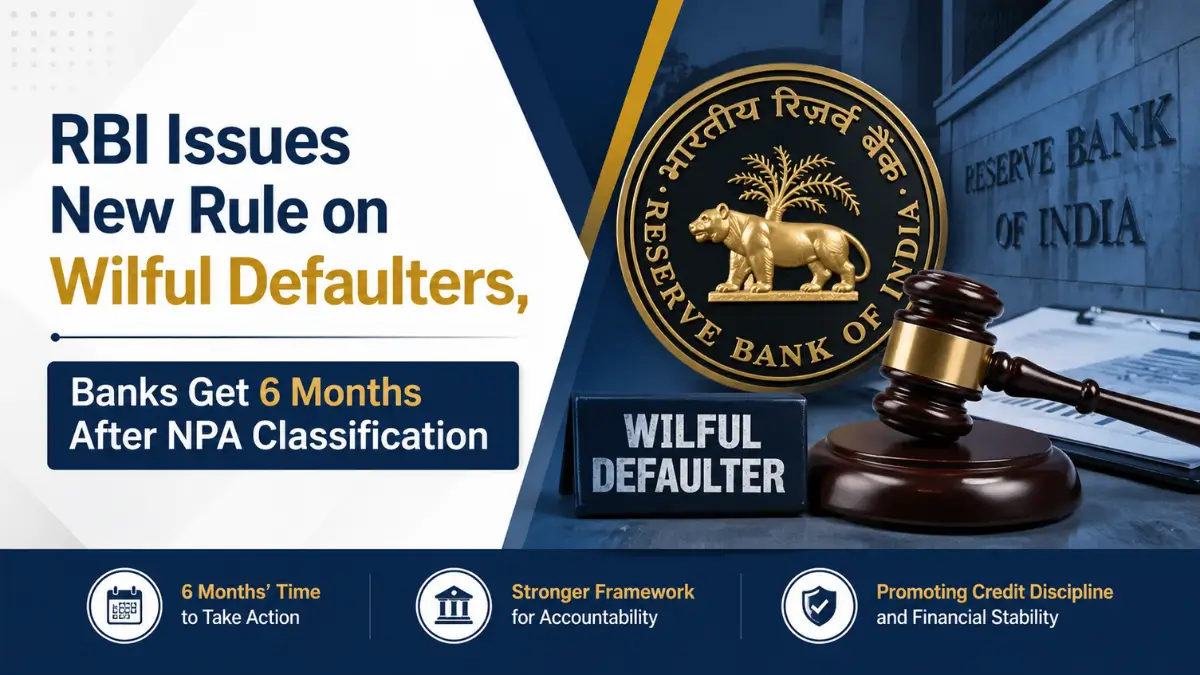
The Reserve Bank of India has introduced a significant reform in its framework dealing with wilful defaulters, aiming to tighten discipline in the banking system. The new rule mandates a strict timeline for banks to act once a loan account turns into a Non-Performing Asset (NPA). This move is expected to reduce delays, improve recovery mechanisms, and prevent borrowers from exploiting procedural gaps.
RBI Issues New Rule on Wilful Defaulters
Announced in April 2026, the guideline reflects RBI’s intent to strengthen credit culture and enhance accountability among lenders and borrowers alike. The biggest highlight of the amendment is the introduction of a fixed timeline for classifying wilful defaulters. Earlier, banks had no strict deadline, which often resulted in long delays and inconsistent practices across institutions.
- Banks must classify a borrower as a wilful defaulter within 6 months of the account being declared NPA
- Applies when wilful default is observed during internal screening
- Covers loans with outstanding amounts of ₹25 lakh and above
What is a Wilful Defaulter?
A borrower is classified as a wilful defaulter when default is not due to genuine financial stress but due to intentional actions. RBI guidelines clearly define such situations to avoid ambiguity.
- Has the ability to repay but deliberately does not pay
- Diverts loan funds for other purposes
- Siphons off funds, making them unavailable for repayment
- Disposes of secured assets without lender approval
Why RBI Introduced This Rule
The central bank identified multiple issues in the earlier system, where delays weakened the overall banking discipline. The absence of a timeline allowed borrowers to misuse loopholes and postpone consequences.
- Delayed identification of wilful defaulters
- Borrowers accessing fresh loans despite defaults
- Lack of uniformity across banks
- Weak deterrence against intentional defaults
New Timeline Explained (Step-by-Step)
The classification process now follows a structured and time-bound approach. This reduces discretion and enforces accountability within banks.
- Account becomes NPA (after default period)
- Bank conducts internal screening for wilful default
- If suspected, formal process is initiated
- Final classification must be completed within 6 months
Key Features of the Updated Framework
The revised directions include several structural improvements apart from the timeline. These additions make the framework more robust and aligned with global practices.
- Applicability to banks, NBFCs, and financial institutions
- Mandatory examination of all NPA accounts above ₹25 lakh
- Stronger reporting and disclosure norms
- Alignment with updated asset classification rules
Comparison: Old vs New Framework
| Aspect | Old Framework | New Framework (Effective 1 April 2027) |
| Timeline for classification | No fixed deadline | 6 months from NPA classification |
| Equity infusion failure | Not explicitly covered | New ground for wilful default |
| Loan agreement covenants | Basic |
Mandatory clauses on wilful defaulter induction
|
| Associated entity restrictions | Limited |
Extended to 1 year (credit) / 5 years (new ventures)
|
| Guarantor liability | Less defined | Explicit — can be classified as wilful defaulter |
| Forensic audit threshold | Not specified | Board-approved policy required |







 NICL Assistant Mains Exam Date 2026 Out ...
 SBI Data Leak Shock! 3.75 Lakh Customer ...
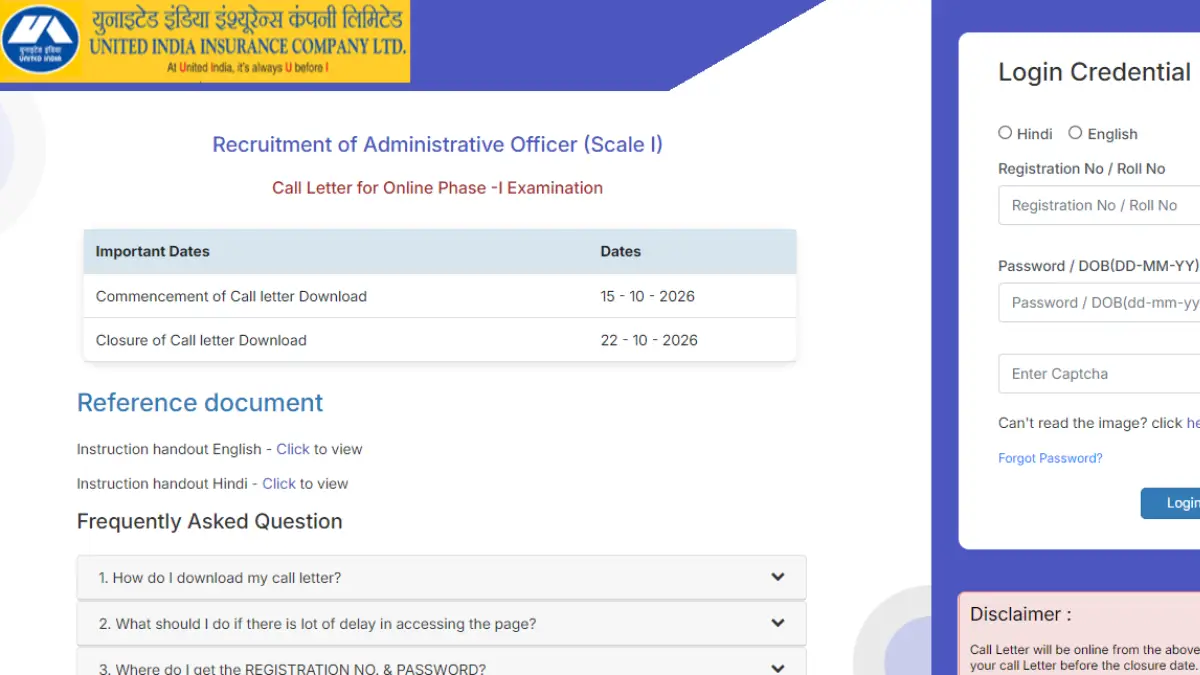 UIIC AO Admit Card 2026 Out: Download Li...