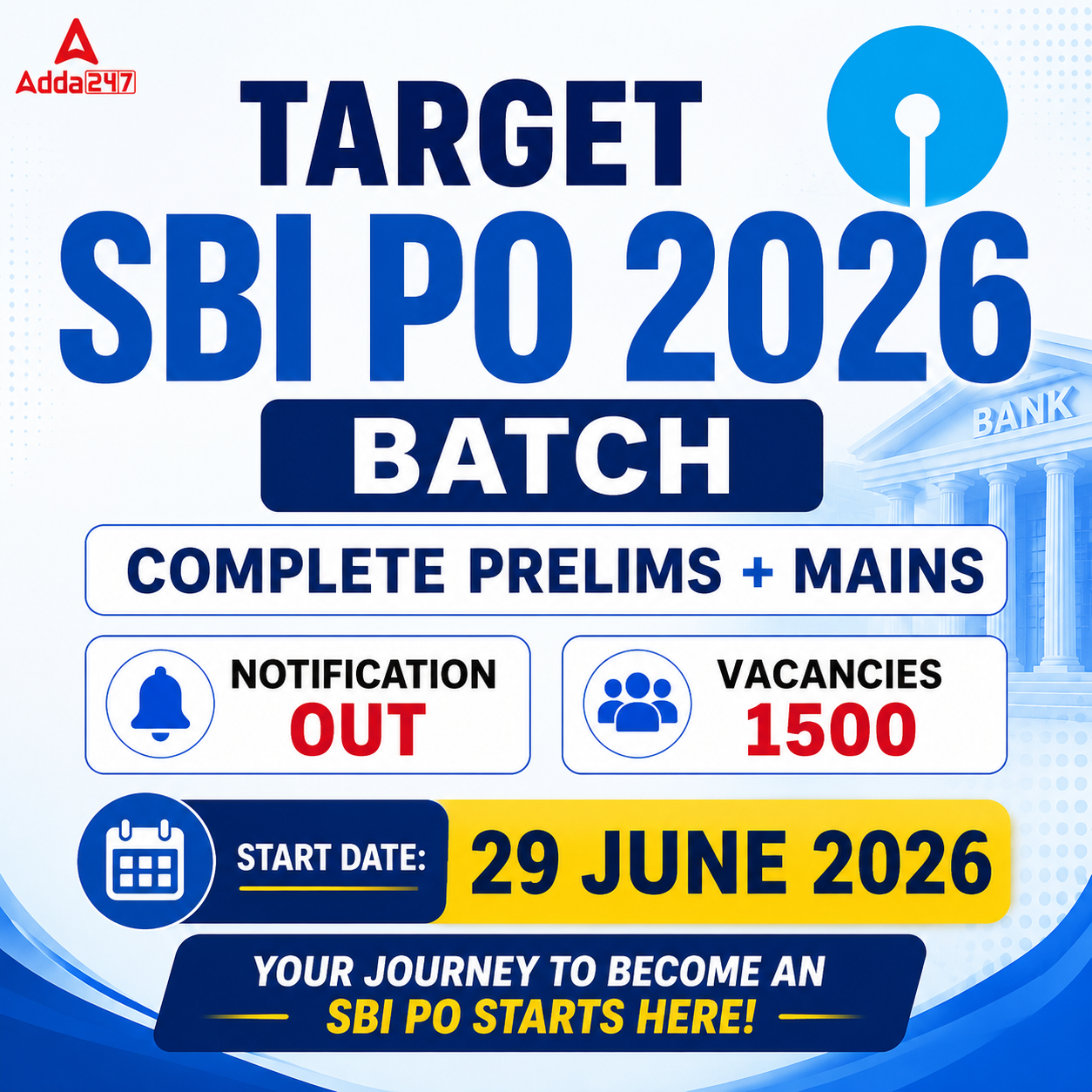
The SBI PO 2026 notification is finally out, and this year’s recruitment presents one of the biggest opportunities for banking aspirants in recent years. State Bank of India has announced 1,500 Probationary Officer vacancies, a massive increase compared to the previous recruitment cycle. The online application process started on 18 June 2026 and will continue until 8 July 2026.
SBI PO Study Plans for Beginners
With the notification now released and competition expected to be intense, many beginners are asking the same question: How should I start preparing for SBI PO 2026? Most aspirants make the mistake of immediately jumping into Quantitative Aptitude, Reasoning Ability, and English Language preparation.
However, successful candidates often begin differently. Instead of studying blindly, they first assess their current level through a diagnostic test and then create a customized study plan. If you are starting your SBI PO journey from scratch, the smartest first step is to take a free diagnostic test.
Attempt SBI PO Readiness Quiz Now
Why SBI PO 2026 Is a Golden Opportunity for Beginners
The increase in vacancies has made SBI PO 2026 one of the most attractive banking exams of the year. SBI has officially released 1,500 vacancies for the Probationary Officer post, significantly higher than the previous cycle. The recruitment process includes Prelims, Mains, Psychometric Test, Group Exercise, and Interview. A higher number of vacancies does not make the exam easy, but it does improve opportunities for well-prepared candidates.
Many aspirants discussing the notification online have pointed out that the increased vacancy count provides a better chance for serious candidates who begin their preparation early and follow a structured strategy.
What Is a Diagnostic Test?
A diagnostic test is a short assessment designed to evaluate your current preparation level before you begin serious study. Unlike a mock test, the purpose of a diagnostic test is not ranking candidates. Instead, it helps identify:
- Strong subjects
- Weak areas
- Accuracy levels
- Speed issues
- Time-management problems
- Exam readiness
Why Beginners Should Take a Diagnostic Test First
Most beginners assume they know their strengths and weaknesses. In reality, they don’t. Many candidates believe Quant is their strongest section until they encounter SBI-level Data Interpretation. Others feel comfortable with English but struggle in Reading Comprehension under time pressure. A diagnostic test provides objective data. Instead of guessing, you know:
- Which topics require immediate attention
- Which subjects need regular practice
- Which sections can become scoring areas
Step 1: Establish Your Baseline Score
Before purchasing courses or solving hundreds of questions, attempt a full-length diagnostic test. Record the following:
- Total score
- Section-wise score
- Accuracy percentage
- Time spent on each section
- Number of attempted questions
- Types of mistakes made
Do not worry if your score is low. The purpose of the test is diagnosis, not performance. Your first score simply becomes the starting point for measuring improvement.
Step 2: Categorize Topics Into Three Buckets
After analyzing your diagnostic test, divide all topics into three categories.
Bucket 1: Strong Areas
These are topics where:
- Accuracy exceeds 80%
- Concepts are clear
- Questions are solved quickly
Examples may include:
- Simplification
- Number Series
- Error Detection
- Coding-Decoding
Bucket 2: Moderate Areas
These topics require consistent practice. Examples include:
- Arithmetic
- Seating Arrangement
- Reading Comprehension
- Cloze Test
Bucket 3: Weak Areas
These are the topics causing the biggest score loss. Examples include:
- Data Interpretation
- Advanced Puzzles
- Critical Reasoning
- Input-Output
SBI PO 2026 Study Plan for Beginners
Preparing for SBI PO 2026 requires a structured approach that balances concept learning, practice, and regular testing. A well-planned study schedule can help beginners build a strong foundation and gradually improve their performance.
Phase 1: Foundation Building
The initial stage should focus on understanding basic concepts and strengthening fundamentals.
Focus Areas:
- Quantitative Aptitude
- Reasoning Ability
- English Language
- General Awareness & Current Affairs
- Revision of learned topics
Objectives:
- Build conceptual clarity.
- Improve calculation speed and accuracy.
- Strengthen grammar and vocabulary.
- Develop reading and comprehension skills.
- Create a strong foundation for advanced topics.
Phase 2: Practice & Improvement
After completing the basics, shift your focus toward intensive practice and application of concepts.
Focus Areas:
- Topic-wise practice questions
- Sectional quizzes and tests
- Previous-year question papers
- Current affairs revision
- Regular performance analysis
Objectives:
- Increase speed and accuracy.
- Identify and improve weak areas.
- Enhance problem-solving skills.
- Gain familiarity with exam-level questions.
- Build confidence through consistent practice.
Phase 3: Mock Test & Exam Readiness
The final stage should be dedicated to exam-oriented preparation and time management.
Focus Areas:
- Full-length mock tests
- Sectional tests
- Current affairs revision
- Mock test analysis
- Revision of important concepts and formulas
Objectives:
- Improve time management skills.
- Develop effective question-selection strategies.
- Enhance exam temperament and confidence.
- Reduce mistakes through detailed analysis.
- Achieve peak performance before the examination.
The 70-20-10 Rule for SBI PO Preparation
A simple framework followed by many successful candidates is:
- 70% Practice : Solving questions regularly improves speed and confidence.
- 20% Concept Revision : Revising formulas, grammar rules, and reasoning techniques prevents forgetting.
- 10% Analysis : Reviewing mistakes from tests often produces the highest improvement. Many aspirants skip this step and repeat the same errors throughout their preparation.







 IBPS Clerk Admit Card 2026 Out @ibps.in,...
 Daily Current Affairs and GK Updates (2n...
 UBI SO Mains Admit Card 2026 Out, Downlo...