
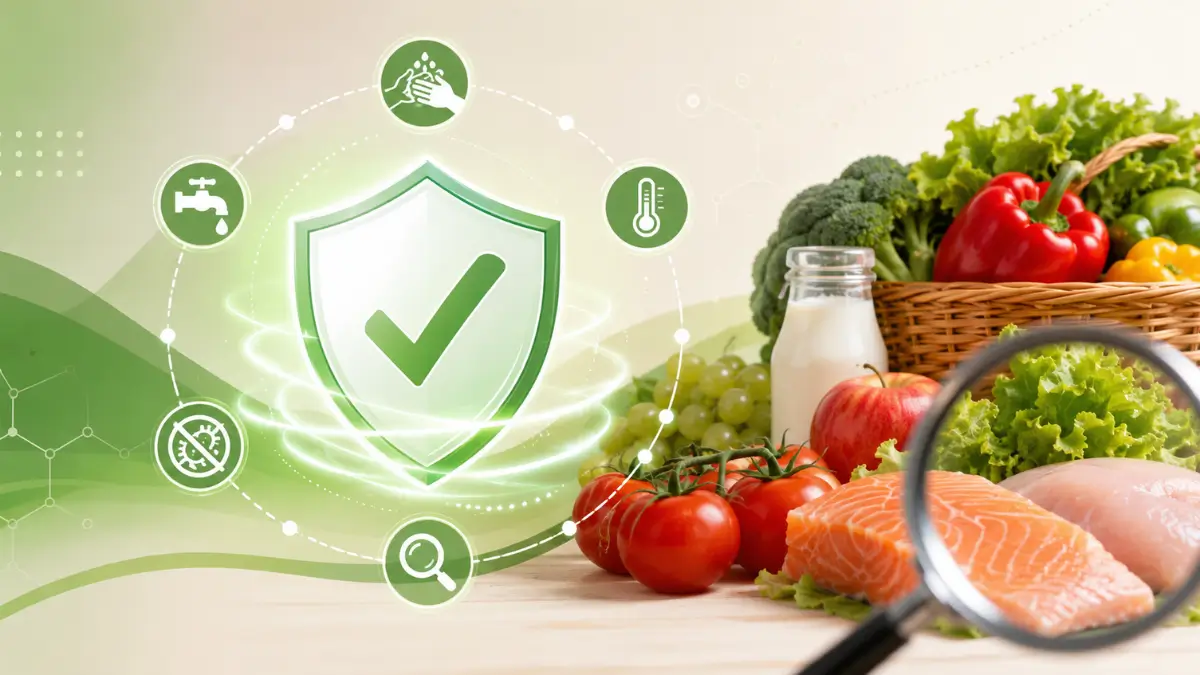
World Food Safety Day is observed every year on 7 June to raise awareness about the importance of safe food and the role it plays in protecting human health. The day highlights the need for collective efforts from governments, food producers, businesses, and consumers to ensure that food remains safe at every stage of the supply chain. From farms and factories to markets and dining tables, food safety is a shared responsibility that affects everyone.
World Food Safety Day 2026
Unsafe food can lead to numerous health problems, including foodborne illnesses, malnutrition, and economic losses. By promoting food safety practices and increasing public awareness, World Food Safety Day encourages people around the world to take action and contribute to safer food systems. The observance also supports global efforts to achieve food security and sustainable development.
World Food Safety Day 2026 Theme
The official theme for 2026 is:
“From burden to solutions – safe food everywhere.”
Announced jointly by WHO and FAO, this theme marks a pivotal shift in the global food safety conversation: it moves from simply raising awareness to using hard data to drive targeted, cost-effective action.
History of World Food Safety Day
The growing importance of food safety in public health led to international efforts to create a dedicated day for awareness and action.
- 2018: The United Nations General Assembly adopted the observance
- 2019: First World Food Safety Day celebrated globally
- Present: Annual awareness campaigns conducted worldwide
The Global Burden: Why 2026 Matters More Than Ever
The statistics behind World Food Safety Day are staggering—and deeply personal:
- 600 million people—nearly 1 in 10 worldwide—fall ill from eating contaminated food every year.
- Foodborne illness causes approximately 420,000 deaths annually, including 125,000 children under the age of five.
- Children under five carry 40% of the global foodborne disease burden, measured in disability-adjusted life years (DALYs).
- In low- and middle-income countries alone, unsafe food costs an estimated $110 billion annually in lost productivity and medical expenses.
- Contaminated food can cause more than 200 different diseases, ranging from diarrheal infections to cancers caused by chemical contamination.
Common Causes of Foodborne Diseases
Food can become unsafe due to contamination at various stages of production, processing, storage, or preparation.
- Bacterial contamination
- Viral infections
- Improper food storage
- Cross-contamination
- Unsafe water usage
- Poor hygiene practices
- Chemical contamination
Common Foodborne Illnesses
- Salmonellosis: Salmonella bacteria
- E. coli Infection: Contaminated food or water
- Listeriosis: Listeria bacteria
- Norovirus Infection: Viral contamination
- Food Poisoning: Various microorganisms
Did you know?
The Codex Alimentarius — the “food code” that inspired World Food Safety Day — contains over 200 standards, 70 guidelines, and more than 100 codes of practice. Yet the entire library fits onto a single standard USB drive. But here is the twist: The word “Codex” is Latin for “tree trunk” or “block of wood” — because ancient Romans used wax-covered wooden tablets (called codices) to record laws. Today, the Codex Alimentarius remains the “wooden tablet” of global food safety, carved with rules that protect billions of meals every single day.
Role of WHO and FAO in Food Safety
The World Health Organization and the Food and Agriculture Organization play a major role in promoting global food safety standards.
- Developing food safety guidelines
- Supporting countries with food safety policies
- Conducting awareness campaigns
- Promoting scientific research
- Strengthening international cooperation
Sustainable Development Goals (SDGs)
- SDG 2 (Zero Hunger): Ensuring access to safe, nutritious food for all.
- SDG 3 (Good Health and Well-being): Reducing deaths and illnesses from contamination.
- SDG 6 (Clean Water and Sanitation): Addressing wastewater and safe reuse in food production.
- SDG 8 (Decent Work and Economic Growth): Supporting formalization of food enterprises.
- SDG 9 (Industry, Innovation, and Infrastructure): Integrating small-scale food producers into safe value chains.





 IBPS SO Mains Admit Card 2026 Out, Downl...
 IBPS SO Score Card 2026 Out, Prelims Sco...
 SBI Clerk Prelims Result 2026 Out @sbi.b...