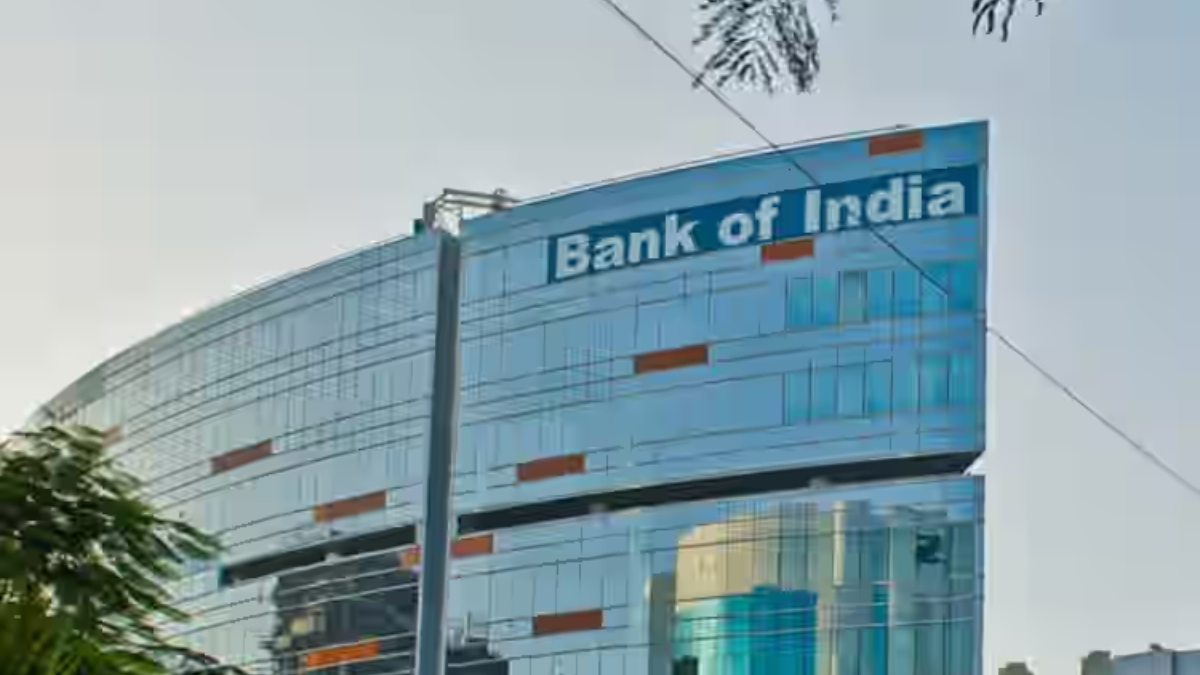
The Bank of India Credit Officer recruitment of 514 vacancies is a significant opportunity for professionals aiming to build a strong career in the credit and lending domain. To perform well in the selection process, candidates must clearly understand the latest syllabus and exam pattern prescribed by the bank. A structured knowledge of subjects, section-wise weightage, and marking scheme helps aspirants plan preparation in a focused and efficient manner. This article explains the detailed syllabus and exam pattern for the Bank of India Credit Officer Exam 2026, enabling candidates to prepare with clarity and confidence.
Bank of India Credit Officer Syllabus 2026 and Exam Pattern
The Bank of India Credit Officer selection process primarily evaluates both aptitude and professional expertise related to credit operations. Since the Professional Knowledge section carries the highest weightage, candidates with a strong foundation in banking, finance, and credit appraisal have a clear advantage. At the same time, sections like English, Reasoning, and Quantitative Aptitude test overall aptitude and decision-making ability. Going through the detailed syllabus below will help aspirants prioritize topics and allocate preparation time wisely.
Bank of India Credit Officer Exam Pattern 2026
The online examination follows a composite time structure and assesses candidates across four sections.
The exam consists of 150 questions carrying a total of 150 marks.
The total duration of the exam is 120 minutes, with no sectional time limits.
All questions are objective in nature and conducted in online mode.
Performance in the Professional Knowledge section plays a decisive role in shortlisting.
| Bank of India Credit Officer Online Exam Pattern | |||
| Section | No of Qs. | Max. Marks | Duration |
| English Language | 25 | 25 | 120 minutes |
| Reasoning | 25 | 25 | |
| Quantitative Aptitude | 25 | 25 | |
| Professional Knowledge (Relevant to Post) | 75 | 75 | |
| Total | 150 | 150 | 2 hours |
Bank of India Credit Officer Syllabus 2026
The syllabus is designed to evaluate both general aptitude and in-depth professional understanding of credit-related functions.
English Language
This section evaluates reading ability, grammar usage, and comprehension skills required for professional banking communication.
- Reading Comprehension based on banking, finance, economy, and business-related passages.
- Cloze Test focusing on contextual understanding and vocabulary usage.
- Error Spotting and Sentence Correction based on grammar rules.
- Fill in the Blanks (single and double) testing grammar and vocabulary.
- Para Jumbles to assess sentence arrangement and logical flow.
- Sentence Improvement and Phrase Replacement questions.
- Vocabulary-based questions including synonyms, antonyms, word usage, and idioms.
Reasoning Ability
This section checks logical thinking, analytical skills, and problem-solving ability.
- Puzzles (floor-based, box-based, scheduling, comparison-based).
- Seating Arrangement (linear, circular, square, rectangular).
- Syllogism (traditional and coded).
- Inequality (direct and coded).
- Coding–Decoding (alphabet, numeric, symbolic).
- Blood Relations (family-based problems).
- Direction Sense and Distance problems.
- Order & Ranking questions.
- Input–Output based on number and word patterns.
- Logical Reasoning (statement–assumption, cause–effect, inference).
Quantitative Aptitude
This section assesses numerical ability, accuracy, and calculation speed essential for credit-related roles.
- Simplification and Approximation.
- Number Series (missing, wrong, pattern-based).
- Quadratic Equations.
- Data Interpretation:
-
- Table-based
- Line Graph
- Bar Graph
- Pie Chart
- Caselet DI
- Arithmetic Word Problems:
-
- Percentage
- Ratio & Proportion
- Profit & Loss
- Simple & Compound Interest
- Time & Work
- Time, Speed & Distance
- Mixtures & Allegations
- Averages
- Partnership
- Number System basics (LCM, HCF, divisibility).
Professional Knowledge (Credit Officer)
This is the most important section, carrying maximum weightage and deciding shortlisting.
Banking & Financial System
- Structure of Indian banking system.
- Functions of RBI, commercial banks, NBFCs.
- Types of bank accounts and deposit products.
Credit Appraisal & Lending
- Credit appraisal process and loan lifecycle.
- Types of loans: retail, MSME, corporate, agriculture.
- Fund-based and non-fund-based limits.
- Security, collateral, and guarantees.
Financial Statement Analysis
- Balance Sheet analysis.
- Profit & Loss account interpretation.
- Cash Flow and Fund Flow statements.
- Ratio analysis (liquidity, profitability, leverage).
Working Capital & Project Finance
- Working capital assessment methods (Turnover method, MPBF).
- Project appraisal and viability analysis.
- Break-even analysis and DSCR.
Risk Management
- Credit risk, market risk, operational risk.
- Basel norms and capital adequacy.
- Risk mitigation techniques.
Asset Quality & Recovery
- NPA classification and provisioning norms.
- SMA categories and restructuring.
- SARFAESI Act and recovery mechanisms.
Priority Sector & MSME Lending
- Priority sector guidelines by the RBI.
- MSME classification and financing schemes.
- Government credit-linked schemes.
Regulatory & Compliance
- RBI guidelines on lending and exposure norms.
- KYC, AML, and compliance basics.

 IPPB Executive Syllabus 2026 and Exam Pa...
 SBI Clerk Syllabus 2026 for Prelims &...
 UP Cooperative Bank Syllabus 2026, Check...