
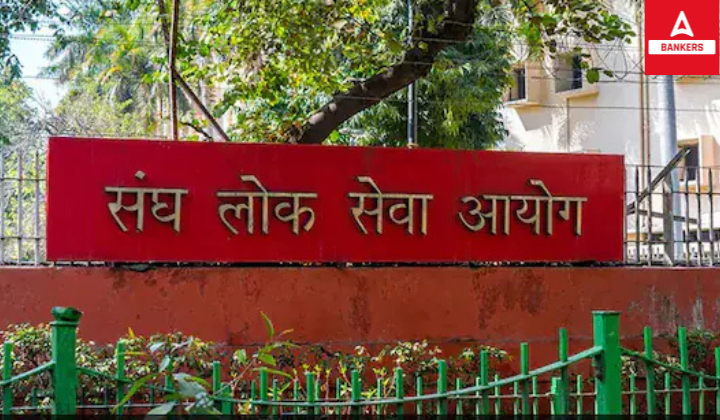
The UPSC EPFO EO/AO and APFC exams are prestigious recruitment tests conducted by the Union Public Service Commission to fill key positions in the Employees’ Provident Fund Organisation. With a 300-mark written test and 100-mark interview, strategic section-wise preparation is essential to crack this exam. Given the multidimensional nature of the syllabus, a section-wise preparation strategy is essential for aspirants aiming to maximize their performance and secure a top rank.
Preparation Strategy for UPSC EPFO EO/AO and APFC Exams
The UPSC EPFO EO/AO and APFC exam recruits officers for the Employees’ Provident Fund Organisation through a two-stage selection process — a 300-mark offline MCQ test followed by a 100-mark interview. Success demands a focused, section-wise preparation strategy targeting high-weightage topics like Labour Laws, Current Affairs, and General English.
Understand the UPSC EPFO Exam Pattern and Syllabus 2026
The Union Public Service Commission (UPSC) will conduct the EPFO EO/AO written examination in offline mode at designated centres across India. The exam is designed to evaluate candidates on a wide spectrum of subjects relevant to the role of Enforcement Officer/Accounts Officer. It will be objective in nature, featuring multiple-choice questions (MCQs). There is no sectional time limit.
| Particulars | Details |
| Mode of Exam | Offline (Pen & Paper-based) |
| Question Type | Objective Type – Multiple Choice Questions (MCQs) |
| Total Questions | 120 |
| Total Marks | 300 |
| Medium of Exam | Hindi & English (English section only in English) |
| Duration | 2 Hours |
| Negative Marking | 1/3rd mark deducted per wrong answer |
| Sectional Time Limit | Not Applicable |
Section-wise Preparation Strategy for UPSC EPFO EO/AO and APFC Exams
When it comes to Labour Laws, get familiar with major acts and their key provisions through concise notes and comparison tables. Keep yourself updated on Current Affairs, including important national events, government schemes, and economic developments. For Industrial Relations, combine theoretical understanding with practical examples by using mind maps and case studies. Maintaining consistent revision and a structured weekly study plan will ensure steady progress.
1. General English
This section evaluates your command of the English language, including grammar, comprehension, and vocabulary. To excel here, aspirants should:
- Practice sentence correction, fill-in-the-blanks, and error spotting regularly.
- Read editorials and articles to improve comprehension and contextual vocabulary.
- Focus on commonly confused words, idioms, and phrasal verbs.
Tip: Create a personal vocabulary journal and revise it weekly.
2. Quantitative Aptitude & General Mental Ability
This section tests numerical ability, logical reasoning, and problem-solving skills. Key focus areas include:
- Arithmetic topics such as percentages, ratios, time and work, and profit & loss.
- Data interpretation sets involving tables, graphs, and pie charts.
- Logical reasoning patterns such as syllogisms, coding-decoding, and series.
Tip: Practice with a timer to improve speed and accuracy under exam conditions.
3. Indian Polity & Constitution
A core component of the syllabus, this section demands conceptual clarity and factual accuracy. Aspirants should:
- Understand the structure of the Indian Constitution, including fundamental rights, directive principles, and amendments.
- Study the functioning of Parliament, the Judiciary, and the Executive.
- Keep track of recent constitutional developments and landmark judgments.
Tip: Use flowcharts and mind maps to visualize governance structures and constitutional provisions.
4. Labour Laws & Social Security
This section is especially important for APFC aspirants and requires a thorough understanding of key legislation. Focus on:
- Major acts such as the Employees’ Provident Fund Act, Employees’ State Insurance Act,
- Payment of Gratuity Act, and Industrial Disputes Act etc.
- Provisions related to applicability, benefits, penalties, and enforcement mechanisms.
- Recent amendments and reforms in labour laws.
Tip: Create comparative tables to distinguish between similar provisions across different acts.
5. Current Affairs & General Awareness
This dynamic section tests your awareness of national and international developments. To stay ahead:
- Follow daily news related to government schemes, economic policies, and social issues.
- Read monthly current affairs compilations and revise them regularly.
- Focus on topics relevant to labour, governance, and social welfare.
Tip: Maintain a current affairs notebook categorized by themes (e.g., Economy, Schemes, International Relations).
6. Industrial Relations & Social Security in India
This section blends theoretical concepts with practical applications. Aspirants should:
- Study the role of trade unions, collective bargaining, and tripartite bodies.
- Understand social security mechanisms and their evolution in India.
- Analyze labour reforms and their impact on employment and welfare.
Tip: Use case studies and real-world examples to strengthen your understanding and retention.
60-Day EPFO Preparation Plan
Week 1-2: Foundation
| Subject | Focus | Daily Target |
| General English | Grammar, vocab, comprehension | 50 MCQs |
| Indian Polity | Constitution, Parliament, Judiciary | Laxmikant basics |
| Indian Economy | GDP, budget, banking, NITI Aayog | NCERT Class 12 |
| Freedom Struggle | 1857-1947 timeline | Leader-wise notes |
Week 3-4: Core EPFO Topics
| Subjects | Focus | Daily Targets |
| Labour Laws | EPF Act, ESI Act, Social Security Code | Section-wise notes |
| Industrial Relations | Trade Union Act, ID Act, Factories Act | 30 MCQs |
| General Accounting | Journal, ledger, final accounts | 10 problems |
Week 5-6: Current Affairs + Quant
| Subjects | Focus | Daily Target |
| Current Affairs | 6-month window, schemes, policies | 1.5 hrs daily |
| Quantitative Aptitude | Simplification, DI, SI-CI, time-work | 30 problems |
| Mental Ability | Coding, series, blood relations | 20 MCQs |
Week 7-8: Social Security + Revision
| Subject | Focus |
| Social Security | EPFO schemes, ESIC, NPS, APY |
| APFC Topics | Culture, population, auditing (if applicable) |
| General Science & Computers | NCERT Class 10 level |
Weekly Mock Test Schedule
| Week | Mock Test | Target Score |
| Week 2 | 1 Full-Length | 120+ |
| Week 4 | 1 Full-Length + 2 Sectional | 150+ |
| Week 6 | 2 Full-Length | 170+ |
| Week 8 | 2 Full-Length | 190+ |
| Week 9 | 2 Full-Length | 200+ |
Progress Tracker
| Section | Week 2 | Week 4 | Week 6 | Week 8 | Week 9 |
| General English | ___/50 | ___/50 | ___/50 | ___/50 | ___/50 |
| Indian Freedom Struggle | ___/30 | ___/30 | ___/30 | ___/30 | ___/30 |
| Current Affairs | ___/40 | ___/40 | ___/40 | ___/40 | ___/40 |
| Indian Polity & Economy | ___/40 | ___/40 | ___/40 | ___/40 | ___/40 |
| Accounting Principles | ___/25 | ___/25 | ___/25 | ___/25 | ___/25 |
| Industrial Relations & Labour Laws | ___/35 | ___/35 | ___/35 | ___/35 | ___/35 |
| Social Security | ___/35 | ___/35 | ___/35 | ___/35 | ___/35 |
| Quantitative Aptitude | ___/30 | ___/30 | ___/30 | ___/30 | ___/30 |
| Mental Ability | ___/15 | ___/15 | ___/15 | ___/15 | ___/15 |
| TOTAL | ___/300 | ___/300 | ___/300 | ___/300 | ___/300 |

| Related Posts | |








 RBI Grade B Interview Preparation Tips: ...
 SBI PO Mains High-Weightage Topics 2026
 SBI Clerk Preparation 2026, Check Subjec...