
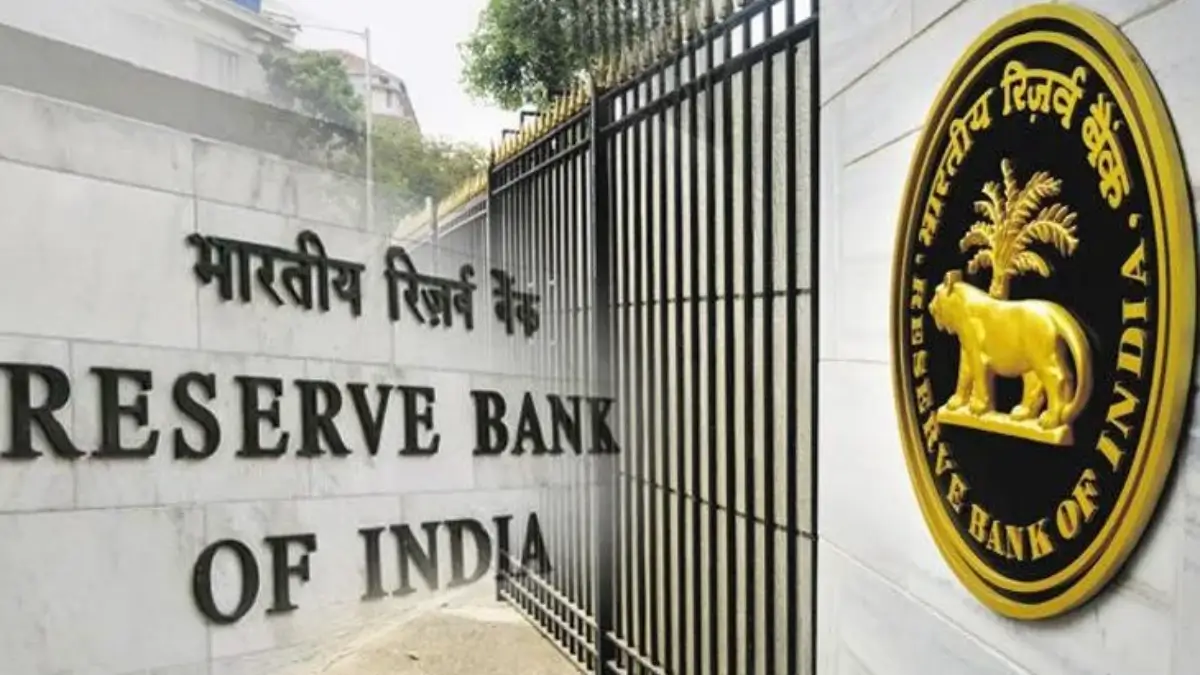
The RBI Grade B Syllabus and Exam Pattern 2026 for DR (General) posts is one of the most important aspects candidates must understand before starting preparation. The recruitment process conducted by the Reserve Bank of India includes Phase 1, Phase 2, and Interview stages, and each phase tests different skills such as current affairs awareness, economic understanding, finance knowledge, analytical ability, descriptive writing, and aptitude skills. Since the examination is considered one of the toughest regulatory body exams in India, candidates should carefully study the latest syllabus and exam pattern to build an effective preparation strategy.
RBI Grade B Syllabus and Exam Pattern 2026
| Detail | Information |
| Conducting Body |
Reserve Bank of India (RBI)
|
| Post Name |
Officer in Grade ‘B’ – DR General
|
| Total Vacancies | 60 (2026 cycle) |
| Phase 1 Exam Date |
13 & 14 June 2026
|
| Phase 2 Exam Date |
25 & 26 July 2026
|
| Exam Mode | Online (CBT) |
| Phase 1 Marks |
200 (Qualifying only – not in merit)
|
| Phase 2 Marks |
300 (Counted in final merit)
|
| Interview Marks | 75 |
| Total Merit Marks |
375 (Phase 2 + Interview)
|
| Official Website |
rbi.org.in / opportunities.rbi.org.in
|
RBI Grade B Notification 2026 Out for 60 Posts: Available now, Click Here to Download
RBI Grade B Exam Pattern 2026
The RBI Grade B 2026 exam for the General (DR) stream is conducted in three stages: Phase 1 (Prelims), Phase 2 (Mains), and Interview. Phase 1 is qualifying in nature and its marks are NOT added to the final merit list. Only Phase 2 and Interview marks determine your final rank.
Phase I: Prelims Exam
| Section | Questions | Marks | Duration |
| General Awareness | 80 | 80 | 120 mins |
| Quantitative Aptitude | 30 | 30 | |
| English Language | 30 | 30 | |
| Reasoning Ability | 60 | 60 | |
| Total | 200 | 200 | 120 mins |
Negative marking: −0.25 for every incorrect answer. Phase 1 marks are EXCLUDED from final merit.
Phase II: Mains Exam
| Paper | Subject | Type | Marks | Duration |
| Paper I | Economic & Social Issues (ESI) | Objective + Descriptive | 100 | 120 mins |
| Paper II | English (Writing Skills) | Descriptive | 100 | 90 mins |
| Paper III | Finance & Management (FM) | Objective + Descriptive | 100 | 120 mins |
Phase 2 carries 300 marks. ESI and FM have both objective (MCQ) and descriptive components. English is entirely descriptive, to be typed on-screen.
Final Merit Formula:
Final Score = Phase 2 Marks (300) + Interview Marks (75) = 375 Total
RBI Grade B Marking Scheme 2026
| Phase | Section/Paper | Marks per Question |
Negative Marking
|
| Phase 1 | All 4 sections (MCQ) | 1 mark |
−0.25 per wrong answer
|
| Phase 2 – ESI | Objective portion (MCQ) | 1 mark |
−0.25 per wrong answer
|
| Phase 2 – ESI | Descriptive portion | — |
No negative marking
|
| Phase 2 – English | Descriptive (Essay/Précis/RC) | — |
No negative marking
|
| Phase 2 – FM | Objective portion (MCQ) | 1 mark |
−0.25 per wrong answer
|
| Phase 2 – FM | Descriptive portion | — |
No negative marking
|
| Interview | Personality Test | 75 total | Not applicable |
RBI Grade B 2026 Selection Process
Each stage plays a crucial role in final selection, with Phase II and Interview carrying maximum weight. The selection process consists of three stages:
Phase I (Prelims Exam) – Objective
Phase II (Mains Exam) – Objective + Descriptive
Interview
RBI Grade B Syllabus 2026
The RBI Grade B Syllabus 2026 is comprehensive and designed to evaluate both conceptual understanding and practical awareness required for a career in the Reserve Bank of India. It is divided into Phase I and Phase II, covering a wide range of subjects from aptitude and reasoning to economics, finance, and management.
RBI Grade B Phase I Syllabus
1. General Awareness
This section focuses on your awareness of recent events and financial knowledge. Focus more on revision and factual clarity, as this section is scoring.
- Current Affairs (last 6–8 months): National & international news, banking updates, RBI policies, reports, and summits.
- Banking & Financial Awareness: Basics of banking, monetary policy, financial institutions, and economic terms.
- Static GK: Important places, organizations, books, and historical facts.
- Government Schemes: Key schemes, their objectives, and target beneficiaries.
- Reports & Indices: Important rankings like GDP, inflation, human development, etc.
2. Quantitative Aptitude
This section evaluates your numerical ability and problem-solving speed. Speed and accuracy are crucial—practice regularly.
- Simplification & Approximation: Quick calculations using basic arithmetic.
- Number Series: Finding patterns and missing numbers.
- Data Interpretation: Solving questions based on charts, tables, and graphs.
- Quadratic Equations: Comparing roots and solving equations.
- Ratio & Proportion: Relationship between quantities.
- Profit & Loss: Concepts of CP, SP, discount, and marked price.
- Time & Work: Work efficiency, pipes & cisterns.
- Time, Speed & Distance: Trains, boats & streams.
- Simple & Compound Interest: Interest calculations and growth patterns.
- Percentage & Average: Base concepts used in most questions.
- Mixture & Allegation: Combining ratios and quantities.
3. English Language
This section evaluates your reading ability, grammar, and overall command of the language. Regular reading (editorials, articles) and vocabulary building are key to scoring well.
- Reading Comprehension: Passage-based questions to test understanding, inference, and tone.
- Cloze Test: Fill in the blanks using contextual and grammatical knowledge.
- Error Detection: Identify grammatical mistakes in sentences.
- Para Jumbles: Arrange sentences in a logical order.
- Vocabulary: Synonyms, antonyms, and word usage.
- Sentence Improvement: Correcting sentence structure and grammar.
- Fill in the Blanks (Single/Double): Based on vocabulary and context.
- Phrase Replacement: Replacing incorrect phrases with correct ones.
- Word Swap: Interchanging words to form meaningful sentences.
- Idioms & Phrases: Understanding figurative meanings.
- Sentence Rearrangement (Paragraph Completion): Completing incomplete passages logically.
4. Reasoning Ability
This section checks logical thinking, analytical ability, and pattern recognition skills.
- Puzzles & Seating Arrangement: Linear, circular, and floor-based arrangements (high weightage).
- Syllogism: Drawing logical conclusions from given statements.
- Coding-Decoding: Pattern-based transformations of words/numbers.
- Inequality: Direct and coded comparison questions.
- Blood Relations: Family-based logical problems.
- Input-Output: Machine-based sequential pattern questions.
- Direction & Distance: Tracking movement and final positions.
- Order & Ranking: Position-based problems in a sequence.
- Alphanumeric Series: Mixed letter-number pattern questions.
- Data Sufficiency: Determining if given data is enough to answer.
- Logical Reasoning (Statement-Based)
- Cause and Effect: Identifying relationships between events.
RBI Grade B Phase II Syllabus
Economic and Social Issues (ESI)
- Growth & Development: National income, per capita income, measurement of growth
- Poverty & Employment: Poverty alleviation programs, employment generation in India
- Sustainable Development: Environmental issues, sustainability practices
- Economic Reforms: Liberalization, privatization, globalization (LPG reforms)
- Industrial & Labour Policy: Policies related to industries and workforce
- Monetary & Fiscal Policy: RBI policies, government budgeting, taxation
Globalization: BoP, EXIM policy, global trade practices - International Institutions: IMF, World Bank, WTO, regional cooperation
- Social Structure: Multiculturalism, demographic trends, migration, urbanization
- Social Issues: Gender equality, social justice, welfare schemes
- Indian Political System: Governance structure and policy-making
- Human Development: Health, education, social sector initiatives
English (Writing Skills)
- Essay Writing: Writing structured essays on economic, social, or current topics with clear arguments.
- Precis Writing: Summarizing a passage concisely while retaining the core idea.
- Reading Comprehension: Understanding passages and answering descriptive questions.
- Business/Office Correspondence: Formal letter and email writing in a professional tone.
Finance & Management (FM)
Finance:
- Financial System: Structure of Indian financial system, regulators
- RBI & Institutions: Functions of RBI, NABARD, SIDBI, EXIM Bank, NHB
- Financial Markets: Money, capital, forex, bond, and equity markets
- Risk Management: Banking risks and mitigation strategies
- Derivatives: Basics of forwards, futures, swaps
- Banking Sector Trends: Reforms, digital transformation, innovations
- Financial Inclusion: Role of technology in inclusive banking
- Public Finance: Union Budget, taxation (direct & indirect), GST
- Fiscal Policy: FRBM Act, Finance Commission
- Inflation: CPI, WPI, trends, causes, and control measures
- Corporate Governance: Governance practices in banking sector
- PPP & Investments: Public-private partnerships, portfolio investment
Management:
- Management Basics: Nature, scope, and functions of management
- Management Process: Planning, organizing, staffing, directing, controlling
- Leadership: Styles, theories, and role of leadership
- Human Resource Development: HRD concepts, training, performance appraisal
- Motivation & Morale: Theories of motivation, incentives, employee satisfaction
- Communication: Types, process, barriers, role of IT in communication
- Organizational Behaviour: Role of managers and team dynamics
- Corporate Governance: Principles, mechanisms, and impact on organizations
Interview
The Interview Phase is the final stage of the selection process conducted by the Reserve Bank of India, where candidates are assessed beyond written knowledge on personality, awareness, and communication skills.
Conducted for 75 marks; Final merit is based on Phase II + Interview marks only. Candidates should Focus on:
- Banking awareness
- Economic issues
- Personal background
- Communication skills

RBI Grade B Syllabus PDF
The RBI Grade B Syllabus PDF is an essential resource for candidates preparing for the exam, as it provides a detailed outline of all subjects and topics covered in Phase 1 and Phase 2. Aspirants can download the official syllabus PDF from the website of Reserve Bank of India to get a clear understanding of section-wise topics, exam pattern, and important areas to focus on.
RBI Grade B Phase 1 High Weightage Topics
An analysis of the last few years of the RBI Grade B Phase 1 exam shows that certain topics consistently dominate across Reasoning Ability, Quantitative Aptitude, English Language and General Awareness.
General Awareness dominates the paper, so daily revision is crucial.
Puzzles + DI together form the backbone of Reasoning and Quant sections.
Reading Comprehension is the most important topic in English.
Smart preparation means prioritizing high-return topics first, then covering the rest.
| Section | Topics | Expected Questions | Important Areas |
| General Awareness | Banking & Financial Awareness | 15–25 | RBI Monetary Policy (Repo, CRR, SLR), Basel Norms, NPA, PCA, Financial Inclusion, RBI Circulars |
| Current Affairs (Economic & National) | 25–35 | Last 6–8 months, Banking News, Budget, Economic Survey, Govt Policies | |
| Government Schemes | 7–10 | PM-JAY, SVAMITVA, Digital India, Objectives & Beneficiaries | |
| Reports & Indices | 5–8 | WEO, GFSR, HDI, Global Hunger Index | |
| Reasoning Ability | Seating Arrangement & Puzzle | 20–40 | Linear, Circular, Floor-based, Box-based puzzles |
| Logical Reasoning | 8–10 | Statement-based, cause-effect, course of action | |
| Syllogism | 3–5 | Basic + new pattern | |
| Machine Input Output | 5 | Step-based logic patterns | |
| Miscellaneous | 5–10 | Coding-Decoding, Direction, Blood Relation | |
| Quantitative Aptitude | Data Interpretation (DI + Caselet) | 10–15 | Pie chart, bar graph, caselet DI, calculation intensive |
| Arithmetic | 8–12 | Profit & Loss, Time & Work, SI/CI, Ratio | |
| Number Series | 4–6 | Missing & wrong number | |
| Quadratic Equation | 1–5 | Roots comparison | |
| Quantity Comparison | 2–5 | Q1 vs Q2 based logic | |
| English Language | Reading Comprehension | 8–15 | Tone, inference, vocab-based questions |
| Para Jumble | 4–5 | Sentence arrangement | |
| Fillers | 4–5 | Single/double fillers | |
| Error Detection | 4–6 | Grammar rules | |
| Vocabulary | 4–6 | Word replacement, idioms | |
| Miscellaneous | 5–9 | New pattern questions |
RBI Grade B Phase 2 Important Topics
Below are the most important topics from each subject based on syllabus trends, previous papers, and recent examination patterns.
Economic & Social Issues (ESI)
The ESI paper focuses on the Indian economy, social issues, growth, development, and government policies.
- Inflation, Monetary Policy, and Fiscal Policy are among the most important RBI Grade B topics every year.
- Poverty, Unemployment, Sustainable Development, and Economic Growth carry high conceptual importance.
- Indian Economy and Economic Reforms should be prepared from both static and current perspectives.
- Globalization, WTO, IMF, and World Bank are frequently asked in ESI examinations.
- Budget, Economic Survey, and Government Reports are extremely important for current economic understanding.
- Social Issues such as education, healthcare, gender inequality, and demographic trends are important descriptive topics.
- Financial Inclusion and Digital Economy initiatives are highly relevant for RBI examinations.
- Agriculture, MSME sector, urbanization, and labour reforms are commonly asked areas
Most Important Reports for ESI
- Economic Survey
- Union Budget
- Human Development Report
- World Development Report
- RBI Annual Report
- IMF World Economic Outlook
Finance & Management (FM)
Finance & Management is one of the most scoring papers in RBI Grade B Phase 2.
Finance:
- Indian Financial System and the functions of the RBI are among the most important topics in FM.
- Financial markets, including the money market, capital market, forex market, and bond market, carry high weightage.
- Basel Norms, Risk Management, and NPA-related concepts are repeatedly asked.
- Monetary Policy tools such as Repo Rate, Reverse Repo, CRR, and SLR are extremely important.
- Financial Inclusion and digital payment systems are highly important in recent RBI examinations.
- Derivatives, including Futures, Options, and Swaps, are commonly asked conceptual topics.
- Inflation, Fiscal Policy, and Budget-related concepts are important for conceptual clarity.
- Banking sector reforms and recent financial developments should be thoroughly prepared.
Management
- Leadership theories and leadership styles are among the most frequently asked management topics.
- Motivation theories, including Maslow, Herzberg, and McGregor, are highly important.
- Communication process and barriers to communication are scoring theoretical areas.
- Human Resource Development and Performance Appraisal questions are regularly asked.
- Organizational Behaviour and morale-related concepts are important for descriptive understanding.
- Corporate Governance and ethics topics carry increasing importance in recent examinations.
- Functions of Management including Planning, Organizing, Staffing, Directing, and Controlling are fundamental topics.
- Decision-making and conflict management concepts are also commonly asked.
| Related Posts |
| RBI Grade B Salary |
| RBI Grade B Previous Year Question Papers |
| RBI Grade B Vacancy 2026 |





 SBI SO Syllabus and Exam Pattern 2026, K...
 LIC HFL Junior Assistant Syllabus 2026 a...
 SBI Apprentice Syllabus 2026, Exam Patte...