RBI Grade B Interview Questions Asked, Check Transcript

The RBI Grade B Interview 2026 is the final stage of the recruitment process for candidates who qualify the Phase 2 (Mains) examination. Candidates shortlisted for the interview will be assessed on their knowledge, communication skills, awareness of economic and financial developments, and understanding of banking and monetary policy.

RBI Grade B Interview Questions Asked

The RBI Grade B Interview 2026 will test candidates beyond their performance in the written examination, with emphasis on their understanding of the Indian economy, banking and financial systems, current economic developments, and their ability to express opinions clearly.

Candidates who qualify the Phase 2 examination should prepare for both subject-specific and situational questions, along with questions related to their educational background, work experience, and personal profile.

Questions Asked In RBI Grade B Interview

This article covers the important areas and probable questions that candidates can expect during the RBI Grade B Interview 2026. The questions asked in an interview often depend on the candidate’s background and experience. In this article, we have shared a collection of previous RBI Grade B interview transcripts to guide your preparation.

Candidate No. 1

  1. Why did you go for higher education?
  2. What is the importance of higher education?
  3. What is a lead bank?
  4. What are the deposits/advances of your branch?
  5. Questions on the import basket of India?
  6. What is NPA?
  7. What are the steps taken to reduce the import of gold?
  8. Percentage of petroleum products imported?
  9. Why leave Po?
  10. What will be the pros and cons of bank privatisation?
  11. What are Basel norms?
  12. What is the second most important function of RBI according to you?
  13. Before an asset is turned into NPA, what are the various stages it goes through?
  14. You’ve talked to many SMA borrowers, what are the major reasons for defaults?

Candidate No. 2

  1. Explain the functioning of the Vidya Lakshmi portal and its role in assessing education loans.
  2. Elaborate on the Turnaround Time (TAT) for education loans.
  3. Discuss common reasons for the rejection of education loan applications.
  4. What is the official vision of PNB, and how does it align with your career goals?
  5. How did you manage your academic commitments and work responsibilities during your final year and first year of employment?
  6. What aspects of RBI’s work culture and objectives attract you the most?
  7. How does the banking sector, specifically, demonstrate transparency, and why did you choose it over UPSC?
  8. Define transparency in the context of banking and address concerns related to this aspect.
  9. Explain what stressed assets are and provide reasons for their occurrence.
  10. Define FINTECH and describe its significance in the financial industry.
  11. How would you approach cross-selling financial products to education loan customers?
  12. Could you share examples of customer complaints you’ve encountered in your banking role?
  13. If given the choice, which department within RBI would you prefer to work in and why?
  14. What is your favourite subject in Economics, and how does it influence your approach to banking?

Candidate No. 3

Here are the interview questions asked:

  1. Explain the components of RBI’s balance sheet and income statement.
  2. Differentiate between the balance sheet of RBI and commercial banks.
  3. What is the capital of RBI? Why is it relatively low (as you mentioned 5 crores)?
  4. Why can’t central banks go bankrupt?
  5. Could you elaborate on IFRS? Discuss its implementation status in banks and reasons for not implementing it yet.
  6. Describe the Code of Ethics for Chartered Accountants.
  7. Let’s discuss the multitude of opportunities in a CA career.
  8. What supply chain management challenges is India currently facing?
  9. Could you provide insights into the Yes Bank issue? (If applicable, you can apologize for not recollecting earlier)
  10. Explain the concept of AT1 bonds and their significance.
  11. Define “quality of capital” for banks, focusing on its implications.
  12. Detail the composition of foreign currency assets in a bank’s balance sheet.
  13. Are there defined penalties for CAs if they produce an incorrect report?
  14. Elaborate on the meaning of “true and fair view” in CA terminology

Candidate No. 4

  1. What have you prepared for the interview? (AR, FSR, PV 2025, DPI, FII)
  2. Tell us about the Financial Stability Report (FSR).
  3. Could you share the major findings from the FSR report?
  4. Explain Gross Net Performing Assets (corrected to Gross Non-Performing Assets).
  5. Have you appeared for an interview last year?
  6. Define Domestically Systemic Important Bank (D-SIB).
  7. What is the contagion effect?
  8. Provide an example of the contagion effect.
  9. Which department of RBI attracts you the most?
  10. How does RBI manage currency issuance?
  11. Differentiate between soiled, mutilated, and torn notes.
  12. Is a torn note exchangeable at a bank counter?
  13. Explain the relationship between banks and non-bank entities and how they are interlinked.
  14. How does the issue faced by an NBFC affect the banking sector?
  15. Why is India still a cash-based economy despite digital payment systems?
  16. What are the different types of IT risks banks face?
  17. Mention more IT risks.
  18. Have you heard about “Man in the Middle” attacks?
  19. Have you pursued any courses, internships, distant learning, or specializations?\
  20. Why haven’t you attempted bank exams like PO?
  21. Have you heard about Urban Cooperative Banks (UCBs)?
  22. Explain the differences between Scheduled Commercial Banks (SCBs) and UCBs.
  23. Why should we hire you? Mention your traits that we should consider.
  24. What other exams have you appeared for?

Candidate No. 5

Male 1:

  1. What is the first thing that comes to your mind when you hear RBI?
  2. Explain the difference between black money and laundered money.
  3. What are the laws in India catering to money laundering?
  4. How does your work relate to how banks tackle money laundering in India?

Male 2:

  1. Gharanas in Kathak dance (mentioned as your hobby).
  2. Name a Kathak dancer from the Benaras Gharana who recently passed away.
  3. Questions related to corporate case competitions you participated in during your MBA.
  4. Do you play any musical instruments since you mentioned music as your hobby?

Female 1:

  1. What is LEI (Legal Entity Identifier)?
  2. A question about RBI’s focus on derivatives and related activities.
  3. Explain Urban Cooperative Banks (UCBs) and the parameters considered for the PCA framework for UCBs.

Female 2:

  1. What is the first thing that comes to your mind when you hear RBI?
  2. Conventional and unconventional monetary policy measures were taken during the pandemic.
  3. Why was the Monetary Policy Committee (MPC) formed?
  4. Define shadow banking and its potential impact on financial stability.
  5. Are NBFCs overrated in terms of crisis potential and their impact on financial stability?
  6. Regulatory measures taken by RBI during the pandemic.
  7. Which sectors performed well during the pandemic, and which ones were most affected?

These transcripts have been taken from publically available material. The candidates must make the most of these to do well in the exam.

RBI Grade B Interview Questions Based on Current Affairs

For 2026, this section is very important. You can add probable questions around the latest RBI and economic developments, such as:

  • What are the major challenges currently facing the Indian economy?
  • What is your view on India’s inflation trajectory?
  • How does RBI balance inflation control with economic growth?
  • What are the major risks to India’s financial stability?
  • How is UPI changing India’s payments ecosystem?
  • What are the opportunities and risks associated with AI in banking?
  • What role can fintech companies play in financial inclusion?
  • How can India further reduce its dependence on cash?
  • What are the major challenges faced by NBFCs?
  • What steps can strengthen India’s banking system?

RBI Grade B Interview Preparation Tips

A short section after the transcripts would work well:

  • Read RBI’s latest reports and publications.
  • Follow monetary policy developments.
  • Revise your graduation subjects.
  • Prepare your DAF thoroughly.
  • Know your hometown and state.
  • Prepare your work experience-related questions.
  • Practise answering opinion-based questions.
  • Avoid memorised answers.
  • Stay updated with economic and banking current affairs.
  • Conduct mock interviews.

Related Posts
Do’s and Don’ts for the RBI Grade B Interview How to Prepare for RBI Grade B Interview?
RBI Grade B Syllabus Dress Code for RBI Grade B Interview
RBI Grade B Salary Structure RBI Grade B Selection Process
RBI Grade B Cut Off

IBPS RRB Clerk Syllabus 2026 and Exam Pattern For Prelims + Mains Exam

The IBPS RRB Clerk Syllabus 2026 and exam pattern provide aspirants with a clear roadmap for preparation. The examination is conducted in two stages Prelims and Mains with different sections, weightage, and time limits. Understanding the syllabus and exam pattern helps candidates plan their preparation, prioritise important topics, and improve speed and accuracy.

IBPS RRB Clerk Syllabus 2026

The IBPS RRB Clerk Prelims Syllabus 2026 includes two sections  Reasoning Ability and Numerical Ability. Candidates should prepare the topics covered under both sections to build speed and accuracy for the preliminary examination.

IBPS RRB Office Assistant Syllabus 2026: Overview

Organization Regional Rural Banks
Exam Name IBPS RRB
Post Office Assistant (Multipurpose)
Category Syllabus
Selection Process Prelims & Mains
IBPS RRB Clerk Prelims Syllabus Reasoning Ability and Numerical Ability
No. of Questions: IBPS RRB Clerk Prelims 80 Questions | 80 Marks
IBPS RRB Clerk Prelims Exam: Duration 45 Minutes
IBPS RRB Clerk Mains Syllabus Reasoning Ability, Numerical Ability, English/Hindi Language, General Awareness, Computer Knowledge
No. of Questions: IBPS RRB Clerk Mains 200 Questions | 200 Marks
IBPS RRB Clerk Mains Exam: Duration 2 Hours
Negative Marking 1/4 of the marks assigned to the question for each wrong answer
Official Website ibps.in

IBPS RRB Office Assistant Syllabus 2026 For Prelims Exam

The IBPS RRB Clerk (Office Assistant) Prelims 2026 is the first stage of selection, focusing on speed, accuracy, and conceptual clarity. Candidates have 45 minutes to complete two sections:

Reasoning Ability

  • Analyze patterns and sequences
  • Solve puzzles and logical problems
  • Identify relationships and connections

Numerical Ability

  • Arithmetic topics (Percentages, Ratio & Proportion, Profit & Loss, Simple & Compound Interest)
  • Data interpretation (tables, charts, graphs)
  • Basic calculations and number series

IBPS RRB Clerk Prelims Syllabus 2026 for Reasoning Ability

The topics that a candidate has to cover in the Reasoning Ability section, as specified in the IBPS RRB Clerk Syllabus, have been discussed in the table below along with their description.

IBPS RRB Clerk Syllabus 2026 For Reasoning Ability
Topics Description of Topics
Alphabet/ Number/ Symbol Series Identifying patterns and sequences involving alphabets, numbers, and symbols.
Inequality Solving equations to determine relationships between given elements.
Syllogism Analysing deductive reasoning involving two or more premises and a conclusion.
Order & Ranking Arranging elements based on given criteria like height, weight, rank, etc.
Coding-Decoding Deciphering codes based on given rules or patterns.
Direction-sense Determining directions (e.g., North, South, East, West) based on given information or clues.
Blood-Relation Understanding family relationships and blood ties between individuals.
Circular/ Triangular/ Rectangular/ Square Seating Arrangement Arranging elements in a circular, triangular, rectangular, or square formation based on given conditions.
Linear Seating Arrangement Arranging elements in a linear formation (e.g., in a row) based on given conditions.
Box Based Puzzle Solving puzzles where elements are placed in boxes according to given conditions.
Floor or Floor-flat based Based Puzzles Solving puzzles where elements are placed on different floors of a building according to given conditions.
Day/ Month/ Year-Based Puzzle Solving puzzles involving arranging elements based on specific days, months, or years.
Comparison/ Categorized/ Uncertain Puzzles Miscellaneous Solving miscellaneous puzzles involving comparison of elements, categorization, or dealing with uncertain information.

IBPS RRB Clerk Prelims Syllabus for Quantitative Aptitude

Aspirants can refer to the table below for the IBPS RRB Clerk Syllabus for Quantitative Aptitude including the topics and their description.

IBPS RRB Clerk Syllabus For Quantitative Aptitude
Topics Description of Topics
Simplification & Approximation Applying rules of BODMAS, simplifying square & cube roots, indices, fractions, percentages, etc.
Number Series Identifying patterns in sequences of numbers, solving missing or wrong number series.
Inequality Solving linear equations, quadratic equations, and comparing quantities.
Arithmetic Performing arithmetic operations including ratio and proportion, percentage, number systems, HCF and LCM, averages, age-related problems, partnership, mixture and alligations, simple interest, compound interest, time and work, pipe and cistern, profit & loss, discount, speed time distance, boat and stream problems, train problems, mensuration (2D and 3D), probability, permutation and combination, etc.
Data Interpretation Analyzing and interpreting data presented in various forms, including tables, pie charts, line graphs, bar graphs, mixed data sets, and caselets.

IBPS RRB Office Assistant Mains Syllabus 2026

The IBPS RRB Clerk Syllabus for Mains includes the following subjects: Reasoning Ability, Quantitative Aptitude, English/Hindi Language, and Computer Knowledge. To get the bifurcation of IBPS RRB Clerk Mains Syllabus topics section-wise, aspirants can refer to the section below.

IBPS RRB Clerk Mains Syllabus 2026
Subject Topics

Reasoning Ability

Reasoning Ability, Direction / Coded-Direction, Inequality / Coded Inequality, Data Sufficiency (Two or Three statements), Circular/ Triangular/ Rectangular/ Square Seating Arrangement – Linear or Direction with Linear Seating Arrangement, Statement and Assumptions, Cause and Effect, Strength of Argument, Blood Relation / Coded-Blood-Relation, Coding-Decoding / Coded Coding-Decoding – Resultant and Coded Series, Input-Output or Coded Input-Output, Box-Based Puzzles – Floor or Floor-Flat Based Puzzles – Comparison/ Categorized/ Uncertain/ Blood-Relation-based Puzzles – Day/ Month/ Year/Age-Based Puzzle, Statement and Inference, Course of Action, Statement and Conclusion

Quantitative Aptitude

Approximation: BODMAS, Square & Cube, Square & cube root, Indices, fraction, percentage etc., Inequality: Quadratic equation, Quantity comparison, Statement based Quadratic equation, Probability, Mensuration 2D and 3D, Number Series: Missing Number series, Wrong number series, Double Pattern series, Statement based series, Data Interpretation: Table DI, Missing Table DI, Pie chart DI, Line chart DI, Bar chart DI, Mixed DI, Caselet, Radar DI, Arithmetic DI; Data Sufficiency: Two Statement and Three statements, Permutation and combination, Algebra, Arithmetic, Ratio and Proportion, Percentage, Number System and HCF and LCM, Average, Age, Partnership, Mixture and Alligation, Simple Interest, Compound Interest, Profit & Loss and Discount, Time and Work, Pipe and Cistern, Speed Time Distance, Boat and Stream

General Awareness

Current Affairs, International Current Affairs, Economy, Financial Awareness, Ranks and Reports, Science News, Static Awareness, State Current Affairs, Banking Awareness, Sports News, Govt. Schemes/ Apps, Defence News, Obituaries

English Language

Reading Comprehension: Conventional and comprehensive, Phrase rearrangement, Word swap: 3 words swap, 4 words swap, Word rearrangement, Match the column: 2 columns, 3 columns, Connectors – Starters – Fillers: Double Sentence Blanks, Single Blanks, Double Blanks – Word usage – Sentence-based, Error: find the correct one, find the incorrect one – Phrase replacement – Spelling error – Error correction, Idioms and phrases: Idioms and phrases usage, Idioms and phrases fillers, Cloze test: Fillers, Replacement, Sentence Rearrangement: One fixed, Conventional, One-word inference

Hindi

अपठित गद्यांश, समानार्थक और विलोम शब्द, रिक्त स्थान, गद्यांश में रिक्त स्थानों की पूर्ति, वाक्य में त्रुटि, शब्द त्रुटी या वर्तनी त्रुटी, वाक्यांश के लिए एक शब्द, मुहावरे – लोकोक्तियाँ

Computer Knowledge

Fundamentals of Computer [History, Types, etc.], Generation of Computer, Hardware & Software [Operating System, Types of Software, Compiler, Interpreter, etc.], Input & Output Device; Memory; Number System [Binary Number, Conversion, etc.], Computer Language, Computer Network [TCP & OSI Model, Protocol, Topology, Methods of Communication, Networking Device and Components], Introduction of Internet – Internet’s Keywords – Use of Internet [Internet Protocol, E-mail, Chatting, E-Commerce, Internet Browser & its shortcut key, etc.], Network & Data Security [Firewall, Virus, Warm, Malware, Trojan Horse, Key logger, Spyware, Hacking, Phishing, Sniffing, Internet Security, Antivirus, User: Identification, Authentication, Biometric, etc.], Cyber Crime & Cyber Security, Multimedia- its components & Uses [Audio, Video, Streaming, Animation, Adobe Flash, etc.], Introduction of MS Window, MS Office & its application [MS Word, MS PowerPoint, MS Excel – Uses & Shortcut keys], Computer Shortcut keys, Computer Abbreviations

IBPS RRB Clerk Prelims Exam Pattern 2026

Understanding the exam pattern is crucial for candidates preparing for the IBPS RRB Clerk Preliminary Exam. The prelims consist of two sections designed to test the candidates’ reasoning and numerical skills. Below are the key features of the exam pattern:

  • The exam comprises two sections: Reasoning Ability and Quantitative Aptitude.
  • Each section consists of 40 questions, carrying 40 marks, making a total of 80 marks for the exam.
  • A total time duration of 45 minutes is allocated, with a sectional time limit for each part.
  • A negative marking system is in place, deducting 0.25 marks for every incorrect answer.
  • Candidates must clear both the sectional and overall cut-off to qualify for the next stage.
IBPS RRB Clerk Prelims Exam Pattern
 Section No. of Questions Marks Duration
Reasoning 40 40 25 minutes
Quantitative Aptitude 40 40 20 minutes
Total 80 80 45 minutes

IBPS RRB Clerk Mains Exam Pattern 2026

The important parameters for the IBPS RRB Clerk Mains Exam Pattern are as follows:

  • The exam consists of five sections: Reasoning Ability, Quantitative Aptitude, General Awareness, English/Hindi Language, and Computer Knowledge.
  • The total number of questions asked will be 200 for a maximum of 200 marks.
  • The exam has a sectional timing, 30 minutes each for Reasoning, Quantitative Aptitude & Language section and 15 minutes each for General Awareness & Computer Knowledge (120 minutes: Total Duration)
  • Aspirants can choose to take the English Language or Hindi Language section.
  • The pattern of negative marking will be the same as that of the prelims.
IBPS RRB Clerk Mains Exam Pattern
Name Of The Section  No. Of Questions Marks Duration
Reasoning Ability 40 50 30 minutes
Quantitative Aptitude 40 50 30 minutes
General Awareness 40 40 15 minutes
English/Hindi Language 40 40 30 minutes
Computer Knowledge 40 20 15 minutes
Total 200 200 2 hours

How to Prepare for the IBPS RRB Clerk Exam 2026

To succeed in the IBPS RRB Clerk Exam, candidates should focus on accuracy, speed, and consistent practice.

  • Understand the syllabus and exam pattern before starting preparation.
  • Strengthen your basics in Reasoning Ability and Numerical Ability.
  • Practise sectional mock tests regularly to improve speed and accuracy.
  • Revise important formulas, shortcuts, and concepts.
  • Stay updated with current affairs and banking-related news for General Awareness.
  • Practise Computer Knowledge through topic-wise revision.
  • Work on time management during mock tests to simulate exam conditions.
  • Maintain consistency and revise previously covered topics at regular interv


Related Posts
IBPS RRB Clerk Salary
IBPS RRB Previous Year Papers

OICL AO Cut Off 2026, Check Category-Wise Cut Off Marks

The OICL AO Cut Off 2026 is expected to be released soon by the Oriental Insurance Company Limited (OICL). The cut-off marks will indicate the minimum scores required by candidates to qualify for the next stage of the OICL AO selection process. The cut off will be released category-wise and will help candidates understand the qualifying standard and level of competition in the examination.

OICL AO Cut Off 2026

The OICL AO Result 2026 and Score Card 2026 have been released, allowing candidates to check their qualifying status and section-wise as well as overall marks. However, the OICL AO Cut Off 2026 is yet to be released and is expected shortly. Once announced, candidates can compare their scores with the category-wise cut-off marks to assess their chances of qualifying for the next stage. The expected cut off will depend on factors such as exam difficulty, vacancies and candidates’ overall performance.

OICL AO Expected Cut Off 2026

With the OICL AO 2026 exam successfully concluded, aspirants are keen to evaluate their performance and understand the likelihood of progressing to the next stage. Considering factors such as exam analysis, candidate responses, and past cut-off patterns, the OICL AO Expected Cut off 2026 offers a tentative idea of the qualifying score.

OICL AO Expected Cut Off 2026
Stream Expected Cut Off
UR 70-80
EWS 67-76
OBC 70-80
SC 65-75
ST 45-55

OICL AO Previous Year Cut Off

Analyzing OICL AO Previous Years’ cut-off marks can be highly beneficial for candidates planning their preparation for the OICL AO 2025-26 examination. Previous Year Cut Off data offers a clear picture of competition levels and helps aspirants identify a safe score range to aim for. However, candidates should remember that cut-off marks change every year depending on factors like paper toughness, vacancy count, and the overall performance trend of candidates.

OICL AO Prelims Cut Off 2024

Candidates should keep in mind that these estimates are unofficial, and the actual cut-off will be announced by OICL along with the final results. Aspirants can better judge their own performance by the help of cut off and prepare more strategically for the next stages of the selection process. Below are the category-wise cut-off marks for the OICL AO Prelims Exam 2024 (out of 100 marks):

OICL AO Prelims Cut Off Marks
Stream UR EWS OBC SC ST
Accounts 73.25 71.75 73.25 69.75 52.00
Actuarial 70.25 70.25
Engineering (IT) 67.25 64.50 67.25 67.25 51.25
Engineering 71.25 68.50 71.25 71.25 61.00
Medical 42.50 42.50 37.25 40.50 33.50
Legal 41.75 41.75 41.75 41.75 39.75

The table below shows the section-wise cut off marks for all the disciplines

OICL AO Prelims Cut Off Marks (section-wise)
Section UR & EWS OBC, SC, ST & PwBD
English Language (30 marks) 21.25 17.75
Reasoning Ability (35 marks) 9.00 4.00
Quantitative Aptitude (35 marks) 8.50 5.25

OICL AO Mains Cut Off Marks 2024

The OICL AO Mains Cut Off Marks represent the minimum scores required for candidates to qualify for the next stage of the selection process. The cut-off varies across different categories to ensure a fair selection process. Here, we present the OICL AO Mains Cut Off table, providing a clear insight into the required scores for each category.

Overall Cut-Off Marks for Different Disciplines (Out of 200)

Discipline SC ST OBC EWS UR
Accounts 80.75 63 82.5 82.5 82.5
Actuarial 83.25 85
IT Engineers 64.75 70.25 81 81 81
General Engineers 69.25 82.5 96.75 85.75 100.5
Doctors 54 59 59 59
Legal 74.5 84.25 92 92

Category-Wise Sectional Cut-Off Marks (Out of 40)

Category Reasoning (T1) English (T2) General Awareness (T3) Quantitative Aptitude (T4)
Professional Knowledge (T5)
SC, ST, OBC & PwBD 8 22.75 3 13.25 4.75
EWS & UR 11 25.75 5 16.75 7
OBC & PwBD 9.5 24.25 4 15 2.5
SC, ST, EWS & UR 12.25 27 5.75 18.25 5.25

How to Check OICL AO Prelims Cut Off 2025-26

Candidates can check the official OICL AO Mains Cut Off 2025 by following these steps:

  • Visit the official OICL website: www.orientalinsurance.org.in.
  • Navigate to the “Careers” section on the homepage.
  • Look for the link titled “OICL AO Mains Cut Off 2025” and click on it.
  • A PDF file containing the category-wise cut-off marks will be displayed.
  • Download the PDF and check the cut-off marks according to your category.

Importance of OICL AO Cut Off for Selection

The OICL AO Cut Off plays an important role in determining which candidates qualify for the next stage of the recruitment process. It acts as the benchmark that separates successful aspirants from the rest, ensuring a fair and merit-based selection. Here’s why it is important:

  • Determines Eligibility: Only candidates who meet or exceed the cut-off marks in Prelims, Mains, and Interview stages are considered for the next round.
  • Sets a Performance Benchmark: The cut-off provides aspirants with a clear idea of the minimum score required to progress, helping them evaluate their chances of selection.
  • Guides Preparation Strategy: Understanding expected cut-offs allows candidates to focus on sections or subjects that carry more weight and need improvement.
  • Ensures Fair Selection Across Categories: Cut-offs are set category-wise, ensuring that reservation policies and fair competition are maintained for all candidates.
  • Reduces Uncertainty: By knowing past and expected cut-offs, candidates can set realistic score targets, reducing guesswork and boosting confidence during preparation.

OICL AO Cut Off 2026: How to Calculate Your Score

Candidates who have appeared for the OICL AO Exam 2026 can check their marks through the released OICL AO Score Card 2026 and compare their scores with the expected cut-off. Calculating the score correctly helps candidates get a better idea of their chances of qualifying for the next stage before the official cut-off is released. To calculate and assess your OICL AO score, candidates can follow these steps:

  • Check Your Score Card: Log in to the official OICL website and check your section-wise and overall marks mentioned in the OICL AO Score Card 2026.
  • Check the Expected Cut Off: Compare your overall score with the expected category-wise and stream-wise OICL AO Cut Off 2026.
  • Check Sectional Marks: Candidates should also compare their marks with the expected sectional cut-off, wherever applicable.
  • Consider Your Category: The cut-off varies for different categories such as UR, EWS, OBC, SC and ST. Therefore, candidates should compare their score with the cut-off applicable to their category.
  • Keep a Safe Margin: Candidates scoring significantly above the expected cut-off have a better chance of qualifying, although the final result depends on the official cut-off released by OICL.

Note: The expected cut-off is only an estimate based on factors such as exam difficulty, vacancies and overall candidate performance. Candidates should wait for the official OICL AO Cut Off 2026 to confirm their qualifying status.

Factors Influencing the OICL AO Cut Off 2025-26

Several factors contribute to the determination of the OICL AO Mains Cut Off 2025-26:

  • Number of Vacancies: The total number of vacancies released by OICL for the AO post directly affects the cut-off. A higher number of vacancies may result in a slightly lower cut-off, while fewer vacancies can lead to a higher cut-off.
  • Difficulty Level of the Exam: The overall difficulty level of the OICL AO Prelims Exam plays a significant role in deciding the cut-off marks. If the exam is more challenging, the cut-off tends to be lower, and vice versa.
  • Number of Candidates Appeared: The total number of candidates appearing for the exam is another crucial factor. With more candidates competing for limited seats, the cut-off tends to be higher.
  • Category of the Candidates: The cut-off varies across different categories (General, OBC, SC, ST, EWS, PWD) to ensure a balanced selection process that accounts for reservation policies.
Related Posts
OICL AO Salary OICL AO Syllabus

OICL AO Score Card 2026 Out, Direct Link To Check Marks

The Oriental Insurance Company Limited (OICL) has released the OICL AO Score Card 2026 for candidates who appeared in the Administrative Officer (AO) recruitment examination. Candidates can now check their section-wise and overall marks through the official OICL website by using their login credentials.

OICL AO Score Card 2026 Out

The OICL AO recruitment process for 300 Administrative Officer posts was conducted through multiple stages, including Prelims, Mains and Interview. The candidates can now use the scorecard to review their performance in the examination.

OICL AO Score Card 2026 Overview

Particulars Details
Organisation Oriental Insurance Company Limited
Post Administrative Officer (Scale-I)
Recruitment OICL AO 2025-26
Total Vacancies 300
OICL AO Tier-I Exam 10 January 2026
OICL AO Tier-II Exam 28 February 2026
Score Card Release Date 24 August 2026
Score Card Status Released
Exam Stages Prelims, Mains & Interview
OICL AO Cut Off Check Here
Official Website orientalinsurance.org.in

OICL AO Score Card 2026 Download Link

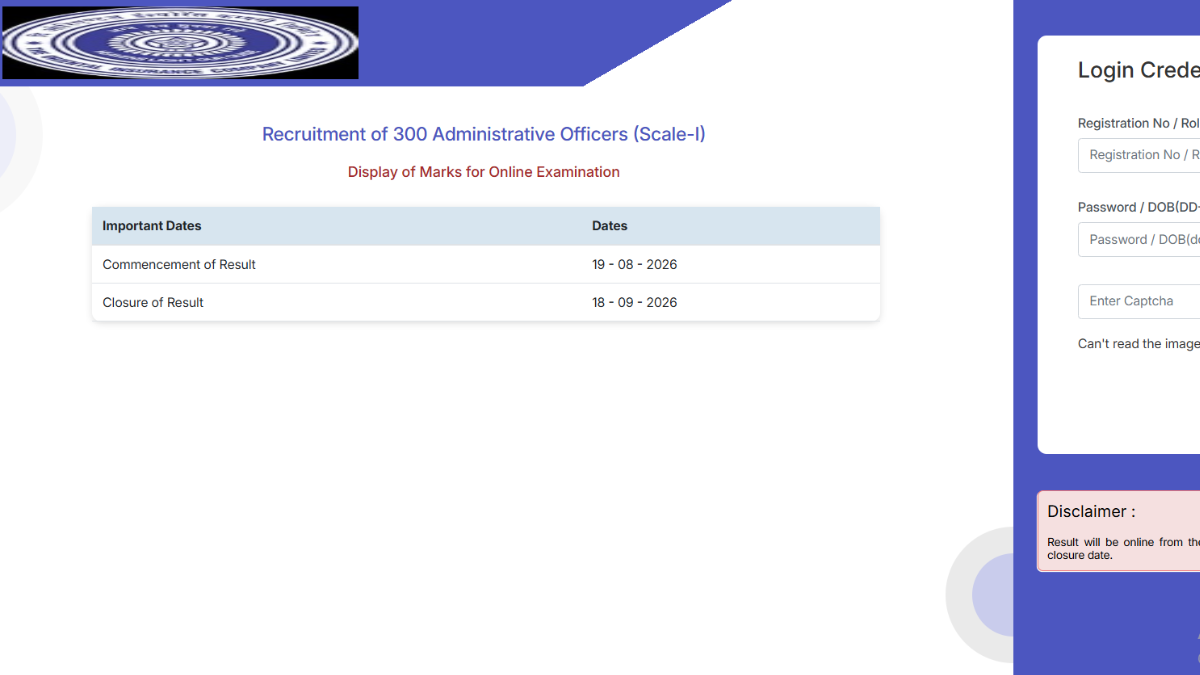
Candidates can check their OICL AO marks by visiting the official OICL website and accessing the scorecard link available under the recruitment section. Candidates should keep their Registration Number/Roll Number and Password/Date of Birth ready before opening the scorecard.

OICL AO Score Card 2026: Direct Link

How to Check OICL AO Score Card 2026?

Candidates can follow the steps below to check their marks:

  • Visit the official website of Oriental Insurance Company Limited.
  • Open the Careers section on the homepage.
  • Look for the recruitment link related to Administrative Officer (AO).
  • Click on the link for the OICL AO Score Card 2026.
  • Enter your Registration Number/Roll Number.
  • Enter your Password or Date of Birth.
  • Submit the details.
  • Your OICL AO Score Card will appear on the screen.
  • Check your section-wise and overall marks.
  • Download and save the scorecard for future reference.

Details Mentioned on OICL AO Score Card 2026

After downloading the scorecard, candidates should carefully check the details mentioned on it. The scorecard generally provides the candidate’s performance in the examination and helps them understand their standing.

The scorecard may include:

  • Candidate’s Name
  • Roll Number/Registration Number
  • Examination Name
  • Post Name
  • Section-wise marks
  • Overall marks
  • Qualifying status
  • Cut-off marks, wherever applicable

OICL AO Score Card 2026 Login Credentials

To access the OICL AO Score Card 2026, candidates need to enter their login credentials on the scorecard login page. Candidates should keep their Registration Number/Roll Number and Password/Date of Birth ready before proceeding. A captcha code may also be required to complete the login process.

Details Required to Check OICL AO Score Card

  • Registration Number/Roll Number
  • Password/Date of Birth (DD-MM-YY)
  • Captcha Code

Why Should Candidates Check the OICL AO Score Card?

The scorecard is important even for candidates who have already checked the final result. It allows aspirants to understand their actual performance rather than only knowing whether they were selected.

Candidates can use their marks to:

  • Analyse their performance in each section.
  • Compare their marks with the respective cut-off.
  • Identify strong and weak areas.
  • Evaluate their preparation strategy.
  • Plan better for upcoming banking and insurance examinations.

IBPS Calendar 2026-27 Out @ibps.in for PO, Clerk, SO & RRB Exam Dates, Download Official PDF

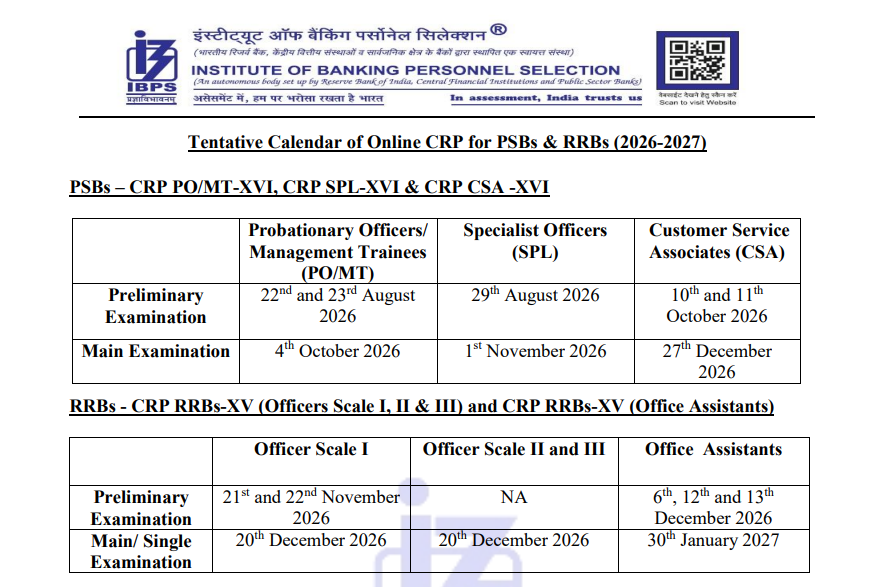
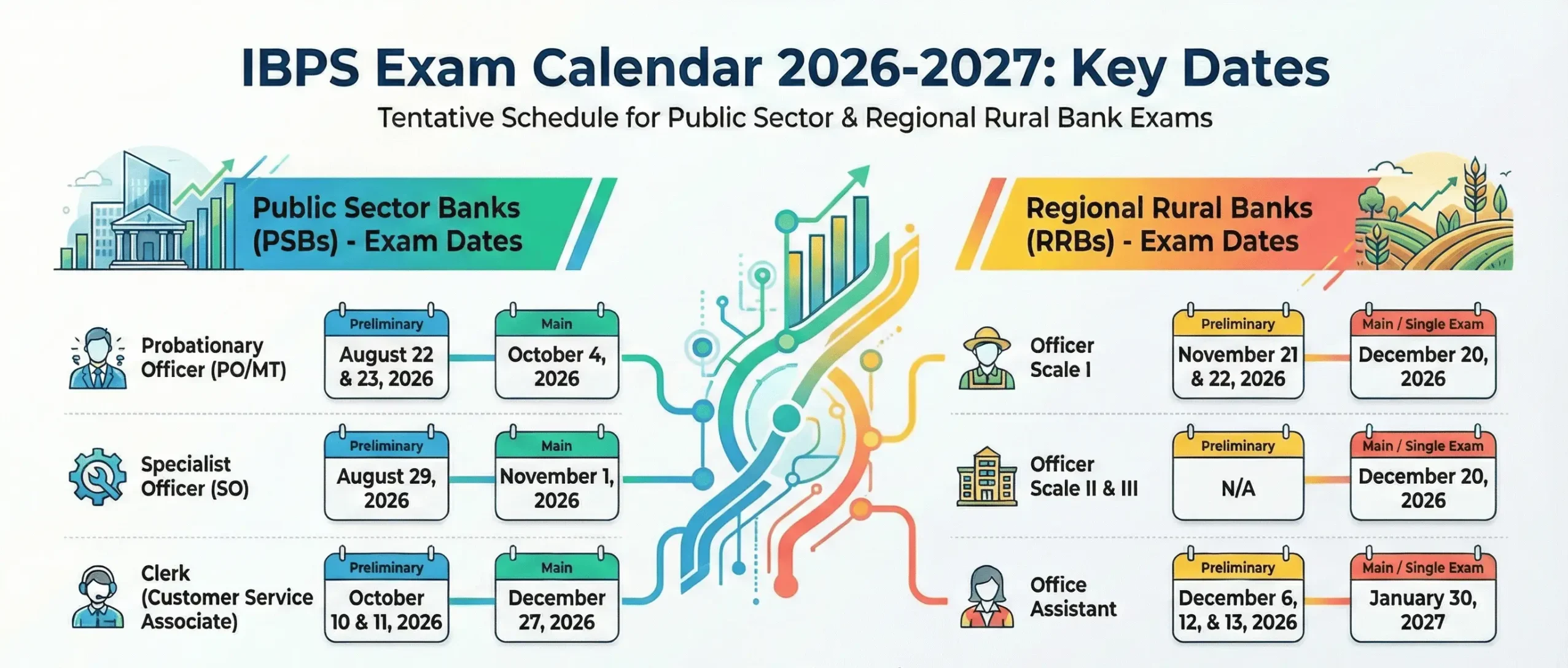
The IBPS Calendar 2026-27 outlines the tentative schedule for major banking examinations, including IBPS PO, Clerk/CSA, Specialist Officer (SO), and RRB recruitment. The examination cycle begins with IBPS PO Prelims on 22 and 23 August 2026, followed by SO Prelims on 29 August 2026, while Clerk/CSA Prelims are scheduled for 10 and 11 October 2026. RRB examinations will be conducted in the subsequent months, extending into January 2027.

IBPS Calendar 2026-27: Official PO, Clerk, SO & RRB Exam Dates

This article provides the complete IBPS Calendar 2026-27, including notification dates, exam schedule, registration timeline, eligibility, salary, participating banks, preparation strategy, admit card timeline and important information for IBPS PO, Clerk (CSA), IBPS SO, and RRB recruitments. This article provides the latest IBPS exam dates, recruitment schedule, important updates, and a month-wise preparation roadmap to help aspirants plan their preparation effectively.

IBPS Calendar 2026-27 Highlights

Candidates can use the official calendar to plan their preparation strategically and stay ahead throughout the 2026-27 banking recruitment cycle.

IBPS Exam Calendar 2026
Organization
Institute of Banking Personnel Selection (IBPS)
Exam Name
IBPS PO, Clerk, SO, and IBPS RRB
Posts Covered
PO, Clerk (CSA), SO, Officer Scale I, II, III, Office Assistants
Category Bank Jobs
Selection Process
Prelims, Mains, Interview (Depends on Post)
IBPS Exam Calendar 2026
Released
IBPS PO & SO Notification
Released
Official Website www.ibps.in
IBPS Calendar 2026 (Official) Download PDF

IBPS Recruitment Notification Schedule 2026 Latest Updates

The IBPS Calendar 2026-27 was released in January 2026. Since then, individual recruitment notifications and updates have been issued for different examinations. Candidates should refer to the latest recruitment notification for application-related details and check the official IBPS website for any changes to the examination schedule. Notification timeline for IBPS 2026 recruitment cycle:

Exam Notification Status
IBPS PO (Released) 30 June 2026
IBPS SO (Released) 30 June 2026
IBPS Clerk (Released) 1 August 2026
IBPS RRB Expected in September 2026

IBPS Calendar 2026-27 PDF: Check PO, Clerk, SO & RRB Exam Dates

The IBPS Calendar 2026-27 provides a complete schedule of all major banking exams, helping candidates track important dates and align their preparation strategy accordingly. This article covers everything you need to know to plan your 2026 banking exam journey from start to finish.

Home_7.1

Note: Candidates preparing for IBPS PO 2026 should now intensify their preparation, as the Prelims are expected to begin from 22 August 2026. With limited time left after notification release, focused revision and mock tests will be Important.

Need Personalized Preparation Guidance?

When Will IBPS Admit Cards Be Released?

IBPS generally releases admit cards 7 to 10 days before the respective examination. Candidates can download their call letters by logging into the IBPS website using their Registration Number/Roll Number and Password or Date of Birth.

Exam Expected Admit Card
IBPS PO 2nd Week of August 2026
IBPS SO 3rd Week of August 2026
IBPS Clerk Last Week of September 2026
IBPS RRB Officer Scale I 2nd Week of November 2026
IBPS RRB Office Assistant Last Week of November 2026

Is the IBPS Calendar released every year?

Yes, the Institute of Banking Personnel Selection (IBPS) releases an annual exam calendar to inform candidates about the tentative schedule for major recruitment exams such as IBPS PO, Clerk (CSA), SO, and RRB. The calendar helps aspirants plan their preparation well in advance and keep track of upcoming recruitment activities.

IBPS Exam Dates 2026 for Public Sector Banks (PSBs)

The following table shows the official tentative exam schedule for IBPS PO, Clerk, and SO exams in 2026:

Exam Prelims Mains/Single Exam
IBPS PO 2026 22 & 23 August 2026 4 October 2026
IBPS SO 2026 29 August 2026 1 November 2026
IBPS Clerk/CSA 2026 10 & 11 October 2026 27 December 2026
IBPS RRB Officer Scale I 21 & 22 November 2026 20 December 2026
IBPS RRB Officer Scale II & III Single Exam 20 December 2026
IBPS RRB Office Assistant 6, 12 & 13 December 2026 30 January 2027


Important Dates for IBPS Exam Calendar 2026-27

Can You Apply for Multiple IBPS Exams?

Yes, candidates can apply for multiple IBPS exams such as PO, Clerk (CSA), SO, and RRB if they meet the eligibility criteria for each post. Separate applications and application fees are required for every recruitment.

Can the IBPS exam dates change after the calendar is released?

Yes, the dates mentioned in the IBPS Calendar are tentative and may change due to administrative or unforeseen circumstances. If any revisions are made, IBPS announces the updated schedule through an official notice on its website. Candidates should regularly check the official portal for the latest updates.

IBPS 2026 Exam Calendar: Month-Wise Timeline

The IBPS 2026-27 exam cycle spans from August 2026 to January 2027 as shown below:

Month & Year Exam Stage Dates
August 2026 IBPS PO/MT-XVI Prelims 22, 23 August 2026
August 2026 IBPS SO (CRP SPL-XVI) Prelims 29 August 2026
October 2026 IBPS PO/MT-XVI Mains 4 October 2026
October 2026 IBPS Clerk (CRP CSA-XVI) Prelims 10, 11 October 2026
November 2026 IBPS SO (CRP SPL-XVI) Mains 1 November 2026
November 2026 IBPS RRB Officer Scale I Prelims 21, 22 November 2026
December 2026 IBPS RRB Officer Scale I Mains 20 December 2026
December 2026 IBPS RRB Officer Scale II & III Single Exam 20 December 2026
December 2026 IBPS RRB Office Assistant Prelims 6, 12, 13 December 2026
December 2026 IBPS Clerk (CRP CSA-XVI) Mains 27 December 2026
January 2027 IBPS RRB Office Assistant Mains 30 January 2027

Can Final-Year Students Apply for IBPS Exams 2026?

Eligibility depends on the specific IBPS recruitment notification and the prescribed qualification cut-off date. Candidates should check the relevant notification to determine whether their graduation status satisfies the eligibility requirement.

Does the IBPS Calendar mention vacancies?

No, the IBPS Calendar only provides the tentative schedule for notifications and examinations. It does not include vacancy details, eligibility criteria, application fees, or exam patterns. These details are published separately in the official notification of each recruitment.

IBPS Registration Process 2026

The IBPS registration process is conducted online through the official IBPS website. Candidates need to complete the application form carefully and upload the required documents in the prescribed format.

Key Registration Guidelines:

  • Applications are accepted online only.
  • One registration covers both Prelims and Mains, wherever applicable.
  • Candidates must upload a recent passport-size photograph.
  • The signature should be clear and properly uploaded.
  • A live photograph may also be required during registration.

Documents Required During Registration

Document Size Requirement
Photograph 20 KB – 50 KB
Signature 10 KB – 20 KB
Thumb Impression 20 KB – 50 KB
Handwritten Declaration 50 KB – 100 KB

How to Download the IBPS Exam Calendar 2026 PDF?

The IBPS Exam Calendar helps aspirants plan their preparation in advance for PO, Clerk, SO, and RRB exams. Candidates can easily download the IBPS Exam Calendar 2026 from the official IBPS website by following these simple steps:

  • Visit the official website of IBPS at www.ibps.in.
  • On the homepage, check the “Recent Updates” section and click on the IBPS Calendar 2026–27 link.
  • The calendar PDF will open on your screen.
  • Scroll through the PDF to check the Prelims and Mains exam dates for various IBPS exams.
  • Download and save the PDF for future reference.

Is the IBPS Calendar different from the IBPS notification?

Yes, the IBPS Calendar and the IBPS notification serve different purposes. The calendar only announces the tentative exam schedule, while the official notification contains complete information such as vacancies, eligibility, age limit, application process, exam pattern, syllabus, selection process, salary, and important instructions for candidates.

Which Exam Should Be Your First Preference?

The IBPS exam sequence allows candidates to prepare strategically because the syllabus of PO, Clerk, SO, and RRB examinations overlaps significantly.

  • IBPS PO: Designed for aspirants who want to begin their banking career as Probationary Officers with greater responsibilities, higher salary, and long-term promotional prospects.
  • IBPS SO: Best suited for candidates possessing professional qualifications in fields such as Information Technology, Law, Human Resources, Agriculture, Marketing, or Rajbhasha, where domain-specific expertise is required.
  • IBPS Clerk: A preferred option for candidates looking to secure an entry-level banking position with consistent job security and a comparatively straightforward recruitment process.
  • IBPS RRB: An excellent choice for candidates interested in serving in Regional Rural Banks, offering opportunities to work closer to their home state along with recruitment for both Officer and Office Assistant posts

How Much Time Do You Get Between IBPS Exams?

The IBPS Exam Calendar 2026-27 provides candidates with a clear timeline to plan their preparation for multiple banking exams. Since IBPS conducts PO, SO, Clerk, and RRB exams throughout the year, understanding the gap between each stage helps aspirants manage revision, mock tests, and exam-specific preparation.

Exam Prelims Date Mains/Next Stage Date Preparation Gap
IBPS PO 2026 22 & 23 August 2026 4 October 2026 Around 6 weeks between Prelims and Mains
IBPS SO 2026 29 August 2026 1 November 2026 Around 9 weeks for Mains preparation
IBPS Clerk 2026 10 & 11 October 2026 27 December 2026 Around 11 weeks between Prelims and Mains
IBPS RRB Officer Scale I 21 & 22 November 2026 20 December 2026 Around 4 weeks between Prelims and Mains
IBPS RRB Office Assistant 6, 12 & 13 December 2026 30 January 2027 Around 6–7 weeks between Prelims and Mains

Why the Exam Order Matters

  • PO preparation covers a major portion of Clerk and RRB syllabi.
  • Candidates can reuse preparation across multiple exams.
  • Better time management and revision planning.
  • Higher chances of qualifying multiple recruitment processes in the same year.

Which IBPS exam comes first in the 2026 recruitment cycle?

IBPS PO Prelims is the first examination in the IBPS 2026 recruitment cycle. It will be conducted on 22 & 23 August 2026. After that, IBPS SO Prelims will be held on 29 August 2026, followed by Clerk and RRB examinations later in the year.

IBPS 2026-27 Exam Preparation Timeline: Month-Wise Strategy & Checklist

The IBPS 2026–27 recruitment cycle includes multiple examinations scheduled between August 2026 and January 2027. Following a month-wise preparation plan can help candidates manage their studies efficiently, complete revisions on time, and stay focused on the exams scheduled each month.

Month IBPS Exams What Candidates Should Focus On
August 2026 PO Prelims, SO Prelims Prelims mocks, speed and accuracy
October 2026 PO Mains, Clerk Prelims Mains revision + Clerk Prelims
November 2026 SO Mains, RRB PO Prelims Professional Knowledge + RRB practice
December 2026 RRB Clerk Prelims, RRB Mains, Clerk Mains Mains revision and mock tests
January 2027 RRB Clerk Mains Final revision and mock tests

Can You Prepare for IBPS PO, Clerk, SO, and RRB Exams Together?

Yes, candidates can prepare for IBPS PO, Clerk, SO, and RRB exams together as most of the syllabus overlaps. With proper planning, one preparation strategy can help target multiple exams in the same cycle.

How to Prepare According to the IBPS Calendar 2026?

The IBPS Calendar 2026 helps candidates plan their preparation systematically. Follow these tips to stay on track:

  • Complete the syllabus well before your first scheduled exam.
  • Prepare the common subjects for PO, Clerk, SO, and RRB together.
  • Practice mock tests regularly according to the upcoming exam dates.
  • Use the gap between Prelims and Mains for revision and exam-specific preparation.
  • Stay updated with current affairs and important banking news throughout the recruitment cycle.

What to Do Between Two IBPS Exams?

The gap between two IBPS examinations should not be treated as a break. It is an opportunity to revise weak areas, improve mock-test performance and shift preparation according to the next exam. Candidates can use this period strategically instead of starting their preparation from scratch after every examination.

  • Analyse your previous exam: Identify the topics where you lost time or made mistakes.
  • Shift focus to the next exam: Give priority to the syllabus and pattern of the upcoming examination.
  • Increase mock-test practice: Take full-length mocks regularly and analyse every incorrect or unattempted question.
  • Revise high-scoring topics: Focus on frequently asked concepts instead of spending excessive time on new topics.
  • Strengthen exam-specific sections: For exams such as IBPS SO, give additional time to Professional Knowledge.
  • Continue current affairs preparation: Maintain regular revision of banking and financial awareness for Mains.
  • Work on speed and accuracy: Use sectional tests and timed practice to improve your attempt strategy.

List of 11 Participating PSBs

IBPS conducts recruitment for the following Public Sector Banks:

    • Bank of Baroda
    • Bank of India
    • Bank of Maharashtra
    • Canara Bank
    • Central Bank of India
    • Indian Bank
    • Indian Overseas Bank
  • Punjab National Bank
  • Punjab & Sind Bank
  • UCO Bank
  • Union Bank of India
Related Posts
IBPS PO Syllabus IBPS RRB Syllabus
IBPS PO Salary IBPS RRB Previous Year Papers
IBPS PO Previous Year Paper IBPS RRB Clerk Salary
IBPS PO Cut Off IBPS RRB Clerk Cut Off
IBPS Clerk Previous Year Paper IBPS Clerk Syllabus
IBPS Clerk Salary

SBI PO Salary 2026, Check New CTC, Perks, and Benefits

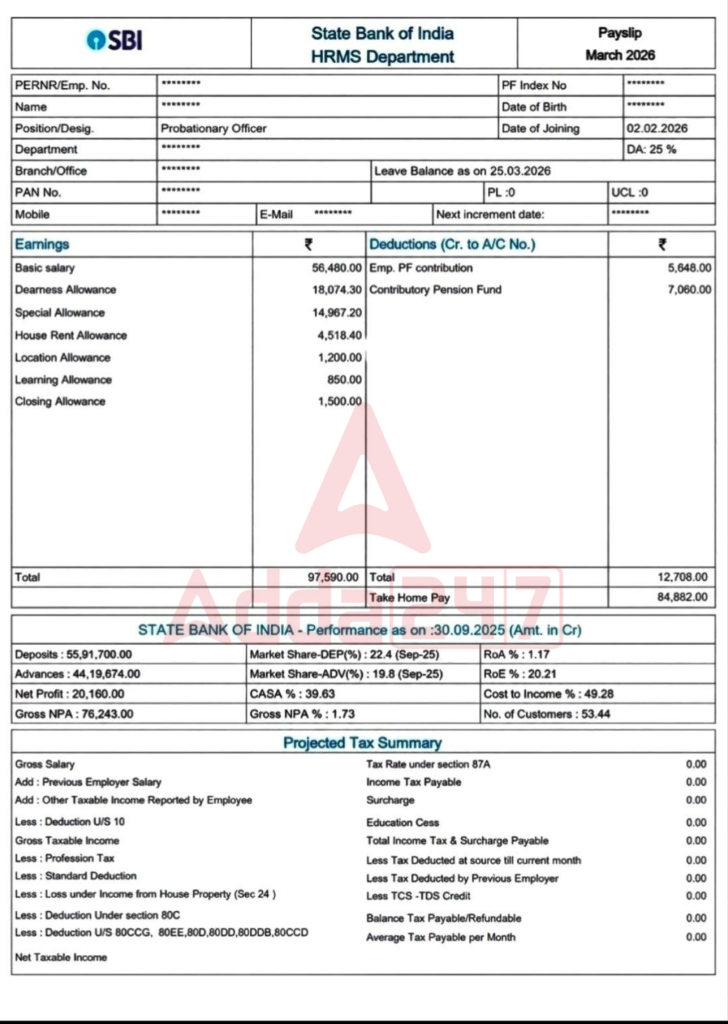
The SBI PO Salary 2026 makes the Probationary Officer post one of the most sought-after officer-level careers in the banking sector. A newly appointed SBI PO receives a starting basic pay of ₹56,480, including four advance increments. The estimated gross monthly salary is around ₹97,590, while the expected in-hand salary is approximately ₹84,882 after applicable deductions.

SBI PO Salary 2026

Along with the monthly earnings, an SBI PO can receive an annual CTC of approximately ₹21.97 lakh at the entry level, apart from various allowances and employee benefits. However, the actual monthly payout may differ based on the posting location, applicable allowances, taxation, deductions and prevailing SBI rules. The pay scale and salary components should be verified with the latest official SBI recruitment notification or circular before publication.

SBI PO Salary Overview 2026

Particulars Details
Organization State Bank of India
Post Probationary Officer (PO)
Grade Junior Management Grade Scale-I
Officer Pay Scale ₹48,480–₹2,000/7–₹62,480–₹2,340/2–₹67,160–₹2,680/7–₹85,920*
Starting Basic Pay ₹56,480
Advance Increments 4
Estimated Gross Monthly Salary Approximately ₹97,590*
Estimated In-Hand Salary Approximately ₹84,882*
Annual CTC Approximately ₹21.97 lakh*

SBI PO Salary: Earnings and Deductions

The monthly salary of an SBI Probationary Officer consists of basic pay and applicable allowances. The following calculation represents the salary structure used for the estimated entry-level gross and in-hand salary. Actual monthly earnings and deductions may vary according to the applicable SBI rules, posting location and individual recoveries.

SBI PO Monthly Earnings

Earnings Component Amount (₹)
Basic Salary 56,480.00
Dearness Allowance (DA) 18,074.30*
Special Allowance 14,967.20
House Rent Allowance (HRA) 4,518.40
Location Allowance 1,200.00
Learning Allowance 850.00
Closing Allowance 1,500.00
Total Gross Earnings 97,590.00

SBI PO Salary Deductions

Deduction Amount (₹)
Employee PF Contribution 5,648.00
Contributory Pension Fund 7,060.00
Total Deductions 12,708.00
Estimated Net/In-Hand Salary 84,882.00

SBI PO Salary Slip 2026

The SBI PO Salary Slip 2026 gives candidates an overview of the monthly earnings and deductions applicable to a newly appointed Probationary Officer. It includes the basic salary, various allowances, statutory deductions, and the estimated in-hand salary, helping aspirants understand the overall monthly payout after deductions.

SBI PO Salary Slip

SBI PO Salary Increment and Pay Progression 2026

The SBI PO pay structure provides for regular increments as officers gain experience and complete the applicable stages of the pay scale. Since the newly appointed PO receives four advance increments, the actual starting basic pay is higher than the first figure shown in the officer pay scale.

Stage Basic Pay (₹) Increment (₹)
Pay Scale Starting Point 48,480
After 1st Increment 50,480 2,000
After 2nd Increment 52,480 2,000
After 3rd Increment 54,480 2,000
After 4th Increment / Starting Basic for SBI PO 56,480 2,000
Subsequent Stage 58,480 2,000
Subsequent Stage 60,480 2,000
After 7 Years 62,480 2,000
After 9 Years 67,160 2,340
Final Stage 85,920 2,680

SBI PO Allowances and Benefits 2026

In addition to basic pay, SBI Probationary Officers receive various allowances and employee benefits. The actual amount or eligibility may depend on the officer’s posting location, cadre, applicable SBI rules and prevailing rates.

Major SBI PO Allowances

  • Dearness Allowance (DA): Revised periodically according to the applicable banking-sector settlement and SBI rules.
  • House Rent Allowance (HRA): Provided according to the officer’s posting location and applicable HRA rules.
  • City Compensatory Allowance (CCA): Applicable according to the location and prevailing bank rules.
  • Special Allowance: Payable as per the applicable salary structure.
  • Learning Allowance: Provided as applicable to officers.
  • Location-related Allowances: May vary according to the place of posting and applicable rules.

SBI PO Benefits

Apart from salary and allowances, SBI POs may receive several employee benefits, including:

  • Medical and health insurance benefits
  • Leave and travel-related benefits
  • Concessional loan facilities
  • Pension/NPS-related benefits
  • Newspaper and other eligible allowances
  • Reimbursement of eligible official expenses
Related Posts
SBI PO Syllabus
SBI PO Salary
SBI PO Preparation Strategy
SBI PO Cut Off SBI PO Mock Test

EPFO APFC Notification 2026 Out for 80 Vacancies, Download Official PDF, Check All Details

The Union Public Service Commission (UPSC) has released the EPFO APFC Notification 2026 under Special Advertisement No. 52/2026 for 80 Assistant Provident Fund Commissioner (APFC) vacancies in the Employees’ Provident Fund Organisation (EPFO), Ministry of Labour & Employment. The online application process starts on 22 August 2026 and will remain open until 11 September 2026 at 6:00 PM.

EPFO APFC Notification 2026 Out for 80 Vacancies

The APFC post is a permanent Group A, Non-Ministerial position in EPFO with All India Service liability. Candidates must have a Degree from a recognised University or equivalent, while a Diploma in Company Law, Labour Laws, or Public Administration is desirable. The selection process includes a Recruitment Test followed by an Interview, with a 75:25 weightage between the two stages.

UPSC EPFO APFC Notification 2026: Download PDF

UPSC EPFO APFC Recruitment 2026: Important Dates

Candidates should keep the following dates marked for the recruitment cycle.

Event Date
Notification 21 August 2026
Online Application Starts 22 August 2026
Online Application Ends 11 September 2026
Closing Time 6:00 PM
Recruitment Test 20 December 2026
Interview
To be intimated separately

EPFO APFC Vacancy 2026: 80 Posts

The 80 APFC vacancies are distributed across the categories as specified in the UPSC advertisement.

  • UR: 29
  • EWS: 08
  • OBC: 18
  • SC: 15
  • ST: 10
  • Total: 80
  • PwBD Reservation: 03

EPFO APFC Eligibility Criteria 2026

Candidates should check the prescribed educational qualification and age limit before starting the application.

Educational Qualification

  • Essential Qualification: Degree of a recognised University or equivalent.
  • Desirable Qualification: Diploma in:
    • Company Law
    • Labour Laws
    • Public Administration

Age Limit 2026

  • UR/EWS: 35 years
  • OBC: 38 years
  • SC/ST: 40 years
  • PwBD: Up to 10 years additional relaxation, subject to maximum age of 56 years

EPFO APFC Application Fee 2026

  • Application Fee: ₹25
  • Fee Exempted: Female, SC, ST and PwBD candidates
  • UR/EWS/OBC Male Candidates: ₹25

EPFO APFC Apply Online 2026

Candidates can apply online for EPFO APFC Recruitment 2026 through the UPSC Online Recruitment Application (ORA) portal from 22 August 2026. The last date to submit the application is 11 September 2026 up to 6:00 PM. Candidates should complete the registration and application process carefully and upload all required documents in the prescribed format

EPFO APFC Apply Online 2026 (Active)

Steps to Apply for EPFO APFC 2026

  1. Visit the UPSC Online Recruitment Application (ORA) portal.
  2. Complete the Universal Registration Number (URN) registration.
  3. Fill in the Common Application Form (CAF) with the required details.
  4. Select Assistant Provident Fund Commissioner (APFC) and complete the post-specific application.
  5. Upload the required documents, photograph, live photograph and signature.
  6. Pay the applicable ₹25 application fee.
  7. Review all details carefully and submit the application.
  8. Save or print the submitted application form for future reference.

EPFO APFC Selection Process 2026

The UPSC EPFO APFC selection process consists of a Recruitment Test followed by an Interview. The final selection is based on the combined performance of candidates in both stages.

Stage 1: Recruitment Test

The Recruitment Test is an objective-type examination conducted in pen-and-paper mode. It carries a total of 300 marks and is the first stage of the selection process.

The APFC Recruitment Test (scheduled for 20 December 2026) will be a two-hour objective-type examination conducted in both English and Hindi.

  • Mode: Pen & Paper Based
  • Duration: 2 Hours
  • Question Type: Objective / Multiple Choice
  • Medium: English & Hindi
  • Marks: 300
  • Negative Marking: 1/3 mark assigned to the question for each wrong answer
  • Unattempted Question: No penalty

Stage 2: Interview

Candidates who qualify the Recruitment Test are called for the Interview, which carries 100 marks. Candidates must secure the prescribed minimum suitability marks in the Interview as follows:

Category Minimum Suitability Marks
UR/EWS 50
OBC 45
SC/ST/PwBD 40

Final Selection and Weightage

The final merit list is prepared by giving 75% weightage to the Recruitment Test and 25% weightage to the Interview. Candidates must perform well in both stages to secure a place in the final merit list.

EPFO APFC 2026 Salary

The Assistant Provident Fund Commissioner (APFC) is a Group A, Non-Ministerial post under EPFO. The post falls under Level 10 of the Pay Matrix as per the 7th CPC.

EPFO APFC Pay Scale

  • Starting Basic Pay: ₹56,100 per month
  • Pay Level: Level 10
  • Pay Scale: ₹56,100 – ₹1,77,500

EPFO APFC Gross & In-Hand Salary

The salary varies based on posting location, allowances and applicable deductions.

  • Gross Salary: Approximately ₹1.08–₹1.15 lakh per month
  • In-Hand Salary: Approximately ₹85,000–₹1 lakh+ per month

The salary includes DA, HRA, Transport Allowance and other applicable benefits, while deductions include NPS, tax and other government deductions.

EPFO APFC Syllabus

The EPFO APFC Recruitment Test covers topics related to English, Indian polity, economy, labour laws, social security, general science, mathematics and other areas. The major subjects included in the syllabus are:

  • General English: Understanding of language and workman-like use of words
  • Indian Culture, Heritage and Freedom Movements
  • Governance and Constitution of India
  • Current Events: National and international importance
  • Indian Economy: Developmental issues and present trends
  • Industrial Relations, Labour Codes and Social Security in India
  • Principles of Accountancy, Auditing and Insurance
  • General Science and Basic Knowledge of Computer Applications
  • Elementary Mathematics, Statistics and General Mental Ability

EPFO APFC Exam Centres 2026

The UPSC EPFO APFC Recruitment Test 2026 will be conducted at various centres across the country. Candidates can select their preferred examination centre while filling out the online application form, subject to availability. The complete list of examination centres with their respective codes is given below.

S.No. Exam Centre (Code) S.No. Exam Centre (Code) S.No.
Exam Centre (Code)
1 Agartala (45) 29 Ghaziabad (59) 57 Nagpur (13)
2 Agra (79) 30 Gorakhpur (60) 58 Nashik (86)
3 Ahmedabad (01) 31 Gurugram (63) 59 Navi Mumbai (65)
4 Aizawl (47) 32 Gwalior (69) 60 Panaji (Goa) (36)
5 Ajmer (71) 33 Hanumakonda (82) 61 Patna (15)
6 Aligarh (21) 34 Hisar (95) 62 Port Blair (37)
7 Almora (85) 35 Hyderabad (10) 63 Prayagraj (02)
8 Alwar (94) 36 Imphal (44) 64 Puducherry (20)
9 Ananthapuramu (76) 37 Indore (78) 65 Pune (66)
10 Bareilly (54) 38 Itanagar (48) 66 Raipur (49)
11 Bengaluru (03) 39 Jabalpur (68) 67 Rajkot (72)
12 Bhopal (04) 40 Jaipur (11) 68 Ranchi (41)
13 Bhubaneswar (91) 41 Jammu (34) 69 Sambalpur (53)
14 Bilaspur (77) 42 Jodhpur (22) 70 Shillong (16)
15 Chandigarh (35) 43 Jorhat (46) 71 Shimla (17)
16 Chennai (12) 44 Kannur (96) 72 Siliguri (81)
17 Chhatrapati Sambhajinagar (38) 45 Kanpur (93) 73 Srinagar (18)
18 Coimbatore (56) 46 Kochi (Cochin) (24) 74 Srinagar (Uttarakhand) (84)
19 Cuttack (07) 47 Kohima (43) 75 Surat (87)
20 Dehradun (14) 48 Kolkata (06) 76 Thane (67)
21 Delhi (08) 49 Kozhikode (57) 77 Thiruvananthapuram (19)
22 Dharamshala (88) 50 Lucknow (26) 78 Tiruchirapalli (75)
23 Dharwad (39) 51 Ludhiana (70) 79 Tirupati (50)
24 Dispur (09) 52 Madurai (40) 80 Udaipur (52)
25 Faridabad (64) 53 Mandi (89) 81 Varanasi (61)
26 Gangtok (42) 54 Meerut (92) 82 Vellore (74)
27 Gautam Buddh Nagar (58) 55 Mumbai (05) 83 Vijayawada (62)
28 Gaya (80) 56 Mysuru (73) 84 Vishakhapatnam (51)

Coal India Management Trainee Admit Card 2026 Out @coalindia.in, Download Hall Ticket PDF

The Coal India Management Trainee Admit Card 2026 is your key document for today’s CIL Management Trainee Exam 2026. As your exam is being conducted today (24 August 2026), make sure you carry your hall ticket, reach the examination centre on time, and carefully follow all exam-day instructions.

Coal India Management Trainee Admit Card 2026

The CIL Management Trainee Admit Card 2026 contains important details such as the candidate’s exam centre, reporting time, shift, and exam-day instructions. Candidates appearing for the examination should carry all the required documents and reach the exam centre well before the reporting time. The examination is being conducted for 660 Management Trainee vacancies.

Before leaving for the exam centre, make sure you have checked your exam centre, reporting time, shift, roll number, and exam-day instructions mentioned on your hall ticket.

CIL MT Admit Card 2026: Overview

Particulars Details
Recruiting Organisation Coal India Limited (CIL)
Recruitment Name CIL MT Recruitment 2026
Post Management Trainee
Admit Card Status Released
Vacancy 660
Admit Card Release Date 21 August 2026
Exam Date 24 August 2026
Exam Day Monday
Mode of Exam Computer-Based Test (CBT)
Official Website coalindia.in

CIL MT Exam Date & Shift Timing 2026

The Coal India Management Trainee Exam 2026 will be conducted in two shifts, with separate timings for Electrical and Mechanical disciplines. Candidates should report at the venue as per the timing assigned to their respective shift.

Discipline Exam Date Candidate Entry / Reporting Time Examination Window (Shift Timing)
Electrical August 24, 2026 7:30 AM 9:00 AM – 12:00 Noon
Mechanical August 24, 2026 1:30 PM 3:00 PM – 6:00 PM

Coal India MT Admit Card 2026 Download Link

The Coal India Management Trainee Admit Card 2026 is available through the official CIL recruitment portal. Candidates can visit the career section of Coal India’s website and locate the Management Trainee CBT admit card link. Below, the CIL MT Admit Card 2026 download link has been provided for your convenience.

How to Download the Coal India Management Trainee Admit Card 2026?

Candidates can download the CIL MT hall ticket by following these steps:

  • Visit the official website of Coal India Limited.
  • Open the Career section.
  • Find the link for Management Trainee Recruitment through CBT.
  • Click on the Admit Card download link.
  • Enter the required login credentials.
  • Submit the details to access the hall ticket.
  • Check all the information displayed on the admit card.
  • Download the PDF and take a clear printout for the examination.

Credentials Required to Download Coal India MT Admit Card 2026

Candidates need the following login details to access and download their Coal India Management Trainee Admit Card 2026:

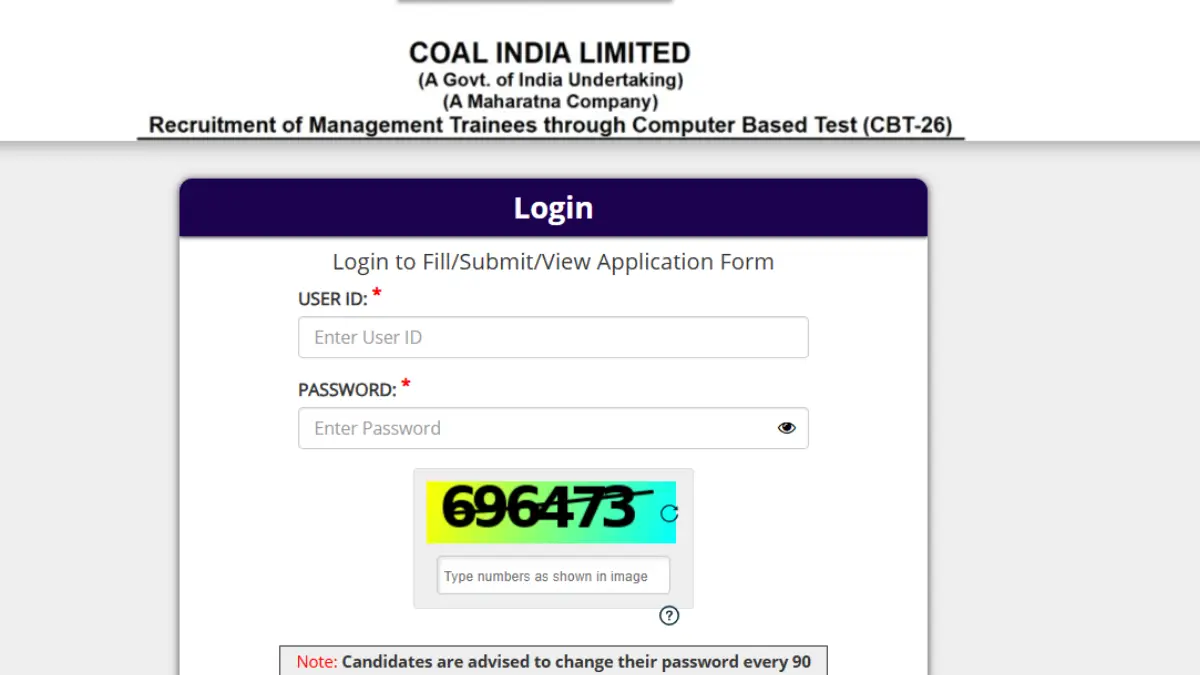
  • User ID
  • Password
  • Captcha Code

Details Mentioned on CIL MT Admit Card 2026

After downloading the hall ticket, candidates should check whether all details are correct. The admit card is expected to contain important examination information such as

  • Candidate’s name
  • Roll number/application details
  • Photograph and signature
  • Examination date
  • Exam centre address
  • Reporting time
  • Examination shift
  • Candidate instructions
  • Other details related to the CBT

Documents Required at the Exam Centre

  • Hard Copy of CIL MT Admit Card 2026 (printed clearly).
  • Valid Original Photo ID Proof (Aadhaar Card, PAN Card, Voter ID, Driving License, or Passport).
  • Two recent passport-size photographs (matching the uploaded photo).

CIL MT 2026: Last-Minute Checklist

Before leaving for the examination, candidates should quickly verify:

  • The admit card has been printed clearly.
  • Name and roll number are correct.
  • The exam center address has been checked.
  • Reporting time has been noted.
  • Valid ID proof is ready.
  • Required photographs/documents, if mentioned in the admit card, are packed.
  • A route to the examination center has been planned.
  • Candidates have read the exam-day instructions.

IBPS PO Prelims Exam Analysis 2026, 23 August 2nd Shift Good Attempts & Sectional Analysis

The IBPS PO Prelims 2026 Shift 2 examination held on 23 August 2026 was conducted yesterday. Candidates who appeared in the shift can now check the detailed exam analysis based on the questions reported from the examination. The analysis covers the section-wise difficulty level, good attempts, and topic-wise questions asked in English Language, Reasoning Ability, and Quantitative Aptitude.

IBPS PO Prelims Exam Analysis 2026, 23 August 2nd Shift

The 23 August Shift 2 paper featured a varied question mix, with several questions based on puzzles, reading comprehension, data interpretation, arithmetic, and other frequently tested concepts. The topic-wise tables below highlight the exact distribution of questions reported from the shift, making it easier to identify the areas that carried greater weightage.

IBPS PO Prelims 2026 Shift 2: Student Reviews and Feedback

Candidate responses provide useful insights into how the paper was perceived immediately after the examination. The feedback mainly highlights the question selection, time management, and section-wise attempt experience.

  • Candidates found several questions based on familiar concepts.
  • Puzzles required careful arrangement and calculation.
  • Reading Comprehension formed a notable part of the English section.
  • DI and arithmetic contributed substantially to the Quantitative Aptitude section.
  • Reasoning included multiple puzzle-based sets along with miscellaneous questions.
  • Candidates with effective time management were able to attempt a higher number of questions.

IBPS PO Prelims Exam Analysis 2026, 23 August Shift 2: Good Attempts

The estimated good attempts for IBPS PO Prelims 23 August Shift 2 will depend on the overall difficulty level and the accuracy maintained by candidates. The final range will be updated after analysing sufficient candidate feedback.

Section Good Attempts Difficulty Level
English Language 23-25 Moderate
Reasoning Ability 26-28 Moderate
Quantitative Aptitude 15-17 Moderate to Difficult
Overall 64-70 Moderate

IBPS PO Prelims 23 August Shift 2: Sectional Analysis

Let’s break down the English Language, Reasoning Ability, and Quantitative Aptitude sections to understand the questions asked, their difficulty level, and the overall attempt trend in Shift 2.

IBPS PO Prelims English Language Analysis 2026, Shift 2

The English Language section consisted of 30 questions. Candidates reported questions from topics such as Reading Comprehension, fillers, error detection, word-based questions, and sentence rearrangement. The detailed topic-wise distribution will be updated after consolidating candidate feedback.

Topic No. of Questions
Reading Comprehension 9
Para Jumble 5
Word Swap 3
Double Filler 4
Word usage 1
Error Detection (4 Sentence) 4
Phrase Replacement) 4
Total 30

IBPS PO Prelims Quantitative Aptitude Analysis 2026, Shift 2

The Quantitative Aptitude section had 35 questions. Candidates faced questions from Data Interpretation, Arithmetic, Approximation, Number Series and other important numerical topics.

Topic No. of Questions
Table DI 6
Bar Graph DI 5
Caselet 1
Approximation 4
Quadratic 4
Wrong Number Series 4
Arithmetic 11
Total 35

IBPS PO Prelims Reasoning Ability Analysis 2026, Shift 2

The Reasoning Ability section consisted of 35 questions. The section included questions from puzzles and seating arrangements along with miscellaneous reasoning topics. The exact distribution is being compiled from candidate feedback.

Topic No. of Questions
Puzzle Month Bases + Variable 5
Puzzle (Parallel Row) 5
Puzzle Selection Based (9 Person) 5
Direction Based 3
Year Based Puzzle  (8 Person) 5
Meaningful Word 1
Word Based 1
Syllogism 3
Blood Relation 3
Inequality 3
Pair Formation 1
Total 35

IBPS PO Prelims 2026 Shift 2: What After the Exam?

Candidates who have appeared for the exam should now focus on evaluating their attempts and preparing for the next stage. Those who are appearing in upcoming shifts can use this analysis to identify important topics and understand the recent question trends.

IBPS PO Prelims Exam Analysis 2026, Shift 2, 23 August: Video Analysis

IBPS PO Prelims Expected Cut Off 2026: Check Category-Wise Expected Cut Off Marks

The IBPS PO Prelims 2026 examination was successfully concluded on 22 and 23 August 2026 across multiple shifts. Candidates can now evaluate their attempts, calculate their estimated scores, and check the IBPS PO Prelims Expected Cut Off 2026 to understand their chances of qualifying for the IBPS PO Mains Exam. The official cutoff will be released by IBPS along with the result.

IBPS PO Prelims Expected Cut Off 2026

The IBPS PO Prelims Expected Cut Off 2026 gives candidates a preliminary benchmark to assess their performance after the IBPS PO Prelims 2026 examination. By comparing their estimated marks with the expected range, candidates can get an idea of their likelihood of moving ahead to the Mains stage. The actual qualifying marks will be confirmed by IBPS with the declaration of the result.

IBPS PO Prelims Category-wise Expected Cut Off 2026

Based on the initial assessment of the examination and the expected level of competition, the category-wise cutoff can be estimated in the following range.

Category Expected Cut Off 2026
General 46–50
EWS 46–50
OBC-NCL 46–50
SC 43–48
ST 38–43
HI 17–23
OC 31–36
VI 18–24
ID 18–24

Note: These are expected ranges, not official cutoffs. The final IBPS PO Prelims cutoff will be released by IBPS along with the result and may differ because of normalization and the performance of candidates across all shifts.

Factors Affecting IBPS PO Cut Off 2026

The final cutoff is not decided solely on the number of candidates attempting the examination because several factors influence the qualifying marks.

  • Difficulty level of the paper
  • Number of vacancies
  • Number of candidates appearing
  • Overall performance of candidates
  • Shift-wise variation in difficulty
  • Normalization of scores
  • Category of the candidate
  • Section-wise performance

IBPS PO Prelims Cut Off 2026: What Does Your Score Mean?

Candidates can compare their estimated marks with the expected range to get an initial idea of their chances. However, being close to the expected cutoff should not be treated as a definite indication of qualification because the actual cutoff can move after IBPS considers the performance across all shifts.

Estimated Score
Initial Assessment
60+ Strong position
55–59 Good position
50–54
Borderline to competitive
45–49
Depends heavily on category and normalization
40–44
Qualification may be difficult for some categories
Below 40
Chances depend significantly on category and final cutoff

IBPS PO Prelims Cut Off: Why It Can Change After Day 1

The cutoff estimate is based on the overall candidate feedback received from all shifts conducted on 22 and 23 August 2026. With the complete examination now concluded, the expected cutoff range provides a more comprehensive indication of the likely qualifying marks. However, the final cutoff may vary depending on the overall difficulty level, candidates’ performance, vacancies, and the normalization process.

  • Shift 1 performance alone does not determine the final cutoff.
  • Questions can vary in difficulty across shifts.
  • Candidate feedback from subsequent shifts can change the overall difficulty assessment.
  • Normalization can affect candidates’ final scores.
  • Category-wise competition also affects the qualifying marks.

IBPS PO Prelims Cut Off 2026: Expected vs Previous Year Cut Off

The expected IBPS PO Prelims Cut Off 2026 can be better understood by comparing it with the actual cutoffs of previous years. In 2025, the General, OBC-NCL, and EWS cutoff was 49.21 marks, while the SC and ST cutoffs were 45.96 and 40.96 marks, respectively. In 2024, the General, OBC-NCL, and EWS cutoff stood at 48.50 marks, while the SC and ST cutoffs were 48.00 and 41.00 marks.

Category 2024 Cut Off 2025 Cut Off 2026 Expected Cut Off
General 48.5 49.21 46–50
EWS 48.5 49.21 46–50
OBC-NCL 48.5 49.21 46–50
SC 48 46 43–48
ST 41 41 38–43
HI 16 21 17–23
OC 35 33.57 31–36
VI 15.75 21.65 18–24
ID 15.5 21.83 18–24
Related Posts
IBPS PO Cut Off IBPS PO Salary