IBPS PO Interview Call Letter 2025 Out at ibps.in, Download Link

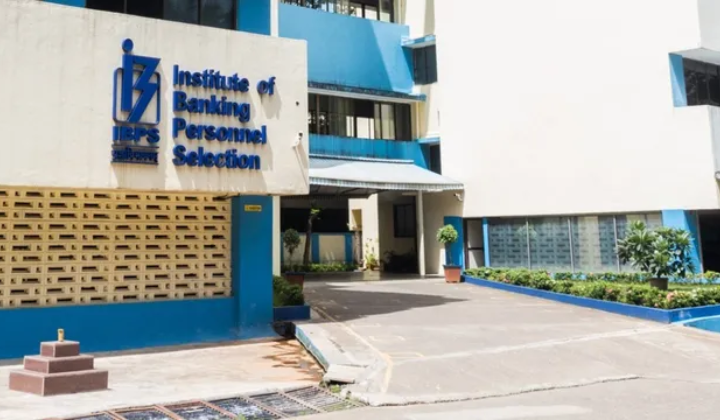
The IBPS PO Interview Call Letter 2025 has been released on 9th December 2025 at the official website www.ibps.in for all candidates who qualified in the Mains exam. The interview is the final stage of the IBPS PO selection process conducted by the Institute of Banking Personnel Selection. Candidates must download their call letter using their Registration Number and Date of Birth. The call letter includes the interview date, time, venue and important instructions that must be followed on the interview day.

IBPS PO Interview Call Letter 2025 Out

The IBPS PO 2025 Interview will be conducted till 24th December 2025 for candidates who cleared the mains exam. This year, IBPS will fill 5208 Probationary Officer vacancies and the interview is the final stage of the selection process. The IBPS PO Interview Call Letter 2025 can be downloaded from the official website www.ibps.in and it contains important details such as the interview date, time, venue and reporting instructions. Candidates must carry the call letter along with valid ID proof, certificates and photocopies for verification on the day of the interview.

IBPS PO Interview Call Letter 2025: Overview

Below we have given the overview of the IBPS PO Interview Call Letter 2025.

Details Information
Conducting Body Institute of Banking Personnel Selection (IBPS)
Post Probationary Officer (PO)
Total Vacancies 5208
Mode of Call Letter Online
Interview Dates Till 24th December 2025
Selection Process Prelims → Mains → Interview
Official Website www.ibps.in

IBPS PO Interview Call Letter 2025 Download Link

The IBPS has released the IBPS PO Interview Call Letter 2025 for candidates who have successfully cleared the mains examination. Aspirants can now download their call letter using their registration number and date of birth from the official website. All shortlisted candidates are advised to download their call letter early and prepare the required documents to ensure a smooth interview process.

Click here to download IBPS PO Interview Call Letter 2025

Are You Appearing for the IBPS PO Interview 2025??

IBPS PO Interview Call Letter 2025 Out at ibps.in, Download Link_3.1

How to Download the IBPS PO Interview Call Letter 2025

Candidates can download their call letter in just a few easy steps:

  1. Visit the official IBPS website – ibps.in
  2. Click on the CRP PO/MT section
  3. Find the link for PO Interview Call Letter 2025
  4. Log in using your Registration Number/Roll Number and Password/Date of Birth
  5. Download the PDF and take a printout

Make sure all the details on the call letter are correct before the interview day.

What You Must Carry for the IBPS PO Interview 2025

On the day of the interview, make sure you have:

  • Printed copy of the Interview Call Letter
  • A valid photo ID proof (Aadhaar, PAN, Driving Licence, etc.)
  • Photocopy of the ID proof
  • Original and photocopies of your educational certificates and mark sheets
  • Category certificates (if applicable)

Missing documents may lead to disqualification, so keep everything arranged beforehand.

Important Instructions for IBPS PO Interview 2025

Candidates appearing for the IBPS PO Interview 2025 should carefully follow all the guidelines issued by IBPS to avoid any last-minute problems. Proper planning, punctuality, and discipline are very important on the interview day. Below are some important instructions that every candidate must keep in mind.

  • Candidates should reach the interview venue well before the reporting time mentioned on the call letter.
  • All required documents must be carried in original along with self-attested photocopies.
  • Candidates should wear formal clothes and maintain proper discipline during the interview.
  • It is important to read and follow all instructions given on the interview call letter carefully.
  • Electronic items such as mobile phones, smartwatches, or other gadgets are not allowed inside the interview venue.
Related Post
6 Red Flags for IBPS PO Interview
IBPS PO Interview Questions
IBPS PO Previous Year Papers
IBPS PO Salary
IBPS PO Syllabus Do’s and Don’ts for IBPS PO Interview

CAIIB BRBL Exam Analysis 2025, 14 December All Shifts Exam Review

The BRBL paper of the CAIIB December 2025 cycle has officially concluded on 14 December. Bank employees who appeared for this paper were asked about their experience immediately after the exam was held. Based on the insights collected so far, our experts have prepared an accurate CAIIB BRBL Exam Analysis 2025. The exam review provided in this article includes details about the shift-wise and overall difficulty levels along with the list of topics asked in each shift.

CAIIB BRBL Exam Analysis 2025, 14 December

The CAIIB BRBL Exam 2025 was conducted on 14 December in multiple shifts across various examination centres. Based on the feedback received from candidates, the overall difficulty level of the exam was moderate. Candidates shared mixed reactions, with some finding the paper relatively more difficult compared to their expectations. In this article, candidates can go through the shift-wise CAIIB BRBL Exam Analysis 2025 to understand the exam pattern, difficulty level, and topics covered in each shift.

CAIIB BRBL Exam Analysis 2025, 14 December Shift 1

The CAIIB BRBL Shift 1 has successfully concluded, based on the experience shared by those who appeared in Shift 1 the difficulty level of this shift was moderate with many case study based questions. Candidates can check the list of topics asked in this section.

  1. SARFAESI Case Study
  2. FEMA Case Study
  3. Presiding Officer Duration And Age
  4. Payment System And Settlement
  5. SARFAESI
  6. Punishment Under FEMA Act How Many Years?
  7. Case Study On Partnership and LLP
  8. Commercial Paper
  9. Director In LLP Having NRI Status
  10. Winding Up Of Bank
  11. Certified Copy In Bankers Boom Act
  12. DRT Presiding Officer Tenure
  13. Ombudsman Scheme, DRT
  14. Contract
  15. MSME Limit
  16. Bailment
  17. BR Act
  18. Waterfall Mechanism
  19. ARC-Asset Reconstruction
  20. Recovery Officer
  21. Mortgage
  22. Prevention Of Money Laundering
  23. Guarantee Section
  24. Partnership
  25. Indemnity
  26. ARC Net Owned Fund
  27. Partnership Act Done In Good Faith
  28. Cheque-Parties
  29. Settlement Of Dispute Between Bank and ARC
  30. Case Study On COPA Act, 2019
  31. Balance Sheet Profit/Loss
  32. Case Study On Guarantee
  33. Balance Sheet-3rd Schedule Of Banking Regulation Act

Share Your CAIIB BRBL Score 2025!!!

CAIIB BRBL Exam Analysis 2025, 14 December Shift 1 Video Link

CAIIB HRM Elective

IBPS RRB Clerk Expected Cut off 2025, Check the State Wise Cut Off Marks

The IBPS RRB Clerk Expected Cut Off 2025 is one of the most searched topics among candidates as the examination reaches its final phase. With the last day of the exam currently ongoing on 14 December, aspirants are eager to understand how the overall difficulty level across shifts may influence state-wise cut off marks. Expected cut offs provide a realistic benchmark for candidates to assess their chances of qualifying for the next stage.

IBPS RRB Clerk Expected Cut off 2025

To help candidates better understand the expected level of competition, we have worked out the probable cutoff marks for the IBPS RRB Clerk 2025 exam. These estimates have been drawn from the difficulty level of the paper and responses received from candidates who appeared in the initial shifts. However, since cutoff marks vary by state and shift, the final qualifying scores may differ depending on factors such as the number of vacancies, candidate performance, and state-specific competition.

IBPS RRB Clerk Expected State Wise Cut off 2025

The anticipated cut-off marks for the IBPS RRB Clerk Prelims 2025 offer candidates a practical benchmark to judge their chances of moving to the mains stage. By matching their expected scores with these projected cut-offs, aspirants can better evaluate their position in comparison to state-level competition and prevailing exam trends.

Such estimates act as a guiding tool, enabling candidates to realign their preparation plan and concentrate on improvements that can strengthen their prospects in the next phase of the selection process.

State Revised Expected Cut Off 2025 (General)
Andhra Pradesh 63 – 69
Assam 67 – 73
Bihar 65 – 71
Chhattisgarh 59 – 65
Gujarat 65 – 71
Haryana 73 – 79
Himachal Pradesh 72 – 78
Jharkhand 67 – 73
Karnataka 64 – 71
Kerala 74 – 78
Madhya Pradesh 68 – 74
Maharashtra 69 – 75
Odisha 72 – 78
Punjab 71 – 77
Rajasthan 69 – 75
Tamil Nadu 59 – 65
Telangana 62 – 68
Tripura 66 – 72
Uttar Pradesh 68 – 74
Uttarakhand 72 – 78
West Bengal 75 – 78

Factors Affecting IBPS RRB Clerk Cut Off

With the first few shifts of the IBPS RRB Clerk Prelims 2025 providing valuable insights, candidates now have the chance to optimize their preparation effectively. Focusing on weaker areas, revising key concepts, and attempting practice tests that reflect the current exam pattern can give aspirants an edge. The expected cut-off marks will largely depend on overall exam difficulty, performance trends across different states, and the level of competition among candidates.

  • Difficulty Level of the Exam: Tougher questions generally lower the cut-off, while an easier paper can push it higher.
  • Number of Candidates: Higher competition among candidates can raise the cut-off marks.
  • State-Wise Competition: Cut-offs vary across states depending on the number of applicants and local competition.
  • Number of Vacancies: More vacancies can result in a lower cut-off, while fewer openings may increase it.
  • Performance of Candidates: Overall performance trends across shifts also impact the final cut-off.

Previous Year Cut Off Trends for IBPS RRB Clerk

The cut-off marks for IBPS RRB Clerk exams are shaped by several factors, such as exam difficulty, the number of vacancies, and candidates’ performance across different states. Studying past cut-off trends provides aspirants with a practical reference point and helps them strategize their preparation more efficiently. The table below highlights the state-wise cut-offs from 2021 to 2024, giving insights into how qualifying marks have changed over the years and what candidates might expect in the upcoming exam.

State 2021 2022 2023 2024
Andhra Pradesh 69.25 71 54 65.5
Assam 71 64.25 65.75 70
Bihar 73 70 68 66.75
Chhattisgarh 71 67.25 68 61.75
Gujarat 76.75 72.75 74 67
Haryana 75.75 75.5 75 75.25
Himachal Pradesh 74.25 72.25 74 74
Jammu & Kashmir 72 64.5 68
Jharkhand 76.25 72.25 75 69.5
Karnataka 70.75 67.25 60 68.75
Kerala 77 76 70 75.75
Madhya Pradesh 73.75 70.25 73 70
Maharashtra 72.75 67 71.25 72.5
Odisha 78.5 77 76 74
Punjab 76.5 74.25 74.75 73
Rajasthan 76.75 75 75.25 70.5
Tamil Nadu 70.5 61.25 63.25 61
Telangana 69 61.5 61 64.5
Tripura 67 69.5 68.5
Uttar Pradesh 76.5 76.5 74.25 69.75
Uttarakhand 77.5 75.5 75 74.25
West Bengal 75.75 74.75 73.75 77.5

How IBPS RRB Expected Cut Off Helps in Planning for Mains

Understanding the expected cut off is extremely useful for candidates preparing for the IBPS RRB Clerk Mains exam. While the official cut off will be released later, these predicted scores act as an early performance indicator and give aspirants a strategic advantage. Here’s how expected cut offs can support effective planning:

1. Helps You Judge Your Chances of Qualifying: Expected cut offs allow candidates to estimate whether their prelims score is likely to clear the qualifying threshold. This helps you avoid uncertainty and plan your next steps more confidently.

2. Enables Early Mains Preparation: Instead of waiting for the official result, candidates who score near or above the expected cut off can immediately start their Mains preparation. This saves valuable time and gives you a head start over others.

3. Guides Section-Wise Improvement: Expected cut offs show the overall competition level. If your performance is slightly below the projected range, you can identify weak areas to improve before the Mains exam.

4. Helps in Setting Realistic Study Goals: Knowing the expected qualifying marks helps candidates set practical short-term and long-term study targets. You can plan your daily schedule based on how far you are from the projected cut off.

5. Builds Awareness of State-Wise Competitiveness: Since IBPS RRB cut offs vary by state, the expected scores help candidates understand how their state’s competition level compares with others and adjust preparation intensity accordingly.

6. Reduces Exam Stress: Having a clear idea of the expected cut off reduces confusion and anxiety. Candidates can prepare with better clarity, avoiding last-minute panic before the Mains exam.

IBPS PO Interview Call Letter 2025 Out at ibps.in, Download Link_7.1

Related Posts
IBPS RRB Clerk Exam Analysis 2025, Shift 1, 13 December IBPS RRB Clerk Exam Analysis 2025, All Shifts
IBPS RRB Clerk Salary IBPS RRB Clerk Mock Test
IBPS RRB Clerk Cut Off IBPS RRB Previous Year Papers
IBPS RRB Clerk Exam Analysis 2025, Shift 3, 13th December 2025

SBI SO Recruitment 2025 Notification Out for 996 Posts, Online Application Starts

State Bank of India (SBI) has released a notification for a total of 996 vacancies for the positions of VP Wealth (SRM), AVP Wealth (RM), and Customer Relationship Executive under the SBI Specialist Officer (SO) Recruitment 2025. The official notification contains detailed information regarding eligibility criteria, age limit, application fees, salary structure, and the selection process.

SBI SO Recruitment 2025 Notification Out

State Bank of India (SBI) has officially announced its Specialist Officer (SO) recruitment, welcoming applications from eligible candidates. The full notification is available on the SBI website and includes comprehensive details on eligibility criteria, educational qualifications, required work experience, salary structure, job roles, and the selection process for each position. Candidates should carefully read the notification to ensure they fulfill all requirements before applying.

SBI SO Recruitment 2025 Notification PDF: Click here to Download

SBI SO Recruitment 2025: Overview

The selection process will include shortlisting of candidates based on their application details followed by an interview round. Candidates can check the detailed information, including post-wise vacancies and eligibility, in the table provided below.

  • Organization: State Bank of India
  • Exam Name: SBI SO 2025
  • Advertisement No.: CRPD/SCO/2025-26/17
  • Vacancy: 996
  • Post: VP Wealth, AVP Wealth, and Customer Relationship Executive
  • Category: Recruitment
  • Application Mode: Online
  • Educational Qualification: Graduation
  • Age Limit: Varies as per post
  • Selection Process: Shortlisting & Interview
  • Medium of Exam: English
  • Official Website: www.sbi.co.in

SBI SO 2025: Important Dates

The SBI SO Recruitment 2025 process has officially begun, with all major dates now released. Aspirants are strongly advised to go through the notification carefully to ensure they meet all requirements before submitting their application.

Event Date
SBI SO Notification Release 2nd December 2025
Start of Online Application 2nd December 2025
Last Date to Apply Online 23rd December 2025
Last Date to Pay Application Fee 23rd December 2025

SBI SO Apply Online 2025 Link

The online application portal for SBI SO Recruitment 2025 is now live, enabling eligible candidates to register and submit their applications directly on the official SBI website. Aspirants should carefully review the eligibility criteria and the selection procedure before filling out the form. It is recommended to apply early to avoid last-minute technical glitches and ensure a seamless submission process.

SBI SO Apply Online 2025: Click here to apply

How to Apply Online for SBI SO Recruitment 2025

  • Candidates interested in applying for SBI Specialist Officer 2025 should follow the steps below to complete their online registration:
  • Go to the official SBI careers portal: sbi.co.in/web/careers.
  • Navigate to the “Current Openings” section on the homepage.
  • Look for the recruitment notice under Advertisement No: CRPD/SCO/2025-26/17 and read the full notification carefully.
  • Click on the “Apply Online” button to start the application process.
  • On the new page, select “New Registration” to create your account and begin filling the form.
  • Complete the application by entering all required personal, educational, and professional details.
  • Pay the application fee according to your category, as mentioned in the notification.
  • Verify all information carefully, then click “Submit” to finalize your application.
  • After submission, download and save a copy of the application form for future reference.

SBI SO Vacancy 2025

The State Bank of India has released a total of 996 vacancies for the Specialist Officer posts under the SBI SO Recruitment 2025. The positions available include VP Wealth (SRM), AVP Wealth (RM), and Customer Relationship Executive, with vacancies divided across different categories such as SC, ST, OBC, EWS, and UR. Both regular and backlog vacancies have been specified for some posts.

Name of Post Type SC ST OBC EWS UR Total
VP Wealth (SRM) Regular 77 34 119 46 188 506
Backlog 15 10 17
AVP Wealth (RM) Regular 33 15 52 20 82 206
Backlog 4
Customer Relationship Executive Regular 47 21 73 28 115 284
Backlog
Total 996

SBI SO Eligibility Criteria

Candidates must carefully check the eligibility criteria before applying for the SBI Wealth Management contractual posts of VP Wealth (Senior Relationship Manager), AVP Wealth (Relationship Manager) and Customer Relationship Executive (CRE). The table below summarises the required educational qualification, minimum experience and age limit for each post to help candidates quickly understand whether they are eligible.

Post Educational Qualification Experience Age Limit
VP Wealth (Senior Relationship Manager) Graduation in any discipline.​ Desirable: PG/professional qualifications and relevant NISM/CFP-type certifications.​ Minimum 6 years in sales/marketing; experience as Wealth RM with Banks/NBFCs/Wealth firms/AMCs preferred.​ 26 to 42 years​
AVP Wealth (Relationship Manager) Graduation in any discipline.​ Desirable: PG/professional qualifications and relevant NISM/CFP-type certifications.​ Minimum 3 years in sales/marketing in Banks/NBFCs/Wealth firms/AMCs; SBI Wealth CREs with 4+ years also eligible.​ 23 to 35 years​
Customer Relationship Executive (CRE) Graduation in any discipline. Good communication and documentation skills preferred.​ Experience in customer interaction/documentation preferred; valid two-wheeler driving licence required.​ 20 to 35 years

SBI SO 2025 Application Fee

As part of the SBI SO 2025 recruitment process, candidates need to pay a nominal application fee based on their category. The fee ensures that the application is successfully processed and can be submitted through multiple online payment options such as debit/credit cards, net banking, or UPI.

SBI SO Notification 2025 Application Fees
Category Fee
General/ EWS/ OBC Rs. 750/-
SC/ ST/ PwBD Nil

pdpCourseImg

Essential Requirements for SBI SO 2025 Online Form

Before starting the SBI SO 2025 online application, candidates must keep all important documents and details ready. This helps in completing the form smoothly and prevents errors during the registration process. Having the required items prepared in advance also saves time and avoids last-minute problems. Below are the essential things candidates should keep ready:

  • Scanned Photograph and Signature in the correct size and format as mentioned in the notification.
  • Signature must NOT be in capital letters, as such signatures will not be accepted.
  • All necessary documents, such as educational certificates, ID proof, experience certificates, and category certificates (if applicable).
  • A valid and active Email ID to receive registration details, OTPs, and important updates from SBI.
  • A working mobile number for verification and communication throughout the recruitment process.
  • Online payment details, such as a debit card, credit card, UPI, or net banking facility, for paying the application fee.
  • A stable internet connection to ensure the form is filled and submitted without interruptions.

SBI SO 2025 Selection Process

The SBI SO 2025 recruitment follows a straightforward and merit-based selection procedure aimed at identifying professionally skilled candidates for specialist roles. Unlike other banking exams, this recruitment does not include a written test. Instead, SBI focuses on evaluating applicants through their experience, qualifications, and overall suitability for the position.

Shortlisting: In the first stage, SBI reviews all submitted applications to check whether candidates meet the required educational qualifications, experience criteria, and role-specific skillsets. Only those who fit the eligibility standards outlined in the notification are shortlisted. This stage is entirely qualification-based, and no exam is conducted here.

Interview: Shortlisted candidates are then invited to attend a personal interview, which serves as the main assessment stage. The interview carries 100 marks, and candidates are evaluated on their domain knowledge, communication skills, practical experience, and understanding of wealth management or customer relationship roles.

SBI SO 2025 Salary

SBI offers attractive compensation packages for its Specialist Officer positions, reflecting the responsibilities and expertise required for each role. The CTC varies significantly depending on the post, with senior positions offering substantial financial rewards. Here’s a detailed look at the upper range of salaries for different SO roles:

Sl. No. Name of Post CTC Upper Range (₹ in Lakhs)
1 VP Wealth (SRM) 44.7
2 AVP Wealth (RM) 30.2
3 Customer Relationship Executive 6.2

Tips for SBI SO Exam Preparation

Preparing for the SBI SO exam requires a clear understanding of the role and focused preparation based on the specialist post you are applying for. Since SBI SO is a professional-level recruitment, candidates should give more importance to domain knowledge and practical skills. Proper planning, regular revision, and skill improvement can greatly increase the chances of selection. Below are some simple and effective tips to help candidates prepare better for the SBI SO exam.

  • First, understand the job profile of the SBI SO post you are applying for and know the duties involved.
  • Focus your study mainly on the specialist subject related to your role instead of general banking topics.
  • Practice previous year question papers, if available, to understand the exam pattern and question level.
  • Revise the basic concepts of your relevant domain regularly to build strong fundamentals.
  • Improve your communication skills, as they are important for interviews and professional work.
  • Work on problem-solving skills to handle practical and job-related questions confidently.

Job Profiles of SBI SO 2025

SBI offers different roles for Specialist Officers, each with specific responsibilities. Here’s a simple overview of what each job entails:

VP Wealth (SRM) – Job Profile

  • Build and maintain strong relationships with wealthy clients.
  • Offer investment, insurance, and other financial products to help clients meet their financial goals.
  • Focus on increasing client value, assets under management, and revenue.

AVP Wealth (RM) – Job Profile

  • Manage and grow relationships with affluent clients.
  • Sell investment and insurance products to meet client needs and business targets.
  • Work on increasing client value and assets under management.

Customer Relationship Executive (CRE) – Job Profile

  • Support Relationship Managers by collecting client documents.
  • Send documents to the right department for processing and assist with client meetings when needed.

SBI SO 2025 Contract Period

The Specialist Officer positions under SBI SO 2025 are offered on a contractual basis for 5 years. This contract may be renewed for an additional 4 years at the discretion of the bank, subject to the fulfillment of any conditions or criteria that the bank may specify at the time of renewal.

SBI SO 2025: Job Profiles and Roles

The Specialist Officer (SO) positions at SBI offer distinct roles with specific responsibilities, focusing on wealth management, client relationship, and customer support. Here’s a breakdown of each position:

VP Wealth (Senior Relationship Manager) – Job Profile

  • Build and maintain strong relationships with affluent and high-net-worth clients.
  • Provide financial advice and sell investment, insurance, and other wealth management products.
  • Focus on increasing client assets under management (AUM) and overall revenue.
  • Strategically identify opportunities to expand the client base and enhance portfolio value.

AVP Wealth (Relationship Manager) – Job Profile

  • Manage and nurture relationships with HNI and affluent clients.
  • Understand client financial needs and offer suitable investment and insurance solutions.
  • Work towards achieving business targets while improving client satisfaction.
  • Support the VP Wealth in increasing client value and contributing to the growth of the wealth management portfolio.

Customer Relationship Executive (CRE) – Job Profile

  • Assist Relationship Managers in collecting and processing client documents.
  • Ensure smooth documentation and verification processes for financial products.
  • Coordinate client meetings and provide administrative support for relationship management activities.
  • Help maintain client records and assist in day-to-day client interaction tasks.

IBPS RRB Clerk Prelims Exam Analysis 2025 All Shifts Difficulty Level

The IBPS RRB Clerk Prelims Exam Analysis 2025 offers a detailed overview of the question paper trends and difficulty level across all shifts. With the last day of the examination currently ongoing on 14 December, candidates are keenly following shift-wise updates to understand the overall exam pattern. This analysis helps aspirants appearing in upcoming shifts evaluate expected difficulty and refine their exam strategy. Reviewing all-shift trends also gives a clearer picture of performance levels and potential cutoff expectations.

IBPS RRB Clerk Prelims Exam Analysis 2025

The IBPS RRB Clerk Prelims Exam Analysis 2025 highlights how maintaining a balance between speed and accuracy, along with smart time allocation, is essential to perform well in every shift. The feedback and question trends observed in the early shifts act as a practical roadmap for candidates, helping them adjust their preparation approach and refine their attempt strategy to score better in the upcoming examinations.

IBPS RRB Clerk Exam Analysis 2025: All Shifts

The detailed IBPS RRB Clerk Prelims Exam Analysis 2025 serves as a valuable guide for candidates by clearly highlighting shift-wise and day-wise changes in difficulty level, question types, and overall exam pattern. Insights from each completed shift help aspirants understand the evolving nature of the paper, allowing them to adjust their preparation plan and exam strategy more effectively for the remaining exam dates.

IBPS RRB Clerk Prelims Exam Analysis 2025: All Shifts
Day Shift 1 Shift 2 Shift 3 Shift 4
06 December IBPS RRB Clerk Exam Analysis 2025, Shift 1 IBPS RRB Clerk Exam Analysis 2025, Shift 2
07 December IBPS RRB Clerk Exam Analysis 2025, Shift 1 IBPS RRB Clerk Exam Analysis 2025, Shift 2 IBPS RRB Clerk Exam Analysis 2025, Shift 3 IBPS RRB Clerk Exam Analysis 2025, Shift 4
13 December IBPS RRB Clerk Exam Analysis 2025, Shift 1 IBPS RRB Clerk Exam Analysis 2025, Shift 2 IBPS RRB Clerk Exam Analysis 2025, Shift 3 IBPS RRB Clerk Exam Analysis 2025, Shift 4
14 December IBPS RRB Clerk Exam Analysis 2025, Shift 1 Uploaded after the exam Uploaded after the exam Uploaded after the exam

Difficulty Level of IBPS RRB Clerk Prelims 2025

The prelims exam is expected to maintain an overall easy to moderate level throughout all days. Both sections typically feature a good number of scoring questions, with patterns largely aligned to previous years. Candidates are advised to keep attempts balanced and avoid unnecessary risks that may impact accuracy.

Key Highlights:

  • Majority of the questions are expected to be straightforward and scoring.
  • Question patterns are likely to remain similar to previous years, ensuring familiarity for well-prepared candidates.
  • Time management will play a crucial role due to the balanced difficulty across sections.
  • Candidates should maintain accuracy and avoid unnecessary over-attempts.

Key Changes in IBPS RRB Clerk Exam 2025

So far, the IBPS RRB Clerk Exam 2025 has remained consistent with its usual framework, with no significant changes in terms of structure or format. The Prelims and Mains stages, section-wise weightage, and marking scheme remain consistent with the pattern followed in previous years. Candidates can confidently prepare for the familiar exam setup and regularly check official IBPS notifications for any updates or announcements.

What to Expect in the Upcoming Shifts of IBPS RRB Clerk Prelims

For the upcoming shifts of the IBPS RRB Clerk Prelims 2025, the overall exam level is expected to remain broadly in line with what has been seen so far. While individual shifts may feature small differences in question types or calculation intensity, especially in Reasoning and Numerical Ability, the general pattern is unlikely to change.

Candidates should concentrate on accuracy, smart question selection, and effective time management rather than worrying about minor variations, as the overall competition level is expected to stay steady across shifts.

IBPS RRB Clerk Prelims Exam: Questions Asked in Previous Exam

According to the questions asked in the previous exam, topics such as seating arrangement, syllogism, inequality, and coding-decoding may dominate the Reasoning Section, while questions from simplification, number series, arithmetic problems, and data interpretation may dominate the Quant section.

IBPS RRB Clerk Prelims Exam: Questions Asked in Previous Exam
Reasoning Ability Quantitative Aptitude
Day Based Puzzle (Monday – Sunday) Simplification
Circular Seating Arrangement (7 Persons) Wrong Number Series
Box Based Puzzle Arithmetic
Inequality Tabular Data Interpretation
Syllogism Bar Graph Data Interpretation
Alphabetical Series
Direction and Distance
Blood Relation
Pair Formation- CLIMATE
Odd One Out

Test Prime

Related Posts
IBPS RRB Clerk Prelims Memory Based Paper 2025 IBPS RRB Clerk Prelims Expected Cut Off 2025
IBPS RRB Clerk Syllabus IBPS RRB Clerk Salary
IBPS RRB Preparation Tips IBPS RRB Clerk Cut Off 
IBPS RRB Previous Year Question Papers

IBPS RRB Clerk Exam Analysis 2025, 14 December Shift 1, Difficulty Level

Today marks the concluding day of the IBPS RRB Clerk Prelims Exam 2025. Shift 1 of the exam, held on 14 December, witnessed candidates sharing their feedback and experiences regarding the overall difficulty of the paper. The pattern remained consistent with previous days, maintaining a balanced mix of questions in both Reasoning Ability and Quantitative Aptitude.

IBPS RRB Clerk Exam Analysis 2025, 14 December, Shift 1

Candidates have now exited the examination hall and shared their feedback on the IBPS RRB Clerk Exam 2025. A large number of aspirants found the questions quite familiar, particularly those who had practiced with mock tests and reviewed memory-based questions from previous shifts. Overall, the exam was predictable, giving well-prepared candidates a good chance to attempt it confidently.

IBPS RRB Clerk Exam 2025, Shift 1: Difficulty Level & Good Attempts

The IBPS RRB Clerk Exam 2025, Shift 1, has concluded, and candidates have started sharing their experiences. This analysis covers the overall difficulty level of the paper, section-wise insights, and the number of good attempts that can help aspirants gauge their performance and plan their next steps effectively.

IBPS RRB Clerk Exam Analysis 2025, 14 December Shift 1
Section Difficulty Level Good Attempts
Reasoning Ability Easy to Moderate 34-38
Quantitative Aptitude Easy to Moderate 30-34
Overall Easy to Moderate 71-75

IBPS RRB Clerk Exam Analysis 2025, 14 December, Shift 1: Section-wise Analysis

The IBPS RRB Clerk Exam 2025, Shift 1 (14 December) has concluded, and candidates have shared their feedback on each section. The Reasoning Ability and Quantitative Aptitude sections were well-balanced, with questions largely based on familiar patterns from previous shifts. Here’s a detailed breakdown of the topics and number of questions to help aspirants understand the exam trend and gauge their performance.

Reasoning Ability

The Reasoning section featured puzzles, seating arrangements, alphanumeric series, and syllogisms. Many candidates found it manageable and were able to complete it quickly, as the questions followed familiar patterns and simpler logical setups similar to those in earlier shifts.

IBPS RRB Clerk Exam Analysis 2025, 14 December Shift 1: Reasoning Ability
Topics No. Of Questions
Puzzle (Floor & Floor) 5
Puzzle (Post Based) 5
Seating Arrangement (Linear, 8 p) 5
Uncertain Linear 3
Inequality 3-4
Syllogism (Only & Few) 3-4
Alphabetical Series 5
Blood Relation 3
Pair Formation 1
3 Digit Numeric Series 5
Meaningful Word 1
Total 40

Quantitative Aptitude

The Quantitative Aptitude section included simplification, number series, a simple DI set, and some basic arithmetic problems. While a few questions involved multi-step calculations, most were straightforward and scoring for candidates who had practiced well.

IBPS RRB Clerk Exam Analysis 2025, 14 December Shift 1: Quantitative Aptitude
Topics No. Of Questions
Simplification 15
Missing Number Series 5
Arithmetic 10
Data Interpretation (Line Chart) 5
Data Interpretation (Table) 5
Total 40

IBPS RRB Clerk Exam Analysis 2025, 14 December, Shift 1: Video Link

Related Posts
IBPS RRB Clerk Prelims Memory Based Paper 2025 IBPS RRB Clerk Prelims Expected Cut Off 2025
IBPS RRB Clerk Syllabus IBPS RRB Clerk Salary
IBPS RRB Preparation Tips IBPS RRB Clerk Cut Off 
IBPS RRB Previous Year Question Papers

Profit, Loss & Discount – Concept + Formula

Profit, Loss, and Discount are among the most scoring topics in competitive exams like Banking, Regulatory bodies and other government exams. These concepts help you understand how selling, buying, and discounting work in real-life business transactions. With basic formulas and simple logic, you can solve these questions quickly and accurately.

Profit, Loss & Discount – Concept + Formula

Profit, Loss & Discount are essential concepts in arithmetic that help determine the financial outcome of buying and selling goods. Profit occurs when the Selling Price (SP) is greater than the Cost Price (CP), while Loss happens when CP exceeds SP. The Marked Price (MP) is the printed price on an item, and the Discount is the reduction given on it to attract customers.

Key formulas include

Profit = SP – CP,

Loss = CP – SP,

Profit% = (Profit/CP) × 100,

Loss% = (Loss/CP) × 100,

Discount = MP – SP, and

Discount% = (Discount/MP) × 100.

Understanding these basics helps solve exam questions quickly and improves real-life financial decision-making.

What is Cost Price (CP)?

Cost Price (CP) is the amount a seller spends to acquire or produce an item before selling it. It includes all expenses involved in bringing the product to a saleable condition such as buying cost, transportation charges, manufacturing cost, taxes, and packaging. In simple terms, CP is the base value used to calculate profit or loss in any transaction.

Example:
If you buy a book for ₹200, its CP = ₹200.
If you also spend ₹20 on packaging or transport, the total CP becomes ₹220.

What is Selling Price (SP)?

Selling Price (SP) is the amount at which an item is sold to a customer. It is the final price a buyer pays after including or excluding any additional charges, taxes, or discounts. SP directly determines whether the seller makes a profit or incurs a loss when compared with the Cost Price. Businesses often adjust the SP based on market demand, competition, and pricing strategy.

Example:
If you sell a book for ₹250, its SP = ₹250.
If a discount of ₹20 is applied on the Marked Price, and the customer pays ₹230, then SP = ₹230.

What is Profit?

Profit is the financial gain a seller earns when the Selling Price (SP) of an item is higher than its Cost Price (CP). It represents the extra amount received over and above the cost of acquiring or producing the item. Profit is a key indicator of business performance, helping sellers understand how well they are pricing and selling their products. Higher profit means better earnings, efficient pricing, and successful sales strategy.

Formula:
Profit = SP – CP

Example:
If you buy an item for ₹500 (CP) and sell it for ₹650 (SP),
Profit = ₹650 – ₹500 = ₹150

Businesses aim to maximize profit by reducing costs, improving product quality, or increasing sales price without losing customers.

Profit Percentage Formula

Profit% = (Profit / CP) × 100

Example: Profit = 50, CP = 200
Profit% = (50/200) × 100 = 25%

What is Loss?

Loss occurs when the Selling Price (SP) of an item is less than its Cost Price (CP). It represents the amount of money a seller loses in a transaction. Loss usually happens due to urgent selling, low demand, market competition, damage to goods, or reducing prices to attract customers. Understanding loss helps businesses adjust pricing strategies and prevent future financial setbacks.

Formula:
Loss = CP – SP

Example:
If you purchase an item for ₹800 (CP) and sell it for ₹700 (SP),
Loss = ₹800 – ₹700 = ₹100

Maintaining a good balance between cost, pricing, and demand is essential to avoid losses in business.

Loss Percentage Formula

Loss% = (Loss / CP) × 100

Example: Loss = 50, CP = 500
Loss% = (50/500) × 100 = 10%

What is Marked Price (MP)?

Marked Price (MP) is the price printed, tagged, or displayed on a product before any discount is applied. It is also called the list price or label price. Sellers usually keep the MP higher than the actual Cost Price (CP) so they can offer discounts while still earning profit. The MP helps customers understand the original value of the product and allows sellers to run sales, offers, and promotional pricing.

Example:
If a shirt has a printed price of ₹1,200, then its MP = ₹1,200
If a 20% discount is given, the actual Selling Price will be lower than the Marked Price.

The Marked Price is important in calculating discount percentage and determining final selling price during sales or offers.

What is Discount?

Discount is the reduction given on the Marked Price (MP) of an item to attract customers and increase sales. It is a common pricing strategy used during sales, festivals, and promotions. A discount lowers the price a buyer pays, while still allowing sellers to make a profit if the Marked Price is set higher than the Cost Price (CP). Discounts can be offered as a fixed amount or a percentage.

Formula:
Discount = MP – SP

Example:
If the Marked Price of a bag is ₹1,500 and it is sold for ₹1,200,
Discount = ₹1,500 – ₹1,200 = ₹300

Discounts help clear old stock, boost customer attraction, and increase overall sales volume

Selling Price After Discount

SP = MP – Discount

SP = MP × (1 – Discount%)

Example: MP = 2000, Discount = 10%
SP = 2000 × (1 – 0.10) = ₹1800

Relation Between Cost Price, Selling Price & Profit/Loss

  1. If SP > CP = Profit

  2. If SP < CP = Loss

  3. If SP = CP = No Profit, No Loss

Foundation Batch

Formulas

  • Profit = SP – CP

  • Loss = CP – SP

  • Profit% = (Profit / CP) × 100

  • Loss% = (Loss / CP) × 100

  • Discount = MP – SP

  • Discount% = (Discount / MP) × 100

  • SP after discount = MP × (100 – Discount%) / 100

Related Posts
Simple and Compound Interest Basics
Reading Comprehension for Beginners Linear and Circular Seating Arrangement Basics
Grammar Essentials Direction & Distance
Number Series Questions for Bank Exams Coding-Decoding- Basics for Beginners
Basics of Percentage Vocabulary Building
Coding Decoding Questions for Beginners Simplification & Approximation Must-Know Techniques
Basic Concepts of Syllogism with Examples Inequality Tricks for Beginners

Nainital Bank Recruitment 2025-26 Notification PDF Out for 185 Clerk, PO and SO Posts

Nainital Bank has released its official notification on 11th December 2025 announcing 185 vacancies for various posts, including Customer Service Associate (Clerk), Probationary Officer (Generalist & Specialist) in Grade/Scale-I, and Specialist Officer in Grade/Scale-II. The online application process will begin on 12th December 2025 on the bank’s official website. This recruitment offers a great chance for candidates looking for a banking career. Interested applicants should check the details and start preparing early to make the most of this opportunity.

Nainital Bank Recruitment 2025-26 Notification PDF Out

With over a century of trusted service and majority ownership under Bank of Baroda, Nainital Bank provides a secure work environment along with attractive salary structures. In this article, you will find all the importantz details about the Nainital Bank Recruitment 2025-26 Notification PDF, including eligibility, important dates, vacancies, and the selection process. Below we have shared the Notification PDF.

Nainital Bank Recruitment 2025-26 Notification PDF: Click here to Download

Are You Preparing for Nainital Bank Exam 2026??

Nainital Bank Notification 2025: Overview

Through this recruitment, both freshers and experienced candidates are eligible to submit their applications. Below, we have provided a quick overview of the Nainital Bank Recruitment 2025 for easy reference.

Nainital Bank Recruitment 2025
Organization Nainital Bank Limited
Exam Name Nainital Bank Recruitment 2025
Post CSA/Clerk, Scale-I, Scale-II & Scale-III
Vacancy 185
Category Recruitment
Education Qualification For CSA & PO:- Graduation/ Post Graduation With Minimum 50% Marks

Specialist Scale-I:- B.E./B.Tech in CS/IT with 60%; LLB for Law

Specialist Scale-II:-  Relevant PG/CA + 2 years experience in banks/FIs

Age Limit According to the post
Language Of Exam English
Application Fees Rs. 1000/- or 1500/- (According to the post)
Selection Process According to the post
Application Mode Online
Official Website www.nainitalbank.co.in.

Nainital Bank 2025-26: Important Dates

Nainital Bank Recruitment 2025-26 opens applications tomorrow for over 185 vacancies in CSA, PO, and specialist roles, offering fresh graduates and professionals a chance to join this Bank of Baroda-majority-owned scheduled bank with 176 branches across North India. Important deadlines range from online registration to the exam and interview stage, allowing candidates to plan ahead for this competitive process.

Nainital Bank Clerk Recruitment 2025-26: Important Dates
Activity Important Dates
Notification 2025 PDF 11 December 2025
Apply Online Starts On 12 December 2025
Last Date to Apply 1 January 2026
Last Date of Fee Payment 2 January 2026
Exam Date 18 January 2026

Nainital Bank Vacancy 2025

The Nainital Bank Recruitment 2025-26 brings a wide range of opportunities for candidates aiming to build their careers in the banking sector. With a total of 185 vacancies announced across different roles, the bank has opened positions suitable for both fresh graduates and experienced professionals.

Post Category Key Vacancies
CSA 71
PO Scale-I (Generalist) 40
Specialist Scale-I (e.g., IT, Law, Credit) 47
Manager Scale-II (e.g., IT, Risk, CA, SO) 27
Total 185

Nainital Bank Post-Wise Vacancy 2025

Name of the Post No. of Vacancies
Customer Service Associate (CSA) 71
Probationary Officer (Grade/Scale-I) 40
Risk Officer (Grade/Scale-I) 3
Chartered Accountant (CA) (Grade/Scale-I) 3
Information Technology (IT) Officer (Grade/Scale-I) 15
Law Officer (Grade/Scale-I) 2
Credit Officer (Grade/Scale-I) 10
Agricultural Field Officer (Grade/Scale-I) 10
HR Officer (Grade/Scale-I) 4
Manager – Information Technology (IT) (Grade/Scale-II) 15
Manager – Risk (Grade/Scale-II) 2
Manager – Chartered Accountant (CA) (Grade/Scale-II) 5
Manager – Law (Grade/Scale-II) 2
Manager- Security Officer in Grade/Scale-II 3
Total 185

Nainital Bank Eligibility Criteria 2025

To apply for Nainital Bank Recruitment 2025-26, candidates must meet the required education, experience, and age limit conditions set by the bank. The eligibility rules may vary depending on the post.

Post Name Educational Qualification Experience Required Age Limit
Customer Service Associate (CSA) Graduate/Postgraduate in any stream with 55% marks; must know Hindi, English & computers. No experience needed 21–32 years
Probationary Officer (PO) – Scale I Graduate/Postgraduate with 50% marks; computer knowledge needed; preference to those with 1–2 years in banking/finance. Not required 25–35 years
Risk Officer – Scale I Master’s in Risk Management/ Finance/ Economics/ Statistics/ Maths or related field; preference for risk-related experience. Not required 25–35 years
Chartered Accountant (CA) – Scale I Must be a qualified CA from ICAI. Not required 25–35 years
IT Officer – Scale I Degree/PG in Computer Science, IT, Electronics, or DOEACC ‘B’ Level. Not required 25–35 years
Law Officer – Scale I LLB with 60% in Law and 55% in Graduation; must be enrolled as Advocate. Not required 25–35 years
Credit Officer – Scale I Graduation/PG in Commerce/ Finance/ Banking/ Related fields with 50% marks OR MBA/PGDBM Finance with 55%; preference for JAIIB/CAIIB. Not required 25–35 years
Agriculture Officer – Scale I Degree in Agriculture/ Horticulture/ Dairy Science/ Animal Husbandry/ Fishery or related field. Not required 25–35 years
HR (Personnel) Officer – Scale I Graduation + 2-year Full-time PG Degree/ Diploma in HR/ IR/ Social Work/ Labour Law with 50% marks. Not required 25–35 years
IT Officer – Scale II Degree/ PG in CS/ IT/ Electronics or DOEACC ‘B’ Level with 60% marks; preference for IT/ security certifications. 1–2 years as IT Officer 25–35 years
Manager (Risk) – Scale II MBA (Finance) or Master’s in Finance/ Economics/ Statistics/ Maths with 60%; preference for FRM/PRM/CFA/CA etc. Minimum 2 years in risk field 25–40 years
Manager (CA) – Scale II Qualified Chartered Accountant; preference for JAIIB/CAIIB. Minimum 1 year as CA 25–40 years
Manager (Law) – Scale II LLB; preference for Master’s degree; 50% marks in Graduation & PG. Minimum 2 years as Law Officer or Advocate 25–35 years
Manager (Security) – Scale II Graduate with 50% marks. Ex-Army JCO (Naib Subedar or above) OR 5 years as Police Inspector/Para-Military equivalent Up to 45 years

Nainital Bank Apply Online 2025-26 Link

The Nainital Bank has announced the recruitment for Specialist Officer (SO), Clerk, and Probationary Officer (PO) posts for 2025. The online application process will begin on 12th December 2025 on the official website www.nainitalbank.bank.in. Eligible candidates should carefully check the notification, verify the eligibility criteria, and submit their applications before the last date, 1st January 2026.

Click here to Apply Online for Nainital Bank Recruitment 2025-26 

Nainital Bank 2025-26 Salary

Nainital Bank Recruitment 2025-26 offers structured pay scales for CSA, Scale-I Officers, and Scale-II Managers, with basic pay increments tied to performance and service. These scales include allowances like DA, HRA, and medical benefits, making total CTC competitive for North India banking roles.​

Cadre/Post Basic Pay Scale Max Basic Pay ​
Customer Service Associate (CSA) ₹24,050–1,340/3–28,070–1,650/3–33,020–2,000/4–41,020–2,340/7–57,400–4,400/1–61,800–2,680/1–64,480 ₹64,480 ​
Officers Grade/Scale-I (PO, Risk, CA, IT, Law, Credit, Agri, HR) ₹48,480–2,000/7–62,480–2,340/2–67,160–2,680/7–85,920 ₹85,920 ​
Managers Grade/Scale-II (IT, Risk, CA, Law, Security) ₹64,820–2,340/1–67,160–2,680/7–1,09,360 ₹1,09,360

Nainital Bank Recruitment 2025 Application Fees

Candidates applying for the Nainital Bank Recruitment 2025-26 must complete the application only through online mode. The bank has fixed separate fees for CSA and Officer posts, and the payment must be made digitally. Below is a quick overview of the fee structure and essential upload requirements.

Post Type Application Fee (Including GST)
CSA / Clerk ₹1,000
Officers (PO / Specialist / Scale-II) ₹1,500

Nainital Bank 2025-26 Selection Process

The selection process for Nainital Bank Recruitment 2025-26 varies based on the post and scale. Each role follows a structured evaluation that begins with an online examination designed to assess job-specific skills. Shortlisted candidates then move to the interview stage, where their domain knowledge, communication skills, and suitability for the role are evaluated. Finally, document verification and other formalities are completed before the final appointment is confirmed.

Complete Foundation Batch


Nainital Bank 2025 Exam Pattern

The Nainital Bank Recruitment 2025 exam will be held in online mode and the pattern will differ based on the post that the candidates applied for. The exam includes various sections such as Reasoning, English, Banking Awareness, Computer Knowledge, and Quantitative Aptitude. Each question will have five answer options and candidates must choose the correct one carefully because there is negative marking. For every wrong answer, 0.25 marks will be deducted. Below we have given the Nainital Bank Exam Pattern 2025.

Exam Pattern for Customer Service Associate / Generalist Officer
Section No. of Questions Marks Duration
Reasoning 40 40 35 minutes
English Language 40 40 35 minutes
General Awareness (Banking Awareness included) 40 40 20 minutes
Computer Knowledge 40 40 20 minutes
Quantitative Aptitude 40 40 35 minutes
Total 200 200 145 minutes


Exam Pattern for Specialist Officers
Section No. of Questions Marks Duration
Reasoning 40 40 35 minutes
English Language 40 40 35 minutes
General Awareness (with special reference to Banking) 40 40 20 minutes
Professional Knowledge 40 40 20 minutes
Quantitative Aptitude 40 40 35 minutes
Total 200 200 145 minutes

Nainital Bank Indemnity Bond

Selected candidates will be required to execute an Indemnity Bond before joining the Bank’s service. The bond must be furnished with two sureties and will be applicable for a specified service period. In case a candidate resigns, leaves or abandons service before completing the bond period, the Bank will recover the bond amount along with applicable costs and expenses.

Cadre Bomd Amount Bond Period
Customer Service Associate (CSA) ₹1.5 Lakhs 02 Years
Grade / Scale I & II Officers ₹3.00 Lakhs 02 Years
Related Posts
Nainital Bank Salary
Nainital Bank Syllabus

Daily Current Affairs Quiz 13 December 2025, Attempt Important GK Questions

The Daily Current Affairs Quiz for 13 December 2025 is designed to help aspirants revise important GK topics relevant to banking and other competitive exams. By practising these questions regularly, candidates can strengthen their awareness of recent national, international and financial developments. Daily quizzes play a key role in improving accuracy and retention in the General Awareness section.

Daily Current Affairs Quiz 13 December 2025

Q1. Which international luxury fashion brand signed a Memorandum of Understanding (MoU) with Maharashtra government leather development corporations to take Kolhapuri chappals to global markets?

(a) Gucci

(b) Prada

(c) Louis Vuitton

(d) Versace

(e) Armani

Q2. Consider the following statements regarding the World Inequality Report 2026:

1.India’s income inequality is among the highest in the world.

2.The top 1% in India own nearly 40% of total wealth.

3.The bottom 50% globally own more than 10% of total wealth.

4.The World Inequality Report 2026 released by World Bank.

Which of the above statements are correct?

(a) 1, 2 and 3 only

(b) 1 and 2 only

(c) 2, 3 and 4 only

(d) 1, 3 and 4 only

(e) All statements are correct.

Q3. According to provisional data released by MoSPI, what was India’s all-India CPI inflation rate in November 2025?

(a) 0.25%

(b) 0.50%

(c) 0.71%

(d) 1.05%

(e) 1.40%

Q4. The Cabinet Committee on Economic Affairs recently approved an increase in MSP for copra for the 2026 season. Which of the following MSPs has been fixed for Fair Average Quality (FAQ) milling copra?

(a) ₹11,500 per quintal

(b) ₹11,750 per quintal

(c) ₹12,027 per quintal

(d) ₹12,250 per quintal

(e) ₹12,500 per quintal

Q5. The Cabinet Committee on Economic Affairs (CCEA) approved a new policy mechanism called the CoalSETU window in December 2025, has been introduced under which existing coal linkage policy framework?

(a) SHAKTI Policy

(b) Commercial Mining Policy, 2020

(c) Coal Mines (Special Provisions) Act

(d) Non-Regulated Sector (NRS) Linkage Auction Policy, 2016

(e) National Mineral Policy, 2019

Test Prime

Answers
01 02 03 04 05
b b c c d

Explanations

Explanation to Question 1: b

  • Prada, the renowned Italian luxury fashion brand, has partnered with Maharashtra government leather development corporations to introduce the traditional Kolhapuri chappal to global luxury markets.
  • The collaboration involves LIDCOM (Sant Rohidas Leather Industries and Charmakar Vikas Mahamandal) and LIDCAR (Dr. Babu Jagjivanram Charmudyog Vikas Mahamandal).
  • The initiative aims to blend centuries-old Indian craftsmanship with contemporary high-end luxury design, creating a bridge between heritage art forms and global fashion.
  • The Memorandum of Understanding (MoU) was signed at the Italian Consulate in Mumbai on 11 December 2025.
  • The signing took place during the India–Italy Business Forum, organised as part of the official visit of Antonio Tajani, Italy’s Deputy Prime Minister and Minister of Foreign Affairs and International Cooperation.
  • Under the partnership, Prada will work directly with skilled artisans from Maharashtra and Karnataka.
  • The footwear will be developed under the project titled “Prada Made in India – Inspired by Kolhapuri Chappals”.
  • The initiative seeks to preserve traditional techniques, provide global exposure to artisans, and generate sustainable employment and skill upgradation.
  • The exclusive collection is scheduled for a global launch in February 2026.

Explanation to Question 2: b

  • The World Inequality Report 2026 is the third edition of the report series, following the 2018 and 2022 editions.
  • It is prepared by over 200 scholars worldwide, released by the World Inequality Lab. Hence statement 4 is incorrect.

India-Specific Findings

  • Income inequality in India remains among the highest globally. Hence statement 1 is correct.
  • The top 10% of earners capture 58% of India’s national income, while the bottom 50% receive only 15%.
  • Compared to World Inequality Report 2022, the income share of the top 10% increased from 57% to 58%, while the bottom 50% increased from 13% to 15%.
  • Wealth inequality is more severe than income inequality:
    • The richest 10% hold about 65% of total wealth,
    • The top 1% alone own nearly 40% of total wealth. Hence statement 2 is correct.
  • Average annual income per capita in India is about €6,200 (PPP).
  • Average wealth per adult stands at around €28,000 (PPP).
  • Female labour force participation remains very low at 15.7%, with little improvement over the past decade.

Global Inequality Trends

  • Global wealth has reached historic highs, but distribution remains highly unequal.
  • The top 10% globally own nearly 75% of total wealth, while the bottom 50% own just 2%. Hence statement 3 is incorrect.
  • The top 1% control 37% of global wealth, more than 18 times the wealth of the bottom half of the world population.
  • The top 0.001% (around 60,000 multi-millionaires) own three times more wealth than the entire bottom half of humanity.

Gender, Climate & Regional Inequality

  • Women earn only 61% of men’s hourly income, excluding unpaid work; this falls to 32% when unpaid work is included.
  • The top 10% account for 77% of global private capital-related carbon emissions, while the bottom 50% contribute only 3%.
  • Average daily income is €125 in North America & Oceania, compared to €10 in Sub-Saharan Africa.

Explanation to Question 3: c

  • India’s headline inflation, measured by the all-India Consumer Price Index (CPI), remained at low levels in November 2025, but increased compared to October.
  • As per provisional data released by the Ministry of Statistics & Programme Implementation (MoSPI), CPI inflation stood at 0.71% year-on-year, rising by 46 basis points from the previous month.
  • Food inflation, measured by the Consumer Food Price Index (CFPI), remained in deflationary territory at –3.91% (YoY).
  • Rural inflation moved from negative territory in October to 0.10% in November 2025.
  • Urban inflation increased more sharply, rising to 1.40% from 0.88% in October.
  • This divergence highlights the interaction between soft food prices and rising non-food costs.

Explanation to Question 4: d

  • The Cabinet Committee on Economic Affairs (CCEA), chaired by Prime Minister Narendra Modi, approved an increase in the Minimum Support Price (MSP) for copra for the 2026 season on 12 December 2025.
  • The MSP for Fair Average Quality (FAQ) milling copra has been fixed at ₹12,027 per quintal.
  • The MSP for ball copra has been set at ₹12,500 per quintal.
  • The revised MSPs are aligned with the 2018–19 government policy, which mandates MSPs at least 1.5 times the all-India weighted average cost of production.
  • Compared to the previous season, the MSP has increased by ₹445 per quintal for milling copra and ₹400 per quintal for ball copra.
  • Since 2014, MSPs for both copra categories have more than doubled:
    • Milling copra: from ₹5,250 to ₹12,027 (129% increase).
    • Ball copra: from ₹5,500 to ₹12,500 (127% increase).

Explanation to Question 5: d

  • The Cabinet Committee on Economic Affairs (CCEA) on 12 December 2025 approved a new policy mechanism called the CoalSETU window.
  • The CoalSETU window creates a new route for long-term coal linkages for a wider range of industrial users and for exports.
  • CoalSETU will be incorporated into the existing Non-Regulated Sector (NRS) Linkage Auction Policy, 2016.
  • Under the earlier system, coal linkages were restricted to specified end-use sectors such as cement, sponge iron, aluminium, steel, and captive power plants.
  • The new CoalSETU mechanism allows any domestic industrial consumer to participate in coal linkage auctions.
  • Coking coal is excluded from CoalSETU, and traders are not permitted to bid under this window.
  • The policy aims to address evolving market needs, rising energy demand, and to promote ease of doing business.
  • Existing NRS linkage auctions for designated sub-sectors will continue, and such end-users may also participate in CoalSETU for added flexibility.

Why Daily Current Affairs Quizzes Matter for Exams

Daily current affairs quizzes play an important role in exam preparation by helping candidates stay updated with relevant information in a structured way. Instead of passive reading, quizzes actively test recall and understanding, which improves long-term retention.

  • Improves Retention: Repeated exposure to current affairs through quizzes helps in better memorisation and recall.
  • Exam-Oriented Practice: Questions are framed in a pattern similar to bank and government exams, making preparation more focused.
  • Tracks Preparation Level: Quizzes highlight strong and weak areas, allowing candidates to revise accordingly.
  • Boosts Accuracy and Speed: Daily practice enhances quick thinking and reduces errors in the exam.
  • Builds Confidence: Familiarity with current topics makes candidates more confident while attempting GA questions.
Related post
Daily Current Affairs Quiz 11 December 2025
Daily Current Affairs Quiz 2025 06 December
Daily Current Affairs Quiz 2025 10 December
Daily Current Affairs Quiz 03 December 2025 Daily Current Affairs Quiz 05 December 2025
Daily Current Affairs Quiz 2025, 28 November 2025 Daily Current Affairs Quiz 29 November 2025

GIPSA Approves New Officer Designations for General Insurance Companies from 2026

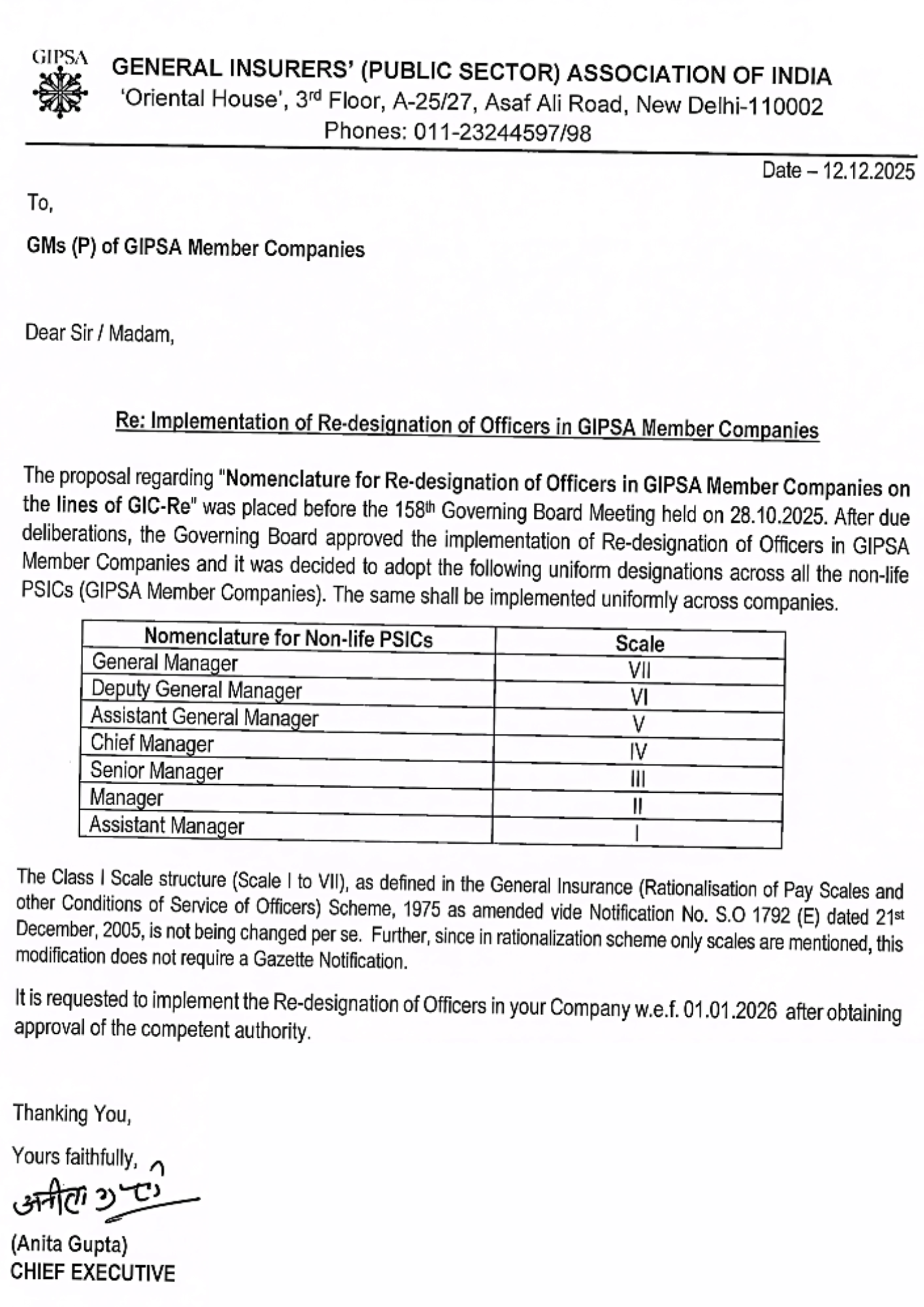
The General Insurers’ (Public Sector) Association of India (GIPSA) has approved a major administrative update that will bring uniform officer designations across all non-life public sector insurance companies. This decision was taken in the 158th Governing Board Meeting held on 28 October 2025, where the proposal titled “Nomenclature for Re-designation of Officers in GIPSA Member Companies on the lines of GIC-Re” was discussed in detail. After due deliberations, the Governing Board cleared the implementation of revised designations to ensure consistency across GIPSA member companies.

GIPSA Approves New Officer Designations for General Insurance Companies from 2026

The new officer designations will come into effect from 01 January 2026, subject to approval by the competent authority in each company. This move aims to standardise hierarchy titles across all non-life PSUs, improving clarity in organisational structure and aligning designations with industry practices. While the nomenclature will change, the existing scale structure and service conditions will remain untouched. As a result, this reform focuses purely on designation uniformity rather than changes in pay, promotion rules or service benefits.

IBPS PO Interview Call Letter 2025 Out at ibps.in, Download Link_20.1

Background of the GIPSA Decision

The proposal was placed before the Governing Board to address long-standing differences in officer designations among non-life public sector insurance companies. These variations often created confusion in inter-company coordination and external dealings.

  • The proposal was discussed in the 158th GIPSA Governing Board Meeting.
  • The objective was to align officer designations across all GIPSA member companies.
  • The structure has been adopted in line with GIC-Re, serving as a reference model.
  • The decision applies uniformly to all non-life PSICs (Public Sector Insurance Companies).

New Uniform Officer Designations Approved by GIPSA

Under the approved framework, officers across non-life PSUs will follow a common set of designations mapped to existing scales.

Scale New Designation
Scale VII General Manager
Scale VI Deputy General Manager
Scale V Assistant General Manager
Scale IV Chief Manager
Scale III Senior Manager
Scale II Manager
Scale I Assistant Manager

Test Prime

Impact on Existing Pay Scales and Service Rules

Although designations are being revised, the underlying scale system remains unchanged. This clarification is important for officers concerned about service conditions.

  • The Class I Scale structure (Scale I to VII) continues as defined under the General Insurance (Rationalisation of Pay Scales and Other Conditions of Service of Officers) Scheme, 1975.
  • Amendments notified vide S.O. 1792(E) dated 21 December 2005 remain fully applicable.
  • Only nomenclature is being modified; pay, allowances, promotion criteria and seniority remain the same.
  • Since the rationalisation scheme refers only to scales and not designations, no Gazette Notification is required for this change.

Implementation Timeline

GIPSA has clearly outlined the timeline for execution of the revised designations.

  • All GIPSA member companies are requested to implement the changes with effect from 01 January 2026.
  • Implementation will be subject to approval from the competent authority of each company.
  • The revised designations will be applied uniformly across all non-life PSUs without deviation.

Why This Change in Designation Is Important

The re-designation initiative brings several long-term administrative and professional benefits.

  • Creates uniformity in officer hierarchy across public sector general insurance companies.
  • Reduces confusion during inter-company transfers, coordination and external representation.
  • Aligns PSU insurance designations more closely with industry and reinsurance standards.
  • Improves clarity for employees, regulators and stakeholders dealing with multiple insurers.

What Officers Should Expect Going Forward

Officers should note that while their designation titles will change, their roles and benefits will continue as before.

  • No change in salary structure or scale-based entitlements.
  • No impact on promotion eligibility or service length.
  • Official records, internal systems and correspondence will reflect new designations from 2026.
  • Companies will issue internal communications detailing the transition process.